

Art handling in London
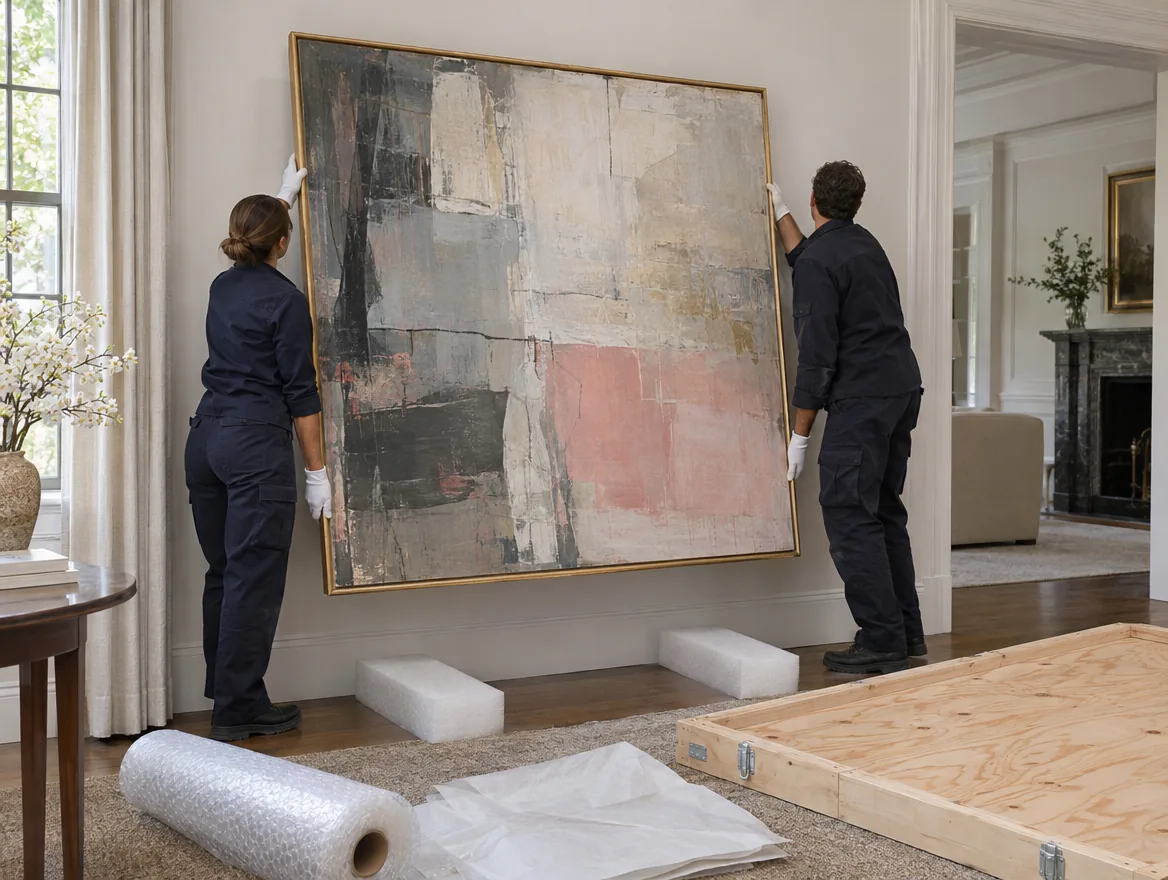
Art handling in London covers every moment a work is touched: taken off a wall, wrapped, lifted, carried down a staircase, moved across a room or into the next building, and packed for the road. We handle paintings, works on paper, mirrors, sculpture and antiques for sales, loans, moves and renovations, and we build the crate when a piece needs one.
- We handle
- Paintings, works on paper, mirrors, sculpture, antiques
- For
- Sales, loans, moves and renovations
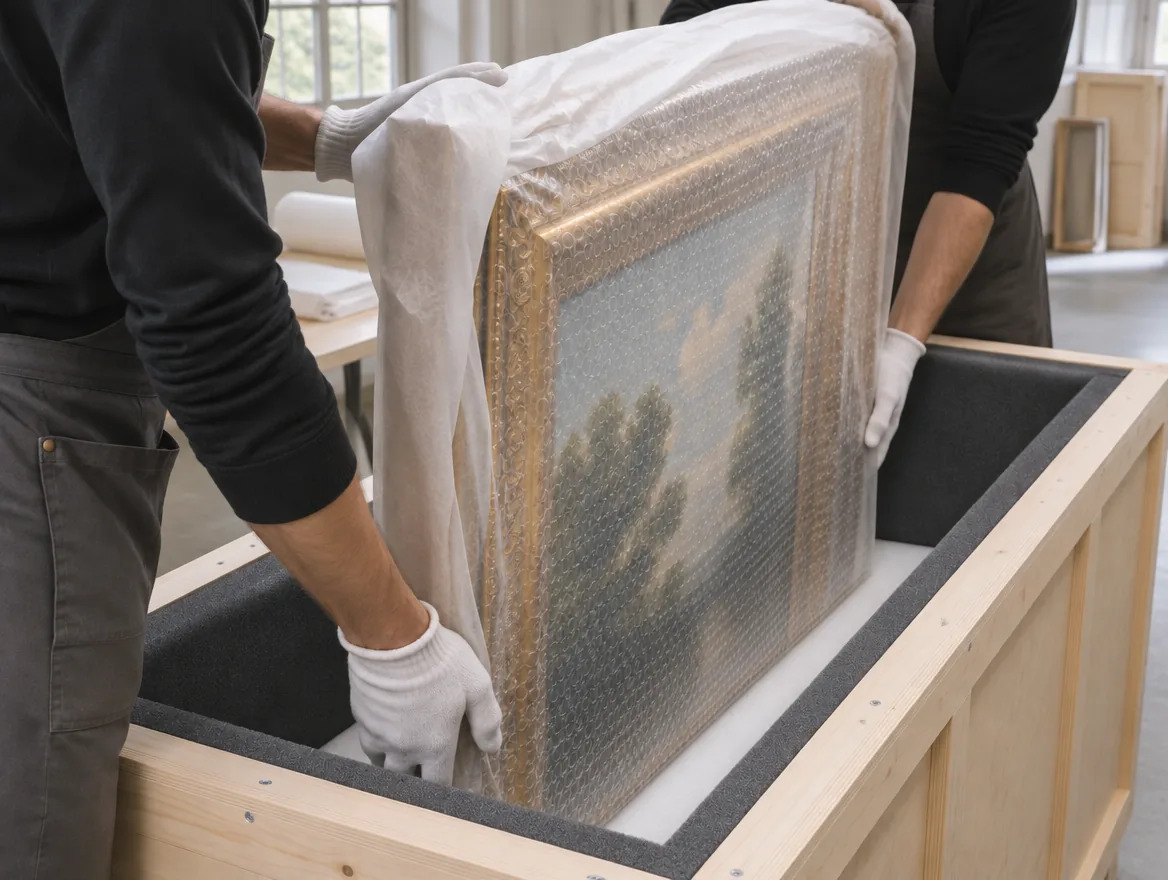
- Every lift
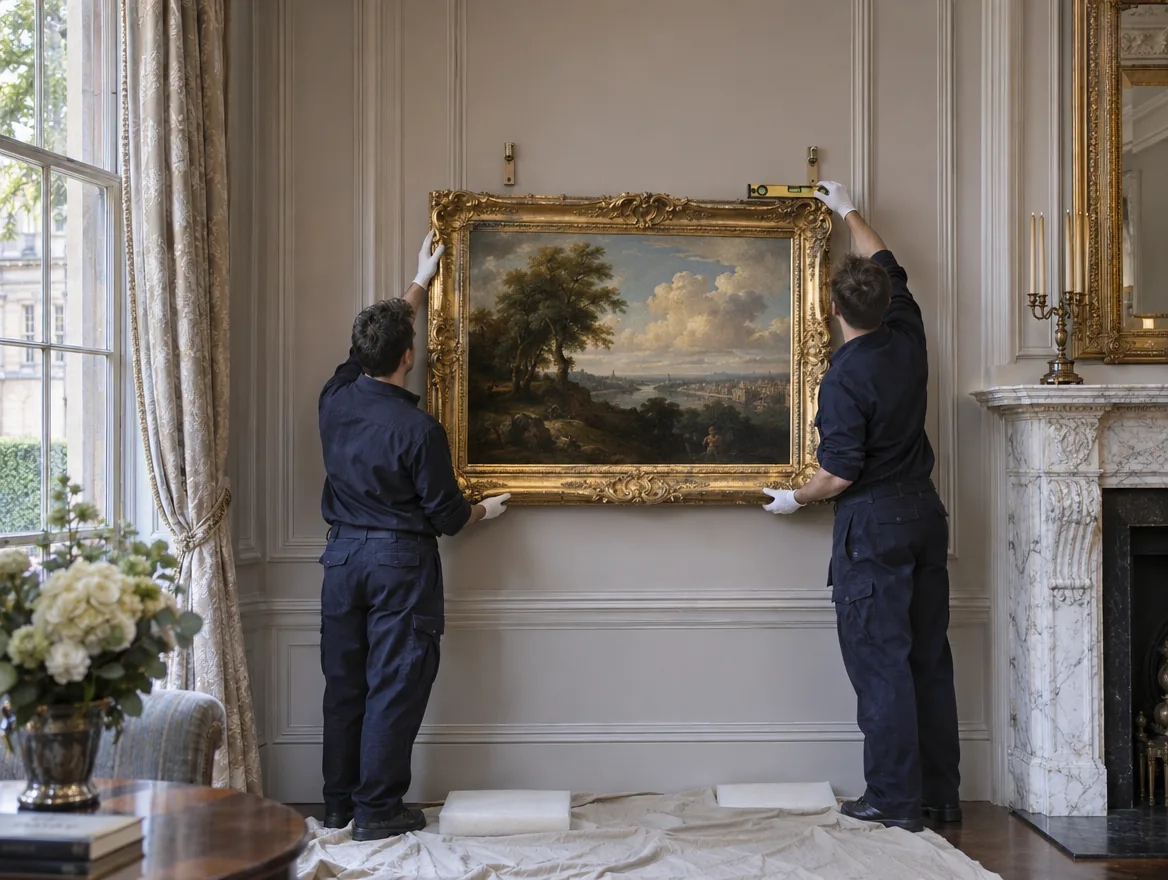
- Two people, gloved hands
- Hours
- 9am to 4pm, 7 days a week
What is art handling?
Art handling is the careful physical work of moving art: lifting it, carrying it, wrapping it and setting it down without harm. It sounds simple. In practice most damage to paintings and objects happens in the few minutes when a work is off the wall and in someone's hands, not on the motorway. Good art handling is about those minutes.
It is the part of the job that sits before and after the crate. Once a work is wrapped and lifted, we can take it on to our warehouse and build a crate around it. See fine art crating.
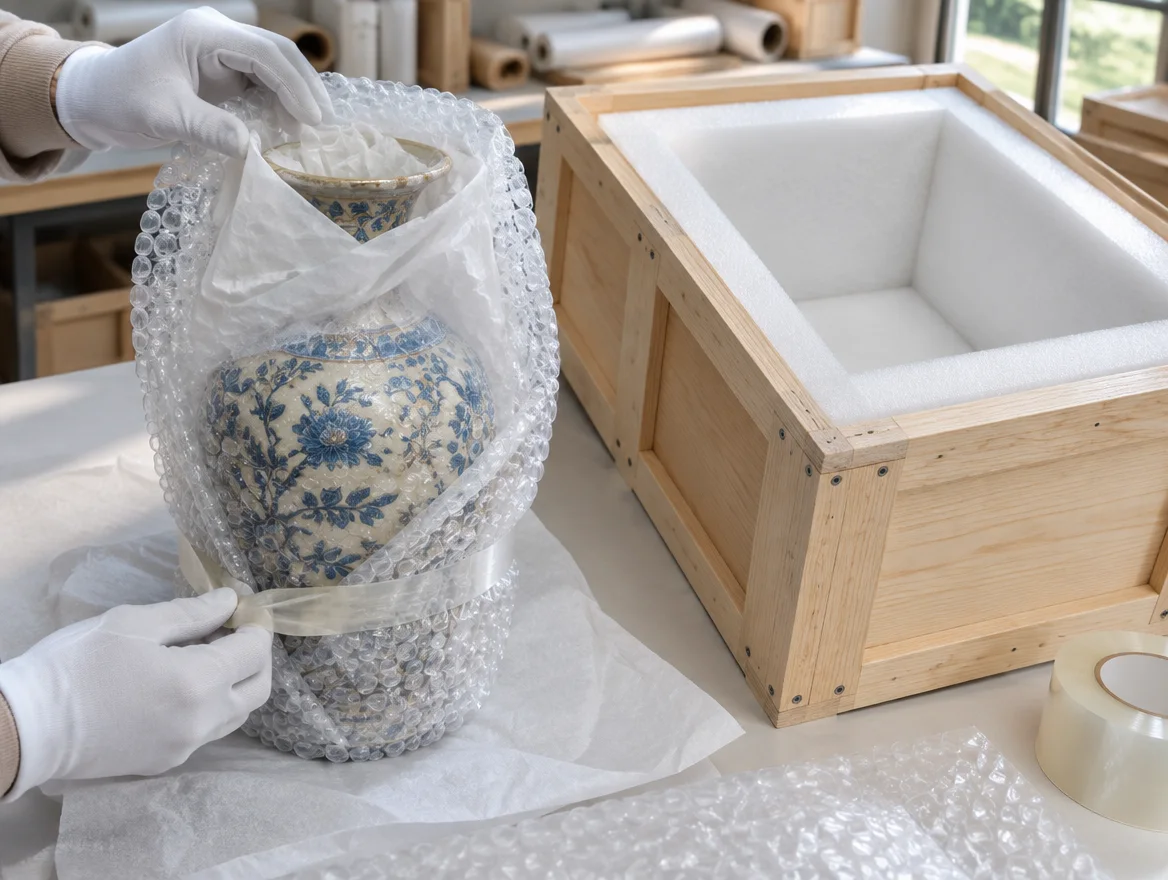
From one room to another, up or down a floor, into a safe room while the decorators are in.
From a house to a gallery, a saleroom, a restorer or a new home, across London or further.
Soft-wrapping for short moves, two-person lifts, and the right way to carry each kind of work.
De-installing works from walls and plinths, and setting them back again when the room is ready.
When do people need art handling in London?
Usually when something in the building is about to change. A sale, a loan, a move or building work all mean art coming off walls and out of rooms, often on a tight date.
Moving house with a removal firm? We often handle the art and antiques alongside them. See crating for removal companies.
| Reason | What usually happens | What to tell us |
|---|---|---|
| A sale | The work comes down, is wrapped and goes to the saleroom or the buyer | The saleroom or buyer, and any collection date |
| A loan | The work leaves for an exhibition and comes back months later | The borrower's packing and condition requirements |
| A house move | Works come down before the removal team arrives and go up again in the new home | The moving date and who else is on site |
| Renovation | Works are moved to a safe room or off site while builders and decorators work | How long, and where the works should wait |
| A new purchase | The work arrives and needs unwrapping, placing and checking | Where it is going in the room |
How should a painting be lifted and carried?
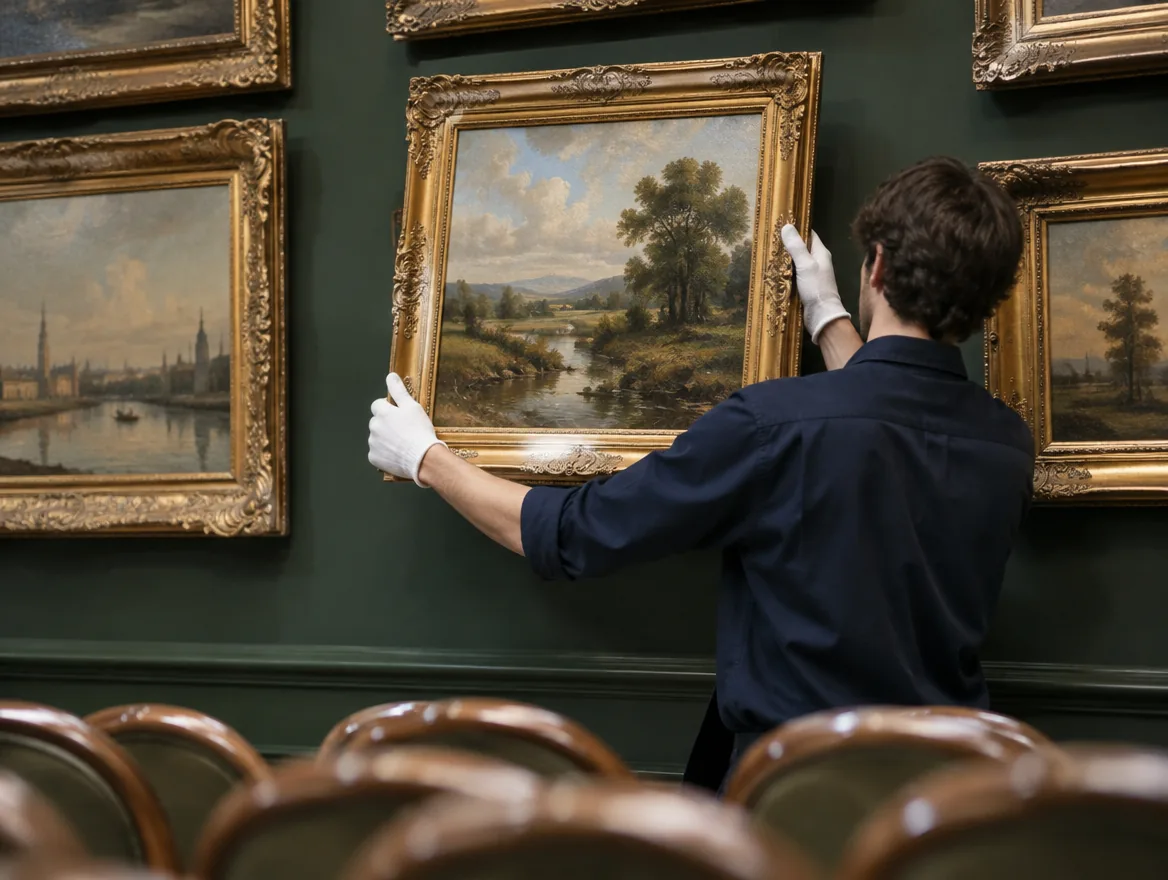
With two people, by the strong parts of the frame, held upright and close to the body. A framed work is carried by its sides, with a hand under the bottom edge, so the weight sits low and the face is never pressed. These are the rules we work to on every lift:
- Two people for anything large, heavy or glazed. One person can hold a small work; a large one needs a pair, one each side, moving at the pace of the slower person.
- Gloves on, chosen for the surface. Clean nitrile gloves for most work, because cotton fibres can catch on flaking paint and slip on smooth frames or glass.
- Never by the stretcher bar. Fingers behind a canvas press into the back of the paint, and cracks can follow.
- Never by the top of the frame. The top rail and any carved crest are the weakest points; carry by the sides with a hand underneath.
- Upright, face in. Paintings travel on their edge, not flat, with the face towards the carrier.
- The route first. Doors open, rugs and cables out of the way, corners and banisters checked, before the work leaves the wall.
- Somewhere soft to land. Foam pads or blocks on the floor, ready before the lift, so the bottom edge has a padded place to rest.
Never lean a painting against another painting face to back. The corner of one frame can push through the canvas of the next.
How we take a work off the wall
Slowly, in a fixed order, with nothing left to chance. De-installing is where an unexpected weight or a hidden fixing causes trouble, so we look first and lift second.
- 01Look at the fixings
Hooks, chains, mirror plates or a security fixing. We find out what holds the work before anyone takes the weight.
- 02Prepare the floor
Foam pads go down beneath the work, along its full width.
- 03Take the weight together
Both handlers lift together, freeing the work from its fixings without dragging it down the wall.
- 04Lower to the pads
The work comes down on its bottom edge, upright, onto the foam.
- 05Check and note
We look over the frame and surface and note anything already there.
- 06Wrap
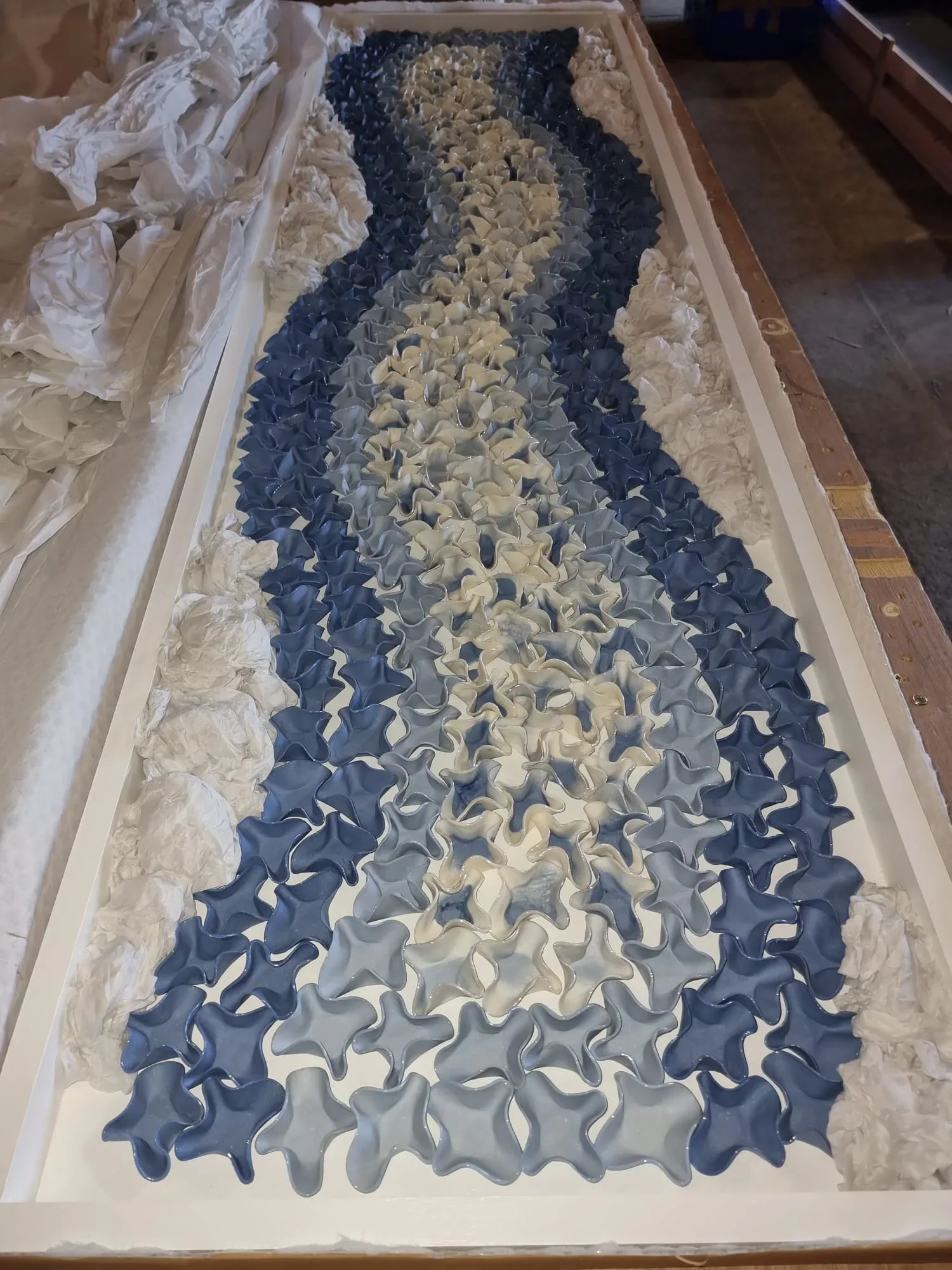
Tissue against the surface and frame, bubble wrap over that, corners padded, glass taped.
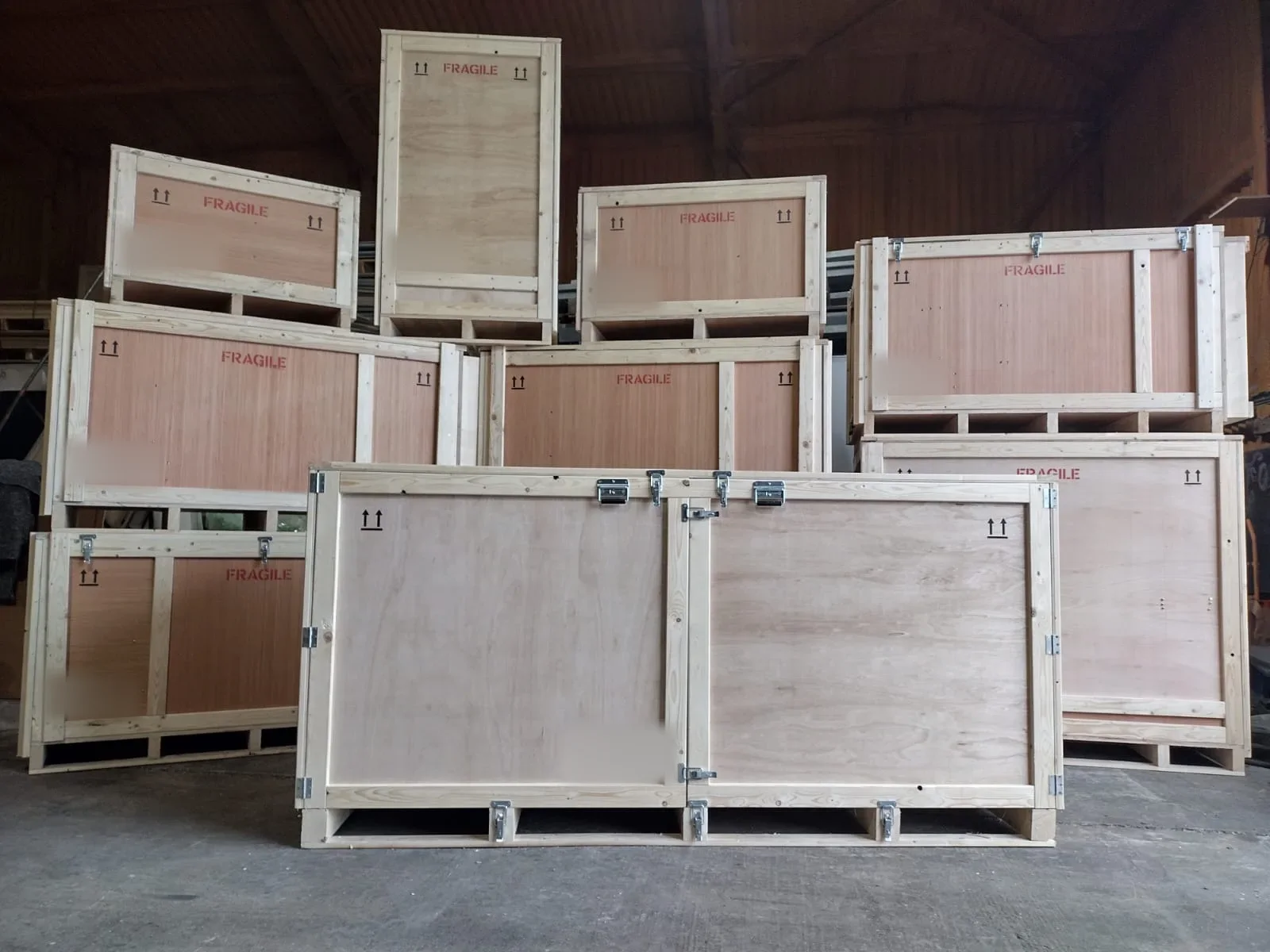
Send us a photo and the measurements.
We’ll recommend the crate, the lining and the supports, and come back with a bespoke quote.
How is each kind of work wrapped?
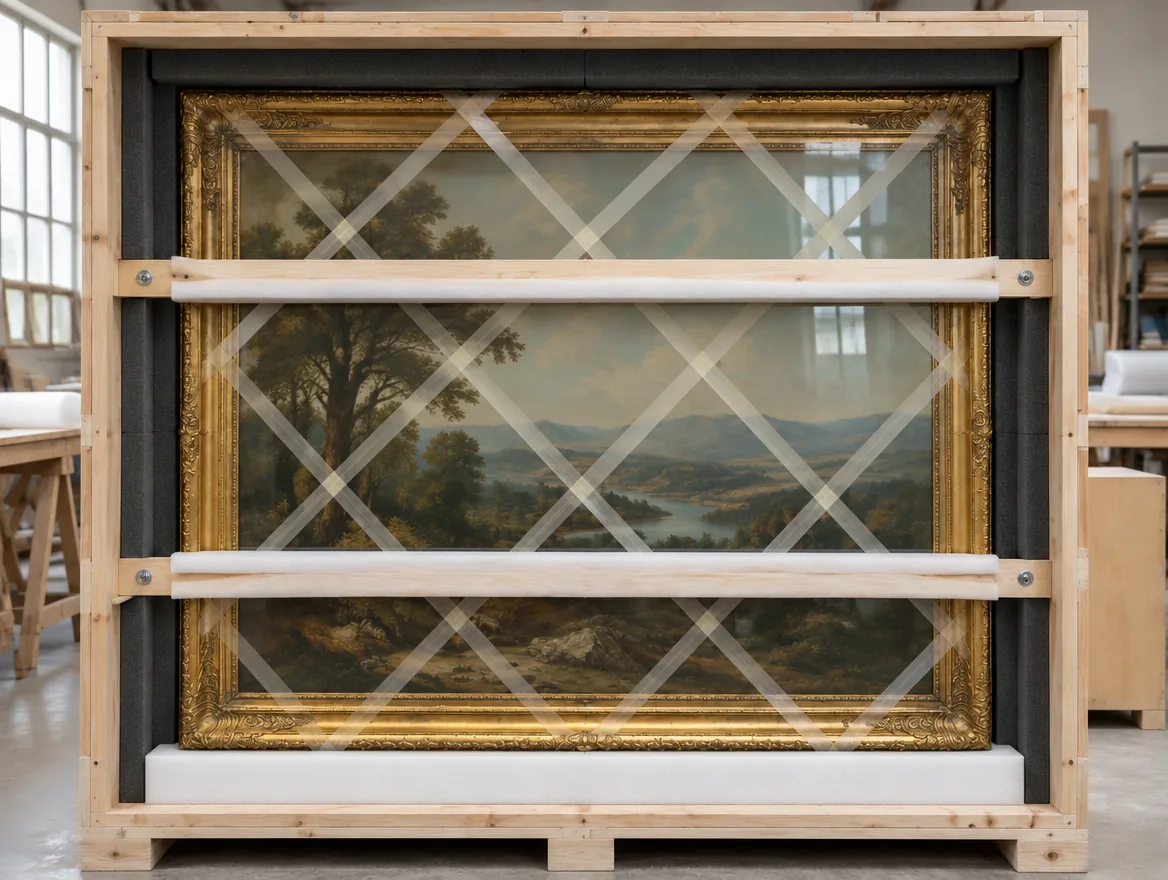
By what the surface can bear. Nothing plastic touches paint, gilding or a soft patina directly, and anything glazed is taped so loose glass can't cut the picture if it breaks.
- Oil and acrylic paintings. Tissue or glassine over the face, then bubble wrap, then cardboard corners. Unframed canvases are held by the stretcher edges, never the canvas.
- Works on paper behind glass. The glass is taped in a lattice with low tack tape, then the frame is wrapped and the corners padded. See how to ship a painting.
- Gilt frames. Gilding is soft and marks easily. Tissue first, no tape on the gilding, extra padding on carved corners.
- Mirrors. Taped like glazed works and carried upright. See mirrors and glass.
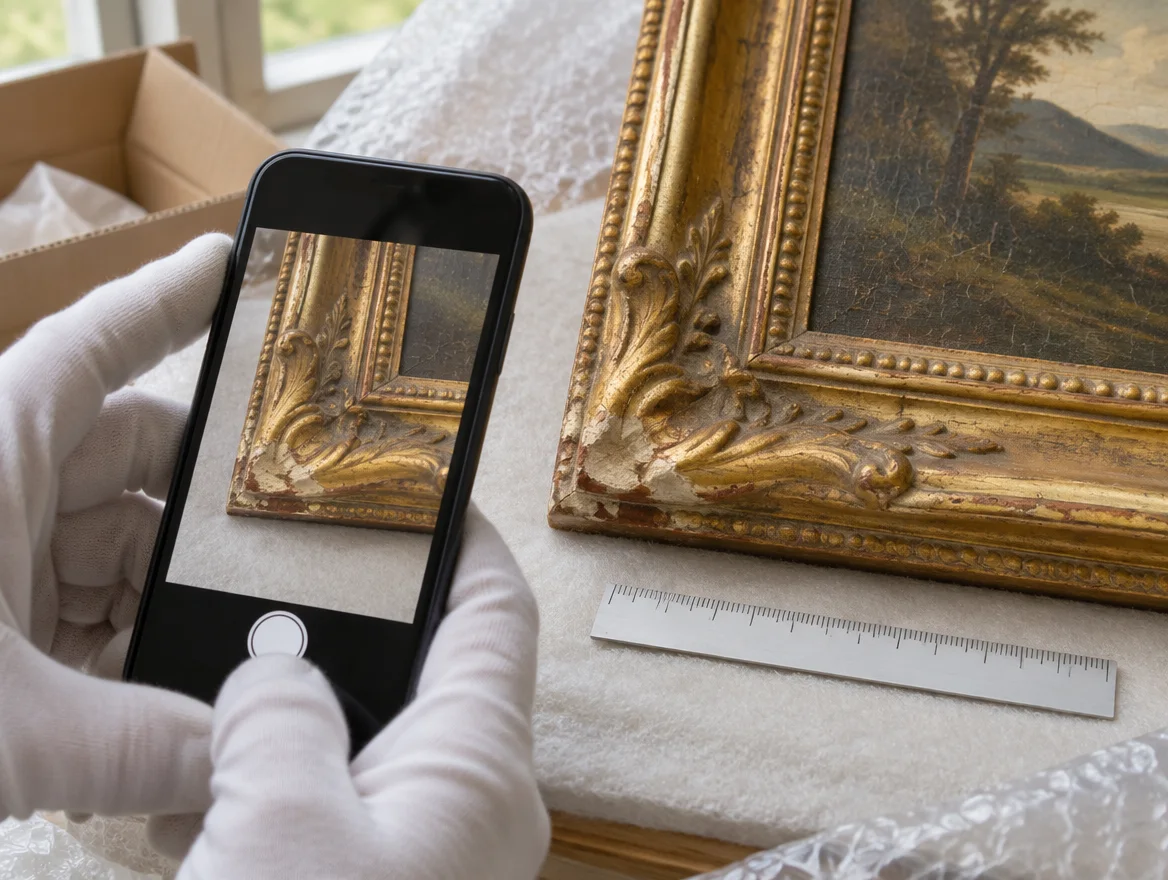
- Sculpture and busts. Wrapped, then supported at the base and the strongest point of the body, never by an arm, a nose or a raised edge. See sculpture and heavy pieces.
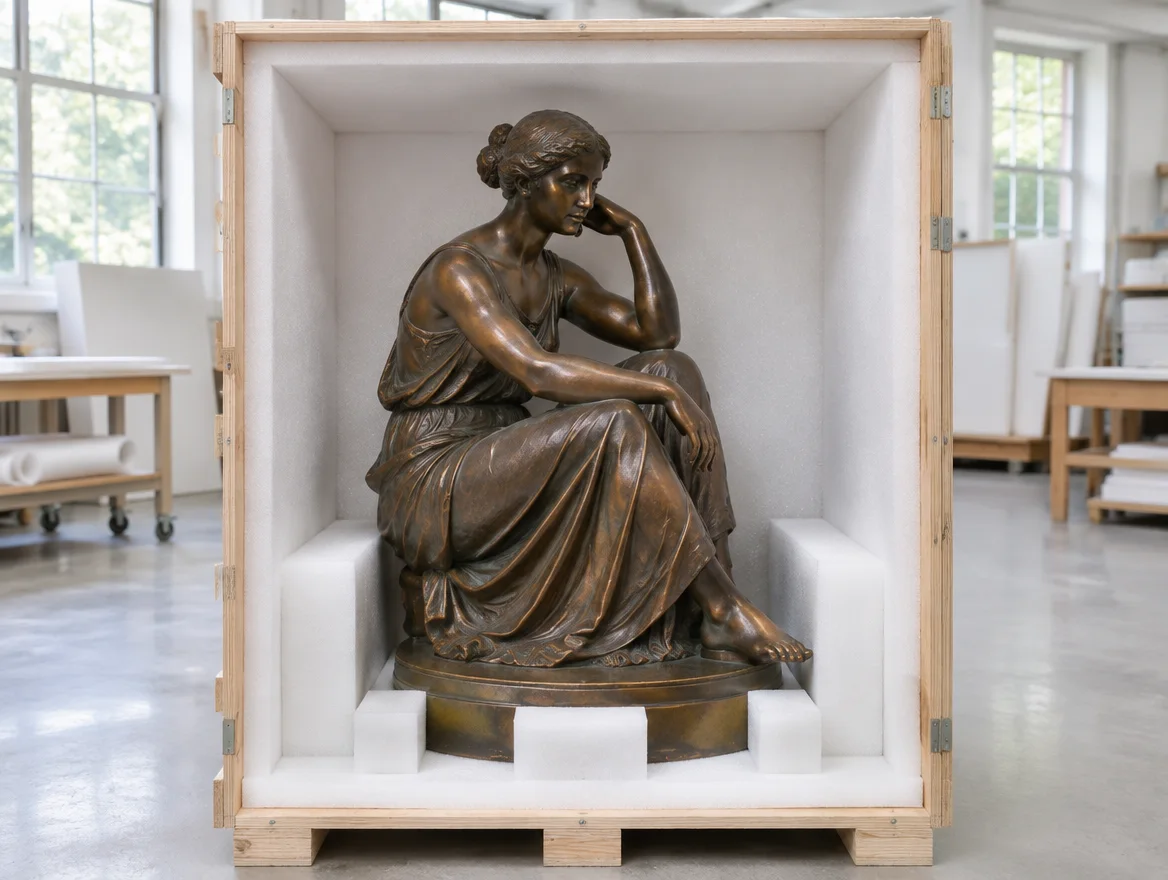
Why write condition notes before anything moves?
Because a mark found after a move is only useful if you know whether it was there before. A dated record taken before the work is touched settles that question for you, the owner, the borrower and the insurer.
Before a work is lifted we look it over with you and point out anything we can see: a loose moulding, a chip in the gilding, a dent in the canvas, a crack in the glass. Take your own dated photos too: front, back, corners and close-ups of any old damage. If the work is going on loan, the borrower will usually want its own condition report; ask them early. Ask us whether we can write up or photograph a work for you as part of the job.
When does a work need a crate rather than soft wrap?
Soft wrap is fine for a short move within a building or across town with careful hands. A crate is right when the work is valuable, glazed, heavy, going a long way or changing hands.
Inside a crate, the foam goes where it is needed: firm white high density foam under the bottom edge, where the weight sits, and soft charcoal HLB22 foam against the frame and any delicate surface, running the full length with no gaps. More in our crate or box guide.
| Soft wrap | A crate | |
|---|---|---|
| Journey | Room to room, or a short drive with us | Long journeys, couriers, shippers, abroad |
| Handling | Our hands only, start to finish | Other people will lift it on the way |
| The work | Sturdy, unglazed, modest size | Glazed, gilded, fragile, large or very valuable |
| Storage | Back on the wall within hours or days | Waiting weeks in a store or warehouse |
Hanging, installing and specialist work
Hanging at height, installing heavy works, fixing to unusual walls or working on scaffolding all need planning for that room and that work. Tell us what you need, with a photo of the wall and the work, and we'll say how we can help.
If the work is leaving the building, there are two ways we can take it from there. We can collect it and crate it at our warehouse, ready for your courier or for shipping we arrange. Or, if you have your own handlers, we can build a crate to your measurements and deliver it. To move a work across the UK or abroad, see our art courier service. We work 9am to 4pm, 7 days a week. Tell us about the job.
Common questions
Do art handlers always wear gloves? +
For most work, yes. Clean nitrile gloves suit most paintings, frames and objects because they grip well and don't shed fibres. Some surfaces are better handled differently, and we choose for the piece.
Can one person move a large painting? +
It isn't safe for the work. Anything large, heavy or glazed should be lifted by two people, one each side, carrying by the sides of the frame with a hand underneath.
Can you move art within the same house? +
Yes. Moving works to another room or a safe room during building work is part of art handling. Tell us how many works there are and where they need to go.
Can you take works down before my removal firm arrives? +
Yes. We can take the art and antiques down, wrap them and crate them where needed, working around the removal team's dates.
Do you hang pictures? +
Tell us what you need, with a photo of the wall and the work. Hanging at height or installing heavy works needs planning for that room, and we'll say how we can help.
Do you handle sculpture as well as paintings? +
Yes. Sculpture is lifted at its base and strongest point, never by a raised arm or edge, and travels held in firm high density foam blocks.
Do you work outside London? +
Yes. We are in and out of London regularly and work across the UK, across Europe and across the Atlantic.
Is the piece insured while it travels? +
Transit insurance is bought by you, job by job, so the cover matches the piece and its real value. We have public and product liability insurance. See our insurance page for what to ask.
How much does it cost? +
Every quote is bespoke, based on the piece itself: its size, weight, how fragile it is and where it is going. We don't use a rate card. Send us the details and a few photos and we'll price your job.
Related
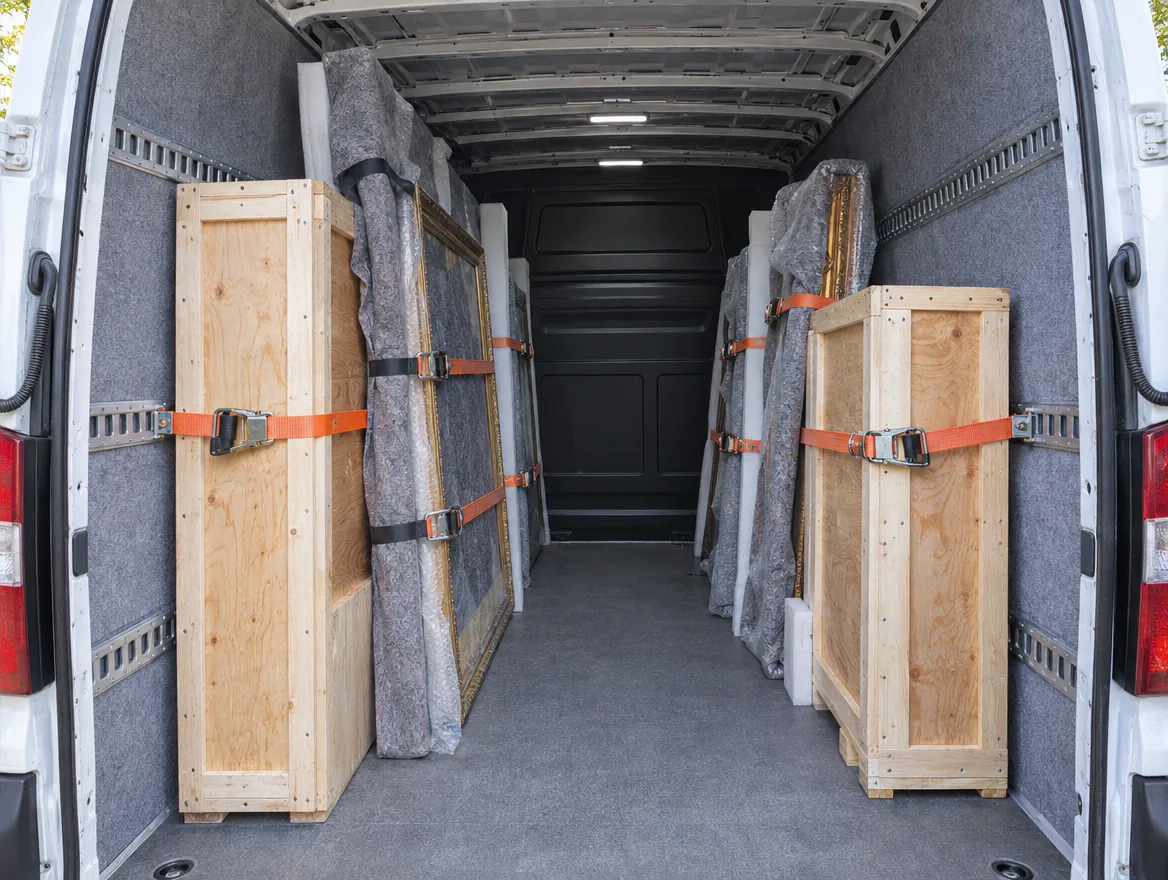
Collected by hand, carried upright, placed in the room.
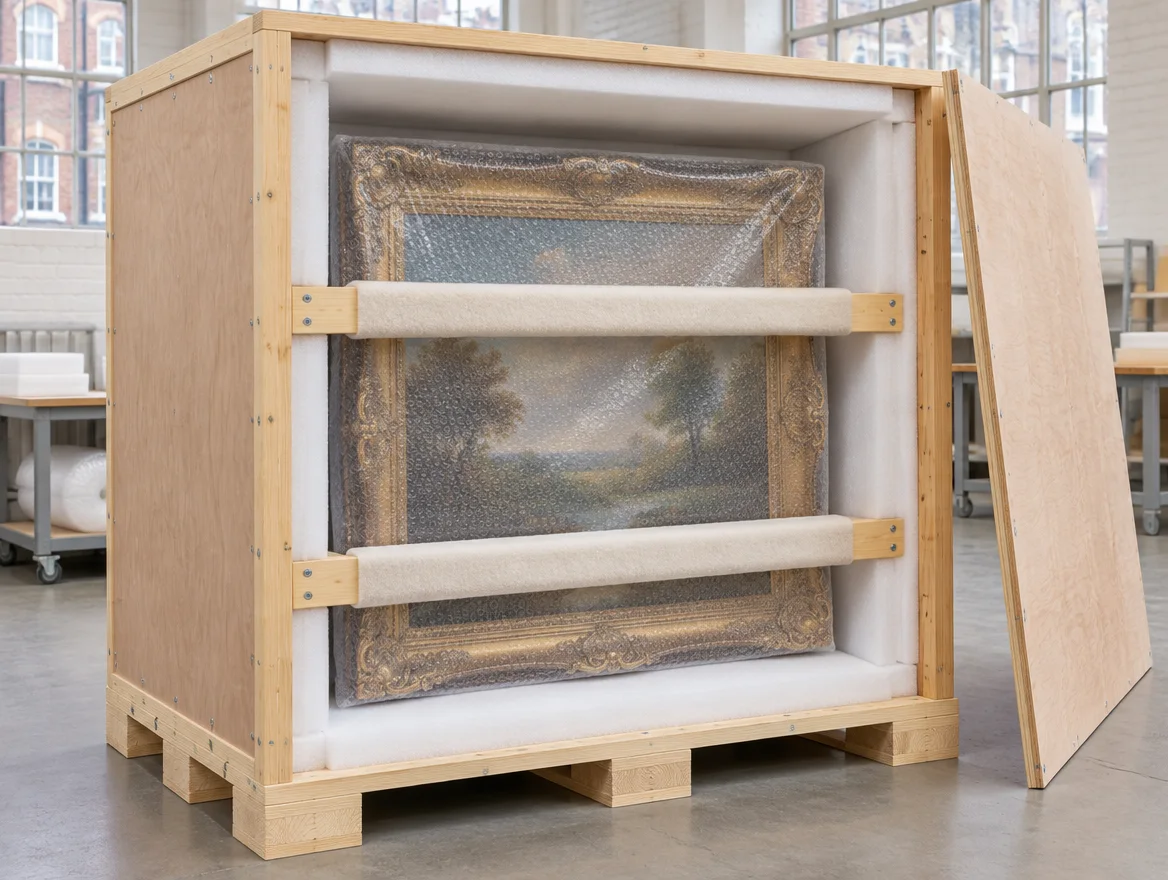
Wrapped by hand, crated to measure.
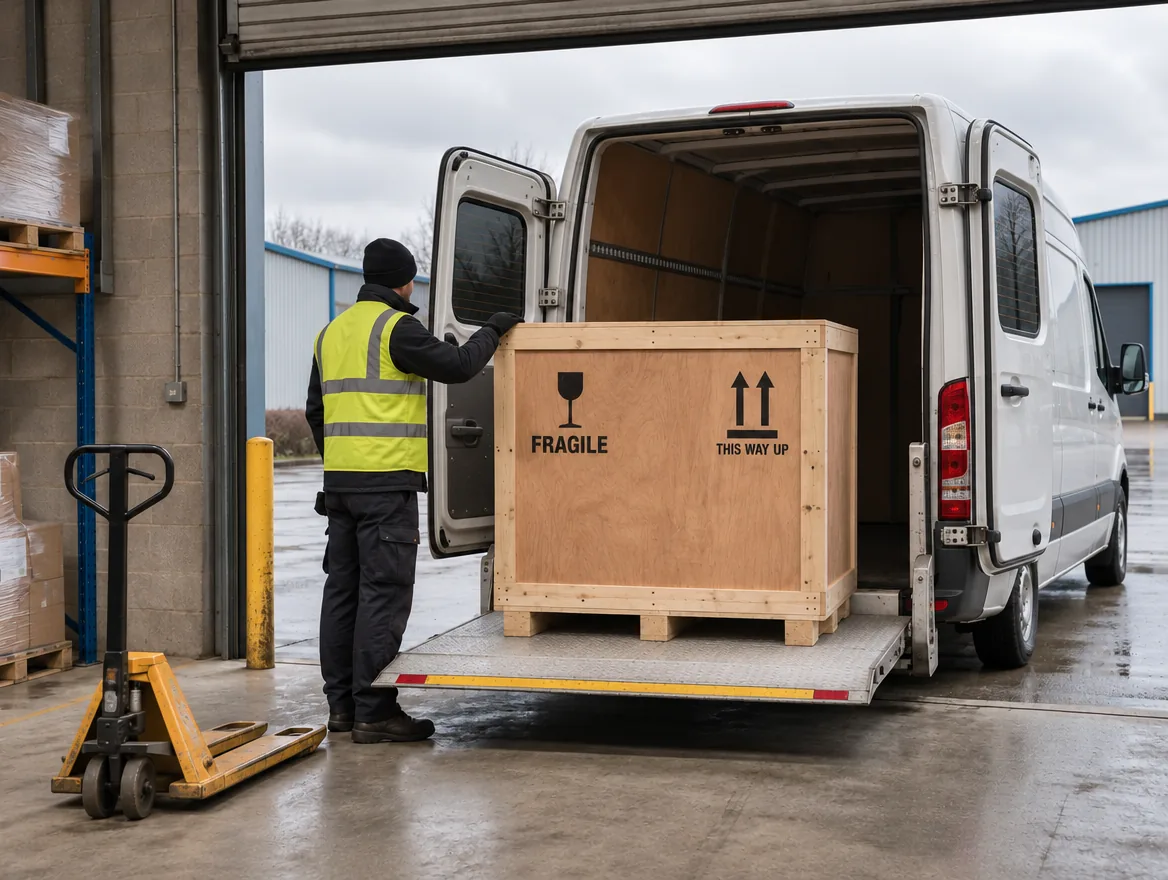
Nothing to measure. We build the crate around the piece.
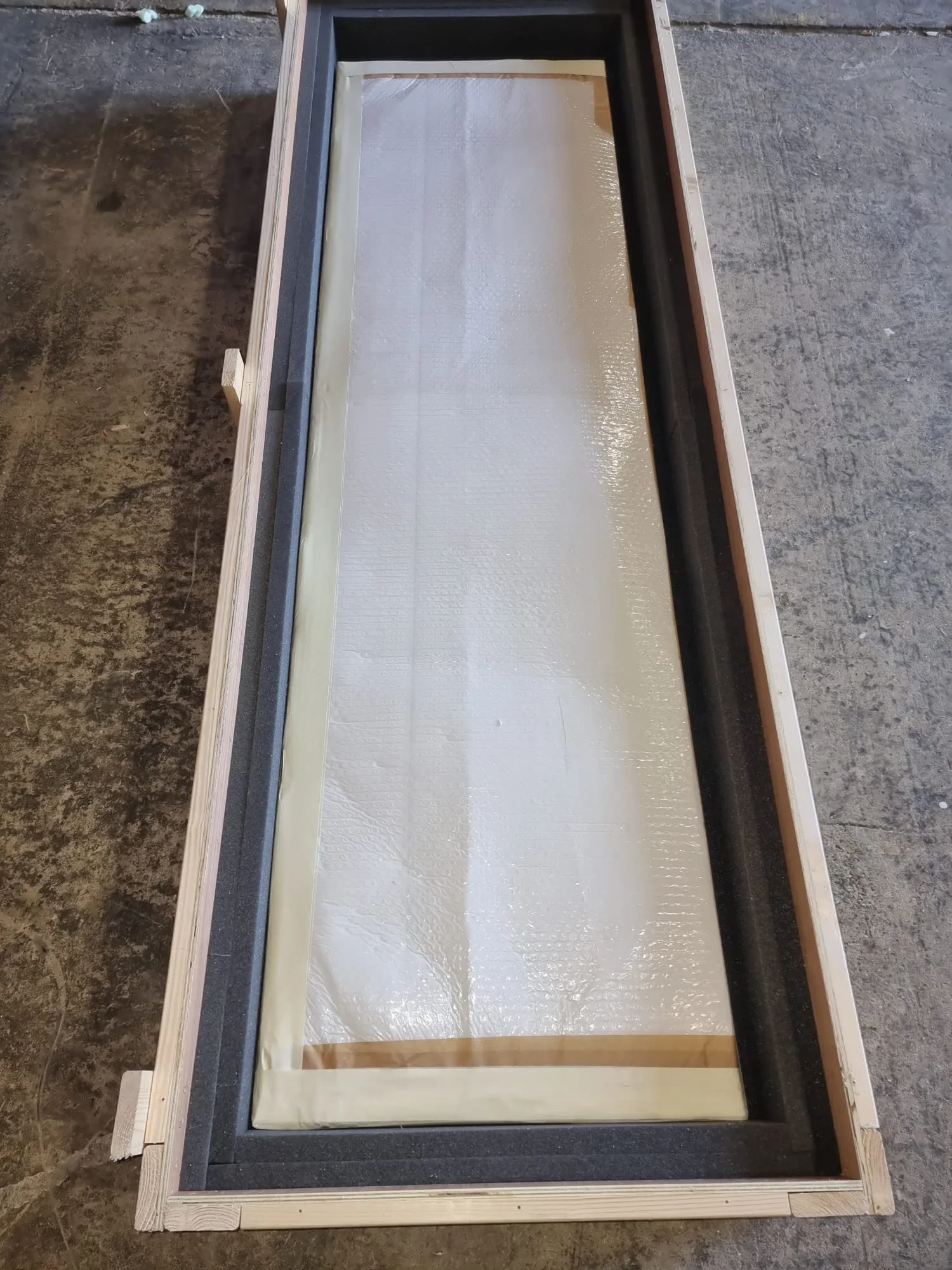
Surface protected, frame held still.
Swipe for more →
Tell us what needs to travel.
Every quote is bespoke, based on the piece itself. Send us the details and we'll come back to you.