

Recent work, start to finish
Recent jobs in full: what the problem was, what we built and how it turned out. Each one shows how we design a crate around the piece, not the other way round.
Two jobs, start to finish
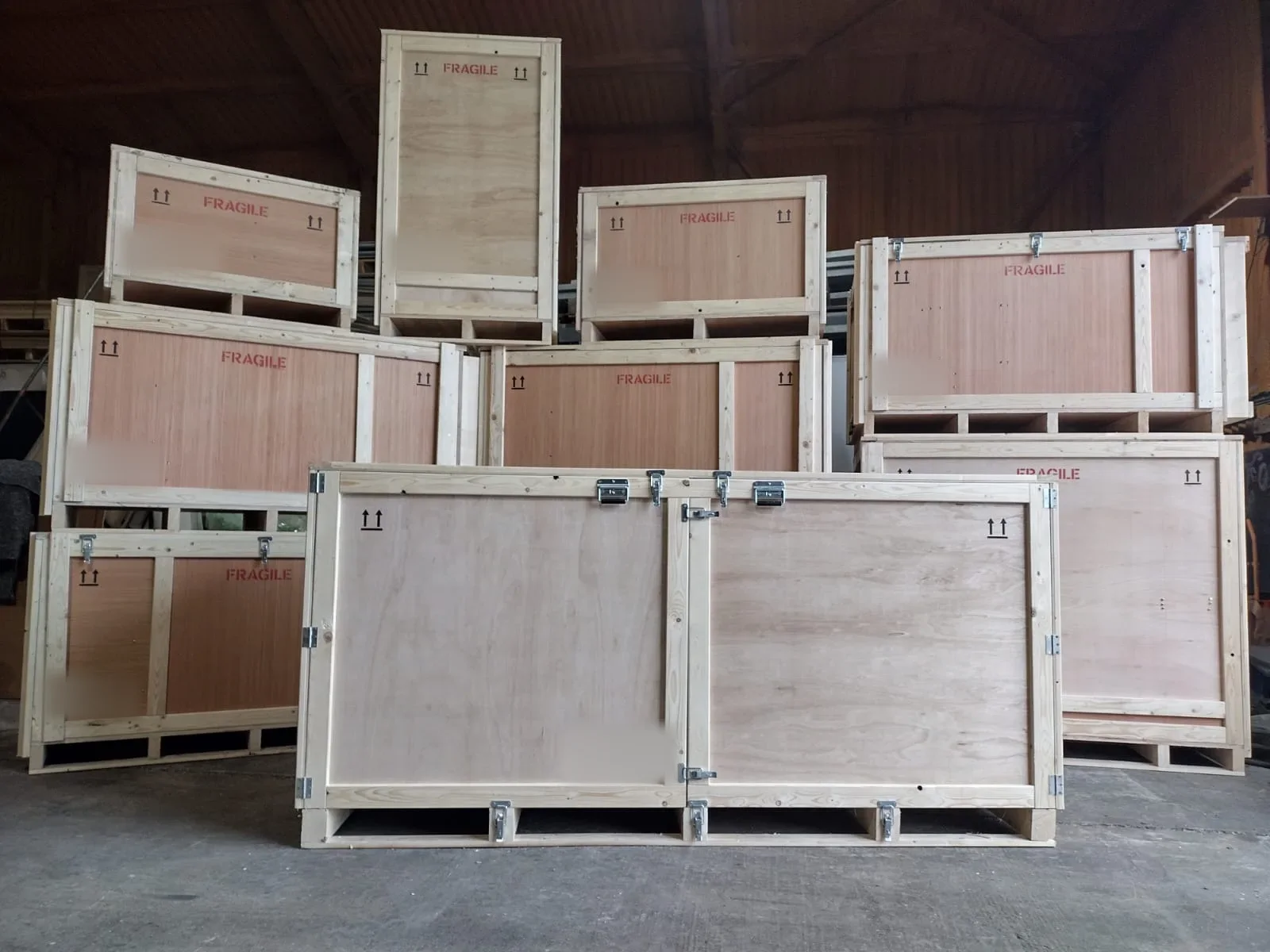
Every job starts with a question: what does this piece need to travel safely? Sometimes the answer is a crate a factory will use every week. Sometimes it's a one-off heavy duty export crate for something nobody has packed before. Here are two recent examples.
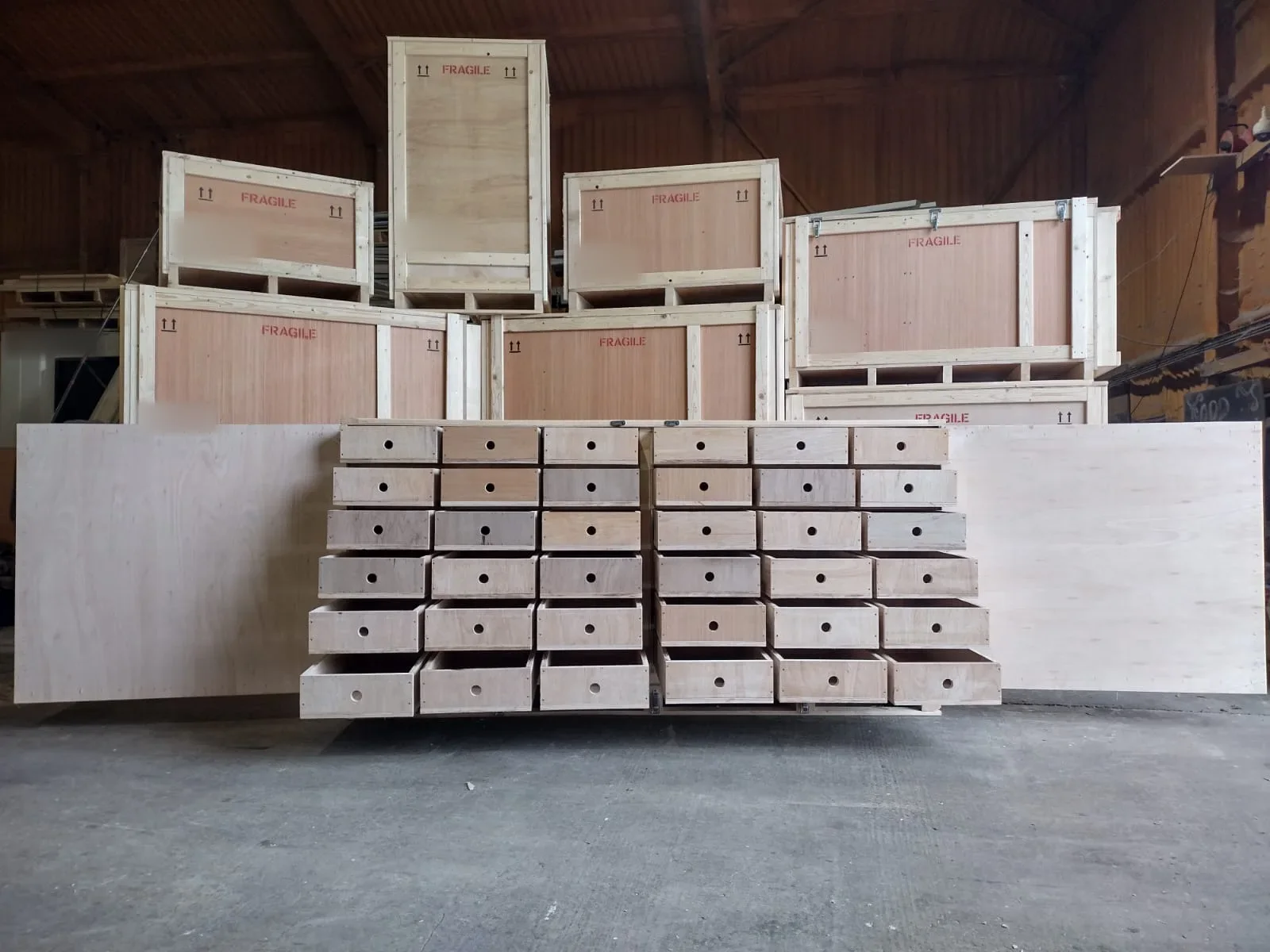
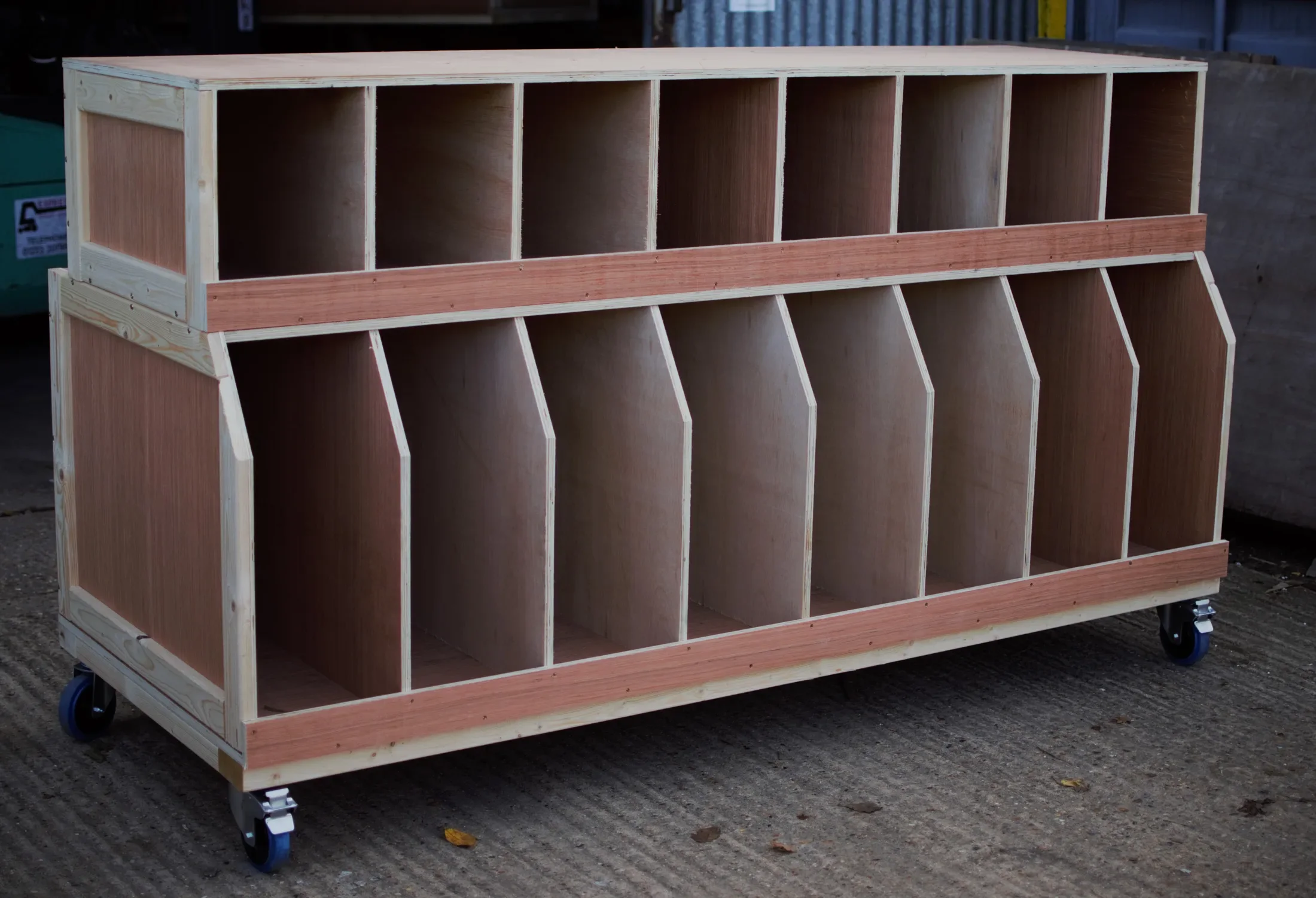
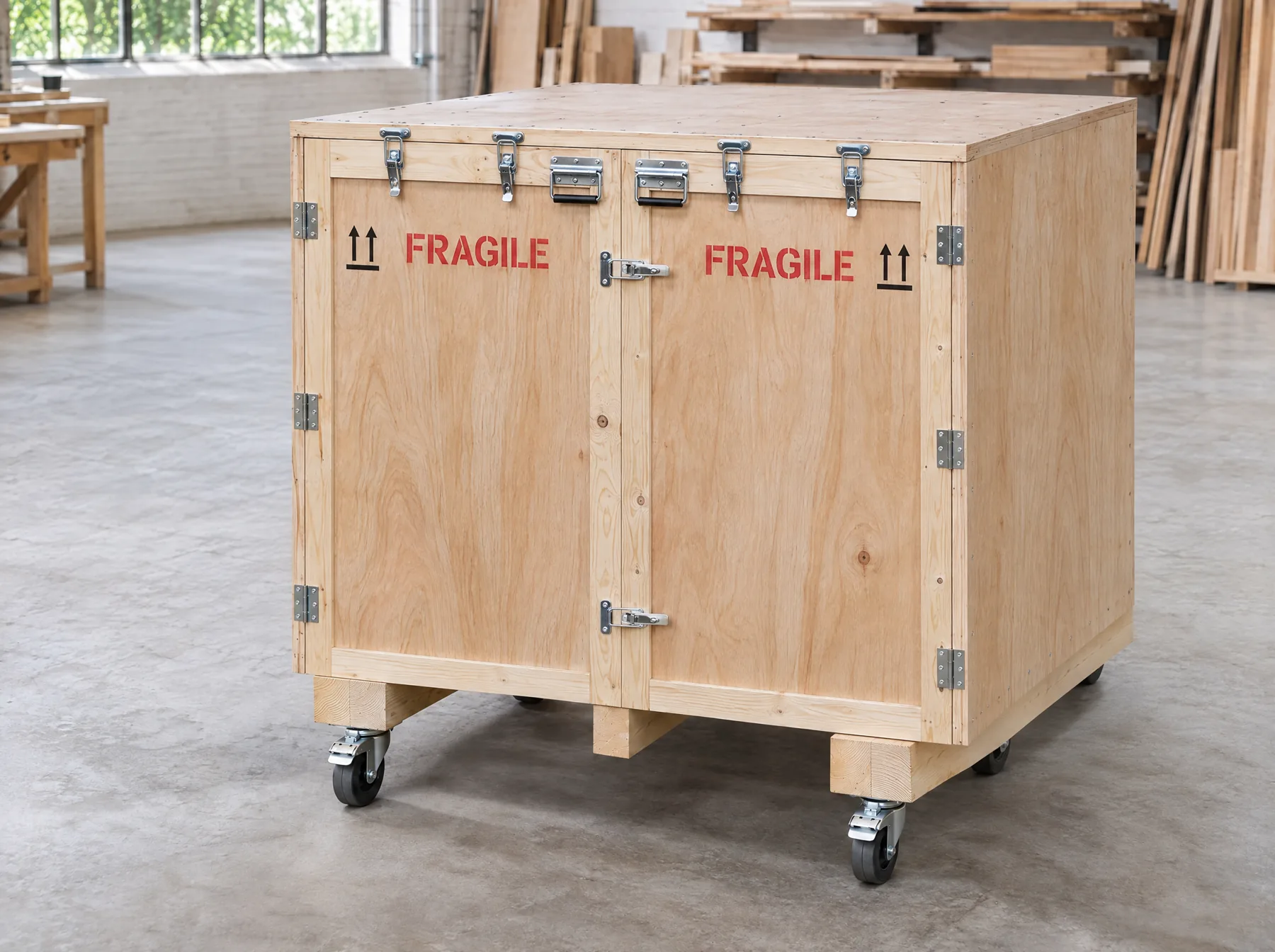
A manufacturer was losing tens of thousands of pounds a year repairing unfinished parts damaged between its factories. We built bespoke drawer crates, paid for once, and the repair bills stopped. Read the full job.
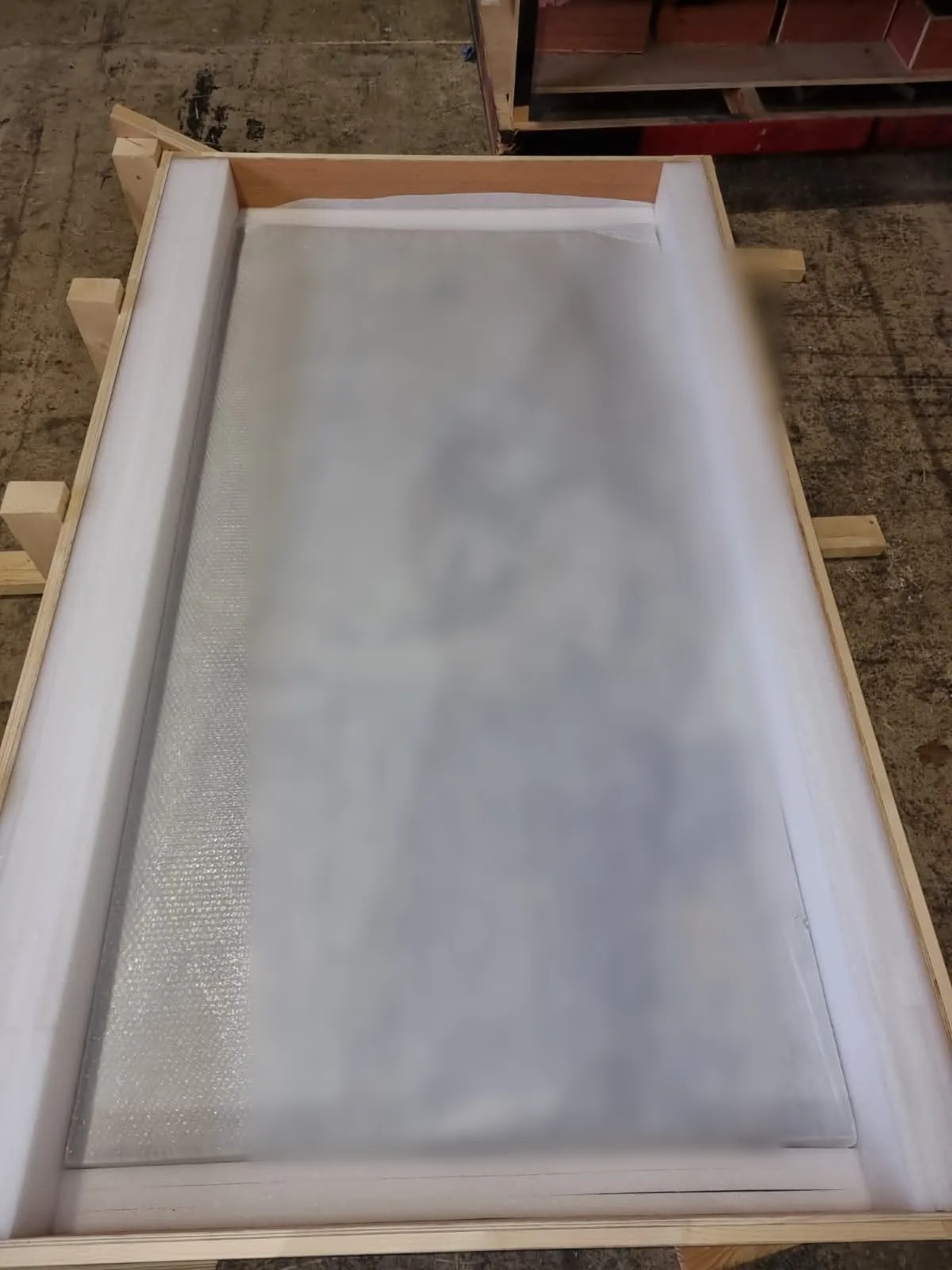
A gallery needed to send a concrete artwork of over 500 kg, by a world-renowned graffiti artist, to the United States. We engineered a crate around its weight, size and painted surface. Read the full job.
The drawer crates
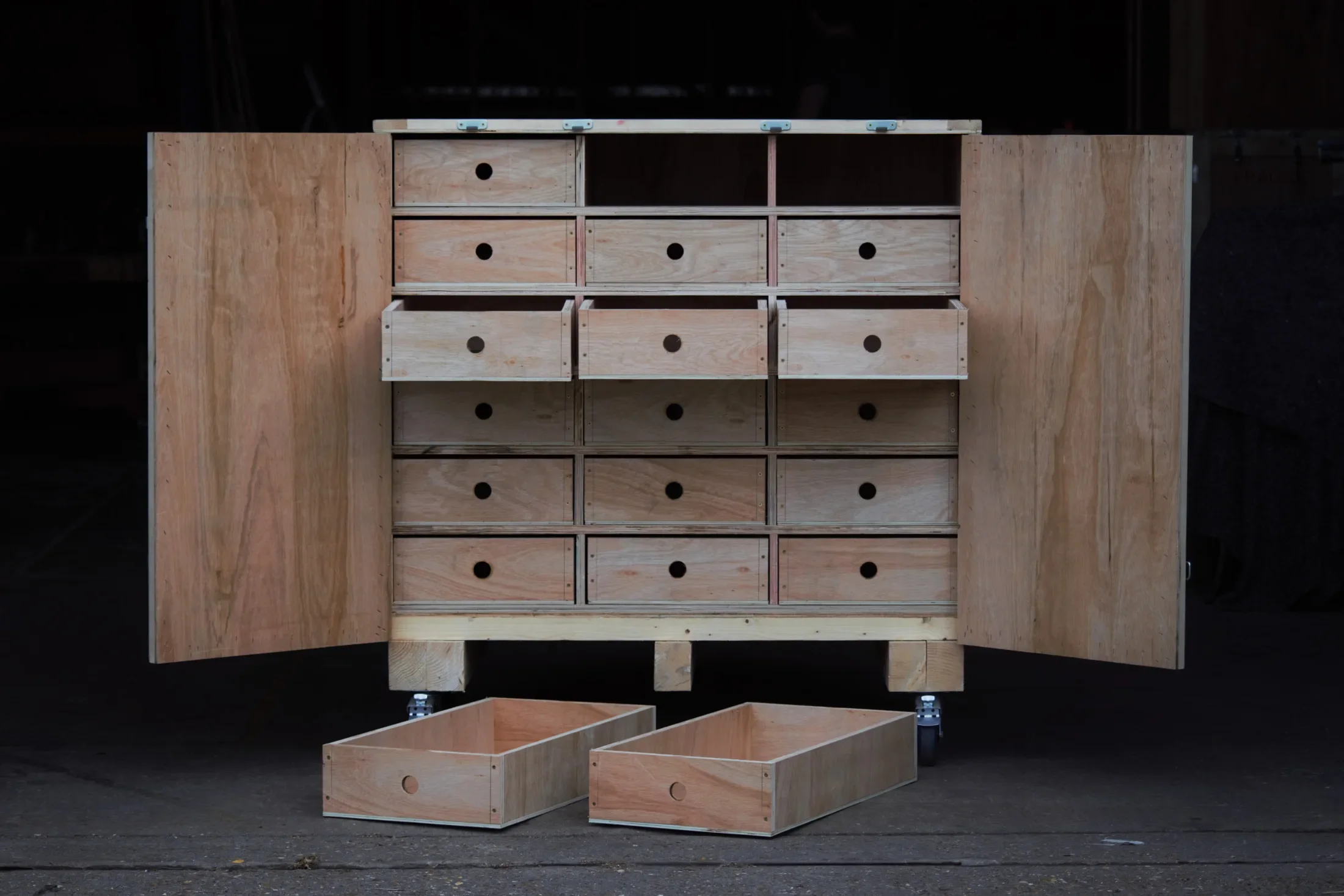
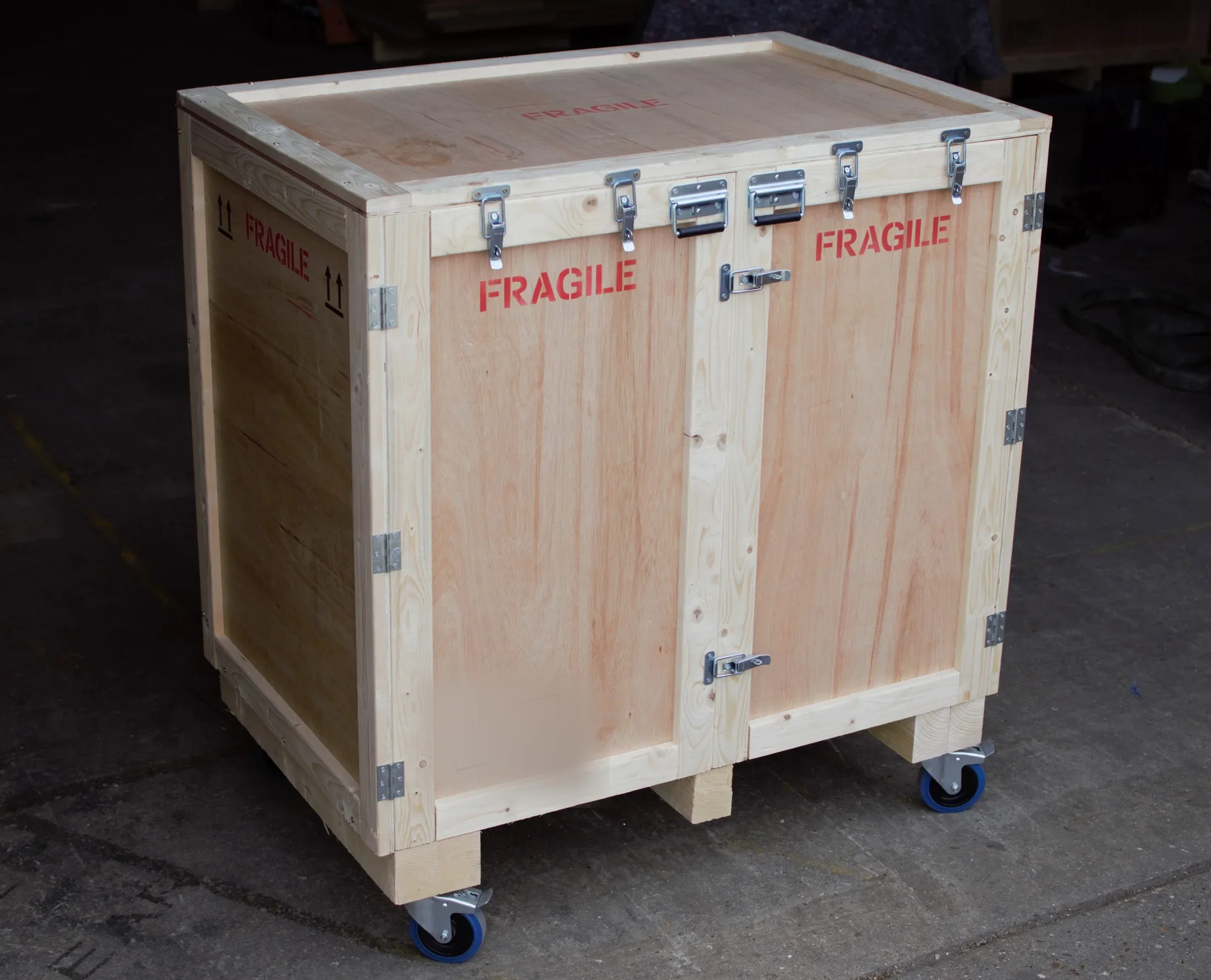
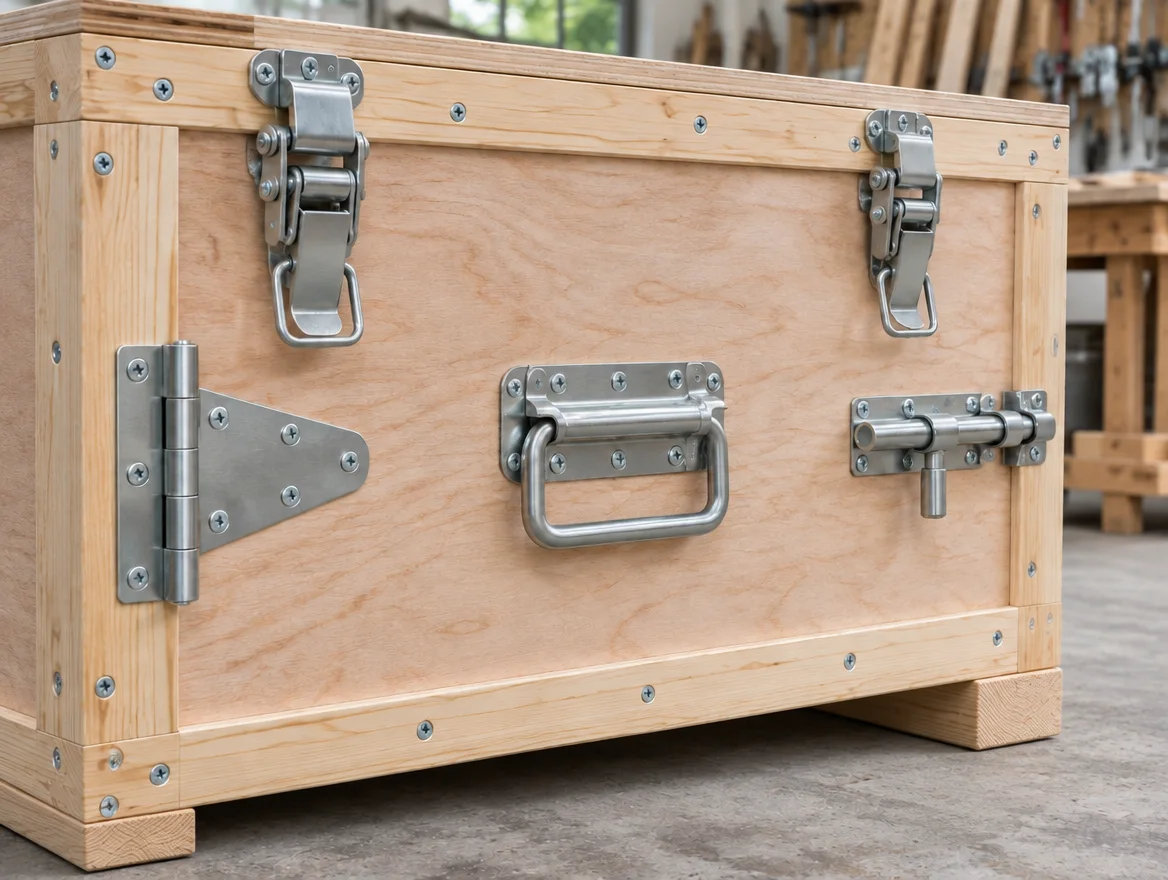
One design, built in several sizes: hinged doors, toggle latches, bolt locks and castors outside, removable plywood drawers inside. The parts are stored and moved in the same crate, so they're protected on every trip. See also industrial crates.
The 500 kg street art crate
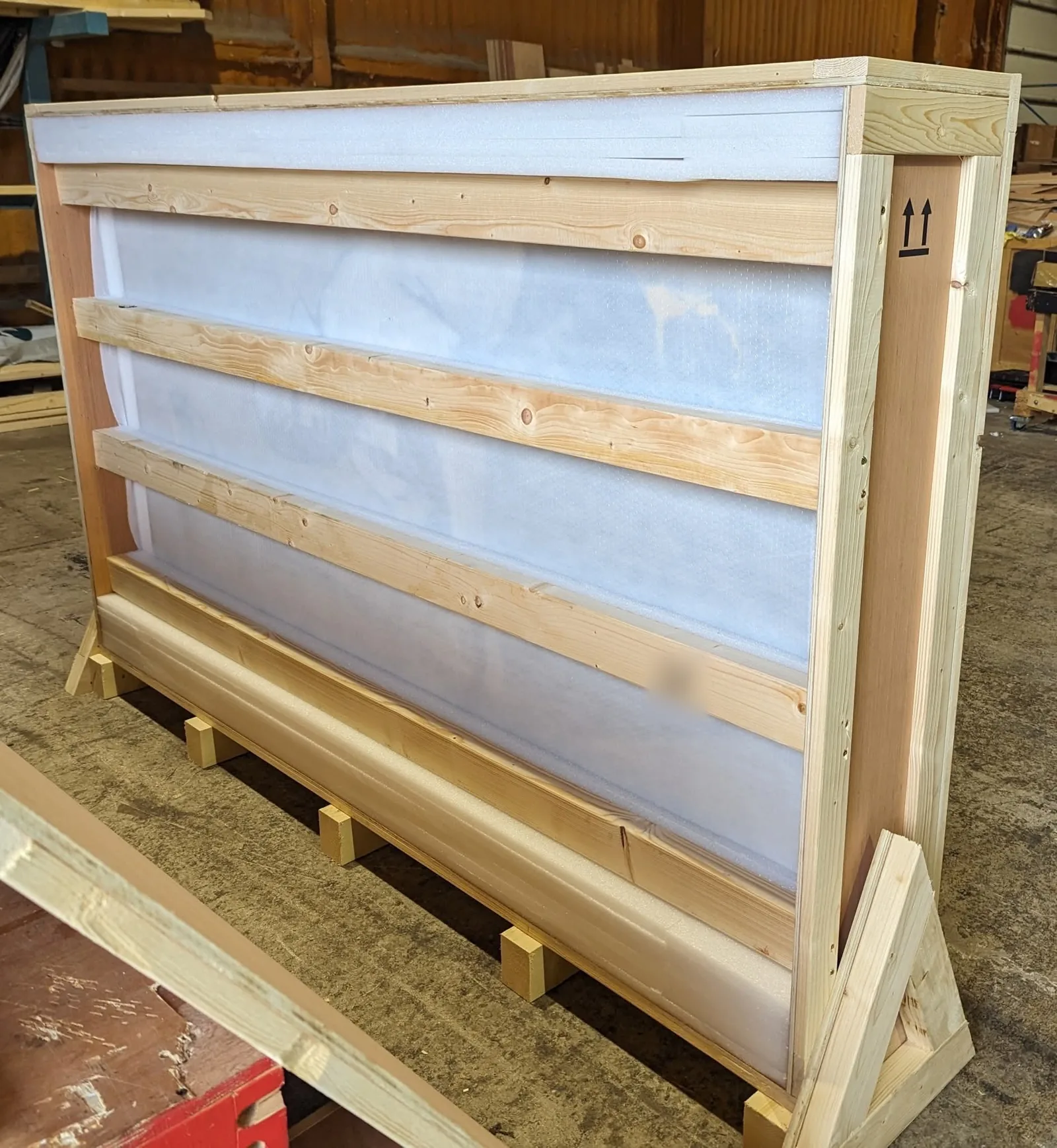
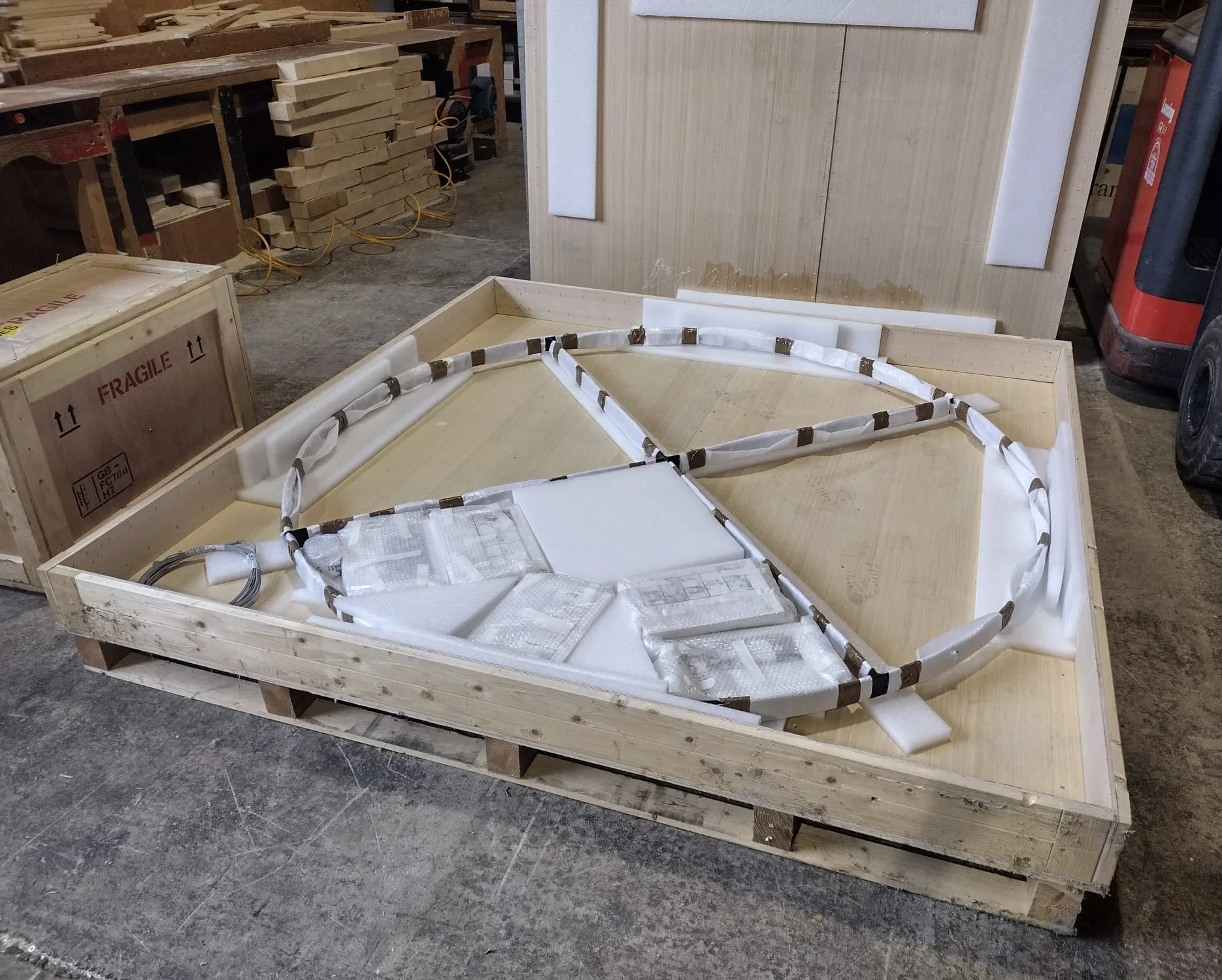
Lined all round with thick white foam, the wrapped artwork laid into it, timber battens across the top to hold it down, and the whole crate standing on A-frame side supports and skids. See also sculpture and heavy pieces.
What these jobs have in common
They look very different, but the thinking is the same.
- The crate is designed around the object: its weight, size, shape and weak points.
- Nothing can move inside. Foam, drawers, blocks or battens hold every part in its place.
- Surfaces that matter never touch the timber.
- The crate is built for how it will be handled: castors for a factory floor, skids for lifting.
- Every latch, hinge and bolt lock is fitted by hand, in-house.
Send us a photo and the measurements.
We’ll recommend the crate, the lining and the supports, and come back with a bespoke quote.
How we approach every job
- 01Understand the piece
Weight, size, shape, what it's made of and what could go wrong.
- 02Understand the journey
Where it's going, how often, how it will be lifted and moved.
- 03Design the crate
The base, the frame, the lining and what holds the piece still inside.
- 04Build it by hand
In timber and plywood, with every latch, hinge and bolt lock fitted in-house.
- 05Mark it and send it on
Fragile and This way up, ready to be handled and shipped.
More from the workshop
Not every job gets a full write-up. These are photos of other crates we've built, each one designed around what went inside it.
Angled slots hold each framed work apart, so no two frames touch. See fine art crating.
Each part of a circular art installation sits in its own cut foam cradle. See sculpture and heavy pieces.
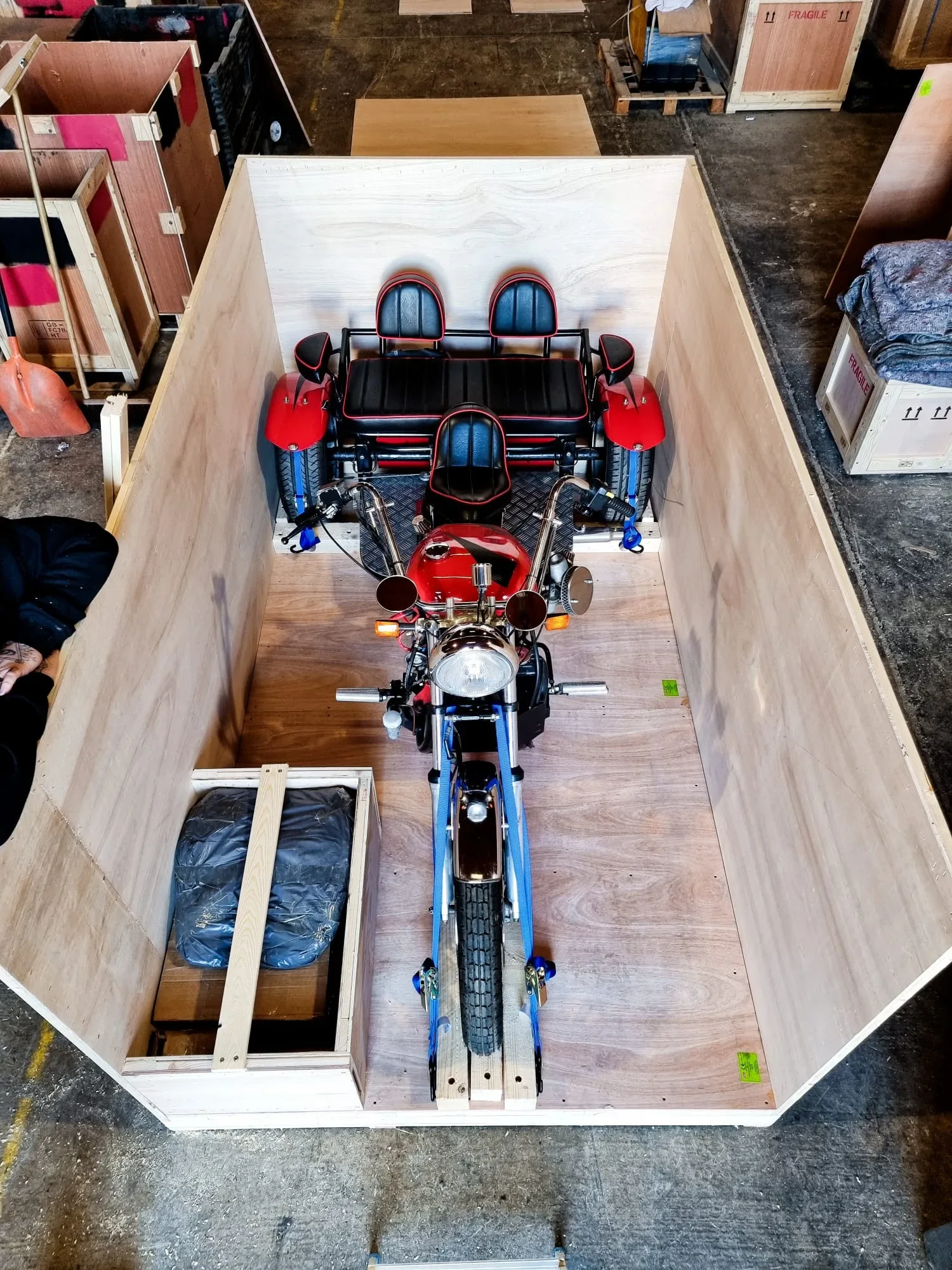
The front wheel sits in a timber chock and the trike is strapped down, with a boxed compartment beside it. See motorbikes and vehicles.
Small pieces get the same care
Size doesn't change the thinking. A single clock part, a small object or a gift gets its own space, bedded so it can't move.
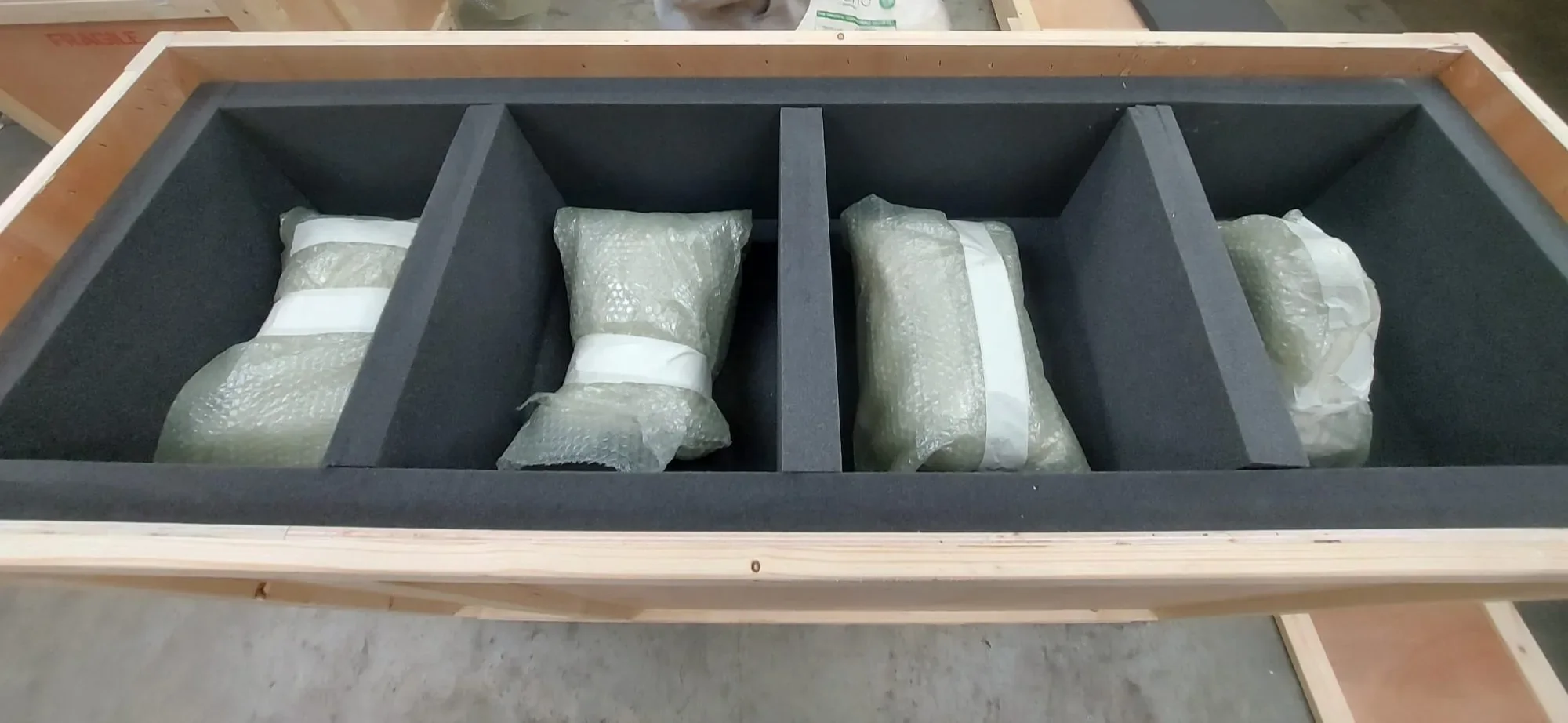
Each part of an antique clock wrapped and set in its own foam compartment. See antique clocks.
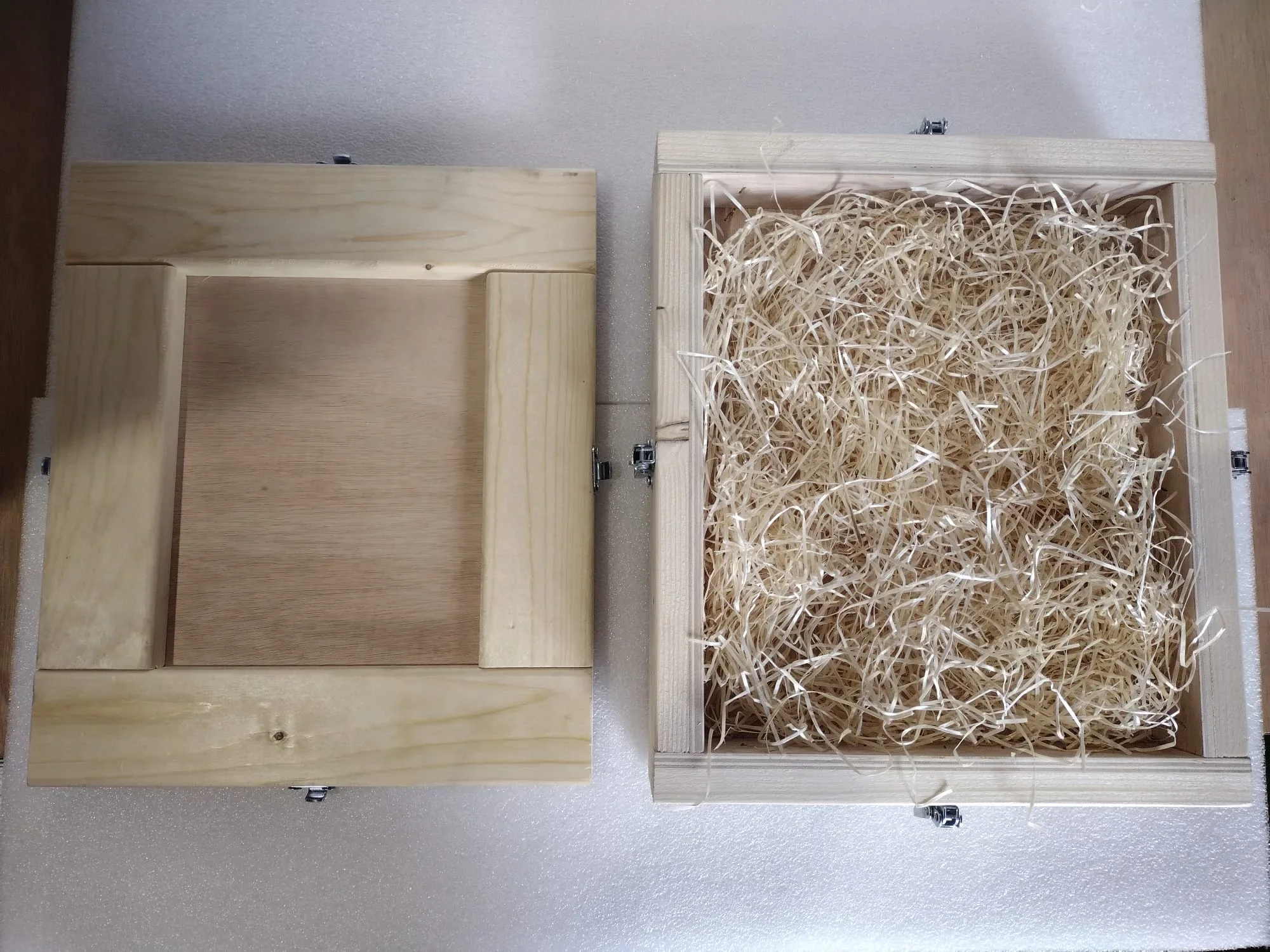
A hinged wooden box with latches, the object bedded in wood wool. See types of crate.
Why we don't name clients
Many of the people we pack for prefer to stay private, and so do the pieces they own. So we don't name clients, galleries or artists unless they've agreed to it. What we can show you is the work itself: the problem, the crate and how it was built.
More jobs will be added here as they're finished. If you'd like to see photos of work similar to yours, ask us when you request your quote.
Have a job like these?
If your parts are being damaged between sites, or you're sending something heavy, awkward or valuable, we'd like to hear about it. Tell us what it is, its size and weight, and where it's going.
- Businesses: see industrial crates and bespoke wooden crates.
- Galleries, collectors and artists: see fine art crating and shipping art to the USA.
Then request a quote, or read how it works first.
Common questions
Can I see photos of crates like the one I need? +
Yes. Ask when you request your quote and we'll show you work similar to yours.
Why don't you name your clients? +
Many of the people we pack for prefer to stay private, and so do the pieces they own. We only name clients, galleries or artists if they've agreed to it.
What's the heaviest piece you've crated? +
A concrete artwork of over 500 kg, by a world-renowned graffiti artist, for a gallery sending it to the United States. We crate any object, of any size or weight.
Do you build crates a business can use again and again? +
Yes. For a manufacturer we built drawer crates in several sizes, used again and again to move unfinished parts between its factories. See industrial crates.
Do you fit the hinges, latches and locks yourselves? +
Yes. Every latch, hinge and bolt lock is fitted by hand, in-house.
Do you only crate art? +
No. We crate art and antiques, furniture, pianos, musical instruments, motorbikes, industrial parts and anything else valuable. See what we crate.
Tell us what needs to travel.
Every quote is bespoke, based on the piece itself. Send us the details and we'll come back to you.