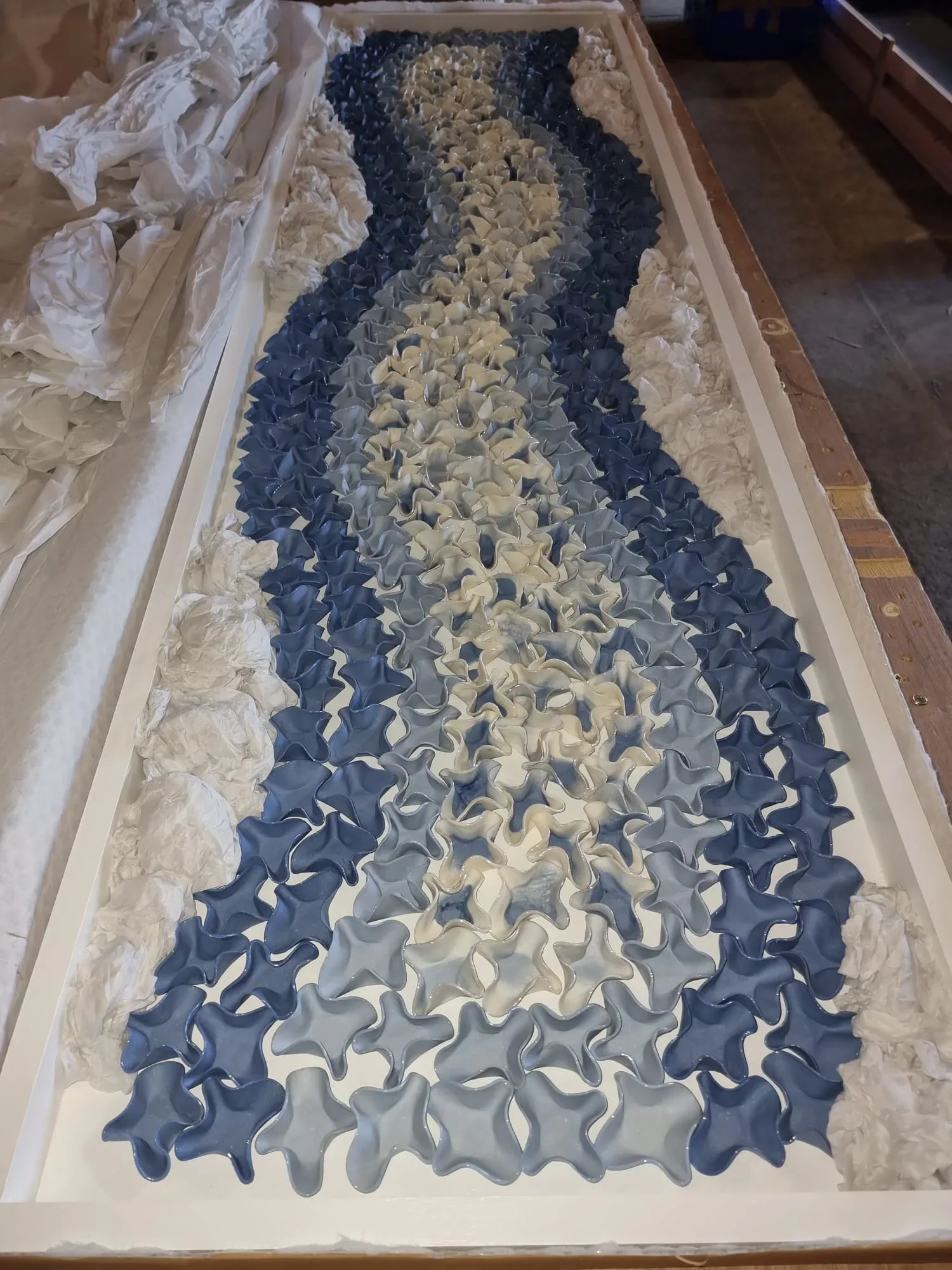
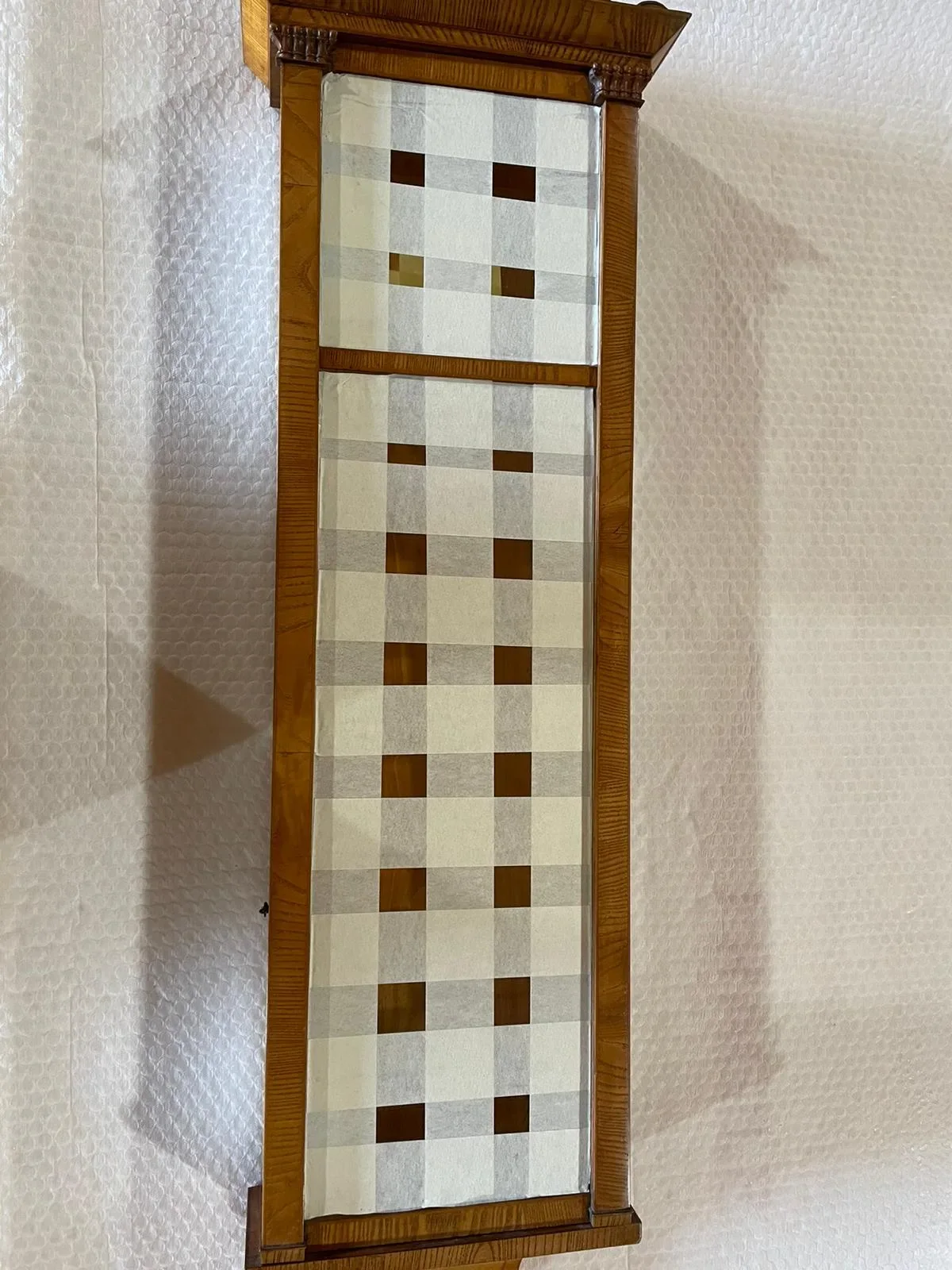
A wall installation of hundreds of small pieces, each packed in tissue
Fine art · Crating and packing

Fine art crating, packed by hand in London

Fine art crating means packing a work of art by hand and building a wooden crate around it, so the surface is protected and the piece cannot move. We crate paintings, works on paper, sculpture and installations for collectors, galleries and artists in London, and ship them to the US, Europe and anywhere else.

Inside the crate

Three linings, chosen for your piece

Every crate is lined to suit what's going in it. We use three materials, each in 25 mm, 50 mm, 75 mm and thicker.

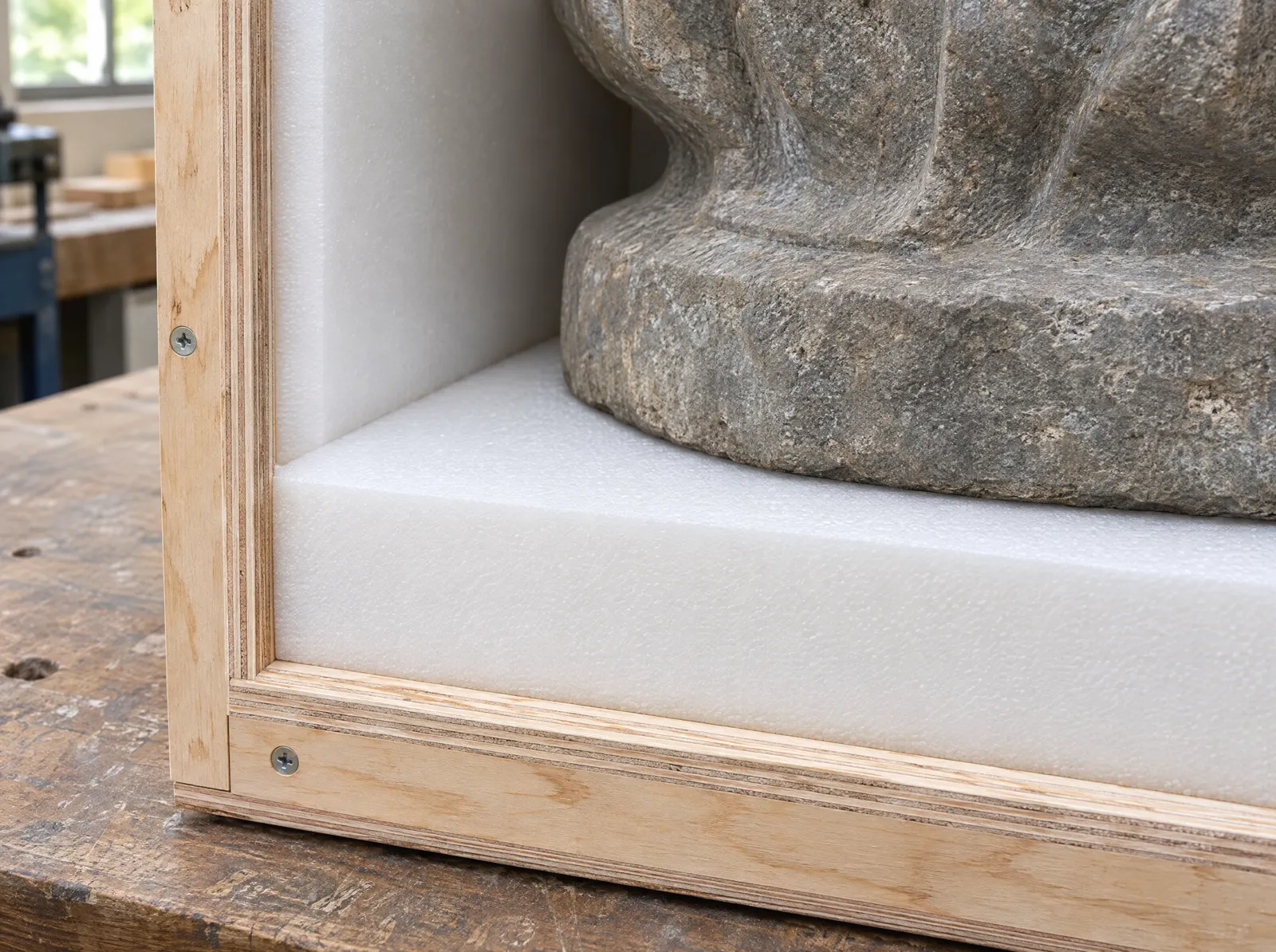
The corner of a crate lined with thick white high density foam, a heavy stone piece resting on it
Firm££Similar to HLB22

High density foam

What it does
Dense and firm. It holds its shape under weight, so heavy pieces stay put instead of sinking in.
Best for
Heavy and solid pieces: stone, bronze, sculpture, machinery parts, and the blocks and battens that hold things still.
25 mm50 mm75 mmand thicker
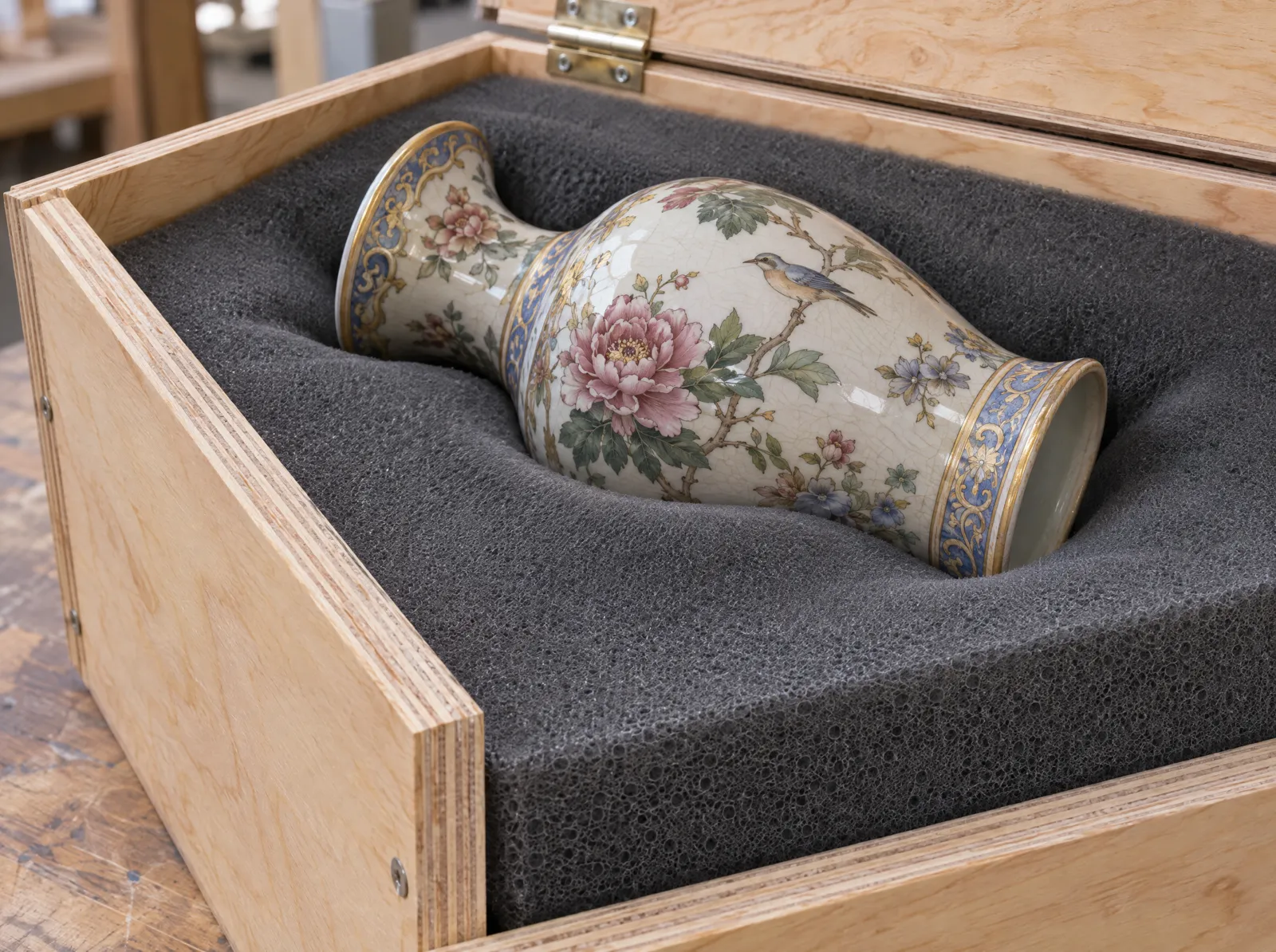
The corner of a crate lined with charcoal grey soft foam, a porcelain vase resting gently in it
Soft££Similar to high density

HLB22 soft foam

What it does
Lighter and softer. It gives a little, cushioning knocks and vibration around delicate surfaces.
Best for
Fragile pieces: ceramics, glass, gilded and carved frames, and anything that needs a gentle touch.
25 mm50 mm75 mmand thicker
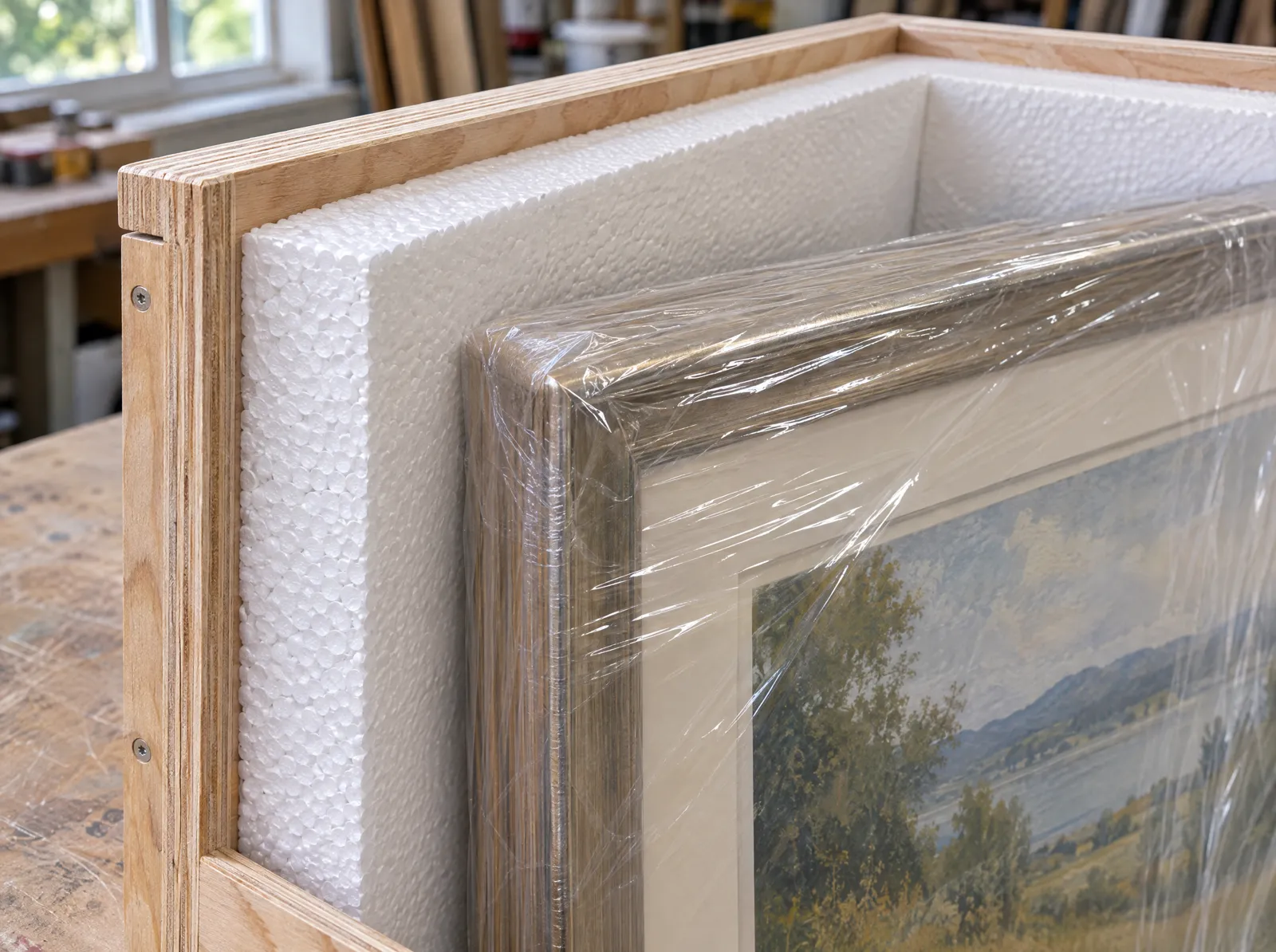
The corner of a crate lined with white polystyrene boards, a wrapped framed picture standing against it
Rigid and light£Most affordable

Polystyrene

What it does
Rigid, very light boards. They fill space and keep a lining firm without adding much weight.
Best for
Lighter pieces and flat works, and lining larger crates where weight matters.
25 mm50 mm75 mmand thicker

Swipe to compare all three →

Polystyrene is the most affordable lining. High density foam and HLB22 cost about the same as each other. Your quote says which lining and thickness we recommend for your piece, and why, so you only pay for the protection it needs.

01

What is fine art crating?

A fine art crate is a wooden crate made for one work, or a small group of works, with the inside fitted to the piece. It's the safest way to send art that is valuable, fragile, heavy or going a long way.

The crate does three jobs. It stops the work moving, it keeps knocks and weather away from it, and it means nobody handling the shipment ever touches the art itself. A box can manage the first job on a short trip. Only a crate does all three across borders and through several pairs of hands.

Not every piece needs a crate. Our guide to crate or box helps you decide, and we'll always tell you honestly if something less is enough.

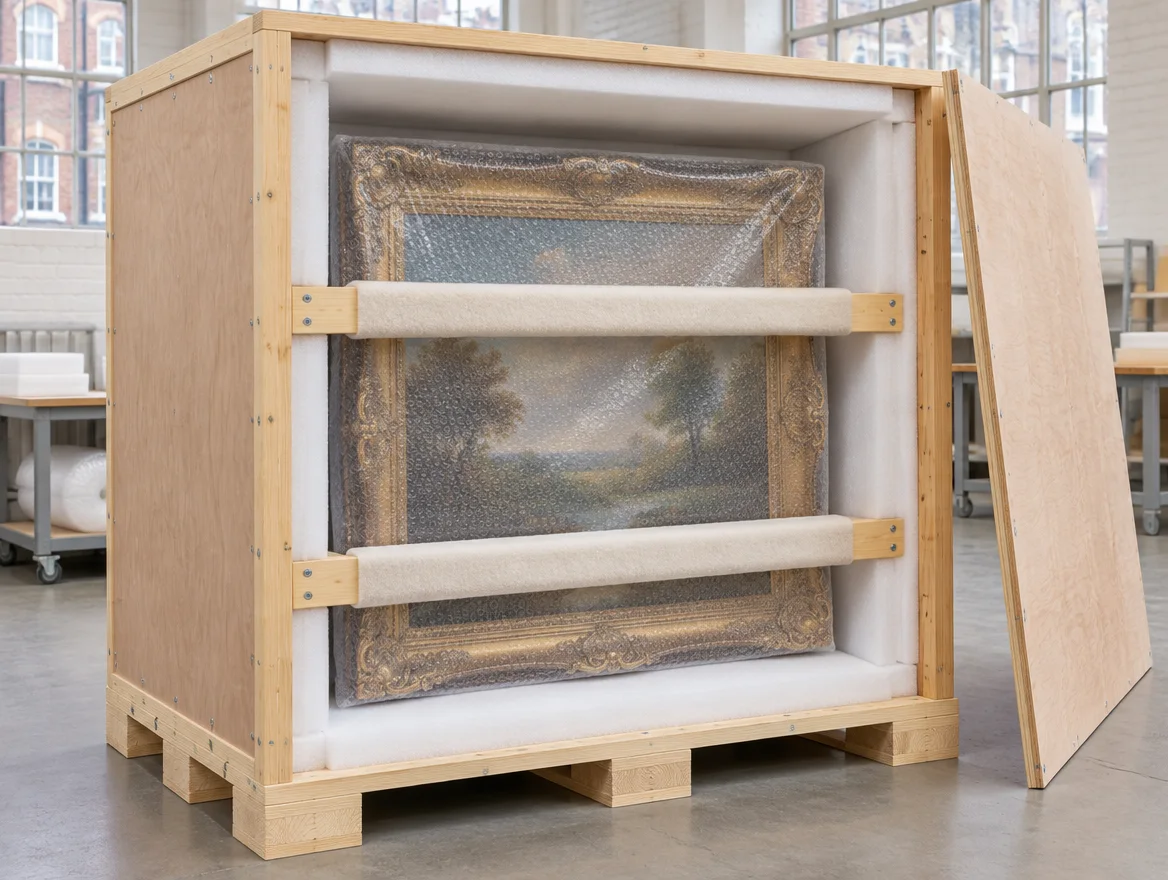
A wooden crate with its front panel off, lined with white foam, a framed painting held still by padded battens
Lined with foam, the work held still by padded battens
02

How we pack a work of art

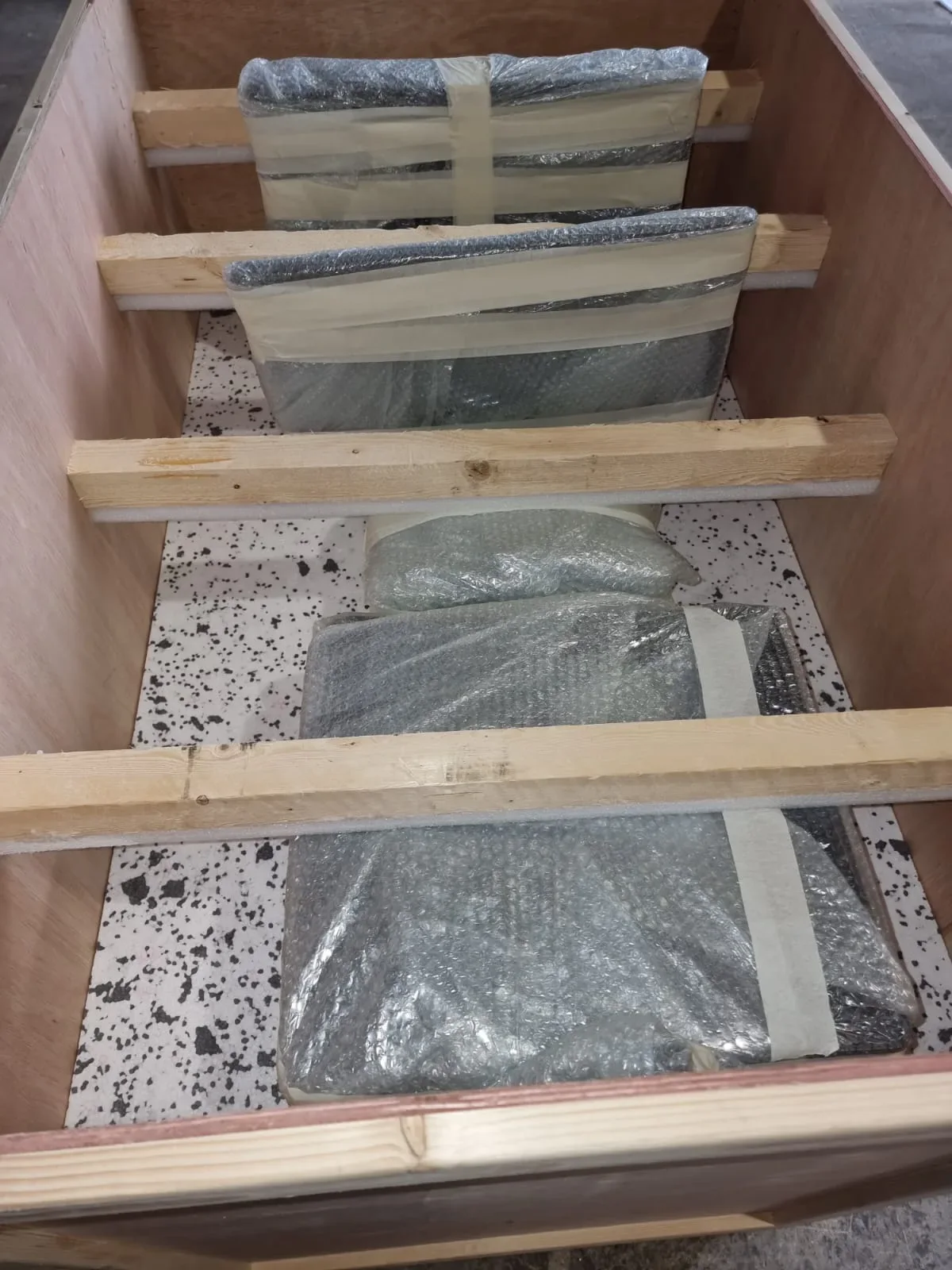
Wrapped flat works held in a crate by timber battens faced with foam
Foam-faced battens hold flat works still
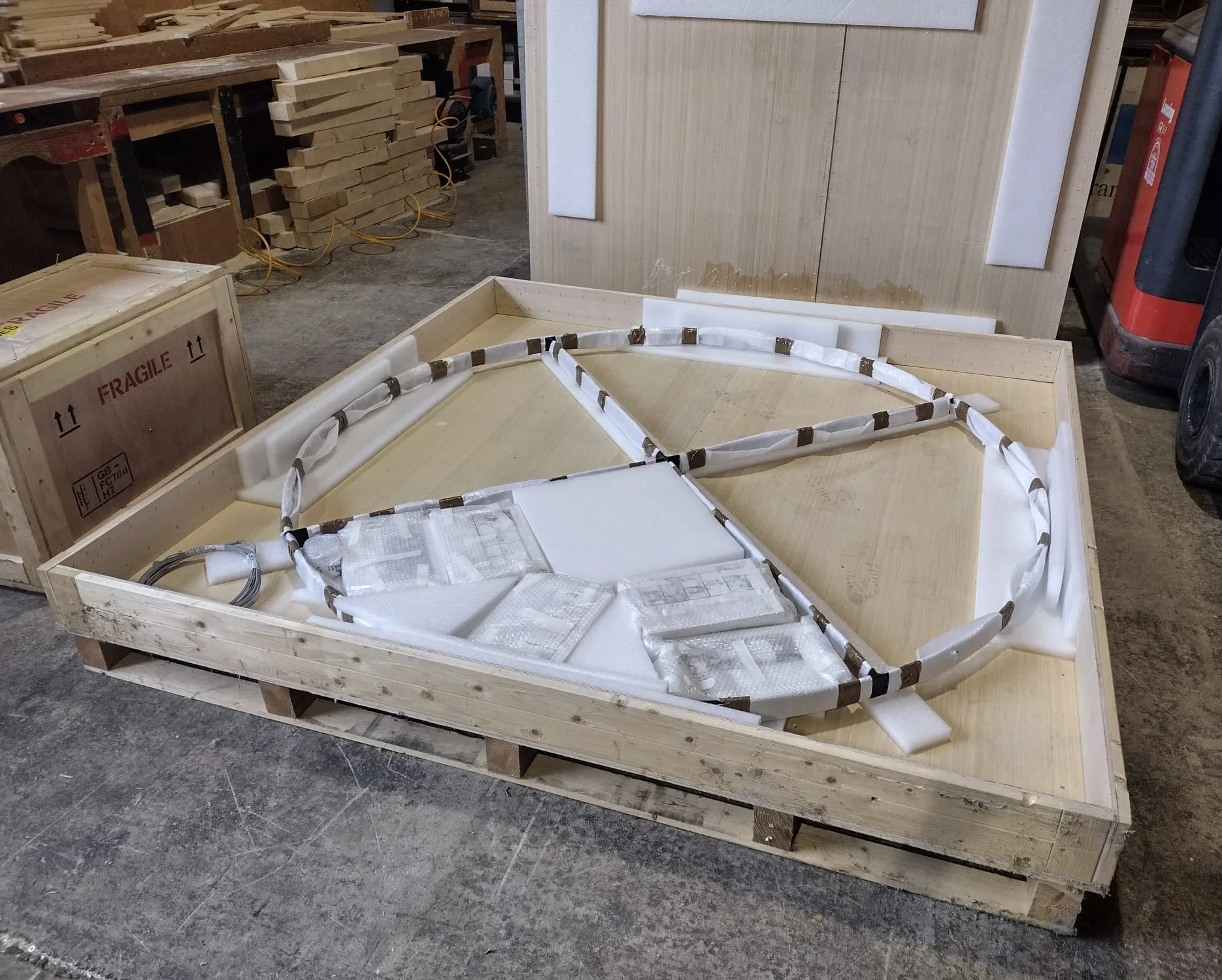
A circular art installation packed in custom-cut foam cradles
An installation held in cut foam cradles
  1. 01Tissue paper first

    The surface is wrapped in tissue paper first, so nothing rough touches it. Bubble wrap goes on over that, never straight onto a painted surface.

  2. 02Glass and corners

    Glass is taped in a lattice so that if it cracks, the pieces stay in place. Corners and carved edges are padded.

  3. 03Padding that fits

    Foam linings, foam blocks or padded battens hold the piece so it can't move or rub.

  4. 04A crate built to measure

    Timber frame and plywood panels, sized to the work, with a base to lift it by.

  5. 05Closed and marked

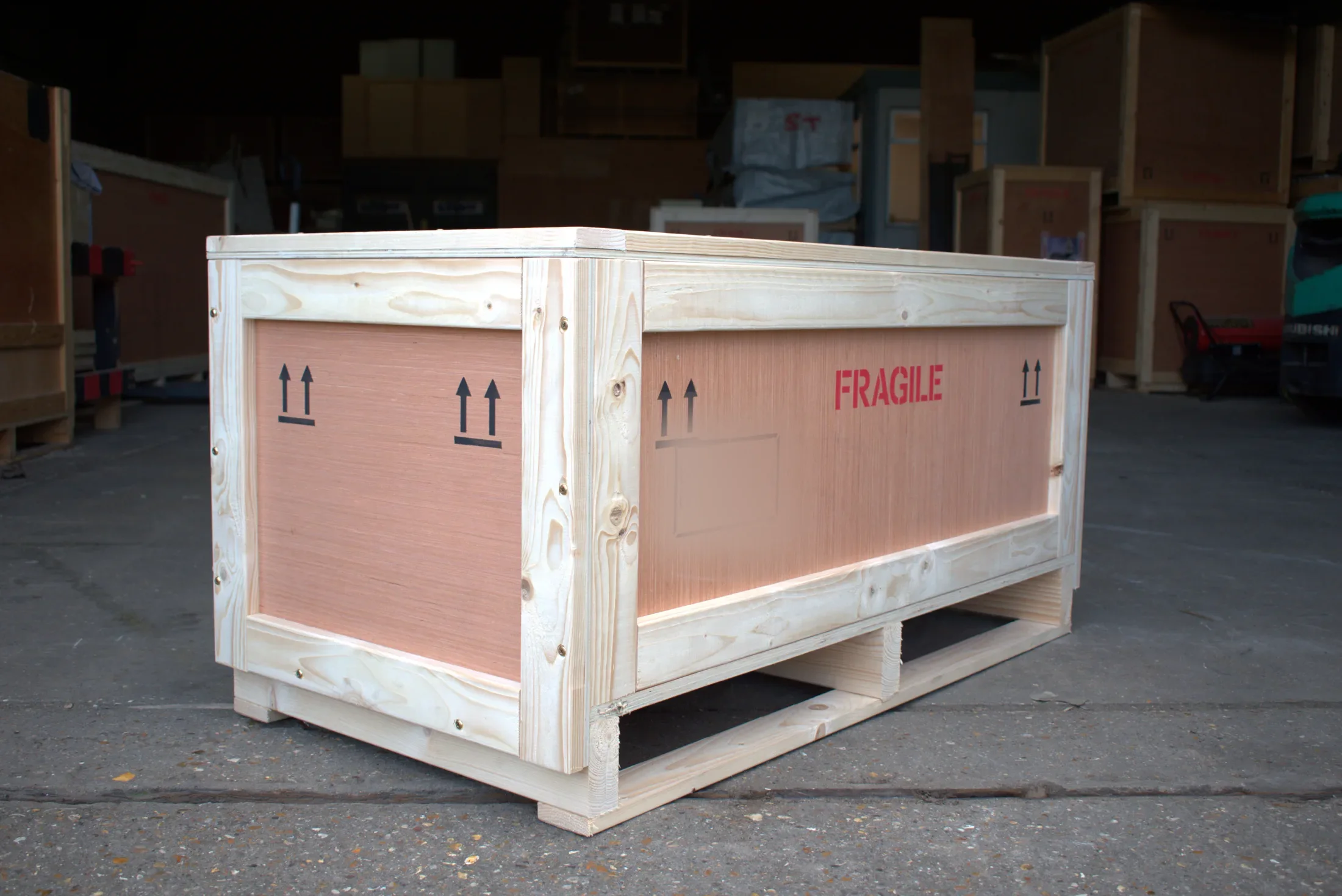
    Screwed shut and marked Fragile, This way up and Keep dry, so it's handled the right way up.

03

How we crate different kinds of artwork

Each kind of work fails in its own way, so each is packed differently.

More detail for each: paintings and framed works, mirrors and glass, sculpture and heavy pieces.

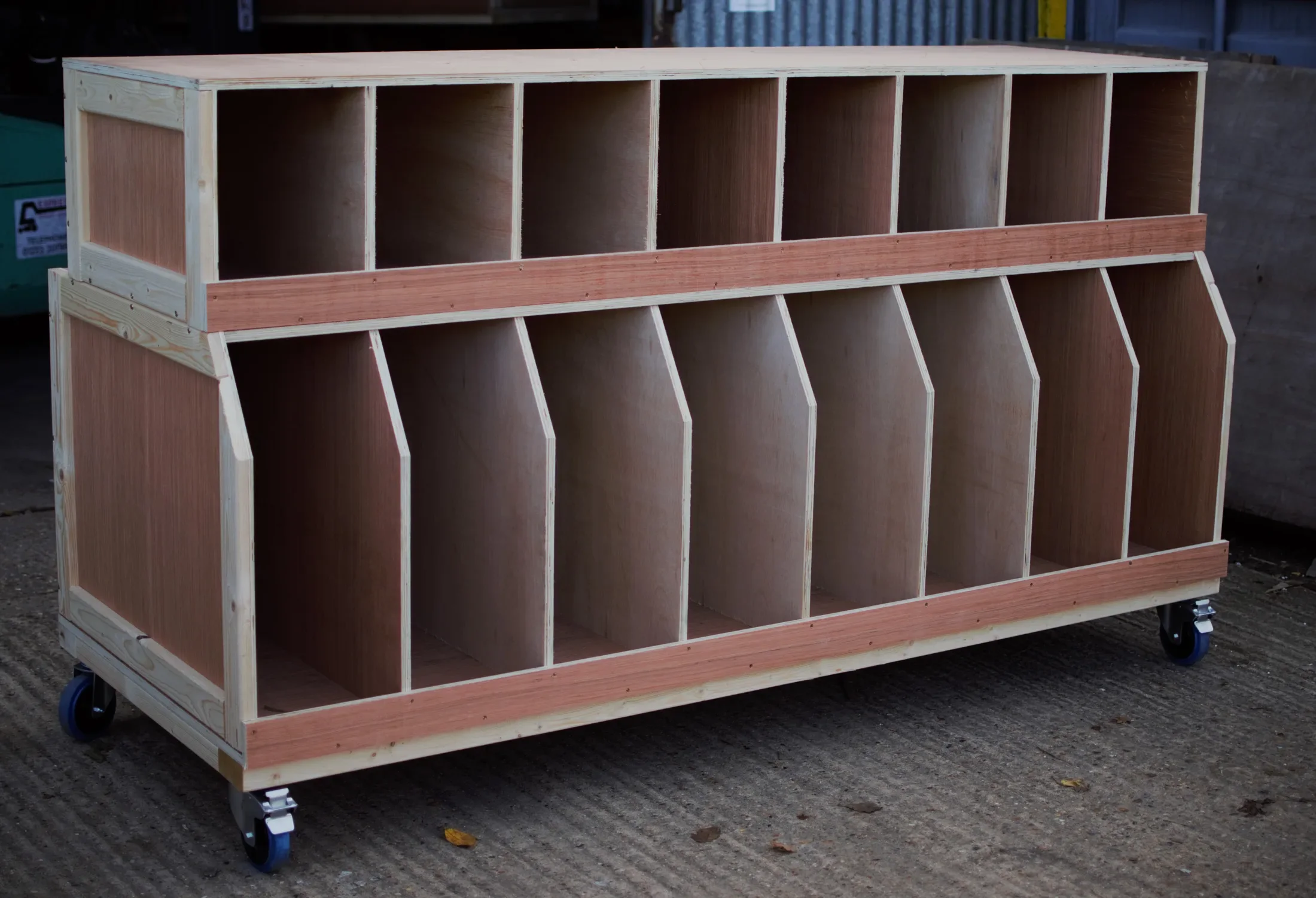
A mobile rack crate with angled slots for framed works
A rack crate with a slot for each framed work
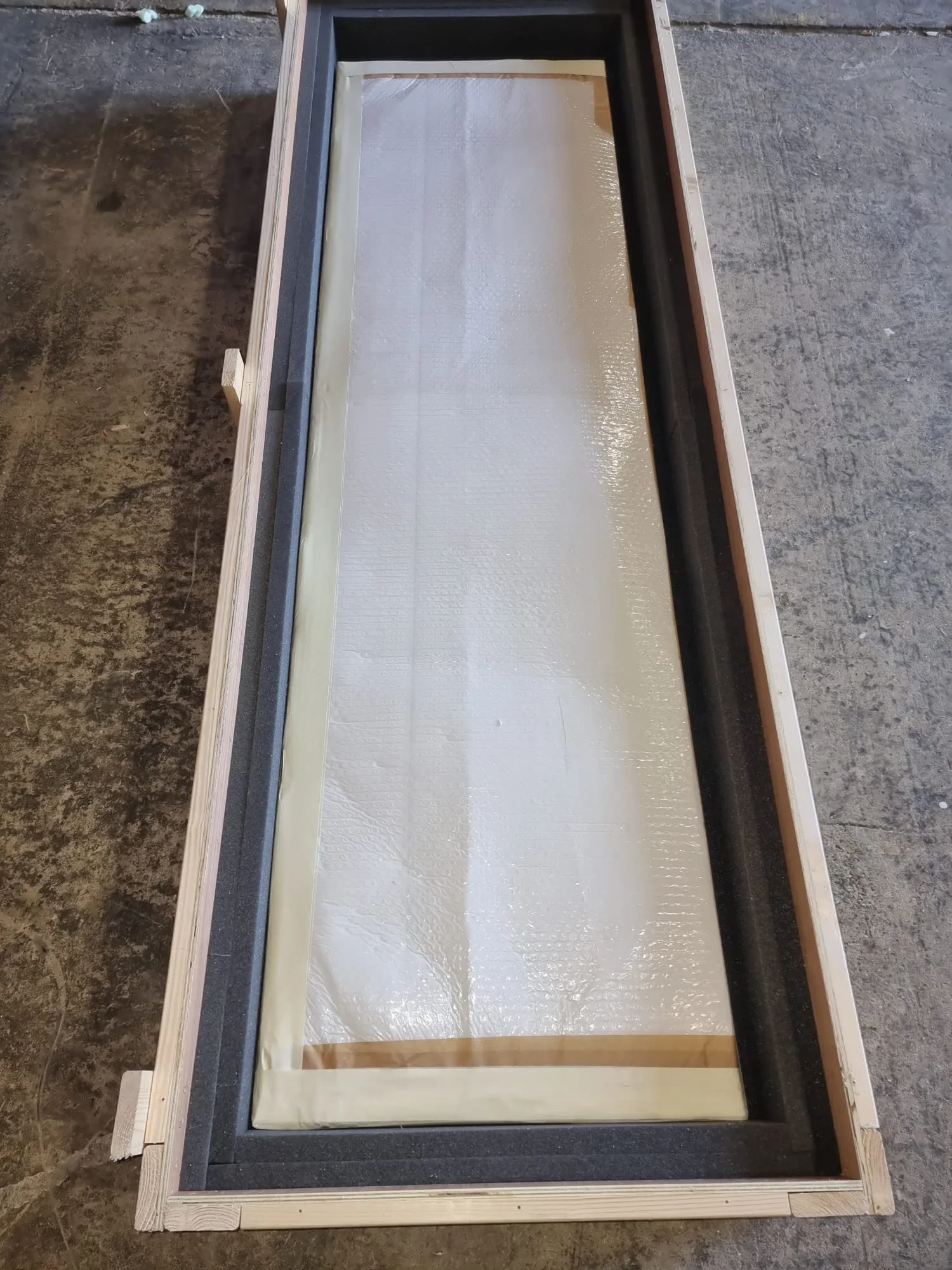
A long painting resting in a foam-lined crate
A long painting in a foam-lined crate
The workMain riskHow it's held
Paintings on canvasPressure or a knock on the canvas; rubbing on the paintTissue paper first, then padded battens on the frame, never on the canvas.
Glazed works and mirrorsGlass cracking and cutting the workGlass taped in a lattice; padded battens; weight along the whole bottom edge.
Several framed worksPictures knocking into each otherA rack or pocket crate with a slot for each one.
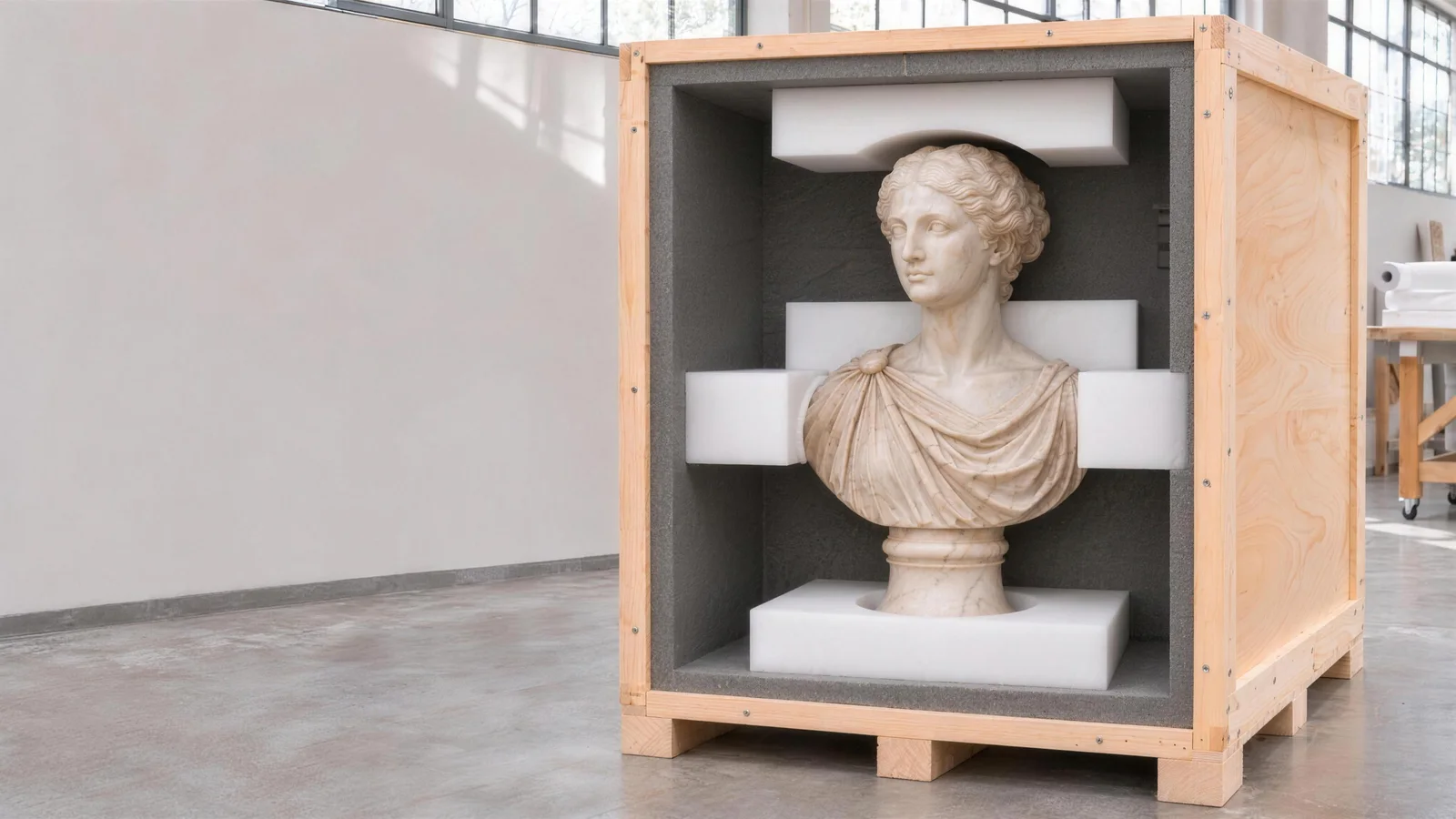
Busts and sculptureShifting, and weight on a fragile pointHigh density foam blocks around the base and body.
Installations of many partsSmall parts moving and chippingCut foam cradles, a place for every part.
Stone, concrete, bronzeSheer weight in handlingA heavy duty crate with a strong base and thick foam all round.
04

Choosing a lining for artwork

All three come in 25 mm, 50 mm, 75 mm and thicker. A small framed print might need 25 mm; a heavy carved frame might need 75 mm of HLB22. Your quote says which we recommend for your piece and why, so you only pay for the protection it needs.

A marble bust held by white high density foam blocks in a crate lined with charcoal grey foam
Firm white foam blocks hold a bust, with grey foam lining the crate
High density foam

White and firm. For heavy pieces, sculpture and busts, and for the blocks that hold them.

HLB22 soft foam

Charcoal grey and soft. For fragile surfaces: ceramics, glass, gilded and carved frames.

Polystyrene

Rigid and light. For lighter pieces and flat works. The most affordable lining.

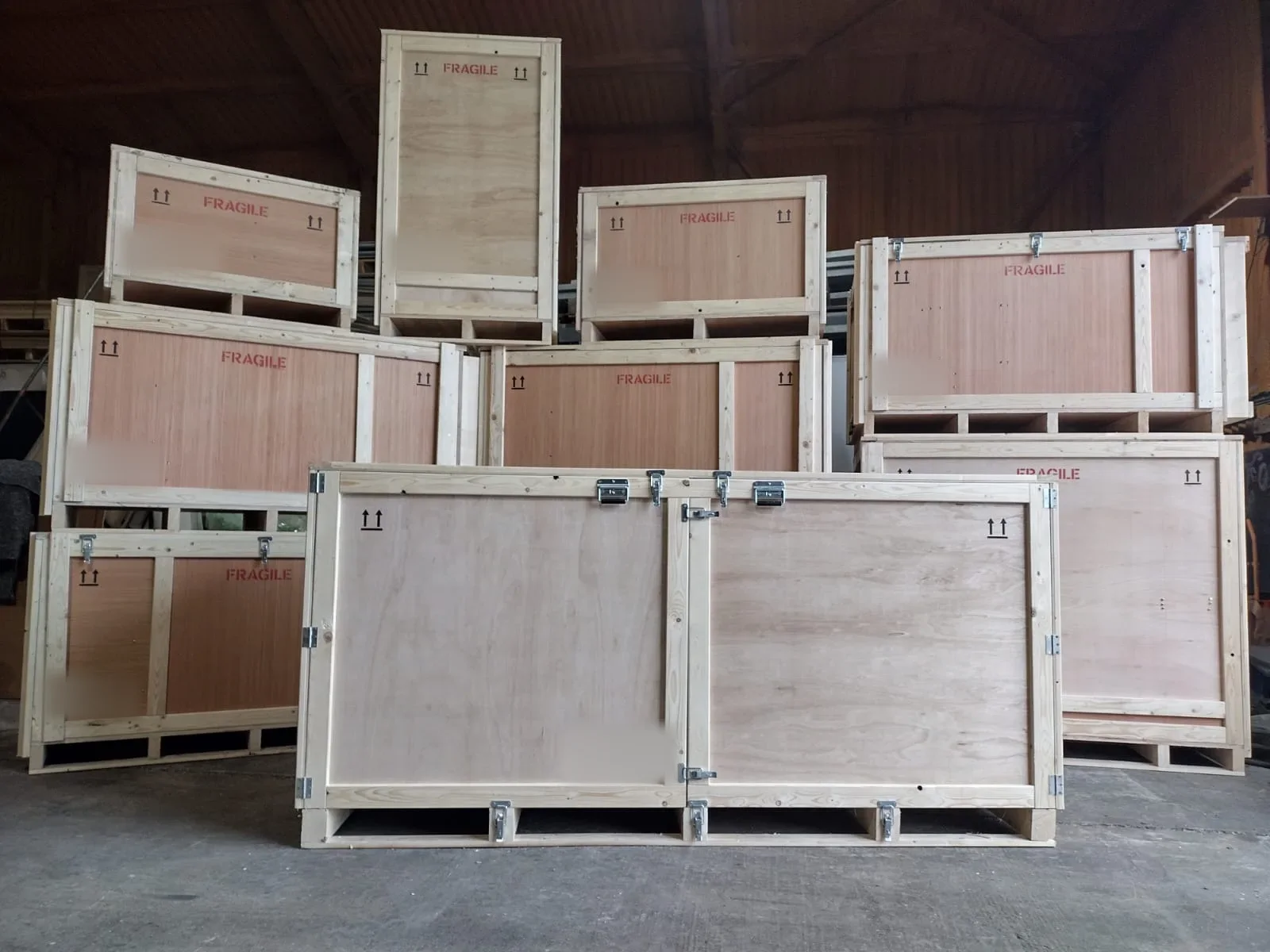
Finished bespoke timber crates stacked in the workshop
Not sure what your piece needs?

Send us a photo and the measurements.

We’ll recommend the crate, the lining and the supports, and come back with a bespoke quote.

05

Humidity, temperature and paintings

Paintings on canvas and panel react to the air around them. Canvas and wood swell and shrink as humidity changes, and paint layers can crack when they do. Conservators, including the National Gallery, say that keeping conditions stable matters as much as the exact level.

A well-built, lined crate slows down sudden changes, which is one more reason to crate rather than box a valuable painting. A few simple habits help too:

  • Don't leave a crated painting in a cold van or a hot loading bay longer than needed.
  • At the other end, let the crate settle to the room for a while, often overnight, before opening it.
  • Unpack slowly and keep the packing materials until the work is checked.

If your work is especially sensitive, a panel painting for example, tell us when you request your quote and ask us what we'd suggest for it.

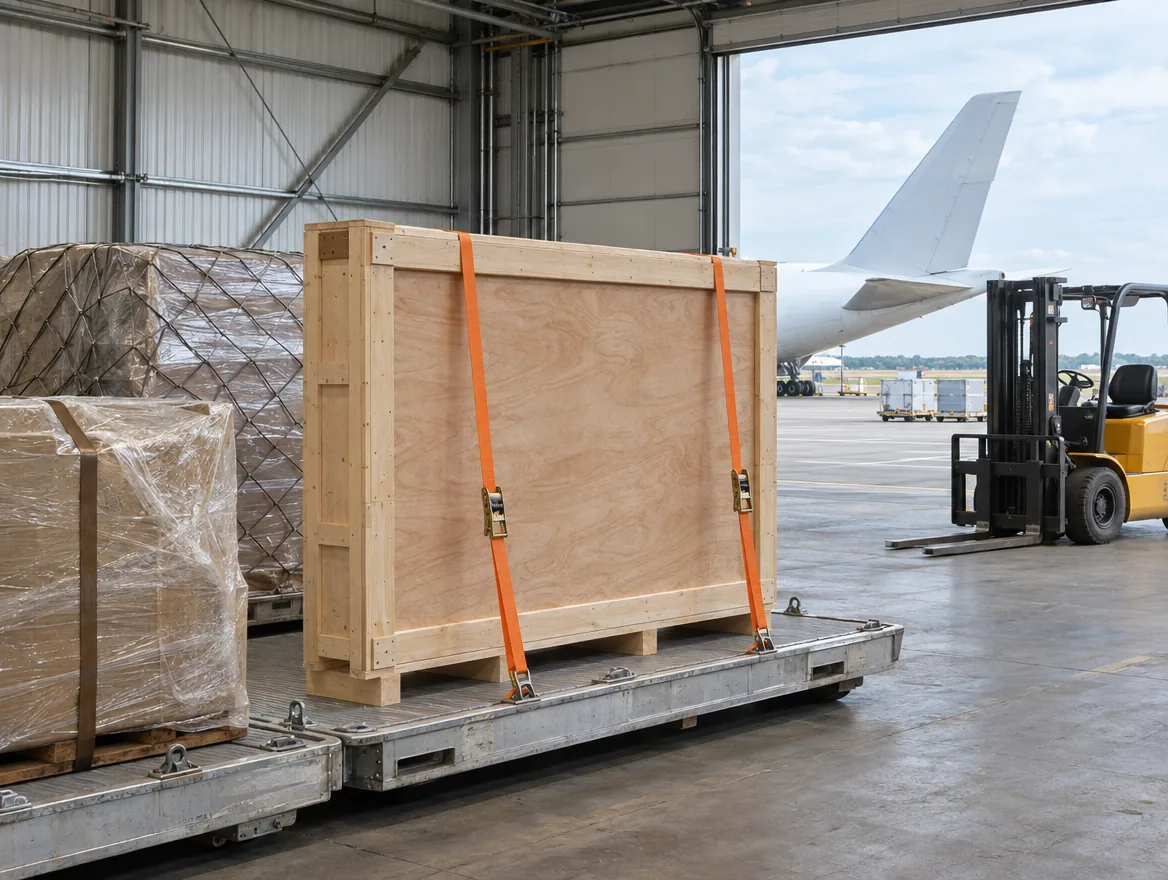
A finished timber and plywood export crate on its own skid base, marked Fragile and This way up
A closed, lined crate slows down sudden changes in the air
06

Shipping fine art abroad: what to check

Crating is only part of an international move. These are the points most people need to check. We don't handle customs paperwork, so the export, import and licence points below are for you, your shipper or a customs agent to sort. We're not tax or legal advisers, so always confirm the current position for your piece.

  • The crate. Solid wood packaging usually has to meet ISPM 15 (heat treated and stamped). Plywood is usually exempt. See the ISPM 15 guide.
  • US import. Original paintings and drawings done entirely by hand fall under chapter 97 of the US tariff and generally enter duty free, but must still be declared correctly. See shipping art to the USA.
  • EU import. Since Brexit, art going to the EU is an import there. Import VAT on art varies by country, as each member state sets its own rate. See shipping art to Europe.
  • UK export licence. Older, high-value cultural items may need a licence from Arts Council England before they leave. Thresholds depend on the kind of object, its age and its value.
  • Protected materials. Frames or objects with ivory, tortoiseshell or some rosewoods can need permits under CITES, and the UK restricts dealing in elephant ivory under the Ivory Act. You or your agent will need to check what applies.
  • Insurance. Transit insurance is available for every export, bought by you for the value of the piece. See insurance.

We don't handle customs paperwork. Export declarations, licences and import entries are arranged by you, your shipper or a customs agent. Check the current rules before it ships, as they change. What we do is make sure the crate is ready for the journey: clearly labelled and easy to open and close again if customs want to look inside.

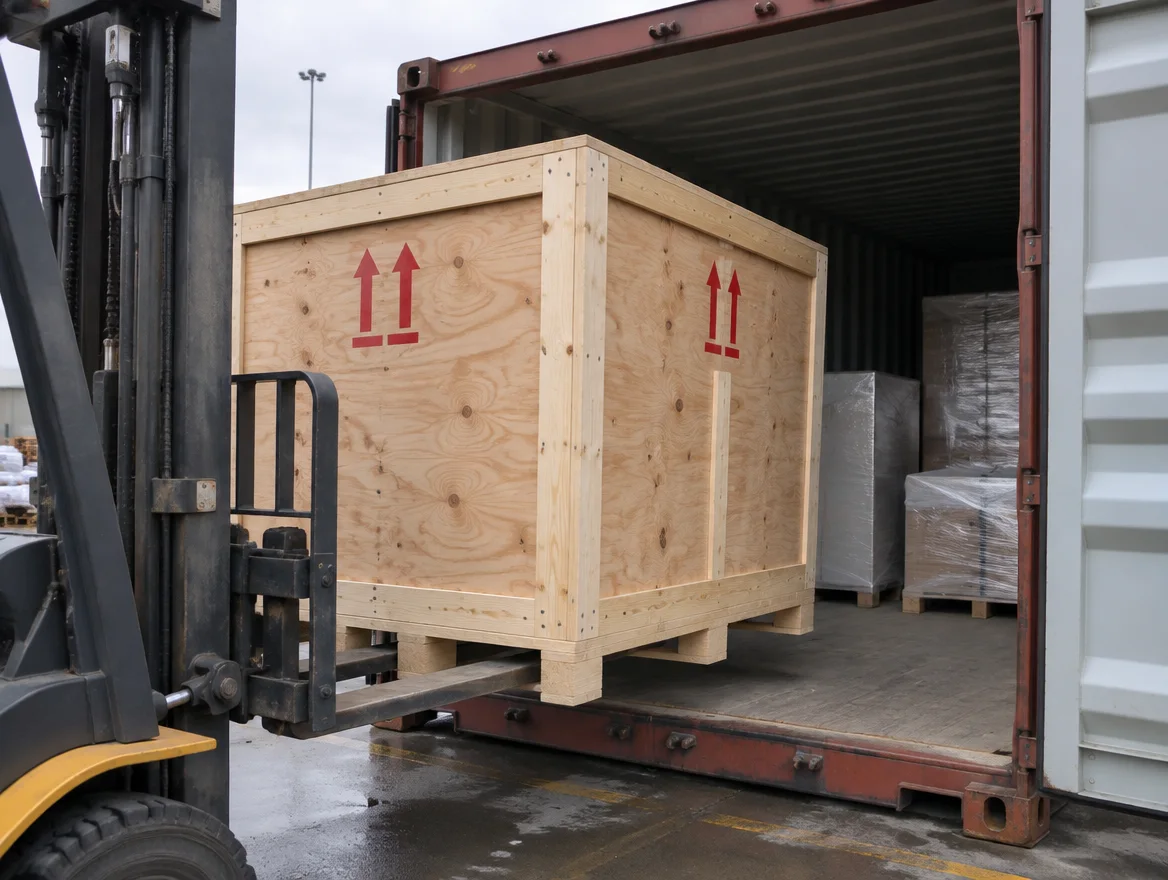
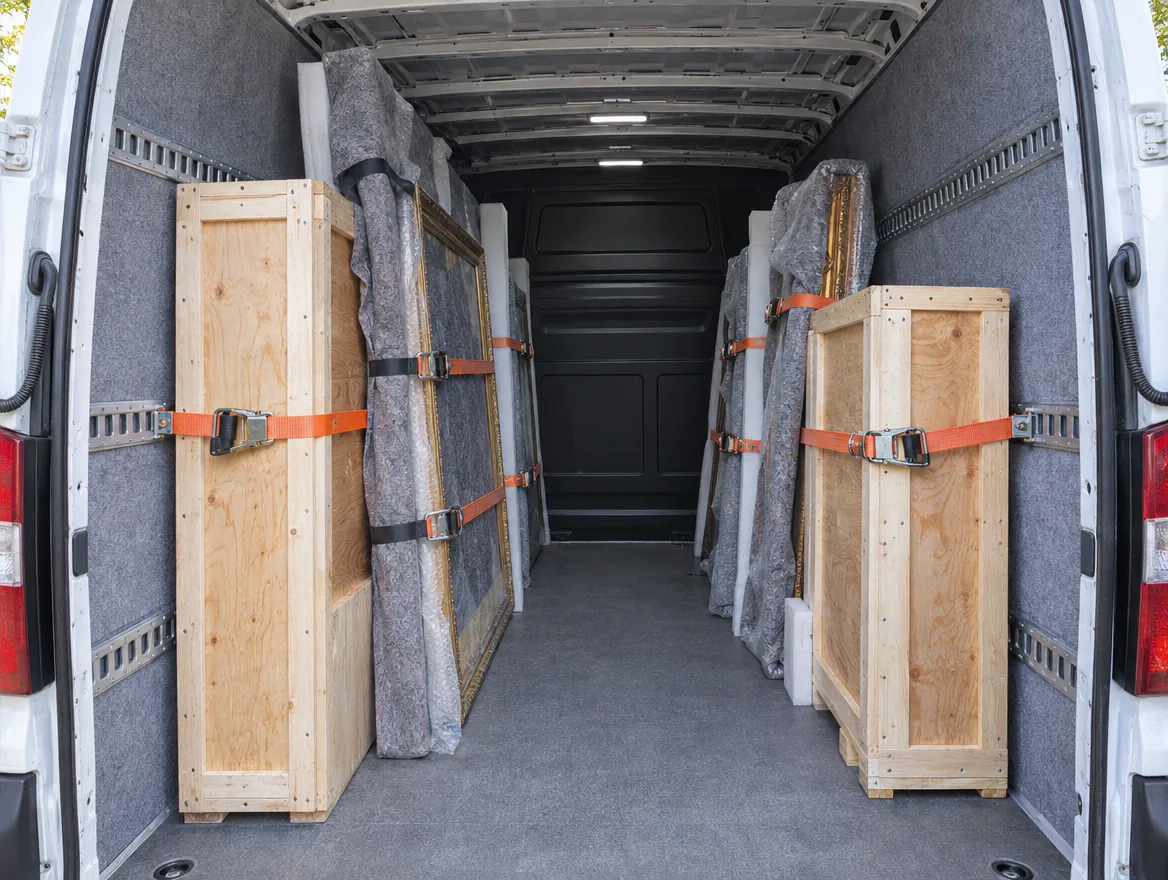
A plywood crate marked with red This way up arrows being loaded into a shipping container by forklift
A crate on its way into a shipping container
07

Recent work: 500 kg of street art, crated for the US

A gallery needed to send a piece by a world-renowned graffiti artist to the United States. It was painted on a section of concrete weighing over 500 kg, with an unusual shape and a painted surface that had to be protected. Normal art packing wasn't an option.

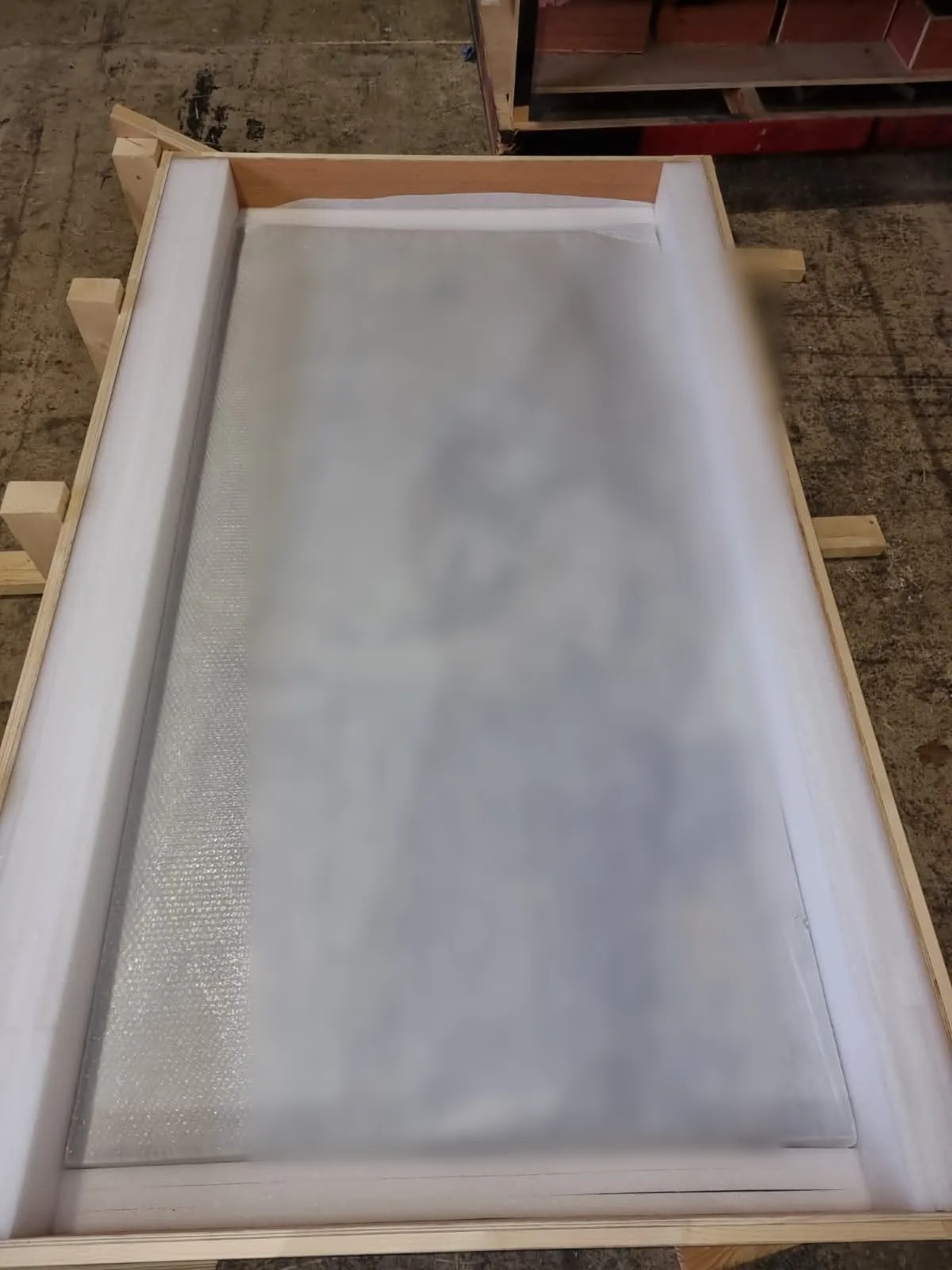
We engineered a heavy duty crate around it. The crate was lined all round with thick white foam, the wrapped piece was laid into it, and timber battens went across over more foam to hold it down. The finished crate stands upright on A-frame side supports and skids. Read the full job.

A wrapped concrete artwork lying in a crate, surrounded by thick white foam on every side
Wrapped, then laid into thick foam on every side
08

Who we crate for

Private collectors, galleries, antique dealers and artists. Whether it's one painting going to a buyer in New York or an installation of hundreds of pieces, it gets the same care.

The specialist who collects your piece is the one who packs and crates it. Fewer hands, and one person to call if you have a question. We work 9am to 4pm, 7 days a week, and we're in and out of London regularly making collections.

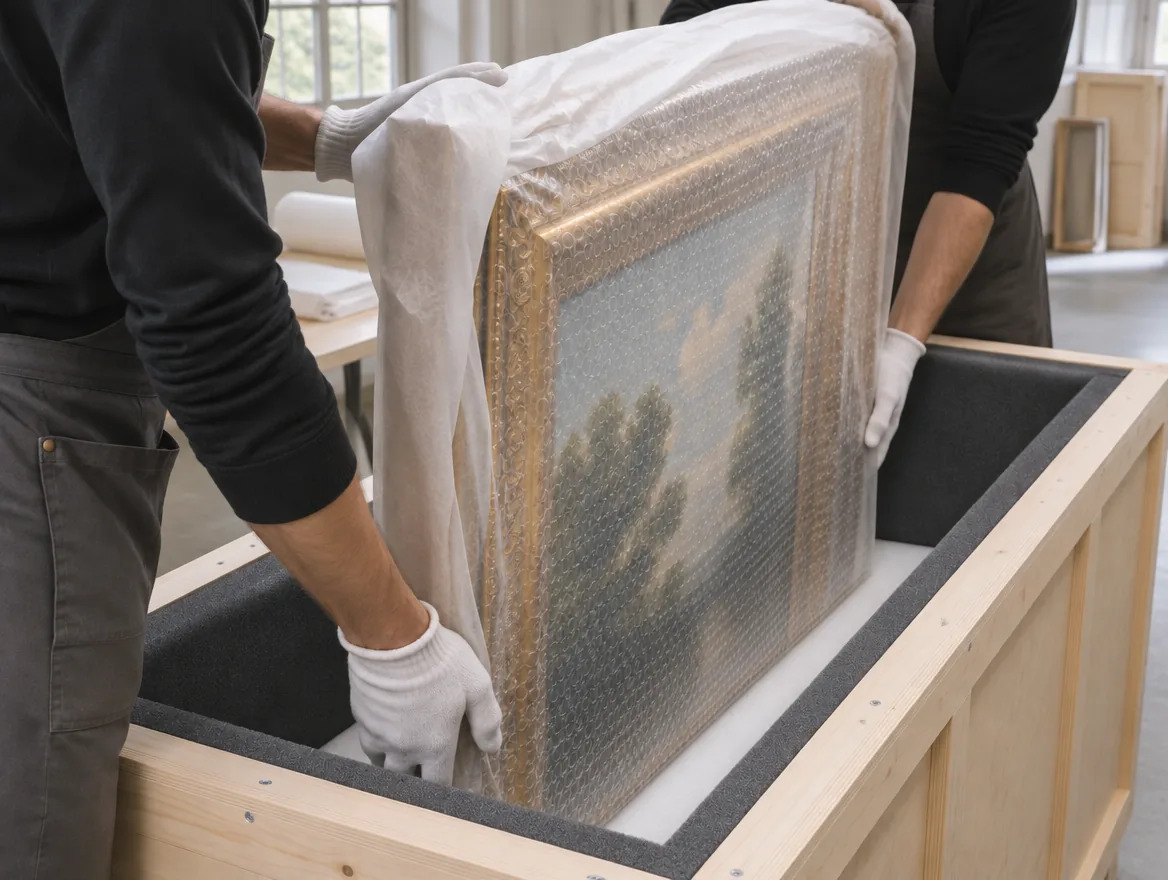
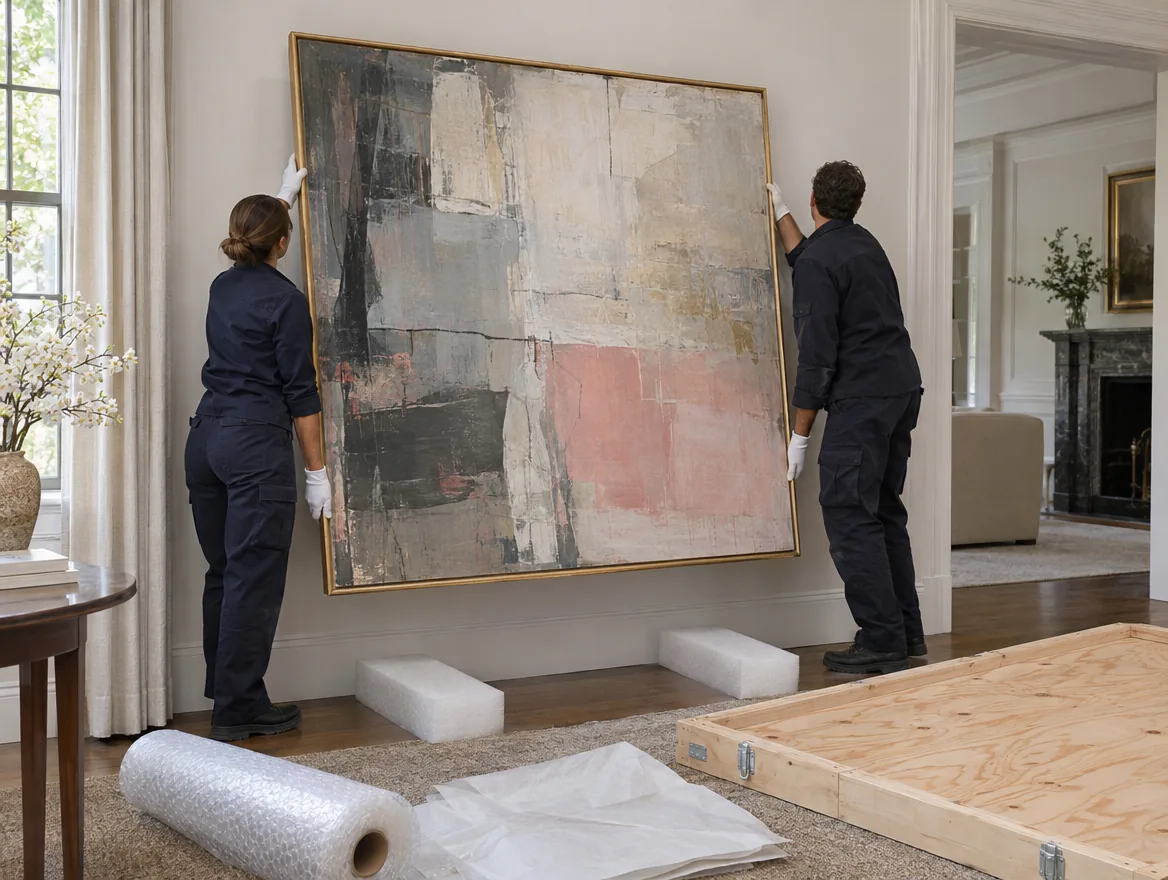
Two packers in white gloves lowering a wrapped framed painting upright into a crate with charcoal soft foam on the walls and firm white foam along the bottom
A wrapped painting lowered into its foam-lined crate
09

What to send us for a fine art crating quote

  • Photos of the work, front and back, and of the frame
  • Size including the frame, and the weight if you know it
  • What it's made of: oil on canvas, panel, paper under glass, bronze, stone
  • Anything fragile: loose flakes, gilding, carved edges, glass
  • Its value, for transit insurance
  • Collection and delivery addresses, and access at each end
  • When it needs to arrive

Then request your quote. It's worth taking your own dated photos of the work before it's collected, so you have a record of its condition.

A gloved hand photographing the corner of a gilded frame with a phone, a ruler laid beside it for scale
Your own dated photos are a record of the work’s condition

Common questions

What is fine art crating? +

Packing a work of art by hand and building a wooden crate around it, sized and lined for that piece, so it's protected and cannot move in transit.

What's the safest way to ship a painting? +

For anything valuable or fragile, a crate built to the painting's size, with the surface protected and padding that stops it moving. Our crate or box guide explains when a crate is worth it.

Do you put bubble wrap on paintings? +

Not straight onto a painted surface. The surface gets tissue paper first, and bubble wrap or other padding goes outside that or onto the frame.

How do you pack a picture with glass? +

The glass is taped in a lattice so that if it cracks, the pieces stay in place. The frame is padded and held by padded battens inside the crate.

What do you line your crates with? +

High density foam, HLB22 soft foam or polystyrene, in thicknesses from 25 mm, 50 mm and 75 mm upwards, chosen for the piece. Polystyrene is the most affordable; high density foam and HLB22 cost about the same.

Does original art pay duty going into the US? +

Original paintings and drawings done entirely by hand generally enter the US duty free under chapter 97 of the US tariff, but they still have to be declared correctly. Check the current position for your piece before it ships.

Does my painting need an export licence? +

Most don't. Older, high-value cultural items can need a licence from Arts Council England, depending on the type of object, its age and its value. We don't apply for licences, so you, your shipper or a customs agent will need to check before it ships.

Is our piece insured in transit? +

Transit insurance is available for every export. It's bought by you, job by job, so the cover matches the piece being shipped. We also have public and product liability insurance.

Where do you ship to? +

A lot of our crates go to the United States and Europe, and we can give you options for anywhere in the world.


Tell us what needs to travel.

Every quote is bespoke, based on the piece itself. Send us the details and we'll come back to you.

Request a quote
Request a quote