

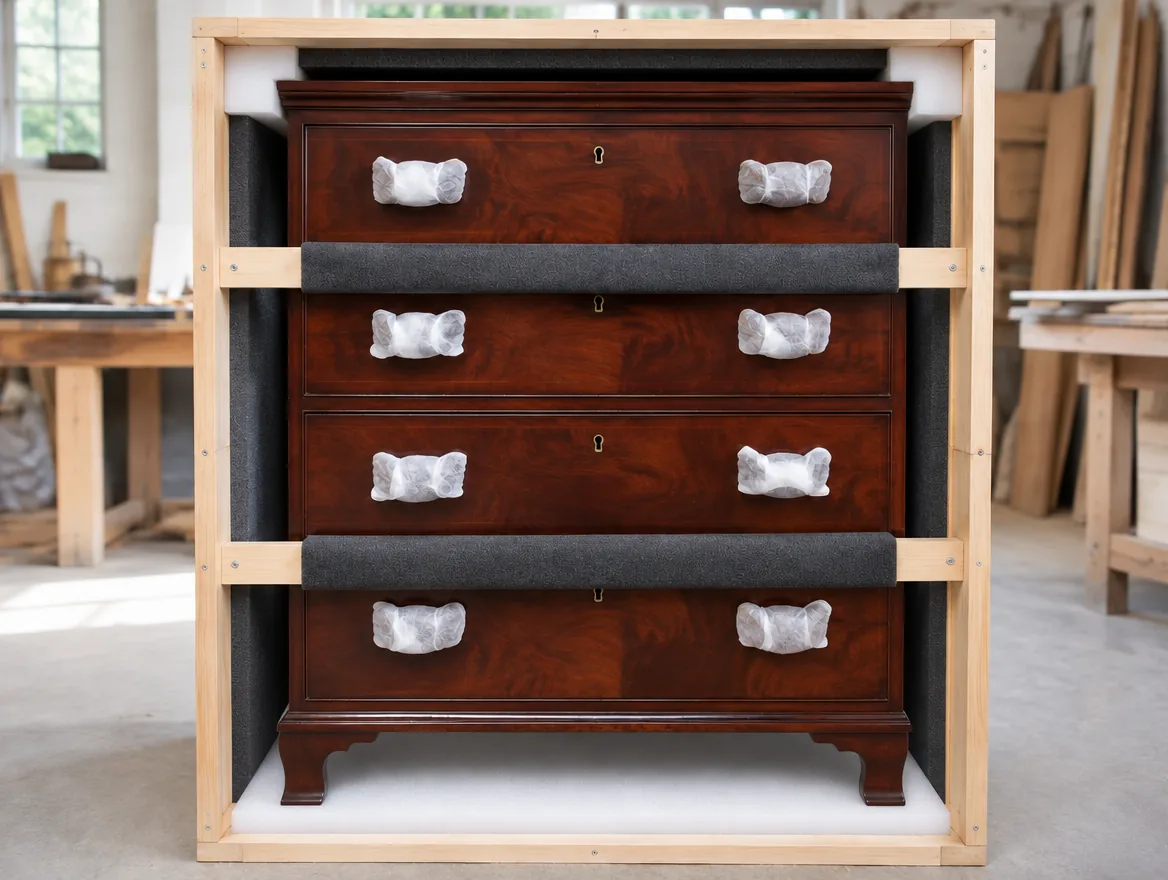
Antique furniture crating, part by part
Antique furniture crating starts with the parts that move: drawers, doors, keys, marble tops and finials. We take those out and pack each one on its own, wrap the finish by hand, and build a crate around the piece so it travels upright and still, whether it's a single chair or a run of cabinets going abroad.
- Pieces
- Cabinets, bureaus, chests, tables, chairs
- Finish
- Tissue first, no tape on polish
- Two ways
- We collect it, or built to your sizes
- Ships to
- US, Europe and worldwide
How does antique furniture crating work?
Each piece is taken back to its solid carcase, its finish wrapped, and held still in a crate built to its size. Parts that could move travel separately, in their own foam.
- 01Look and photograph
Loose veneer, lifting mouldings, wobbly joints and old repairs are checked and photographed, so its condition is on record.
- 02Take out what moves
Drawers, shelves, loose glass, marble tops, finials and keys come out, each labelled with where it came from.
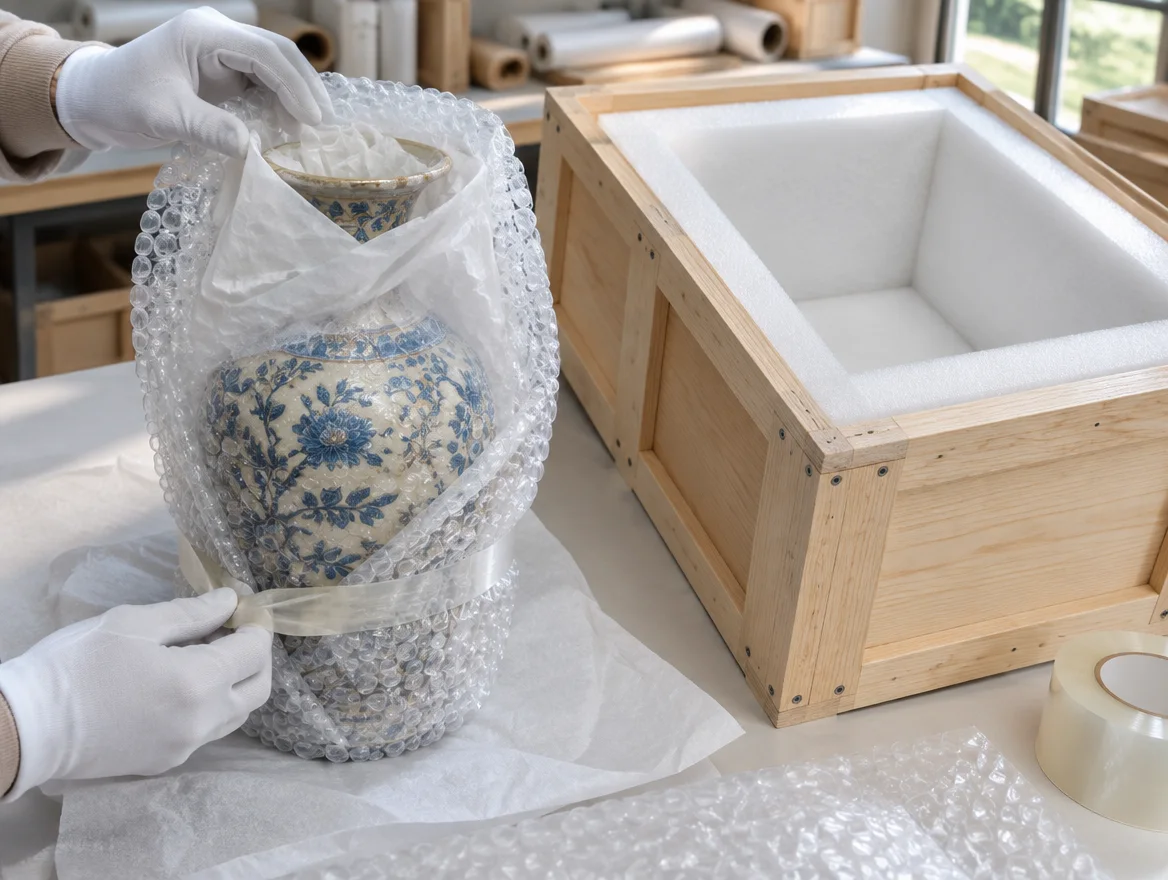
- 03Tissue first
Tissue paper goes straight onto polished, gilded and painted surfaces. Bubble wrap only goes on over the tissue, and tape only ever touches the wrap.
- 04Pad the weak points
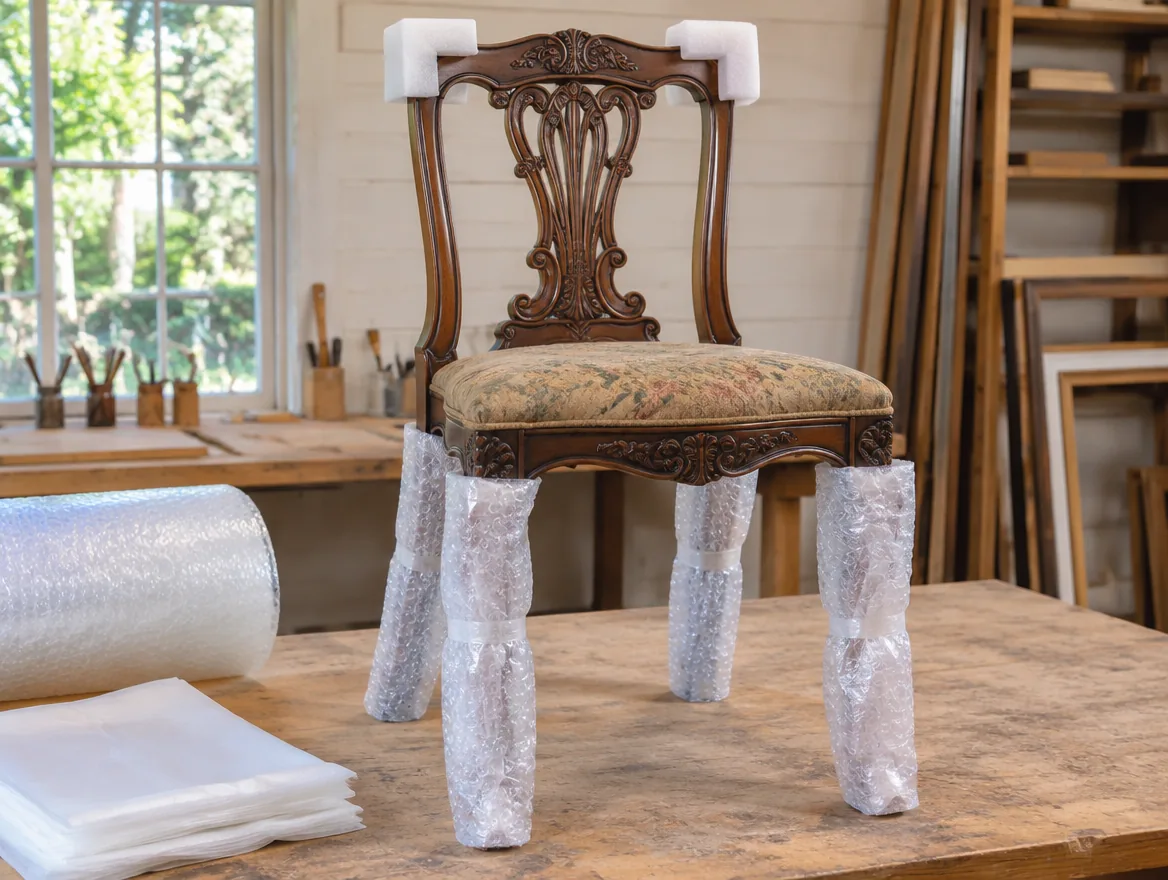
Carved legs, feet, corners and cornices get extra foam, as they take the first knock.
- 05Crate to measure
A pine frame and plywood panels, sized to the piece and its lining.
- 06Hold it still
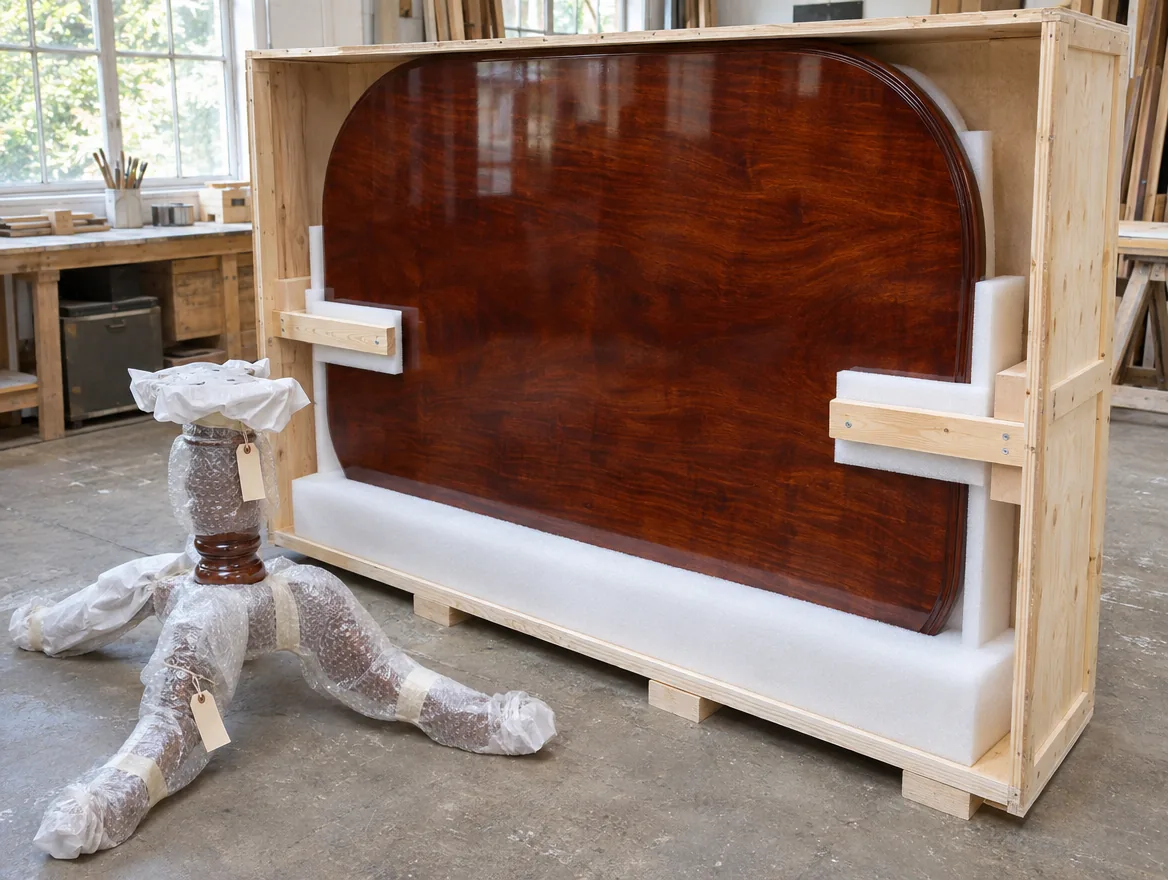
The piece stands on a floor of firm white high density foam, which takes its weight without sinking. Soft charcoal foam lines the walls where the finish could touch, and padded battens and high density foam blocks hold the carcase at its strongest points, so it can't rock, slide or lean.
Which pieces of furniture do we crate?
Any of them: we build crates for any object, item and weight. These are the pieces we're asked about most.
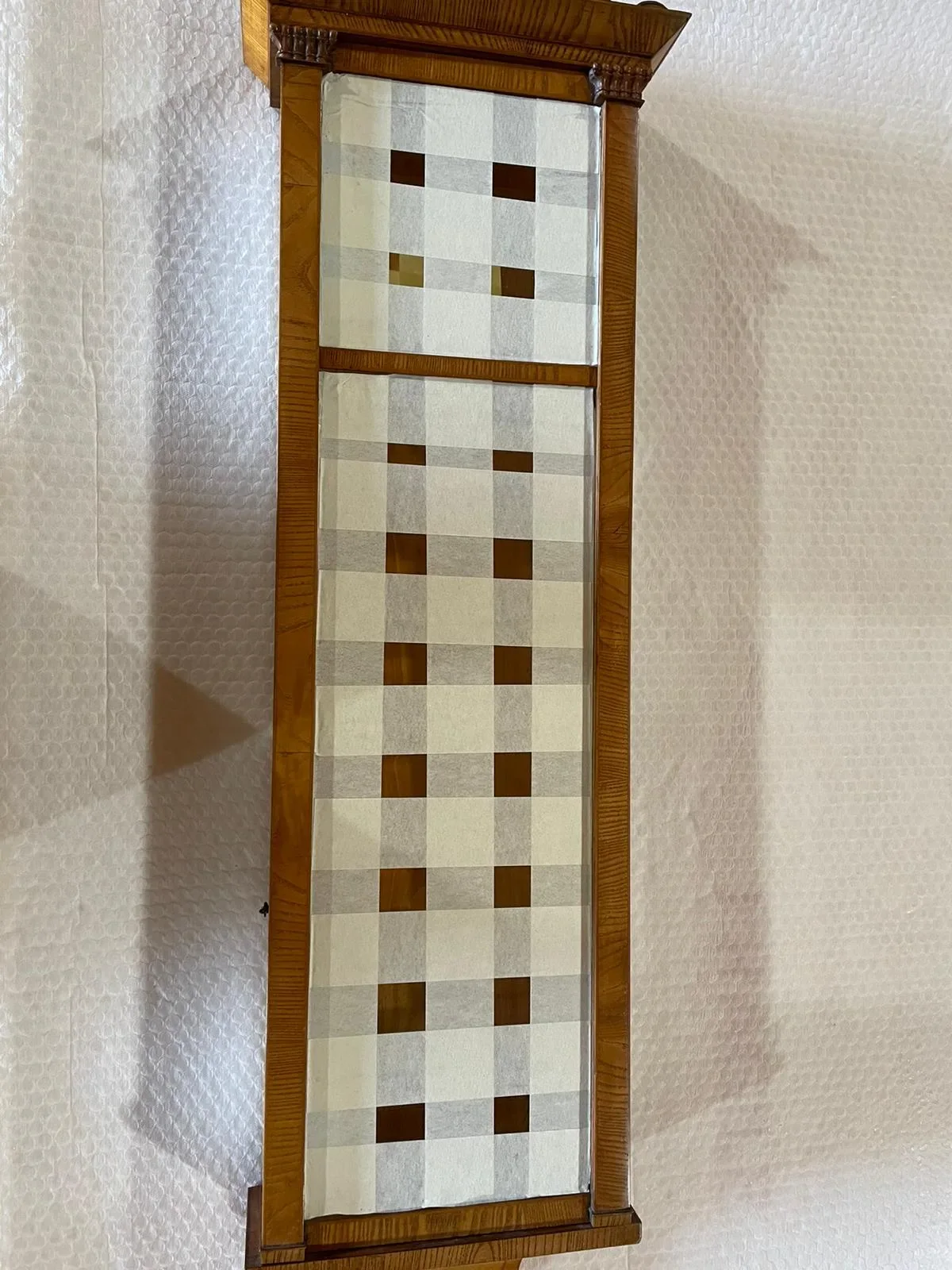
Longcase clocks have their own page: antique clocks. For pier glasses, see mirrors and glass.
Tall and top-heavy. Glass doors, shelves and cornices come off where they're made to; the carcase travels upright.
Fall fronts secured, small drawers out and labelled, keys packed with the piece or handed to you.
Drawers out, marble tops off and crated on edge, the carcase held on padded battens.
Leaves and tops off where they're designed to come off, carved legs wrapped, every chair in its own space, never stacked.
Drawers, keys, glass doors, marble tops and finials
Anything that can move inside a piece of furniture will move on the road. A drawer left in slides and knocks its front against the carcase. A marble top left on bounces on its frame and can crack along a vein. So if it comes out, it travels on its own.
- Drawers come out, numbered top to bottom, and are packed beside the carcase. Old drawers often fit one opening only, so the numbers matter.
- Keys come out of their locks, where a knock would snap them, and are packed with the piece or handed back to you.
- Glass doors that lift off their hinges travel separately, upright and padded, with the glass taped in a lattice. Doors that are fixed are tied shut with soft ties over the wrap, never taped to the polish.
- Marble tops come off and travel on edge in their own padded slot, never flat on top of the carcase. More on our shipping marble page.
- Finials, cornices, gallery rails and loose handles come off if they're designed to, and go into their own foam compartment, listed so nothing is left behind.
We never force a part off. Anything fixed stays where it is and is padded in place.
Veneer, gilding, French polish and carved legs
The finish is usually the most valuable part of an antique and the easiest to spoil. Each kind needs something slightly different.
Tape only ever goes on the wrap, never on a polished, painted or gilded surface. Lifted off old polish, it can take the finish with it.
| Surface | What goes wrong | How we protect it |
|---|---|---|
| French polish | Soft, and marks easily. In warm weather it can take the pattern of bubble wrap pressed into it | Tissue paper first, bubble wrap over the tissue, never tape on the polish |
| Veneer and marquetry | Lifts or chips at edges and corners, especially where the glue is old | Edges padded, nothing dragging across the surface, kept away from damp |
| Gilding | The gesso under the gold chips at corners and on carving | Soft foam, no tape anywhere on the gilt, nothing resting on carved detail |
| Paint and lacquer | Scratches and flakes, and old paint can lift | Tissue first, condition photographed, no pressure on the surface |
| Carved legs and feet | Thin at the ankles, knees and toes, and they take the first knock | Tissue, then bubble wrap, then foam guards on the corners |
Should furniture travel upright or on its back?
Most antique furniture travels upright, standing the way it was made to stand. A carcase is built to carry its weight down through its sides and feet. Lay a cabinet on its back and the weight goes through the backboards, which on many older pieces are thin boards nailed in place, and onto the cornice and mouldings. Glass doors lying flat can flex, and anything inside slides to the back.
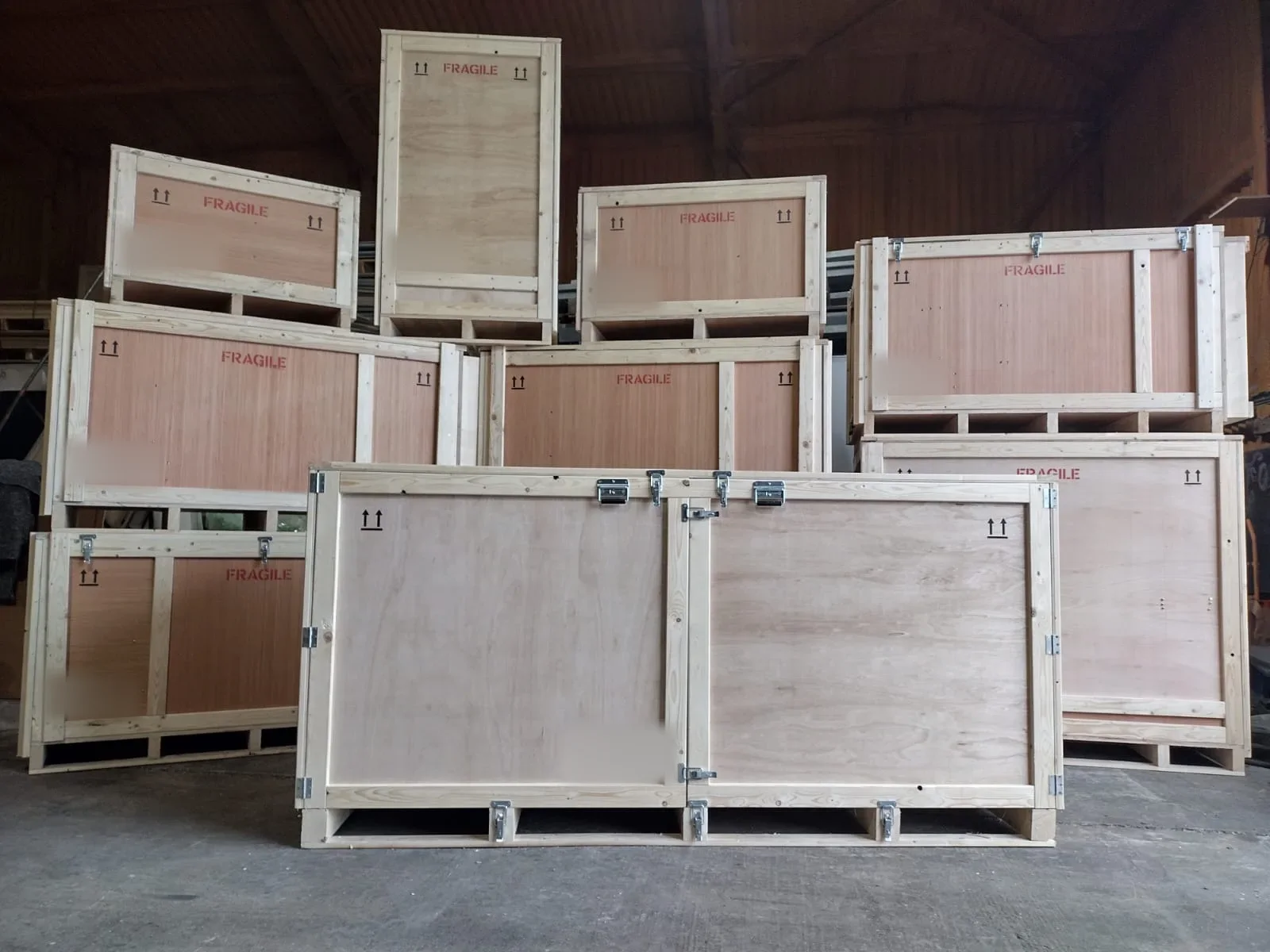
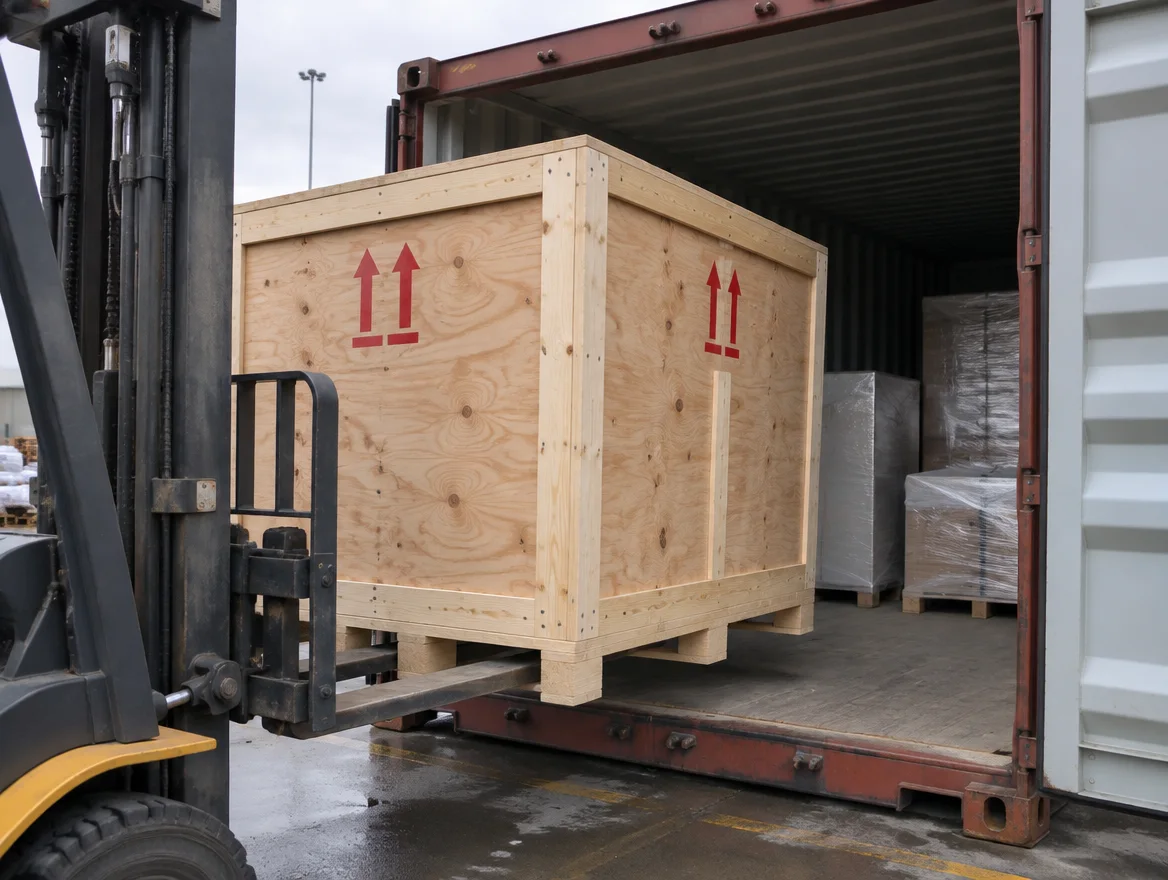
Upright, a piece sits on its own feet on foam, held by battens at the strong points of the carcase. That's why our furniture crates are marked This way up, and should be loaded and stored standing.
A piece too tall for a doorway or a container may have to lie down. Then it is supported along its whole back on foam and nothing rests on the mouldings. Tell us its height and the doors on the way out.
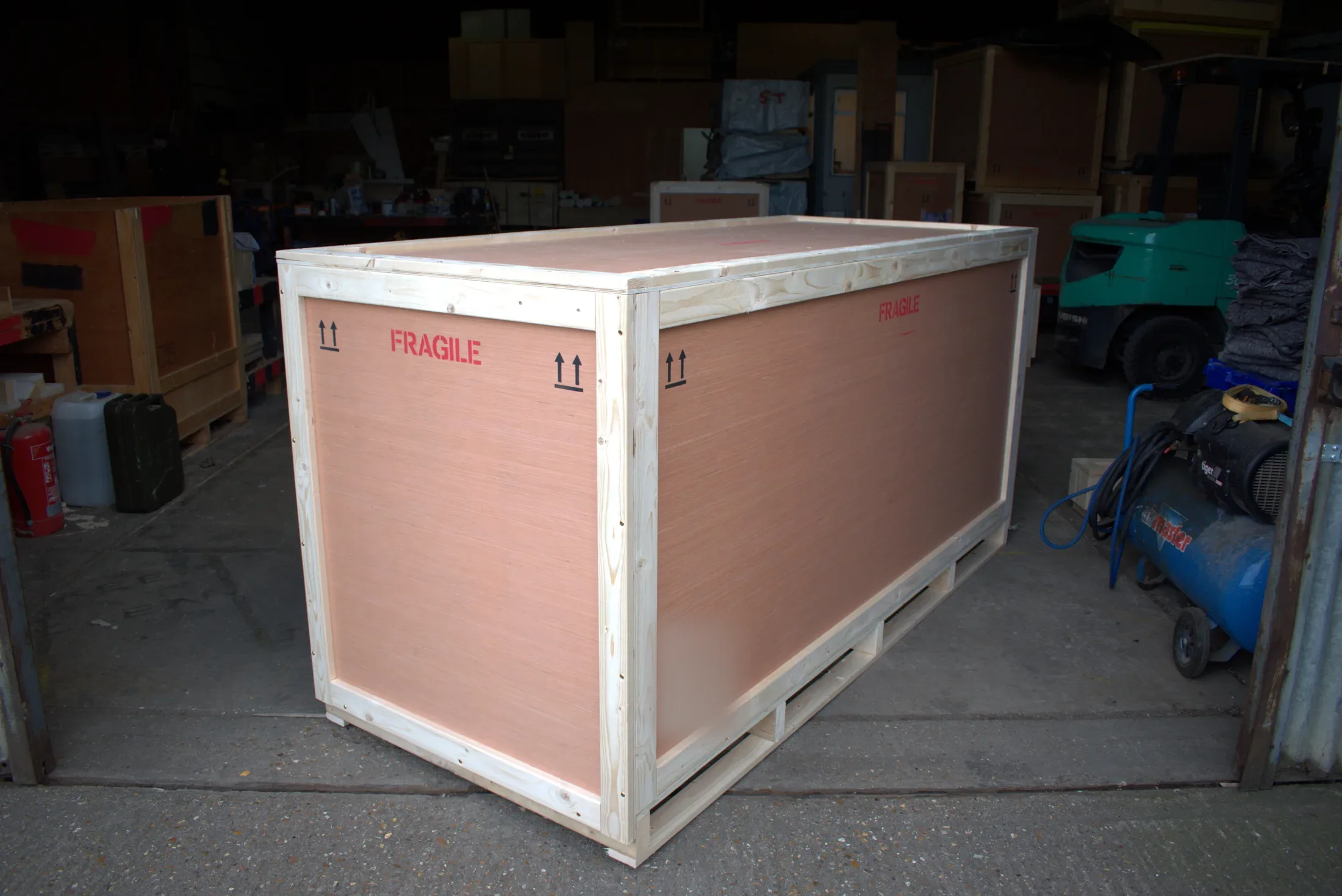
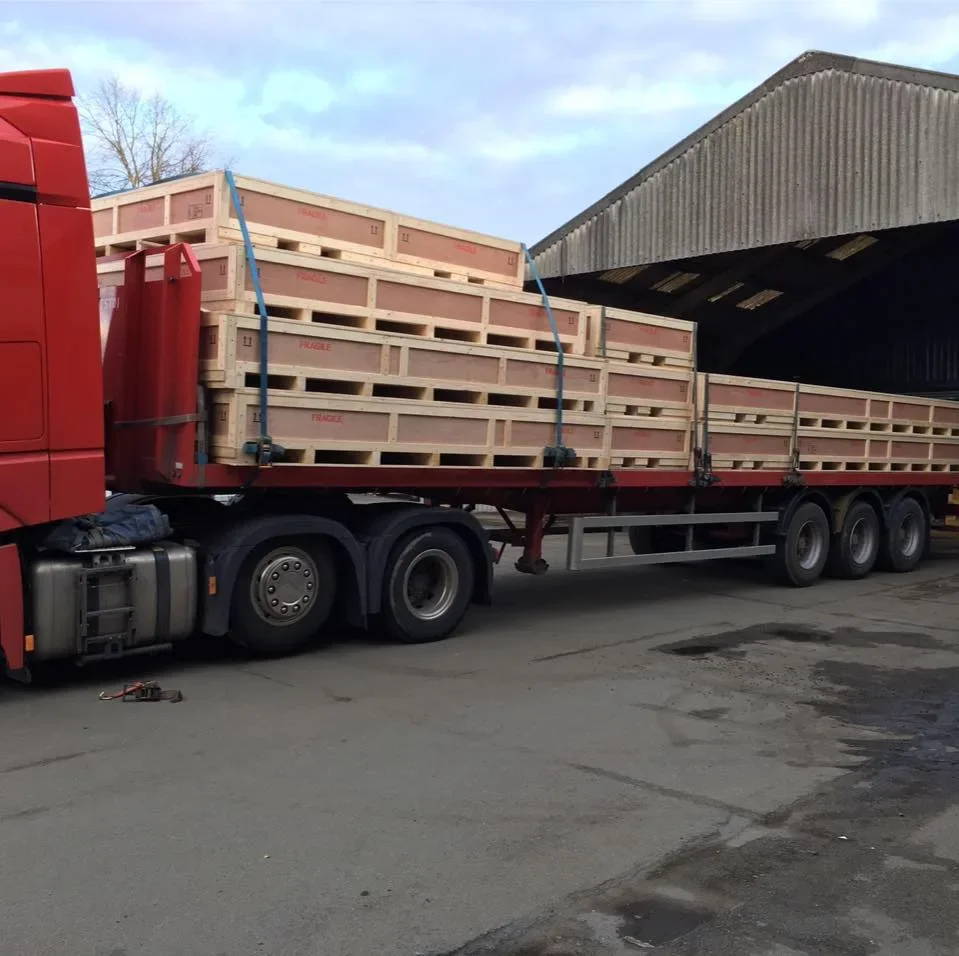
Send us a photo and the measurements.
We’ll recommend the crate, the lining and the supports, and come back with a bespoke quote.
Humidity and timber movement
Wood swells in damp air and shrinks in dry air. The Canadian Conservation Institute warns that these movements can split wood and crack its finish, and quick swings do the most harm. On antiques that means lifting veneer, cracked tops, sticking drawers and open joints.
A journey is a run of changes: a heated house, a cold van, a ship's hold, another heated house. A closed, lined crate slows those changes down. When it arrives, let the crate stand indoors for a day or so before opening, and keep the piece away from radiators at first. If it already has lifting veneer or open cracks, tell us; it may need a restorer's eye before it travels.
Going somewhere much hotter, drier or more humid than London? Tell us when you ask for a quote, and ask us about extra protection against damp for long or sea journeys.
Ivory inlay, rosewood and other protected materials
Ivory inlay, tortoiseshell veneer and Brazilian rosewood come from protected species, and can need permits to leave the UK even when the piece is old.
- CITES. GOV.UK lists furniture made from rosewood or with ivory inlay among the items usually treated as worked specimens if made before 3 March 1947. Even so, a CITES permit is still needed to export or re-export them. In the UK, permits come from the Animal and Plant Health Agency (APHA).
- Ivory. Since 6 June 2022 the Ivory Act has restricted dealing in elephant ivory, including importing or exporting it to buy, sell or hire. There are narrow exemptions, such as items made before 3 March 1947 with less than 10% ivory by volume, all of it integral to the piece, and they must be registered before the item is sold.
- The other end. The country it's going to may have its own rules. The US, for example, has strict rules on antiques containing protected species. See our antique shipping page.
We don't handle CITES permits or customs paperwork; you, your shipper or a customs agent will arrange them. If your piece may contain these materials, tell us when you ask for a quote.
Does antique furniture need an export licence?
Some does. Cultural objects more than 50 years old need an export licence to leave Great Britain. For most antiques, furniture included, the Open General Export Licence covers them when the value per item or matching set is below a set limit, which has been £65,000; a set of dining chairs is valued together. Above that, an individual licence from Arts Council England is needed. Check the current figures with Arts Council England. The licence is arranged by you, your shipper or a customs agent, not by us.
Two ways to work with us
Choose whichever suits the piece and where it is.
We can also arrange the onward shipping, if you'd like the whole journey handled together.
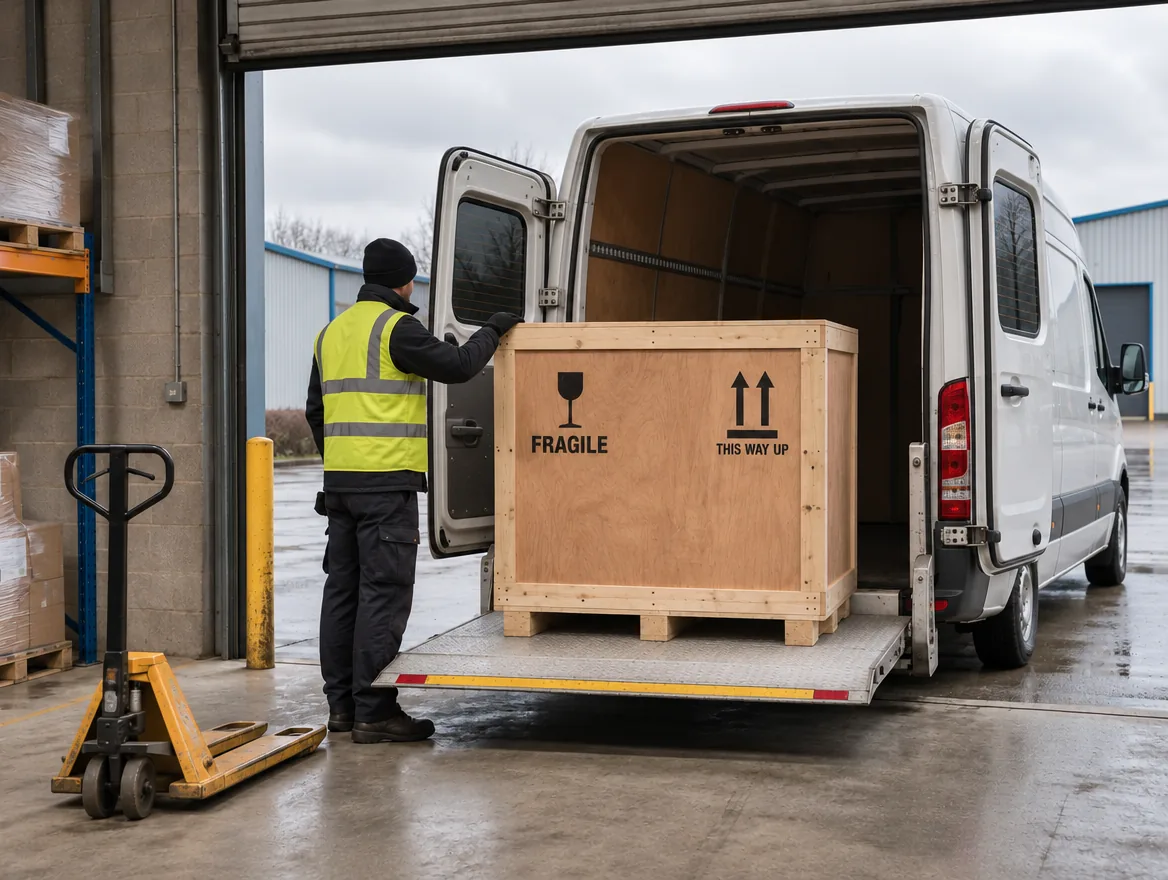
We collect the piece from your home, a dealer, an auction room or storage, take it to our warehouse and build the crate around it there. You don't measure anything. When it's ready, your own courier or shipper collects the finished crate from us. How collect and crate works
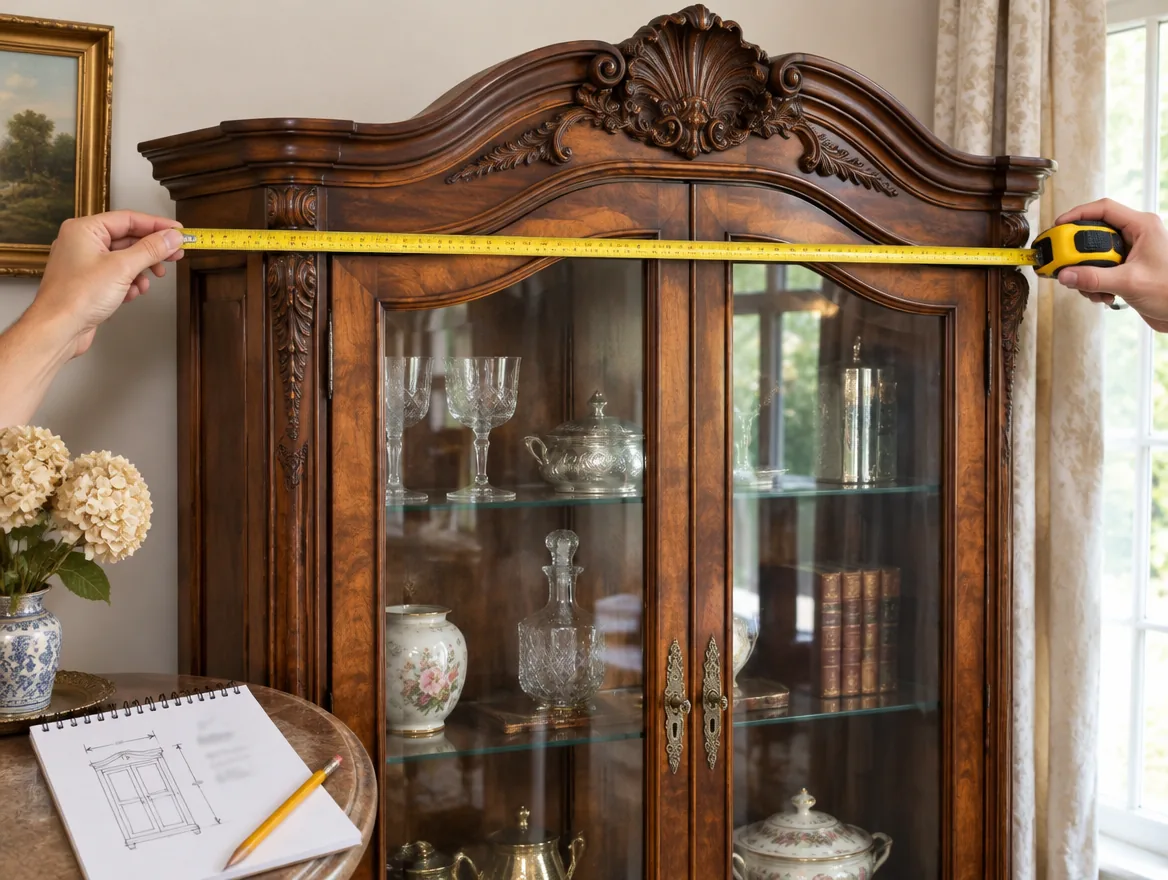
You send us the measurements, roughly what it weighs and what it is. We confirm the sizes with you before we build, then deliver the crate to the address you give us. Crates built to your measurements
How to measure a piece of furniture
If you choose a crate built to your measurements, the fit depends on the numbers you give us. Measure at the widest, deepest and tallest points, not the body of the piece.
- Height from the floor to the highest point, including any cornice, finial or gallery rail
- Width across the widest point, often the cornice, top moulding or handles
- Depth from the back to the furthest point at the front, including handles, knobs and mouldings
- Separate sizes for anything that comes off: marble tops, glass doors, cornices, leaves
- Roughly what it weighs, and what it's made of
We confirm the measurements with you before we build. Rather not measure? Choose collect and crate.
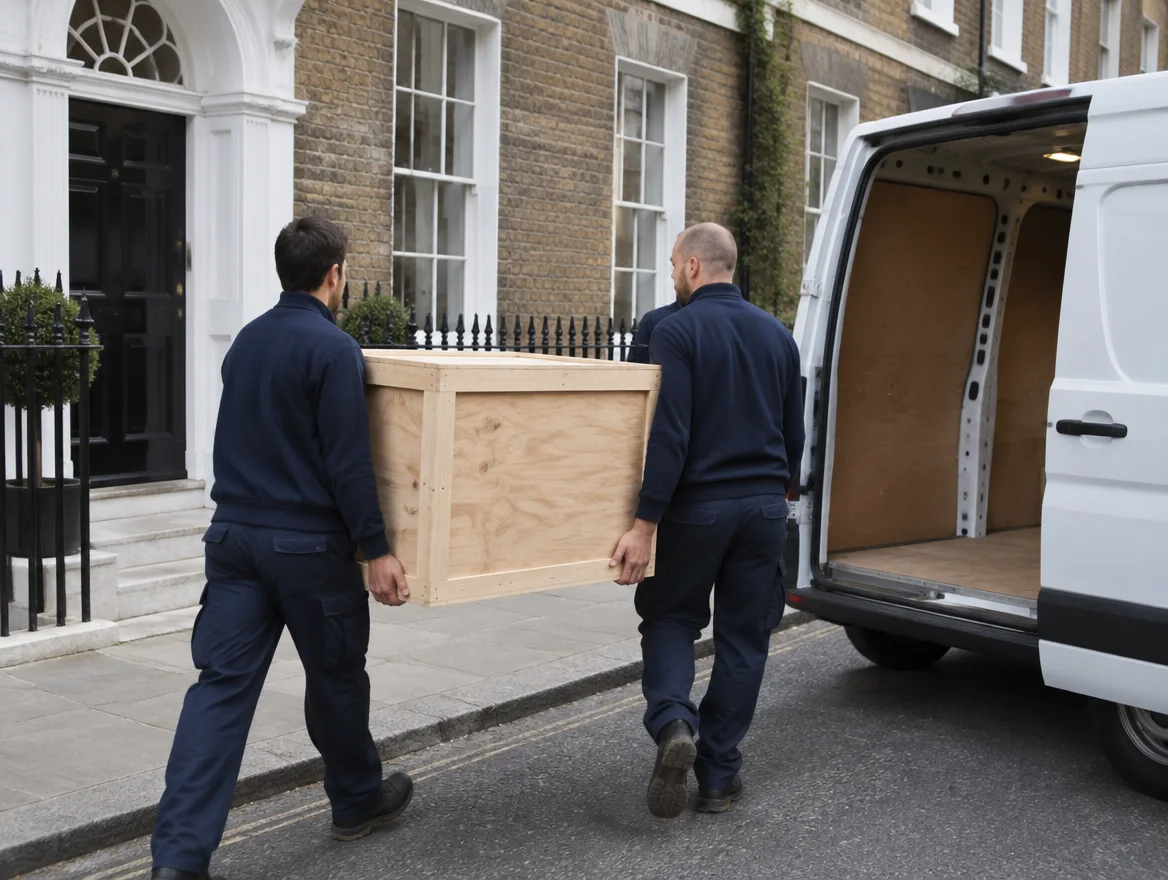
Before we collect
Empty the drawers, keep the keys together and don't wrap anything yourself. Arrange transit insurance for its value (see insurance), then request a quote. Sending pieces regularly? See how we work with the trade.
Common questions
How do you ship antique furniture abroad? +
Crated upright, with drawers, glass, marble tops and loose parts packed separately inside the same crate. A lot of our crates go to the United States and Europe, and we can give you options for anywhere in the world. Customs paperwork is arranged by you, your shipper or a customs agent.
Do you do antique furniture removals? +
For antique pieces, yes: we collect them, pack and crate them, and either your courier collects the crate from us or we arrange the onward shipping. If you're moving a whole house, many people use a removal firm for the everyday contents and have the antiques crated separately.
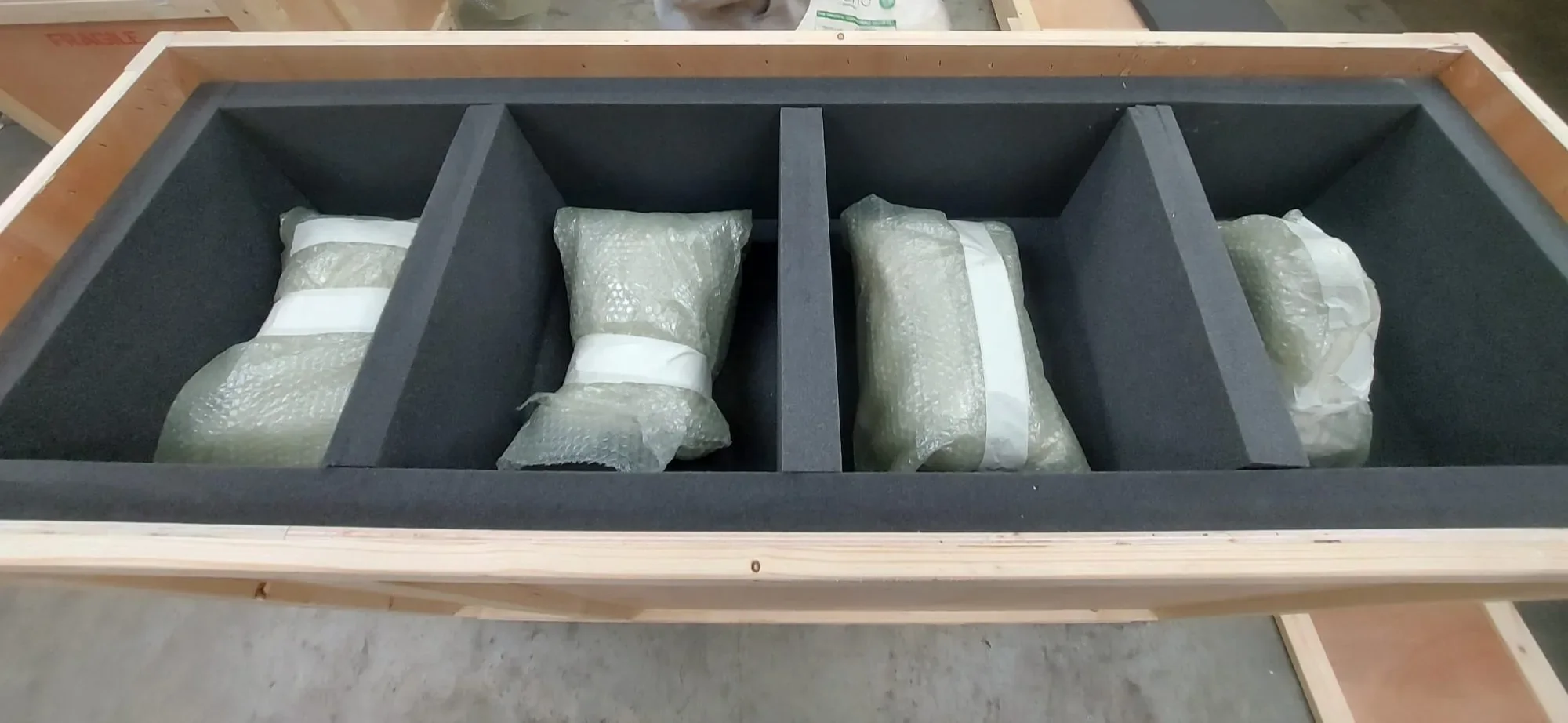
Can several pieces go in one crate? +
Often, if each has its own space and nothing touches. Chairs from a set, for example, can share a crate with a space for each. Send us the full list and we'll suggest the best layout.
Will you take my furniture apart? +
Only the parts made to come off: drawers, shelves, loose tops, lift-off doors and screw-on finials. We never force a joint, and anything fixed stays in place and is padded where it is.
Should a piece be restored before it ships? +
If it has lifting veneer, loose mouldings or a wobbly joint, it's worth asking a restorer first. Movement on the road can make small problems bigger. Tell us about anything loose when you ask for a quote.
Can upholstered chairs and sofas be crated? +
Yes. The fabric is covered with tissue or a clean wrap first, so nothing marks it, then padded. Show wood and carved legs are wrapped like any other antique.
How much does it cost to ship antique furniture? +
Every quote is bespoke, based on the piece itself: its size, weight, how fragile it is, where it's going and how quickly. Send us the details and we'll come back with a price.
Is the furniture insured in transit? +
Transit insurance is available for every export. It's bought by you, job by job, so the cover matches the piece being shipped. We also have public and product liability insurance.
Related
Antique and modern furniture, crated in London for the Atlantic.
Clocks, mirrors, glass and collections.
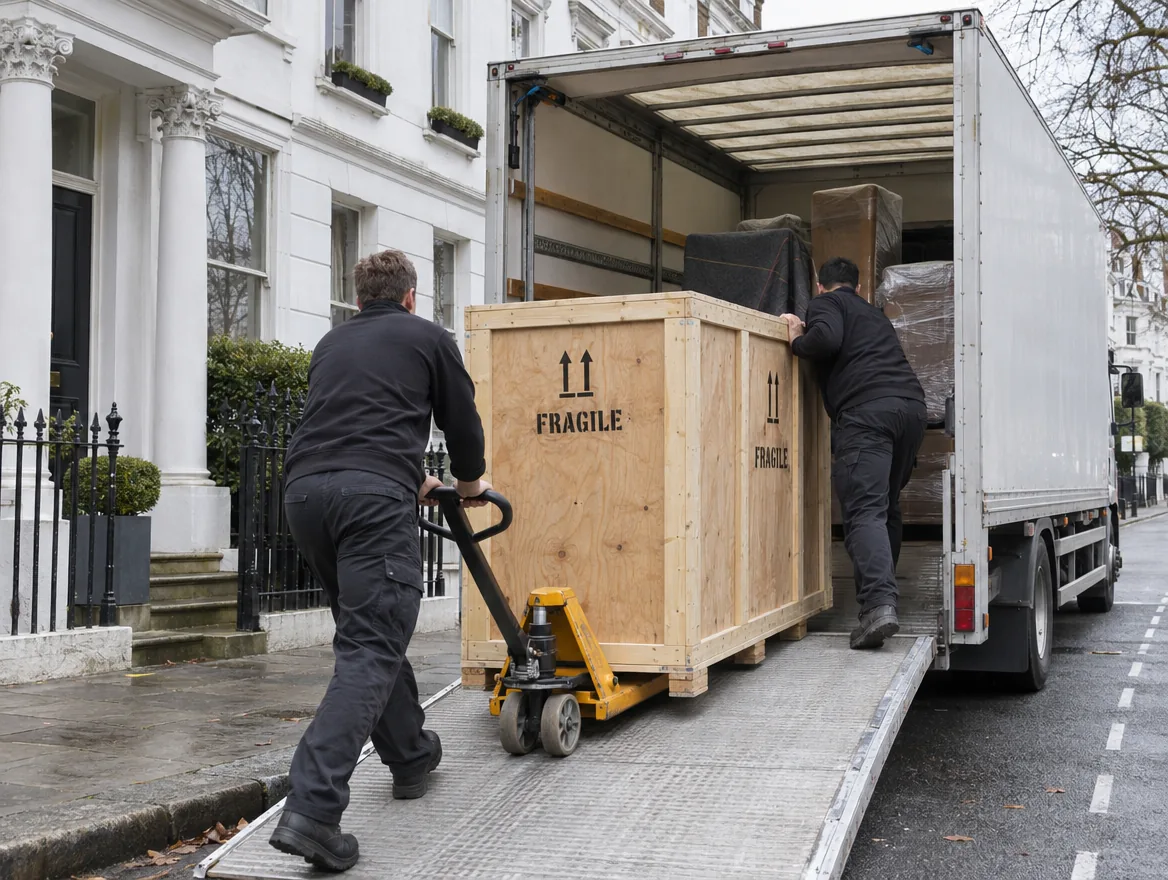
We crate the fragile pieces; your crew moves the house.
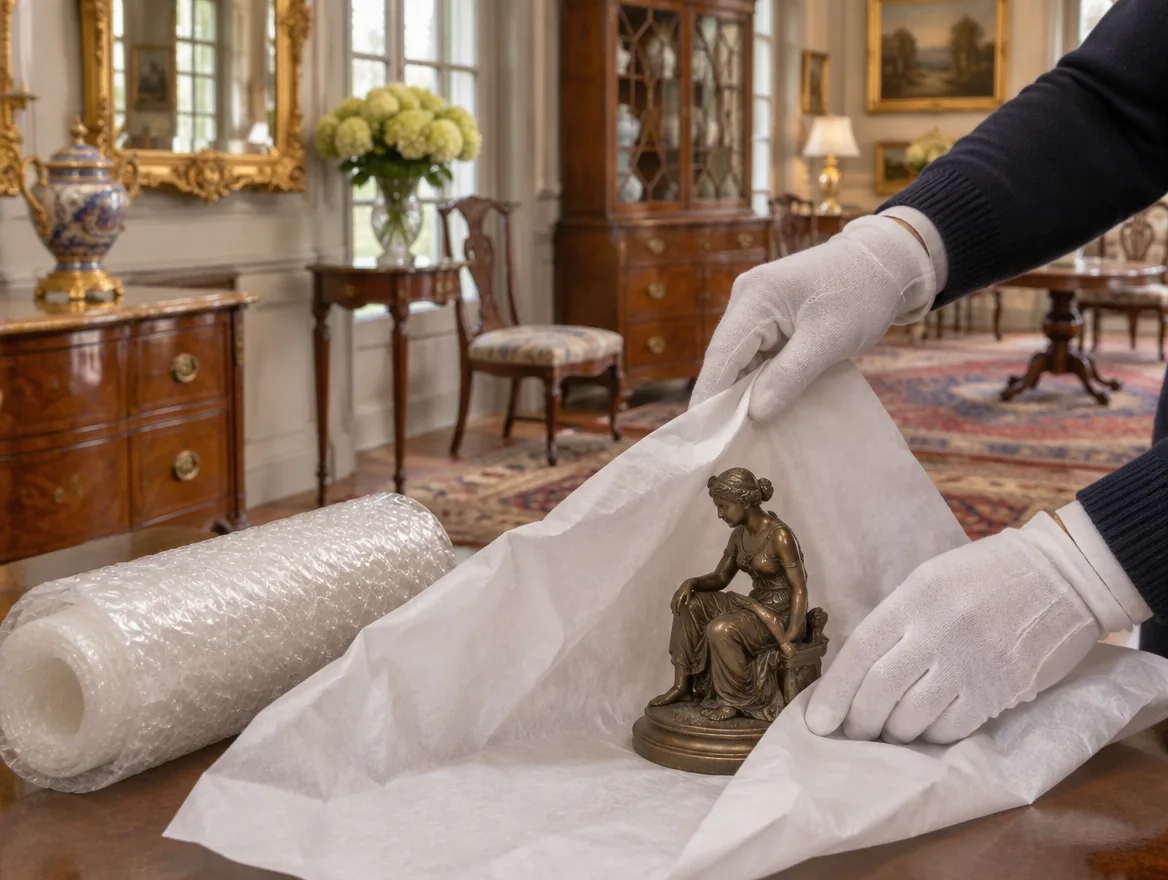
Repeat work, many pieces, one point of contact.
Swipe for more →
Tell us what needs to travel.
Every quote is bespoke, based on the piece itself. Send us the details and we'll come back to you.