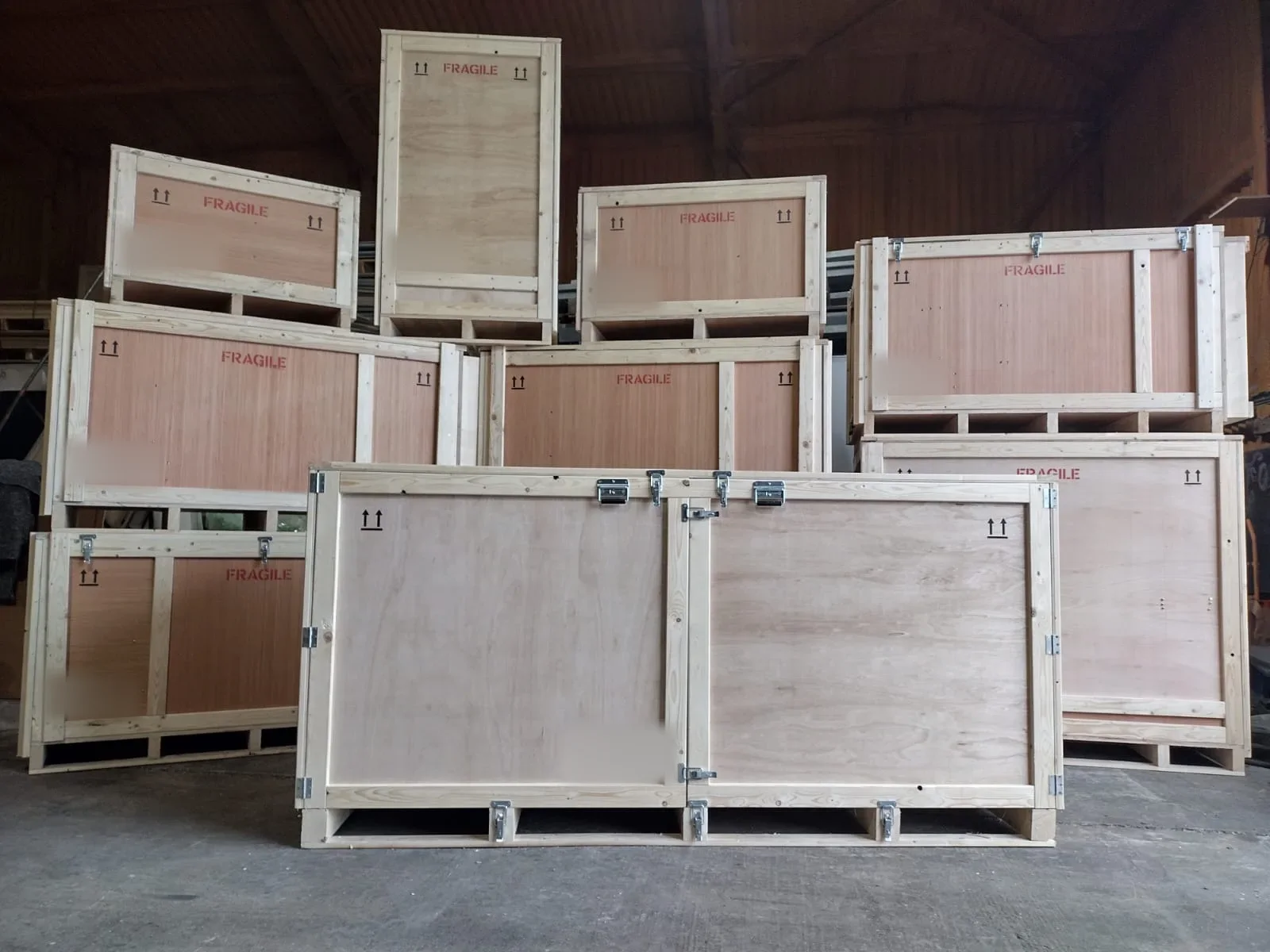
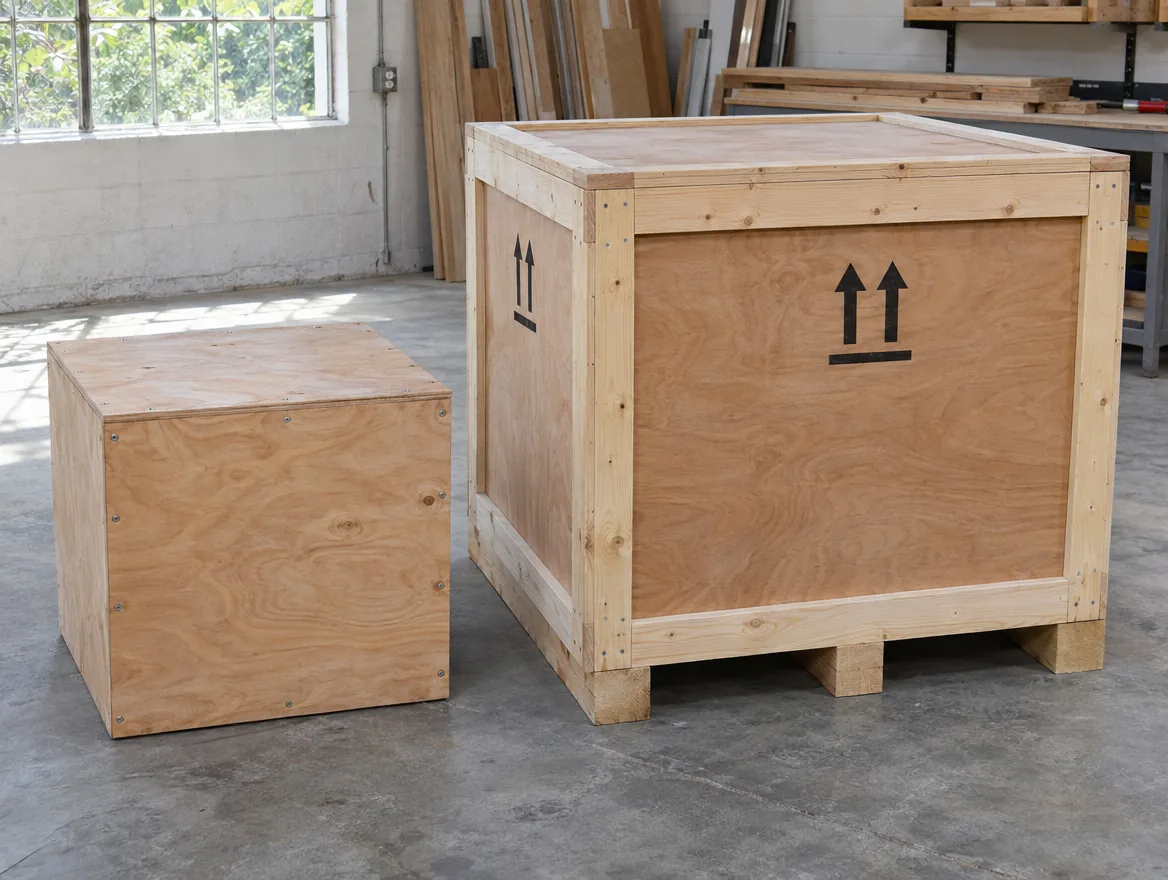
A wall of finished bespoke timber crates in a workshop
Wooden shipping crates · London

Wooden shipping crates, built around what you’re sending

Wooden shipping crates are what we build, each one designed around the item you're sending: paintings, antiques, sculpture, machinery parts and anything else valuable or awkward. Each crate is built to measure in timber and plywood and lined for the piece, so nothing moves inside. You can have the crate on its own, or we collect, pack and ship it for you.

Inside the crate

Three linings, chosen for your piece

Every crate is lined to suit what's going in it. We use three materials, each in 25 mm, 50 mm, 75 mm and thicker.

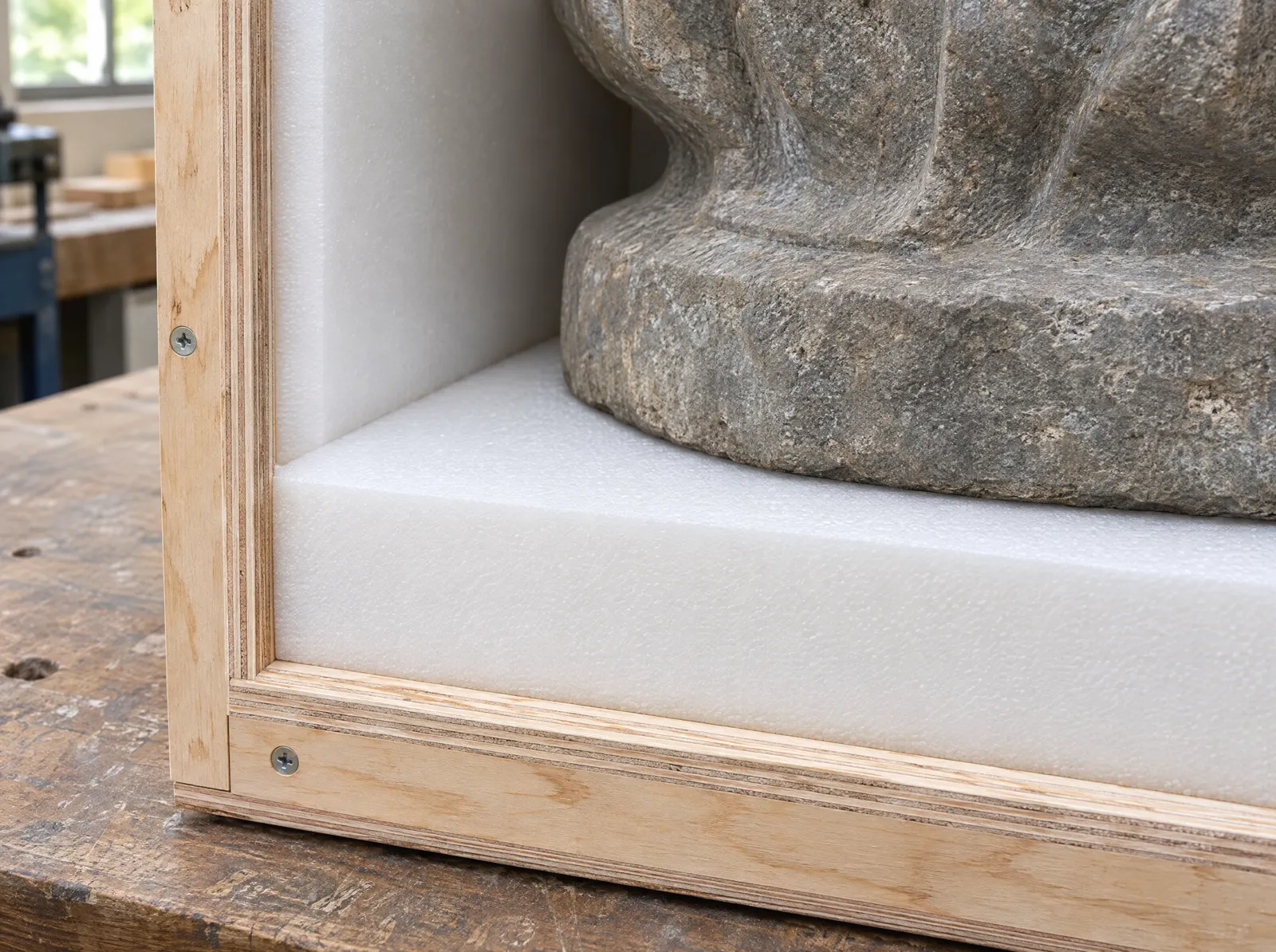
The corner of a crate lined with thick white high density foam, a heavy stone piece resting on it
Firm££Similar to HLB22

High density foam

What it does
Dense and firm. It holds its shape under weight, so heavy pieces stay put instead of sinking in.
Best for
Heavy and solid pieces: stone, bronze, sculpture, machinery parts, and the blocks and battens that hold things still.
25 mm50 mm75 mmand thicker
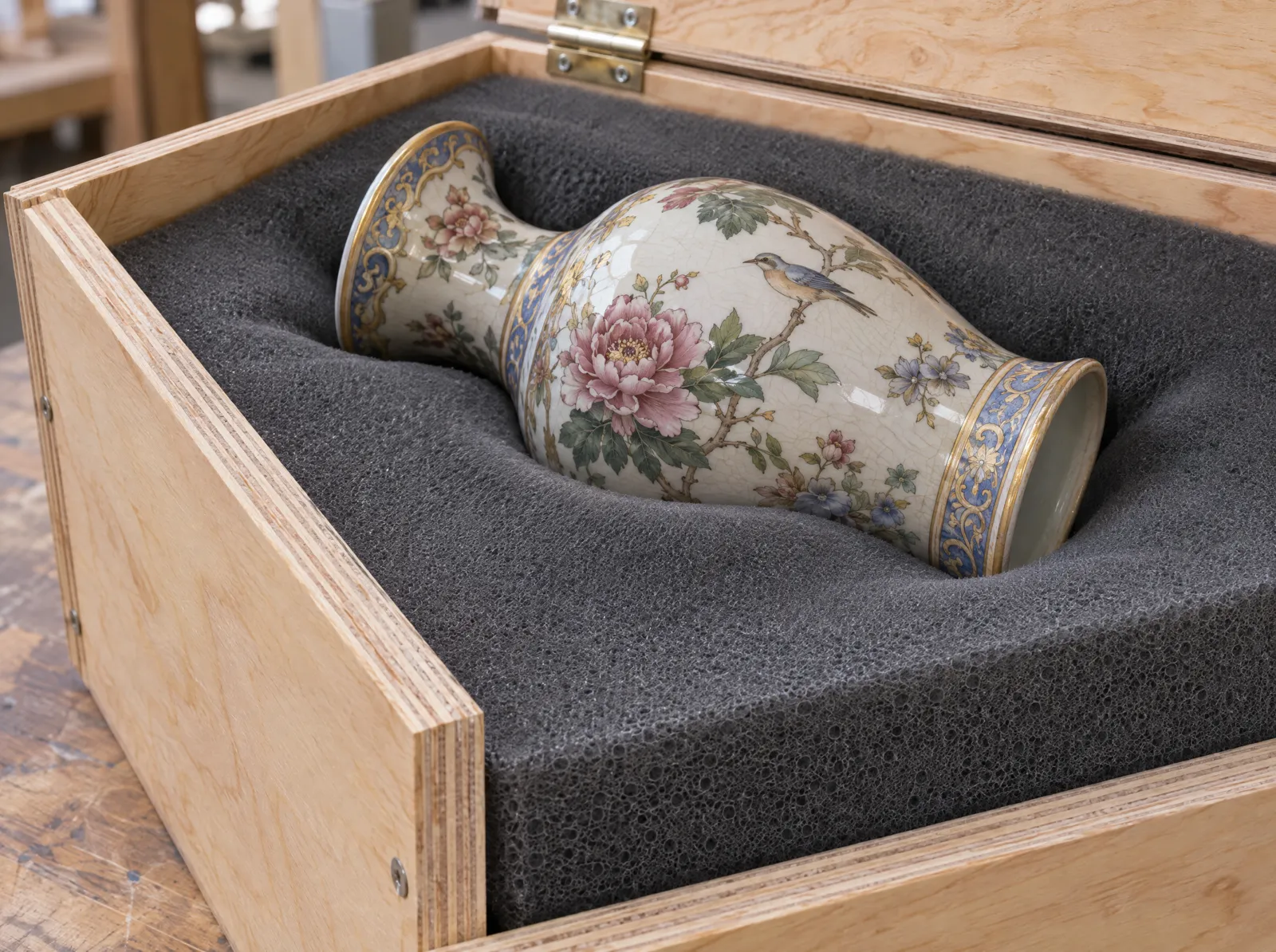
The corner of a crate lined with charcoal grey soft foam, a porcelain vase resting gently in it
Soft££Similar to high density

HLB22 soft foam

What it does
Lighter and softer. It gives a little, cushioning knocks and vibration around delicate surfaces.
Best for
Fragile pieces: ceramics, glass, gilded and carved frames, and anything that needs a gentle touch.
25 mm50 mm75 mmand thicker
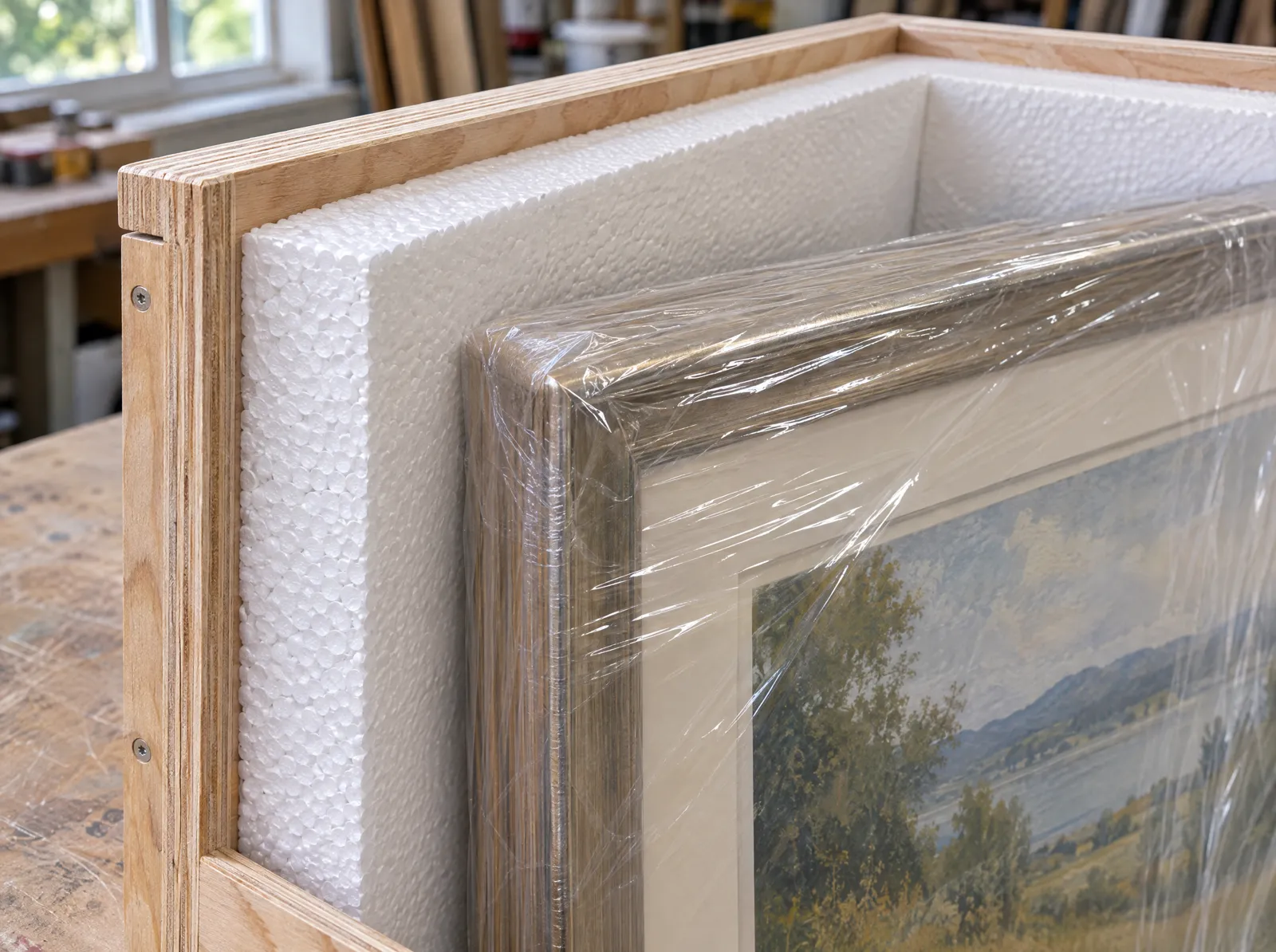
The corner of a crate lined with white polystyrene boards, a wrapped framed picture standing against it
Rigid and light£Most affordable

Polystyrene

What it does
Rigid, very light boards. They fill space and keep a lining firm without adding much weight.
Best for
Lighter pieces and flat works, and lining larger crates where weight matters.
25 mm50 mm75 mmand thicker

Swipe to compare all three →

Polystyrene is the most affordable lining. High density foam and HLB22 cost about the same as each other. Your quote says which lining and thickness we recommend for your piece, and why, so you only pay for the protection it needs.

01

What is a bespoke wooden shipping crate?

A bespoke wooden shipping crate is a crate designed and built for one item, or one set of items, rather than picked off a shelf. It's sized to the piece, lined to suit it and fitted inside so the piece is held still on every side.

That matters because most damage in transit comes from two things: soft packing that gives way, or a box that's too big so the piece moves. A crate built to measure fixes both. The timber frame takes the knocks, the plywood panels keep the weather and the forks out, and the lining holds the piece where it should be.

We build every crate in-house. Every latch, hinge and bolt lock is fitted by hand, by the person who built the crate.

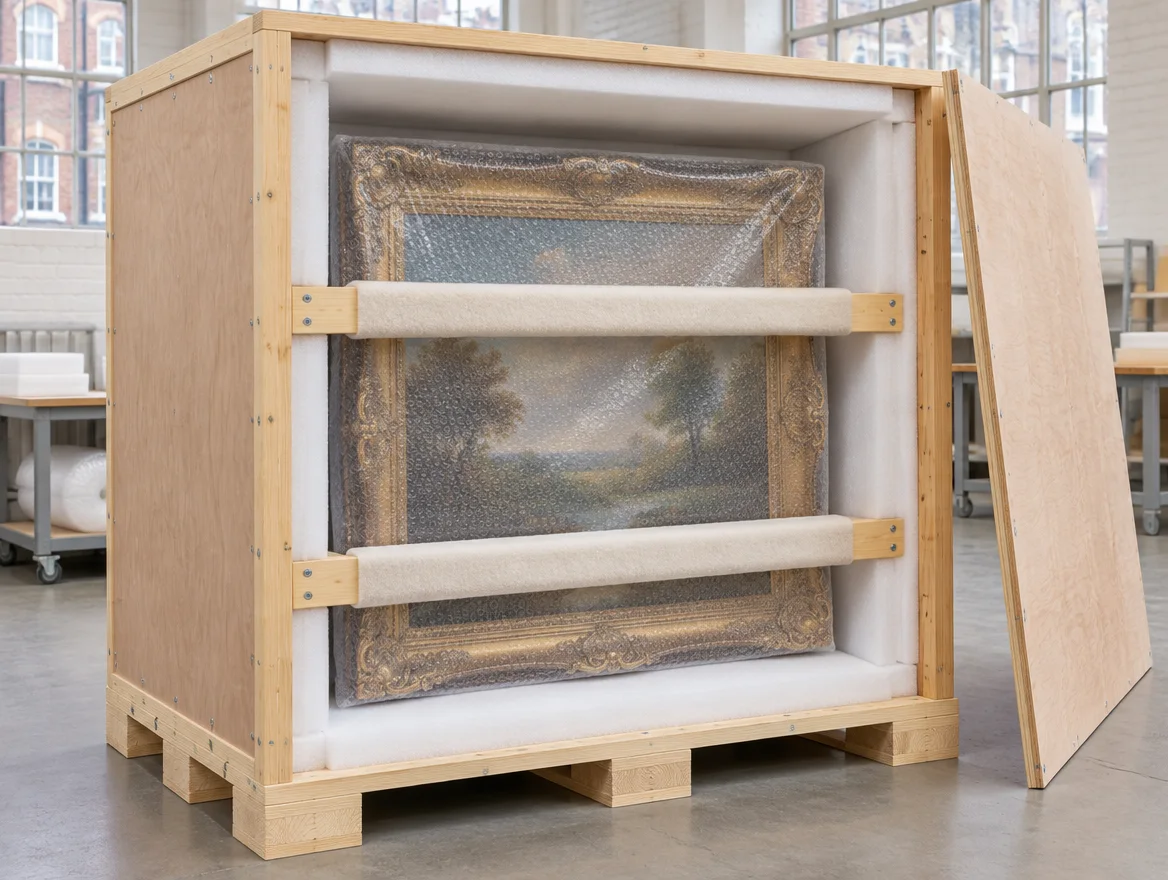
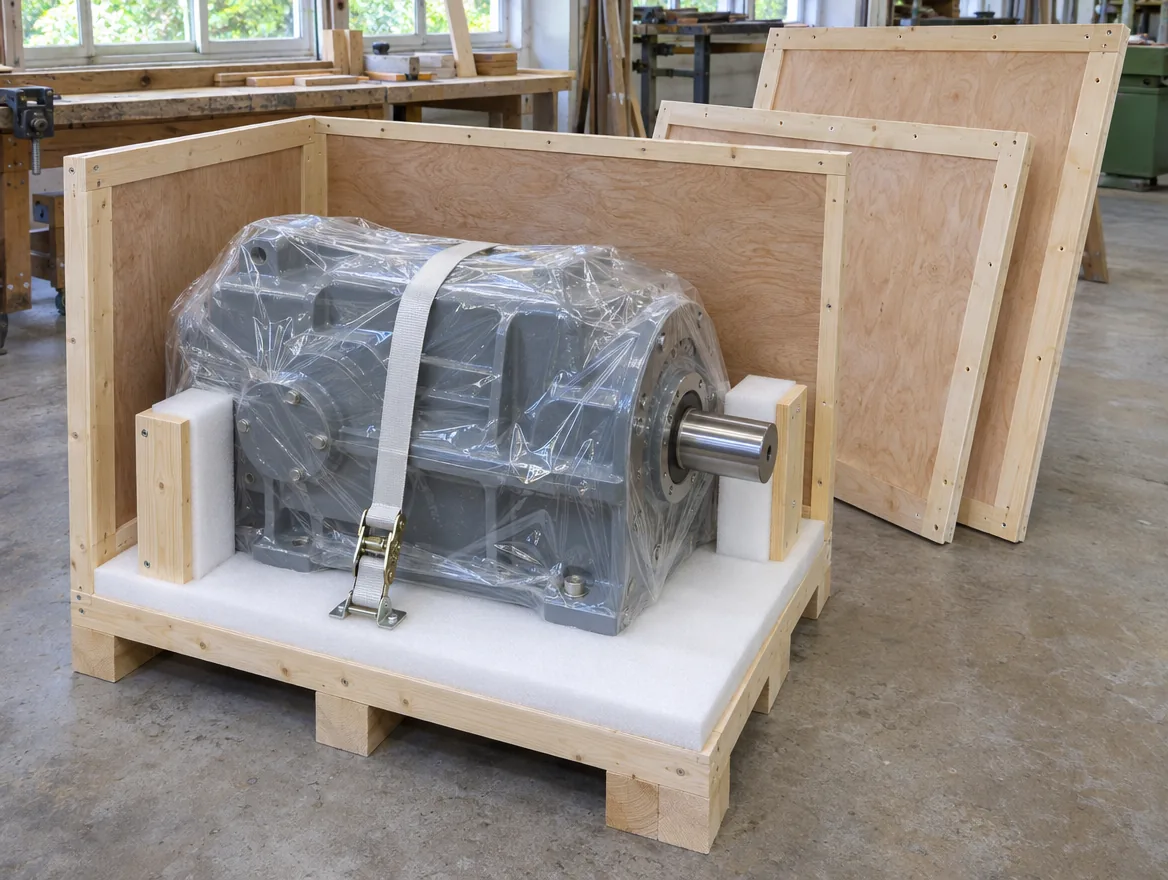
A wooden crate with its front panel off, lined with white foam, a framed painting held still by padded battens
Sized to the piece, lined, and held still
02

How we build a bespoke wooden shipping crate

Every crate is different, but the order of work is the same. This is how a typical export crate comes together.

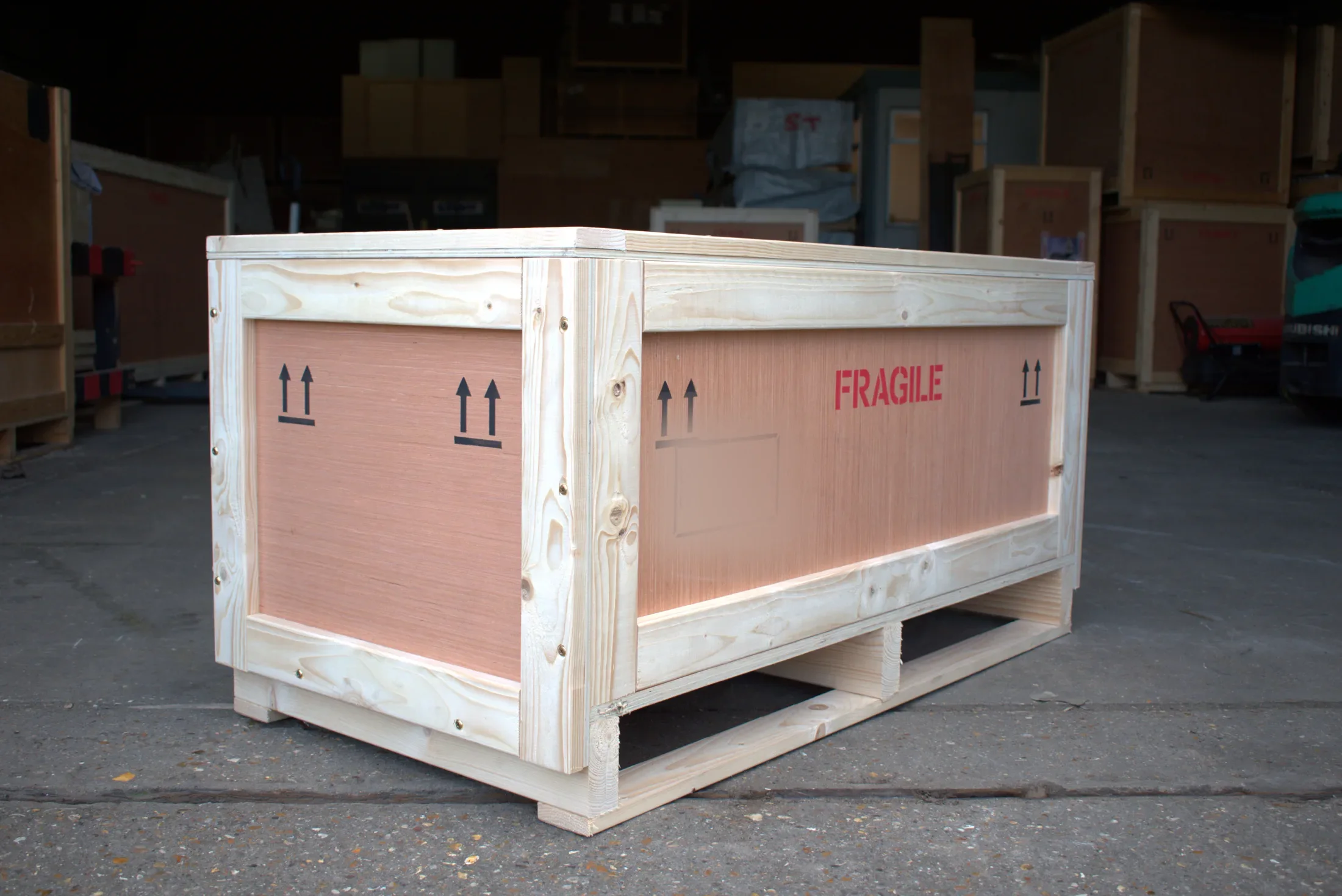
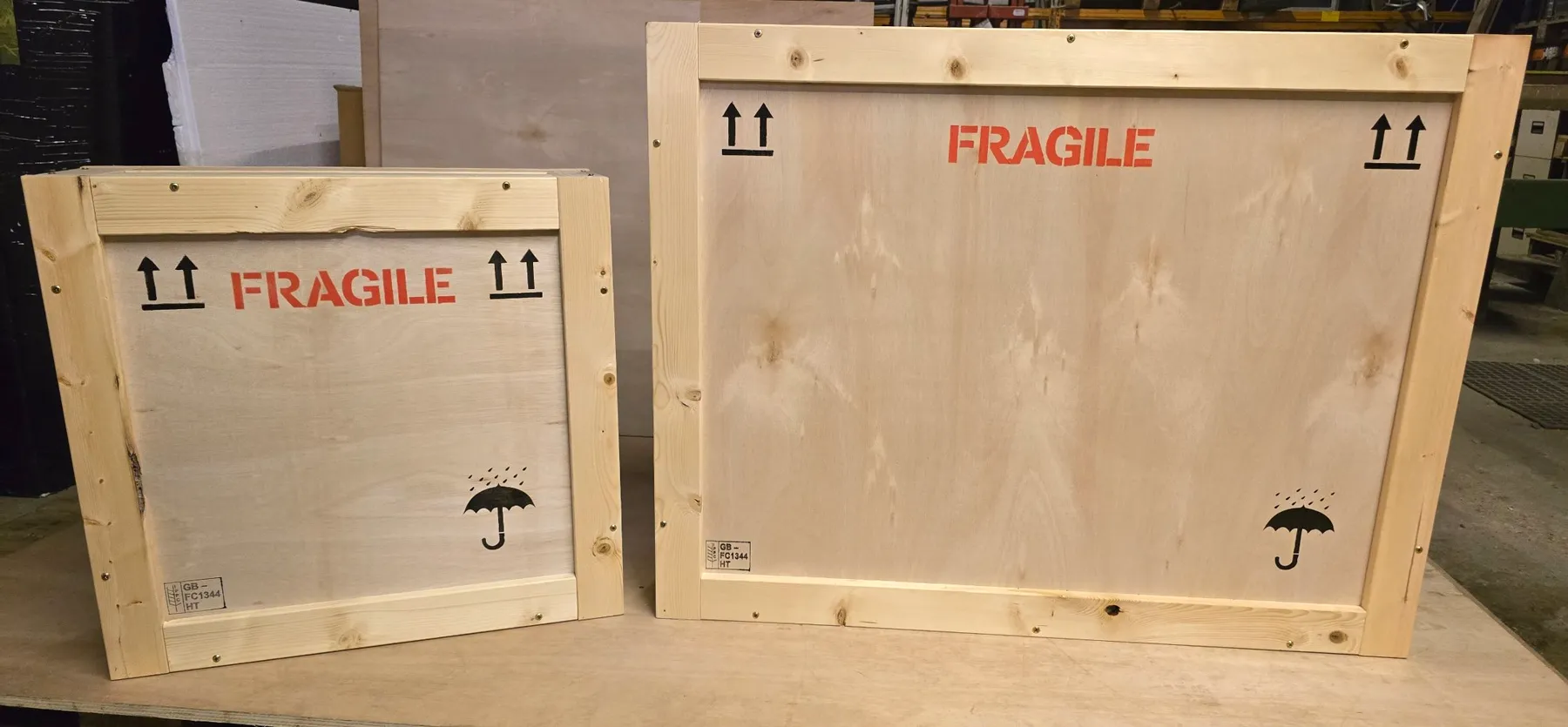
A finished timber and plywood export crate on its own skid base, marked Fragile and This way up
Timber frame, plywood panels, its own base
  1. 01Measure the piece

    We take the height, width, depth and weight, and note anything fragile: glass, gilding, carved edges, loose parts, a painted surface.

  2. 02Design around it

    We decide how the piece will sit (flat, upright or on its back), which lining it needs and how thick, and how it will be held: foam, battens, blocks, drawers or straps.

  3. 03Build the base

    The base carries the weight. Heavier crates sit on timber skids, so they can be lifted from below rather than pushed or dragged.

  4. 04Frame and panel it

    A solid timber frame with plywood panels. Plywood is strong for its weight and doesn't split like boards can.

  5. 05Line it

    High density foam, HLB22 soft foam or polystyrene, cut to fit, in 25 mm, 50 mm, 75 mm or thicker.

  6. 06Pack and secure

    The piece goes in wrapped, then foam blocks, padded battens or cradles are fitted so it cannot shift.

  7. 07Close and mark

    The lid is screwed down so it can be opened and closed again if it's checked on the way. The outside is marked Fragile, This way up and Keep dry.

03

Crates we build

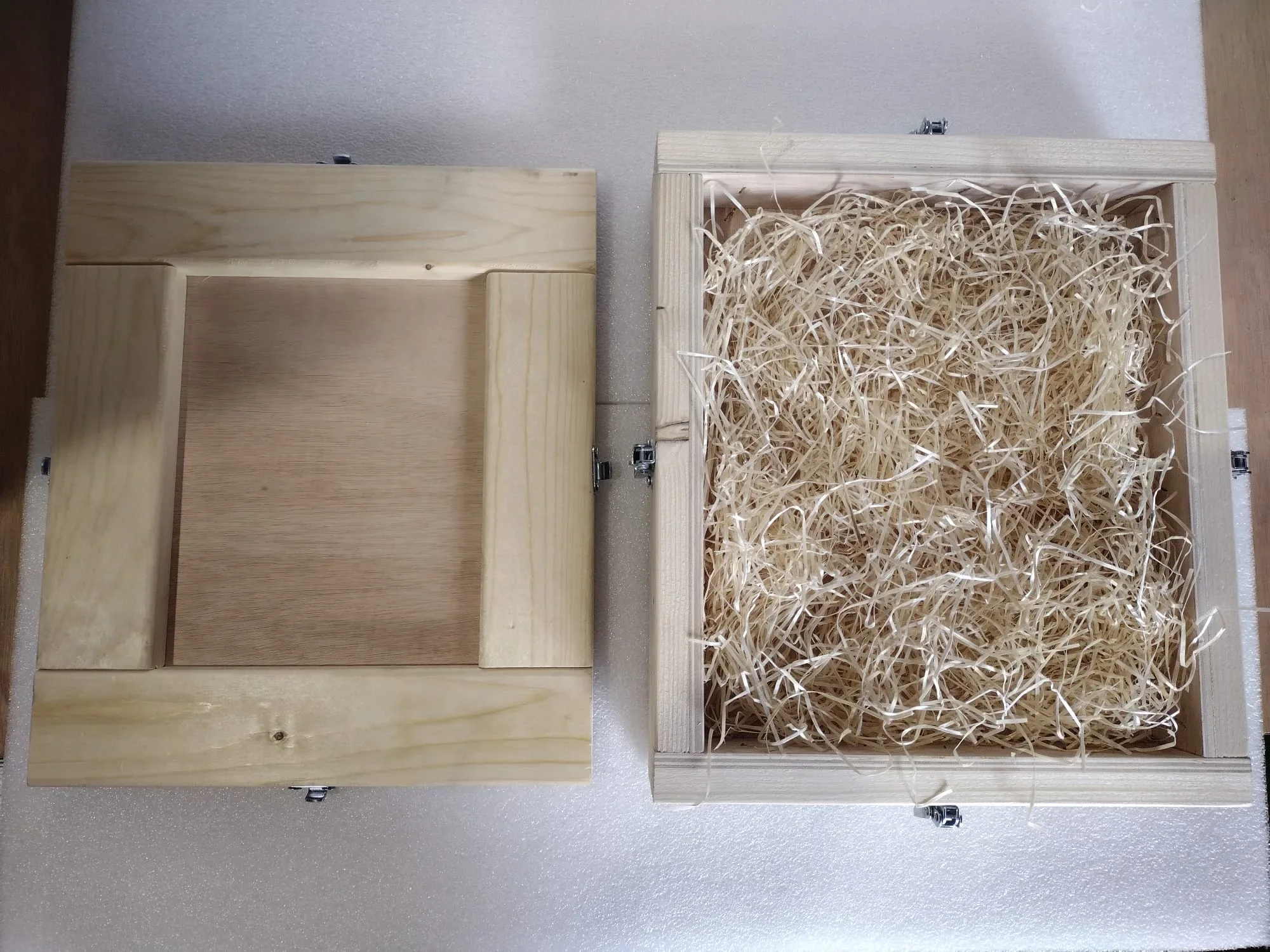
We also make small presentation boxes with hinged lids and latches for single objects and gifts, packed with wood wool or foam.

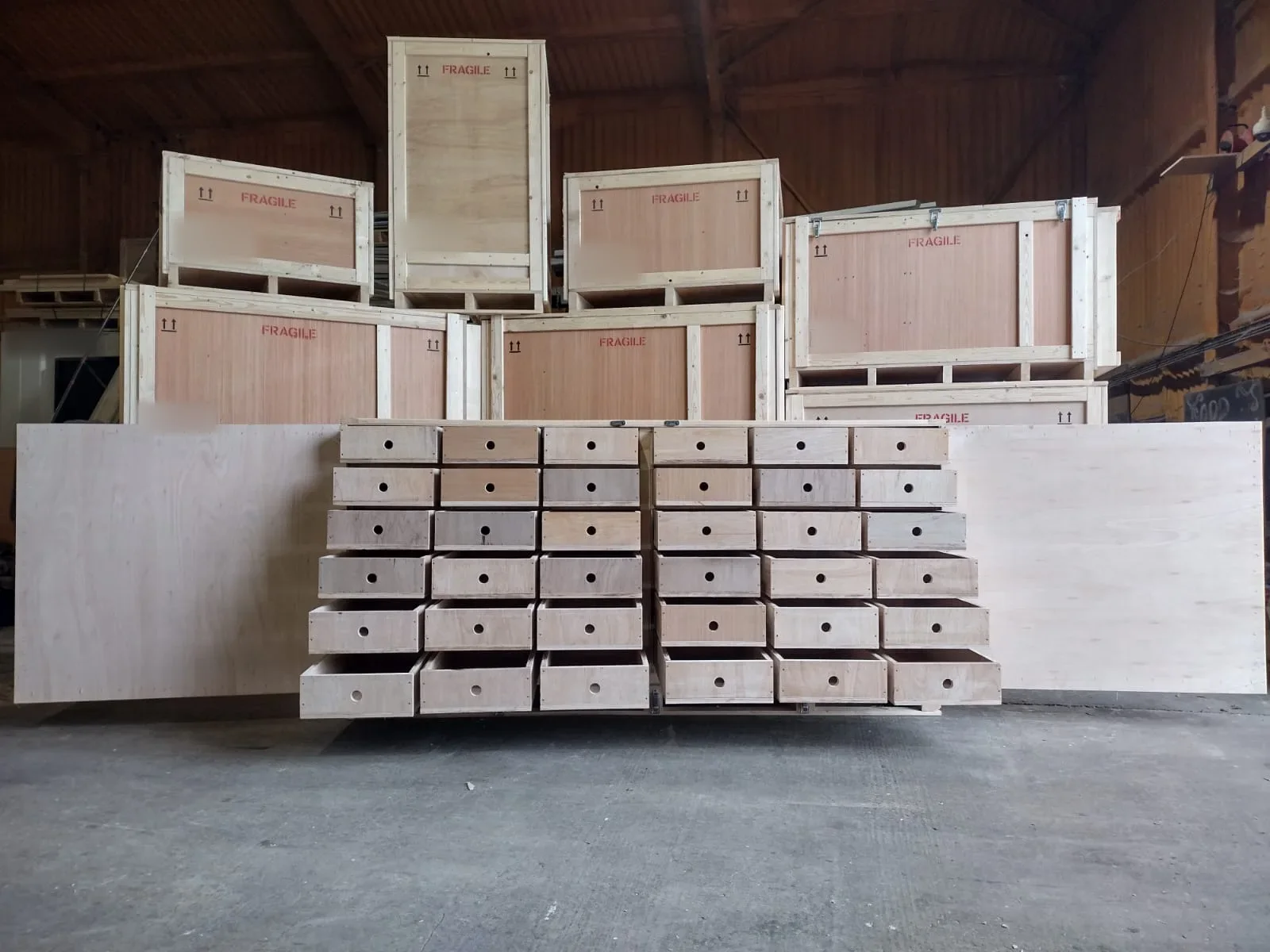
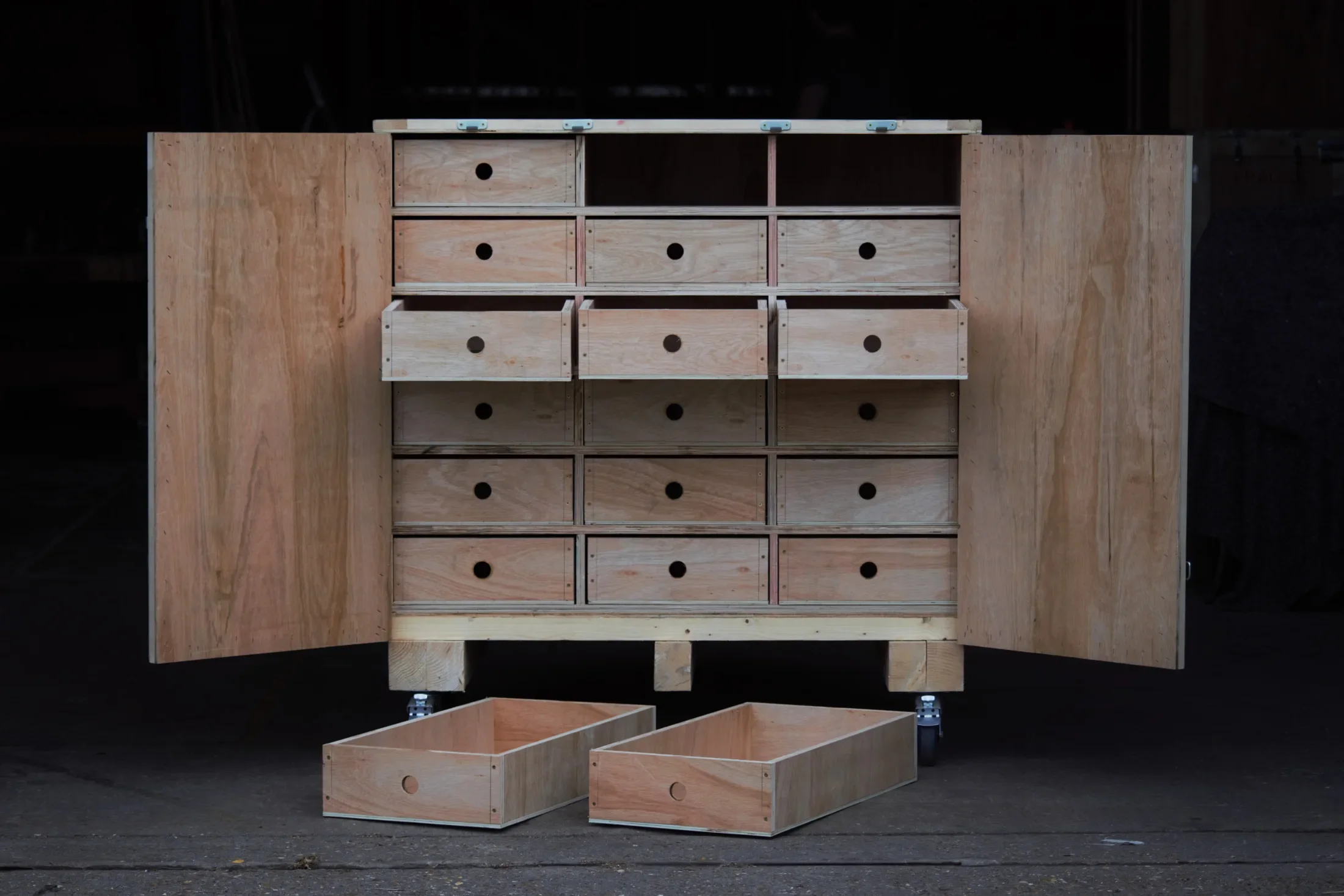
A bespoke crate opened out to show 36 drawers
A 36-drawer crate, built to order
A small hinged wooden presentation box with latches, open and filled with wood wool
A small presentation box, packed with wood wool
Export crates

Plywood on a timber frame, on their own base, marked for handling. Our standard for anything going abroad.

Drawer crates

Drawers for parts and collections, built to travel and to store. See the drawer crates we built for a manufacturer.

Rack and pocket crates

A slot for each framed work, so several pictures travel together without touching.

Heavy duty crates

Stronger frame and base for stone, concrete and sculpture, like this one for 500 kg of street art.

04

Which lining does your piece need?

The lining does most of the protecting, so we choose it for the piece, not the crate. Here's how we usually think about it. Your quote says which lining and thickness we recommend, and why.

Battens are for mirrors and flat works. Busts and sculpture are held with high density foam blocks, which grip the shape without pressing on one point.

High density foam and HLB22 cost about the same as each other. Polystyrene is cheaper, so we only suggest foam where the piece needs it.

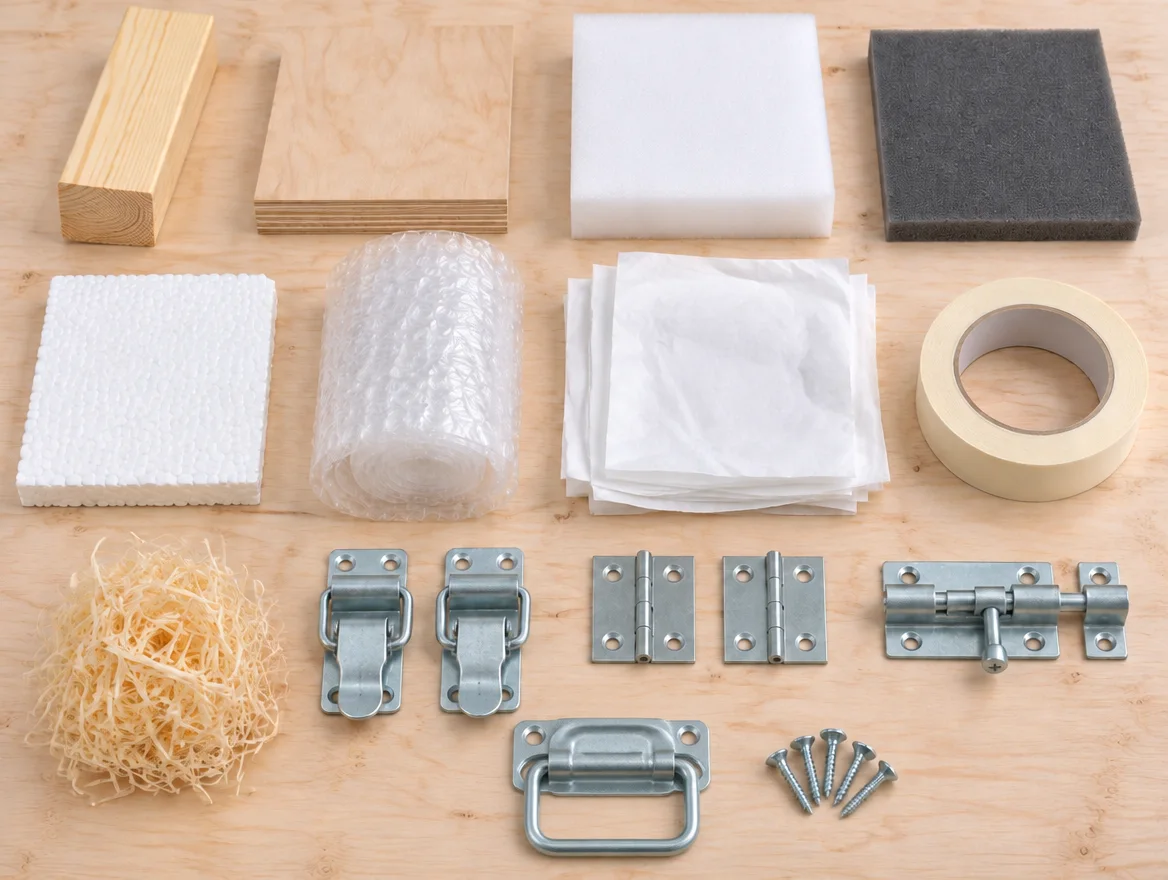
Crate materials laid out on plywood: pine timber, plywood, white high density foam, charcoal grey HLB22 foam, polystyrene, bubble wrap, tissue paper, masking tape, wood wool, latches, hinges, a bolt lock, a handle and screws
What goes into our crates, from timber and linings to wrapping and hardware
What you're sendingUsual liningWhy
Sculpture, busts, stone, bronzeHigh density foamFirm. Heavy pieces stay put instead of sinking in. Busts are held with high density foam blocks.
Ceramics, glass, gilded or carved framesHLB22 soft foamSoft. It gives a little and cushions knocks around delicate surfaces.
Framed pictures and mirrorsPolystyrene or foam, with padded battensBattens hold flat works still; the lining fills the space around them.
Machinery parts and componentsHigh density foamCut-outs or blocks that hold each part in its place.
Larger, lighter piecesPolystyreneRigid and light, so it doesn't add much weight. The most affordable lining.
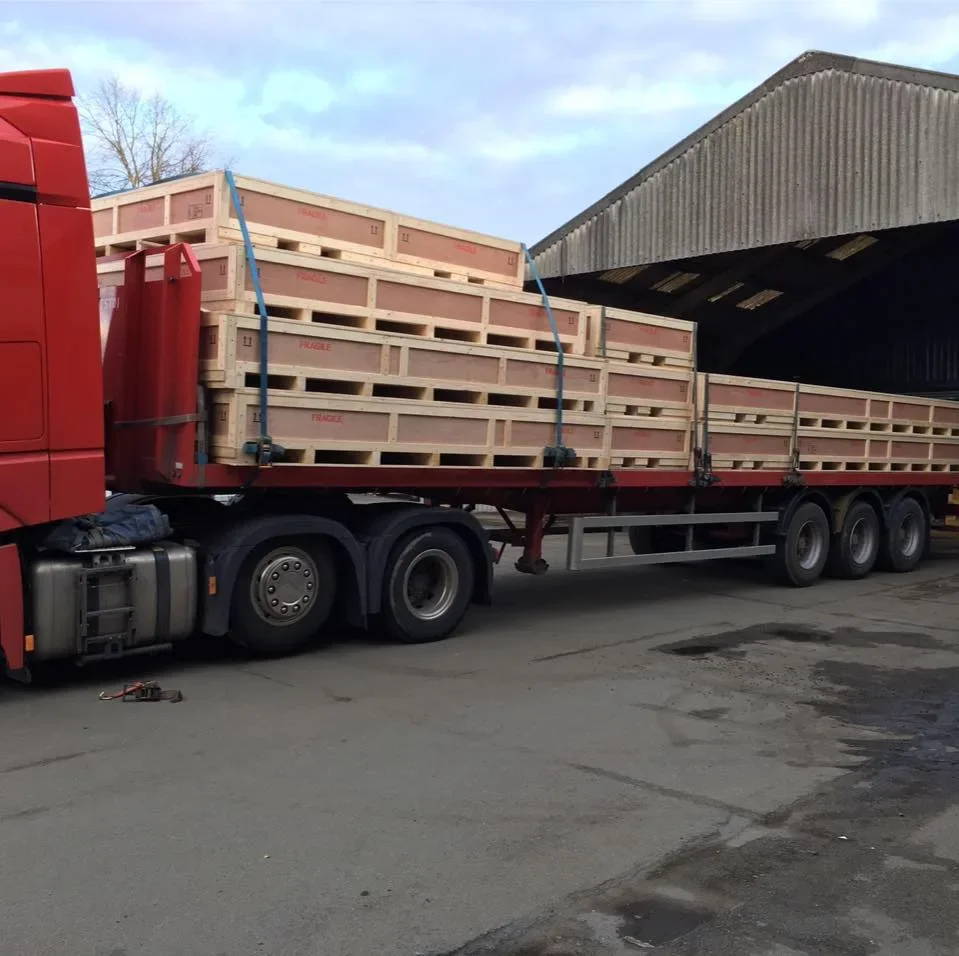
Finished crates strapped onto a flatbed lorry
Not sure what your piece needs?

Send us a photo and the measurements.

We’ll recommend the crate, the lining and the supports, and come back with a bespoke quote.

05

What size will the crate be?

There are no standard sizes. The inside of the crate is the size of the piece plus the lining on every side, and the outside adds the panels, the frame and the base.

A worked example. A framed painting 100 cm wide, 80 cm high and 10 cm deep, with 50 mm of lining on every side, needs an inside space of roughly 110 x 90 x 20 cm. The timber frame, plywood and base then add a few centimetres more each way.

Size matters for cost as well as protection. Shippers, especially by air, often charge on the space a crate takes up as well as its weight. Our crates are light for their size: a crate's own weight is usually far below its volumetric weight, so its outside size is what counts most. A crate that's bigger than it needs to be costs more to send, and a piece with too much room can move. Building to measure keeps both down.

If you're sending several pieces, it's often better to put them in one crate with a slot or compartment each than to send several small crates. Tell us everything that's going and we'll suggest the best split.

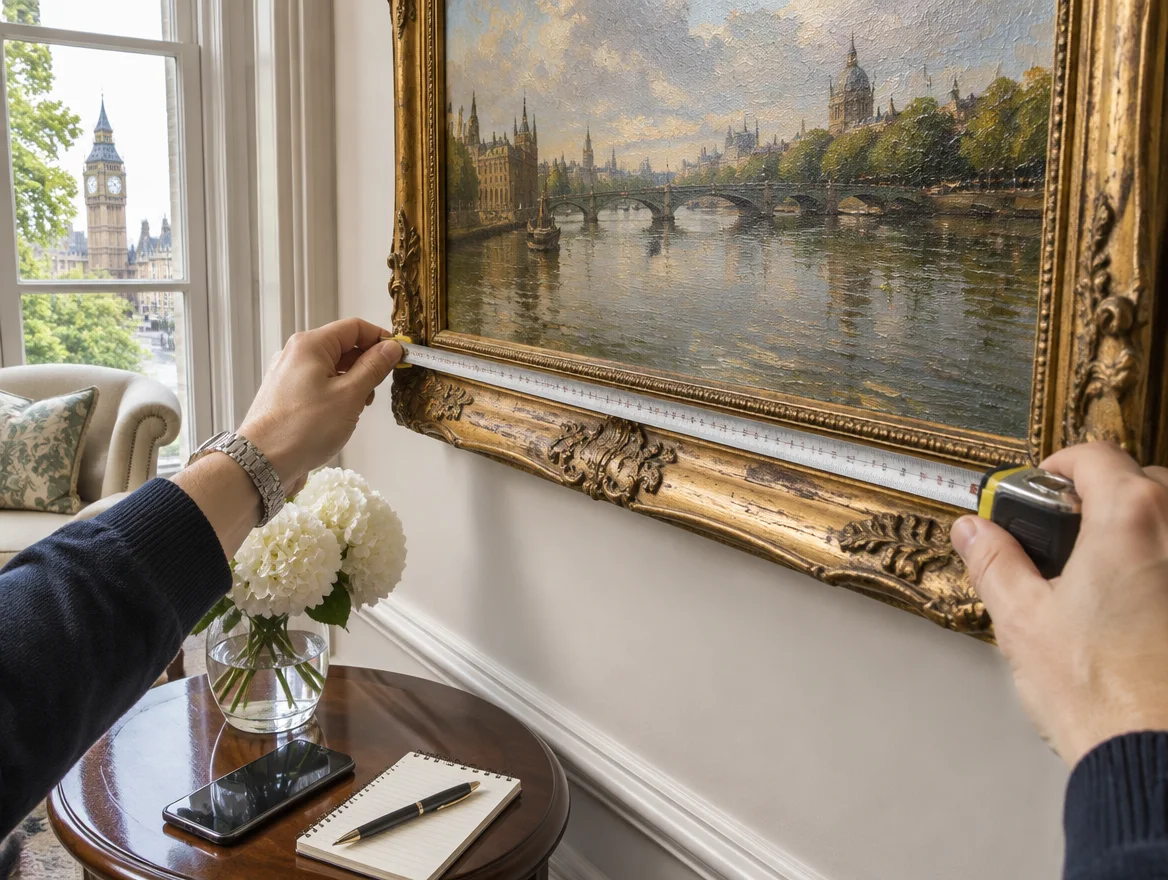
Hands measuring a framed painting on a wall with a tape measure, a notepad and phone on the table below
Every crate starts with the piece’s own measurements
06

Heavy items: bases, skids and bracing

Heavy pieces change how a crate is built. The base and the way the piece is held matter more than the panels.

  • A base that carries the load. Heavier crates sit on timber skids so they can be lifted from underneath.
  • A stronger frame and bracing, sized to the weight, so the crate keeps its shape when it's lifted at one end.
  • Holding the piece still. Thick foam all round, then timber battens or foam blocks over it, so it cannot shift.
  • Standing it the right way. Some pieces travel best upright on side supports, marked This way up.

The largest piece in our recent work was a section of painted concrete weighing over 500 kg, going to the United States. See how that crate was built, or read about sculpture and heavy pieces.

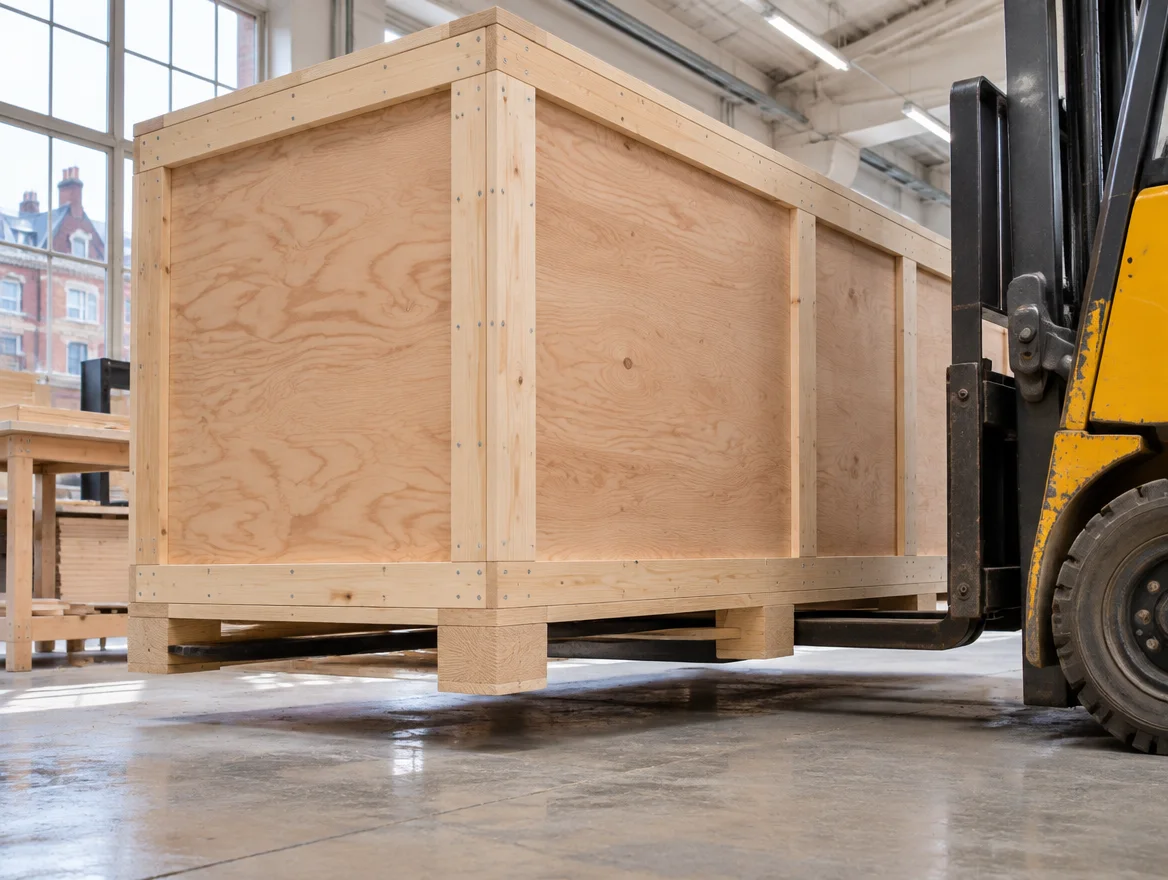
A large plywood crate on timber skids being lifted by a forklift
Skids let a heavy crate be lifted from below
07

Wooden export crates and ISPM 15

If your crate is leaving the UK, the wood itself has rules. Under an international standard called ISPM 15, solid wood packaging such as crate frames, skids and battens usually has to be heat treated and carry an official mark before it crosses a border. The United States and the EU both apply it, and it has applied to wood packaging between Great Britain and the EU since 1 January 2021.

Plywood and other processed wood made with glue, heat and pressure is usually exempt. So a crate with plywood panels still needs its solid timber parts treated and marked.

Our crates are heat treated and carry our own registered ISPM 15 stamp. Rules vary by country and can change, so check the destination's current requirements. Our ISPM 15 guide explains the stamp.

Two finished plywood crates side by side, marked Fragile, This way up and Keep dry, each with an ISPM 15 heat treatment mark
Finished crates, marked for handling
08

Crate only, or the whole journey

You can ask for a crate on its own, or we can collect, pack, crate and ship the piece for you. Either way, the quote is for your item and nothing else.

When we handle the whole journey, all we need are the item details and the collection and delivery addresses. Once your quote is confirmed, we handle everything apart from customs paperwork. See how it works.

Not sure whether you need a crate at all? Read crate or box, or just tell us what you're sending.

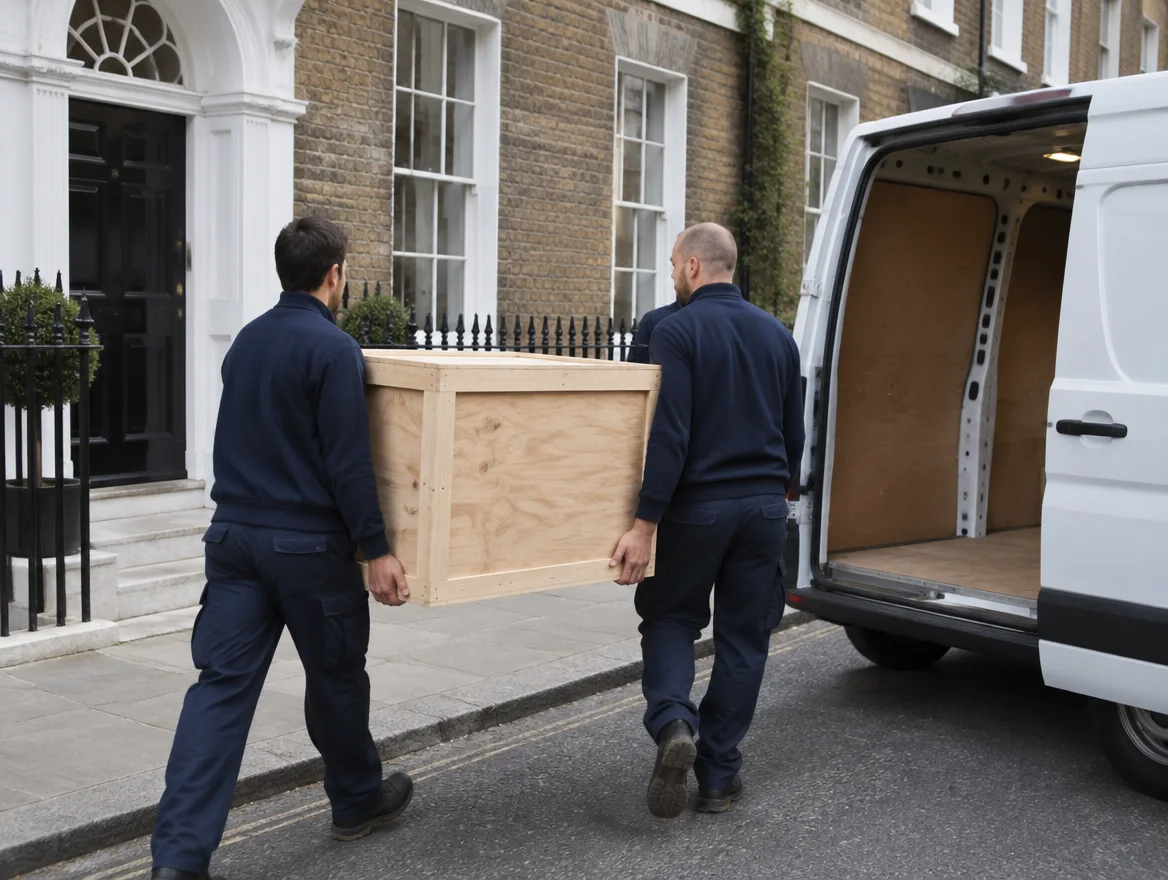
Two packers carrying a plywood crate from a London townhouse to a waiting van
Collected, packed, crated and shipped, if you want the whole journey
09

What to send us for a quote

The more we know, the more accurate the quote. A phone photo and a tape measure are usually enough to start.

  • What it is, and a few photos from different sides
  • Height, width and depth, in centimetres
  • The weight, or your best guess
  • Anything fragile: glass, gilding, loose parts, a painted surface
  • Crate only, or collected, packed and shipped
  • Collection and delivery addresses
  • Access at each end: stairs, lifts, parking, loading bays
  • When it needs to arrive

Then request your quote. We work 9am to 4pm, 7 days a week.

A gloved hand photographing the corner of a gilded frame with a phone, a ruler laid beside it for scale
A few clear photos help us quote accurately

Common questions

Do I need to measure my piece? +

No. We can collect your piece, take it to our warehouse and build the crate around the piece itself, then your courier collects the finished crate from us. If you'd rather send us the dimensions, we confirm them with you before we build, then deliver the crate to your address. That crate is built to the measurements you confirmed, so measure carefully: here's how.

Can my own courier collect the crate? +

Yes. Once your piece is crated at our warehouse, your courier or shipper collects it from us. We give you the crate's size for their booking, with its weight estimated from the volume of materials. If you or your shipper need the exact weight, we weigh the crate once it's built.

How much does a bespoke crate cost? +

Every quote is bespoke, based on the item itself: its size, weight, how fragile it is, where it's going and how quickly. Send us the details and we'll come back with a price for your piece, never a standard rate card.

How do you decide the size of a bespoke crate? +

We measure the piece and add the lining on every side, then the frame, panels and base. A framed painting 100 x 80 x 10 cm with 50 mm of foam all round needs an inside space of about 110 x 90 x 20 cm.

What do you line your crates with? +

High density foam, HLB22 soft foam or polystyrene, in thicknesses from 25 mm, 50 mm and 75 mm upwards, chosen for the piece. Polystyrene is the most affordable; high density foam and HLB22 cost about the same.

Can I buy a crate without shipping? +

Ask for a crate only quote. Tell us what's going in it, its size and weight, and where it's going.

Can you crate very heavy items? +

Yes. Heavy crates get a stronger frame, bracing and a base on skids. Our recent work includes a crate for a concrete artwork weighing over 500 kg.

Do wooden crates need a stamp to go abroad? +

Most countries require solid wood packaging, such as crate frames, skids and battens, to be heat treated and stamped under a rule called ISPM 15. Plywood is usually exempt. Our crates are heat treated and carry our own registered ISPM 15 stamp. See our ISPM 15 guide.

Can a bespoke crate be used again? +

Often, yes. A well-built crate can make the return trip or be stored, and our drawer crates for a manufacturer were built for regular reuse. A crate built around one piece fits that piece best, so tell us if you plan to reuse it.

How long does it take to build a crate? +

It depends on the piece and how busy we are. Tell us when it needs to arrive and we'll say whether we can meet it.

When can you collect? +

We work 9am to 4pm, 7 days a week, and we're in London regularly making collections, in and out of the city.


Tell us what needs to travel.

Every quote is bespoke, based on the piece itself. Send us the details and we'll come back to you.

Request a quote
Request a quote