

What our crates are made of
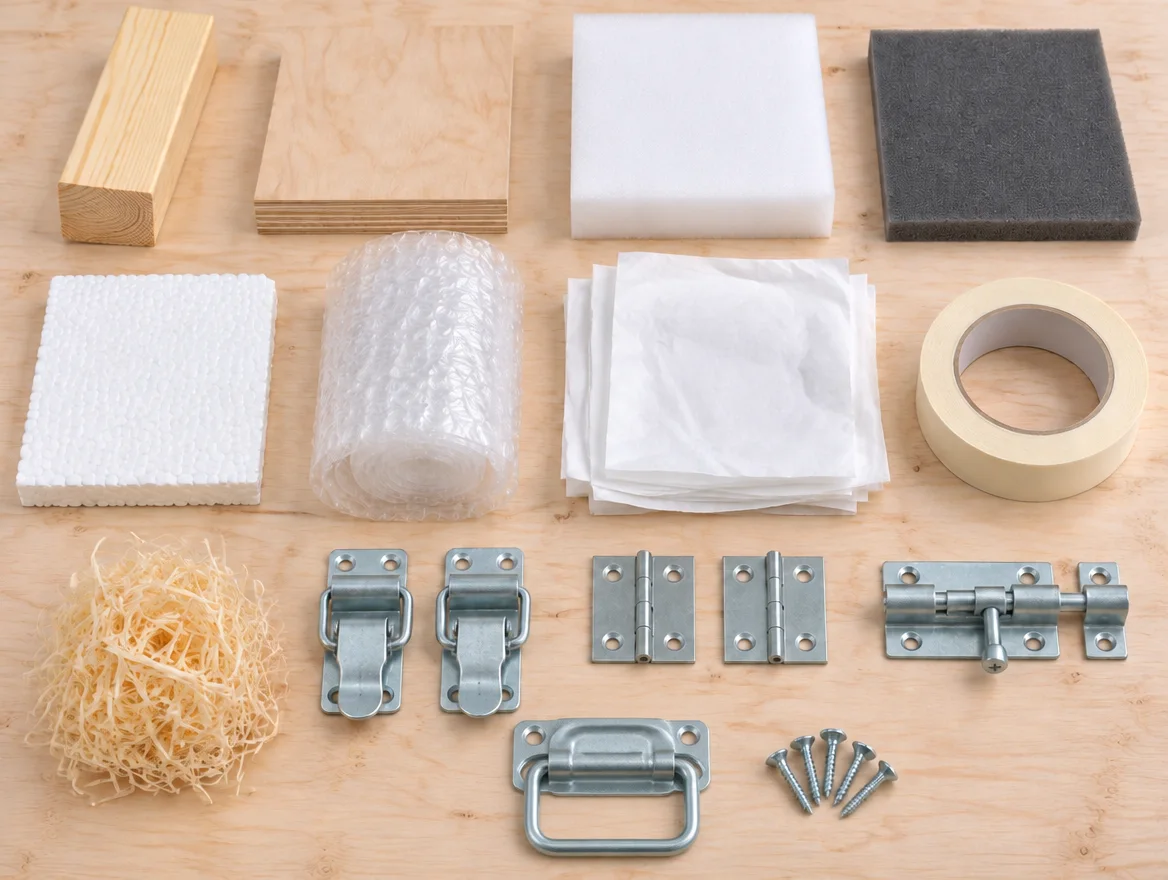
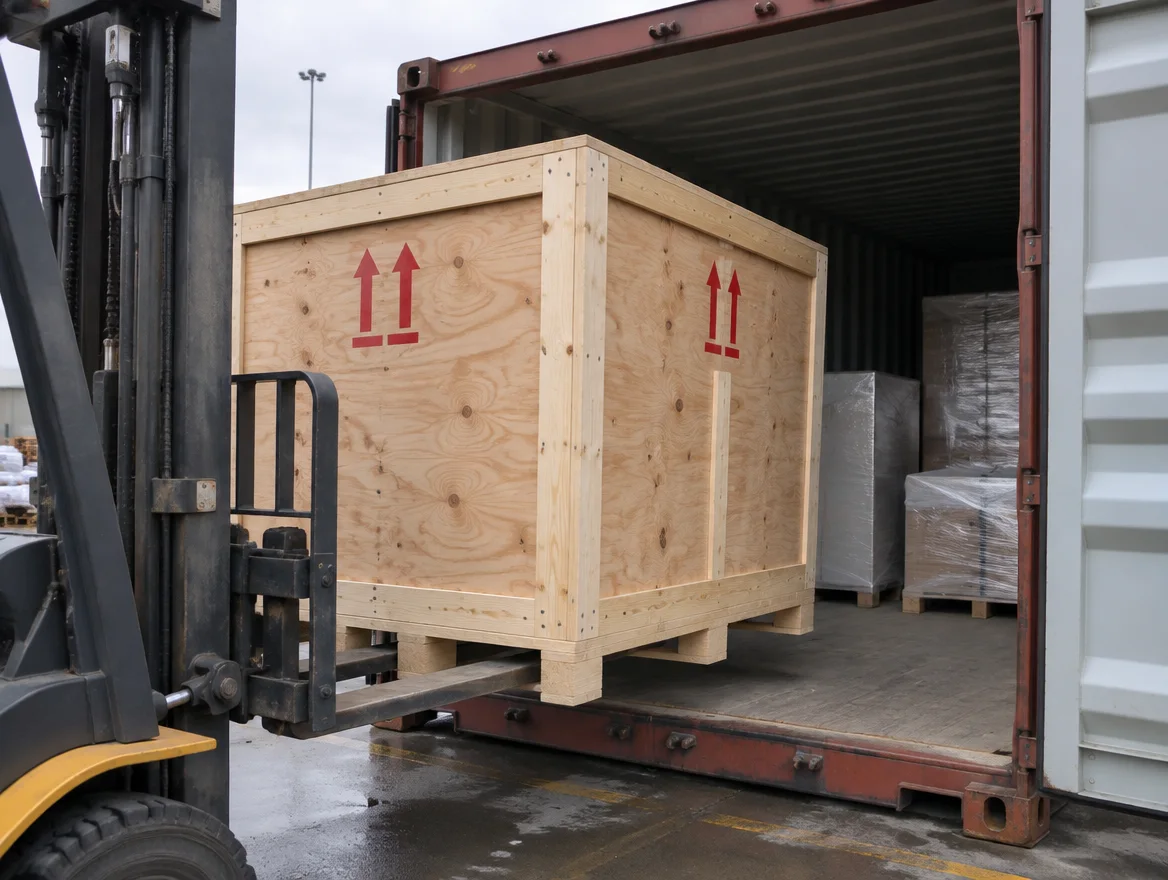
Every crate we build has two jobs: carry the weight and stop the piece inside from moving. We do that with a pine timber frame, plywood panels, skids underneath, a foam lining chosen for your piece and supports that hold it still. Here is everything we use, and why.
- Frame
- Pine timber
- Panels
- Plywood
- Linings
- High density, HLB22, polystyrene
- Thickness
- 25, 50, 75 mm and thicker
- Hardware
- Fitted by hand, in-house
What is a wooden shipping crate made of?
A good crate is a set of layers, and each layer has one job. The outside carries the load and takes the knocks. The inside cushions the piece and holds it still, whichever way the crate is turned.
Here is how the layers go together, in the order we build them:
Not sure which shape of crate you need? Start with types of crate, then come back here for what goes into it.
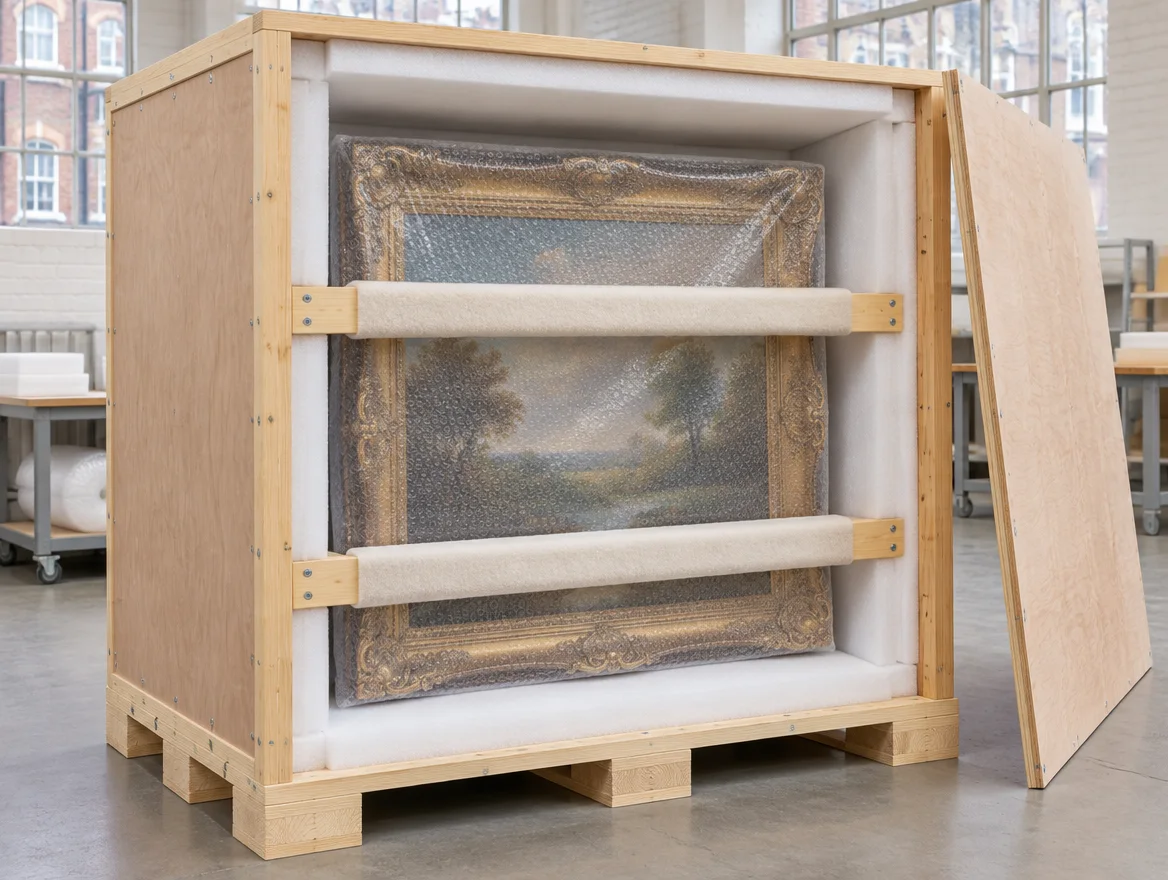
A pine timber frame with plywood panels, built to measure for your piece.
Skids underneath, so a forklift can lift the crate from below.
High density foam, HLB22 soft foam or polystyrene, from 25 mm thick.
A wrap, then foam blocks, padded battens, cradles, drawers or straps.
- 01Measure
We size the crate to your piece, so it fits closely and can't shift.
- 02Build the shell
A pine frame and plywood panels, on skids for the forklift.
- 03Line it
High density foam, HLB22 or polystyrene, at the thickness the piece needs.
- 04Wrap the piece
Tissue, bubble wrap or tape on glass, depending on what it is.
- 05Hold it still
Foam blocks, padded battens, cut foam, drawers or straps.
- 06Close and mark
Latches, hinges and bolt locks fitted by hand, then Fragile and This way up on the outside.
The frame and panels: pine timber and plywood
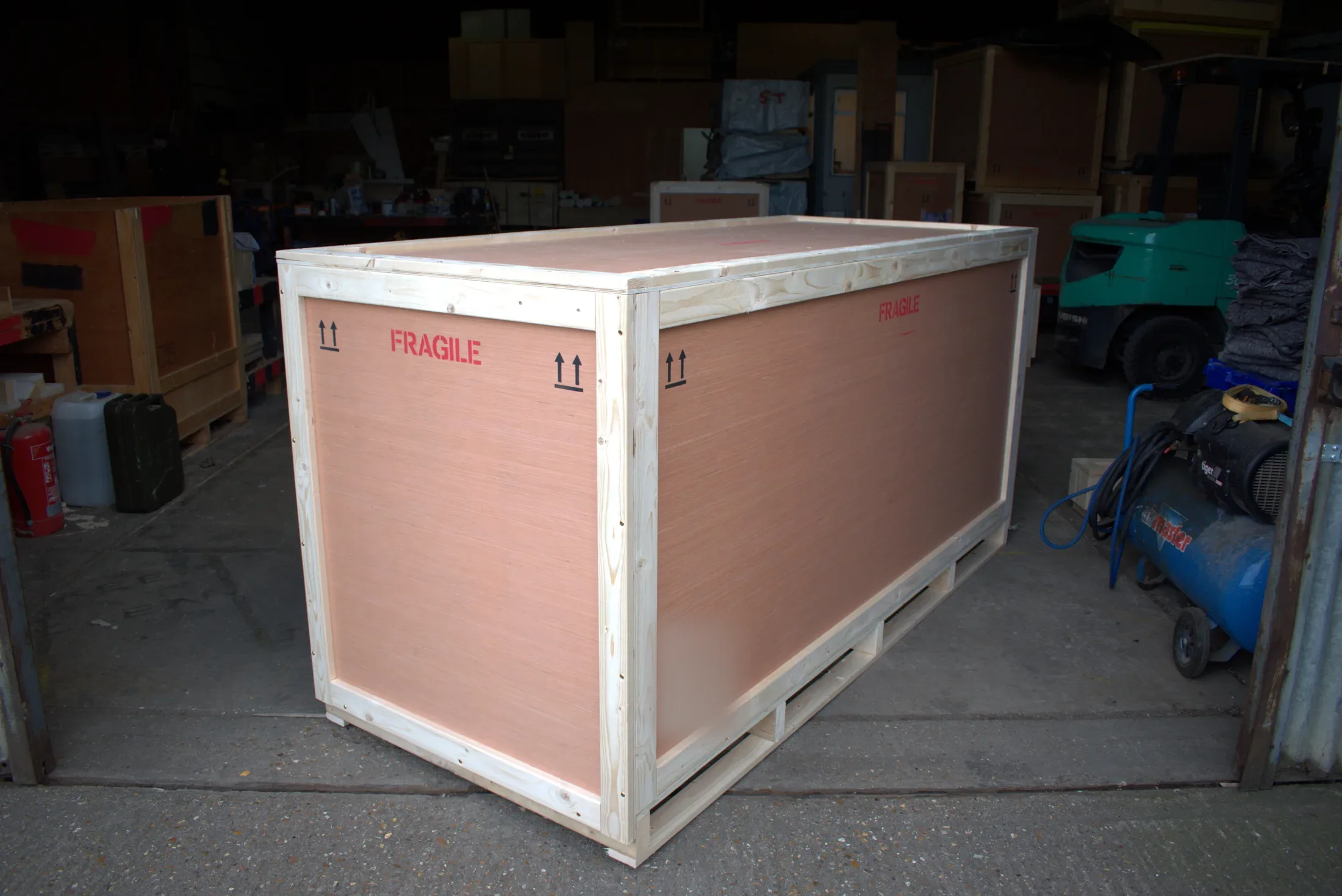
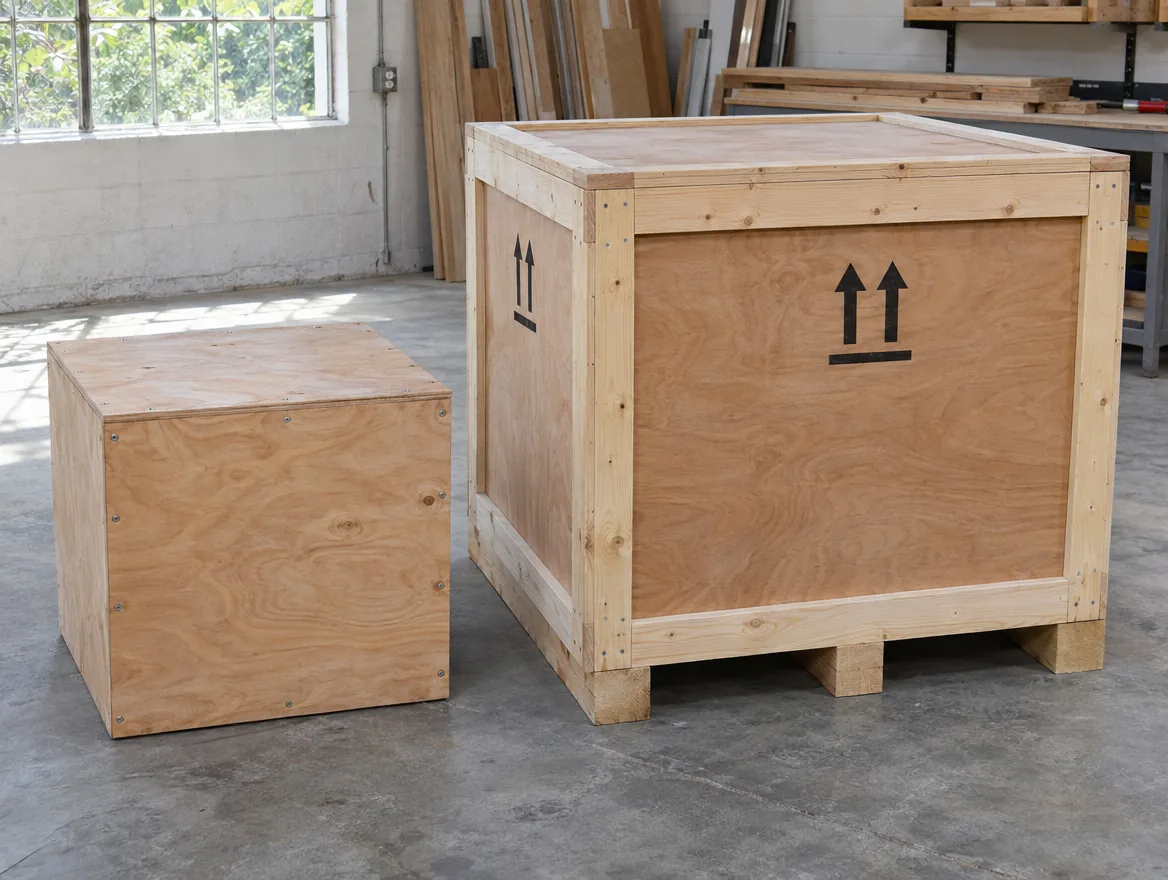
The frame is pine timber. It runs round the edges of every face and takes the strain when the crate is lifted, moved or strapped down. The panels that close the frame are plywood, which is strong for its thickness, hard to split and smooth on the face.
Every crate is built to measure. A crate that is too big lets the piece shift, and movement is where most damage starts. A heavy piece gets a heavier build, and a light painting doesn't pay for a crate built for stone.
A note on ISPM 15. Solid timber packaging that crosses a border usually has to be heat treated and stamped. Plywood is processed wood and is usually exempt. Our crates are heat treated and carry our own registered ISPM 15 stamp. Each country sets its own import rules, so check the current position with your shipper. Our ISPM 15 guide explains more. We build the crate; we don't handle customs paperwork.
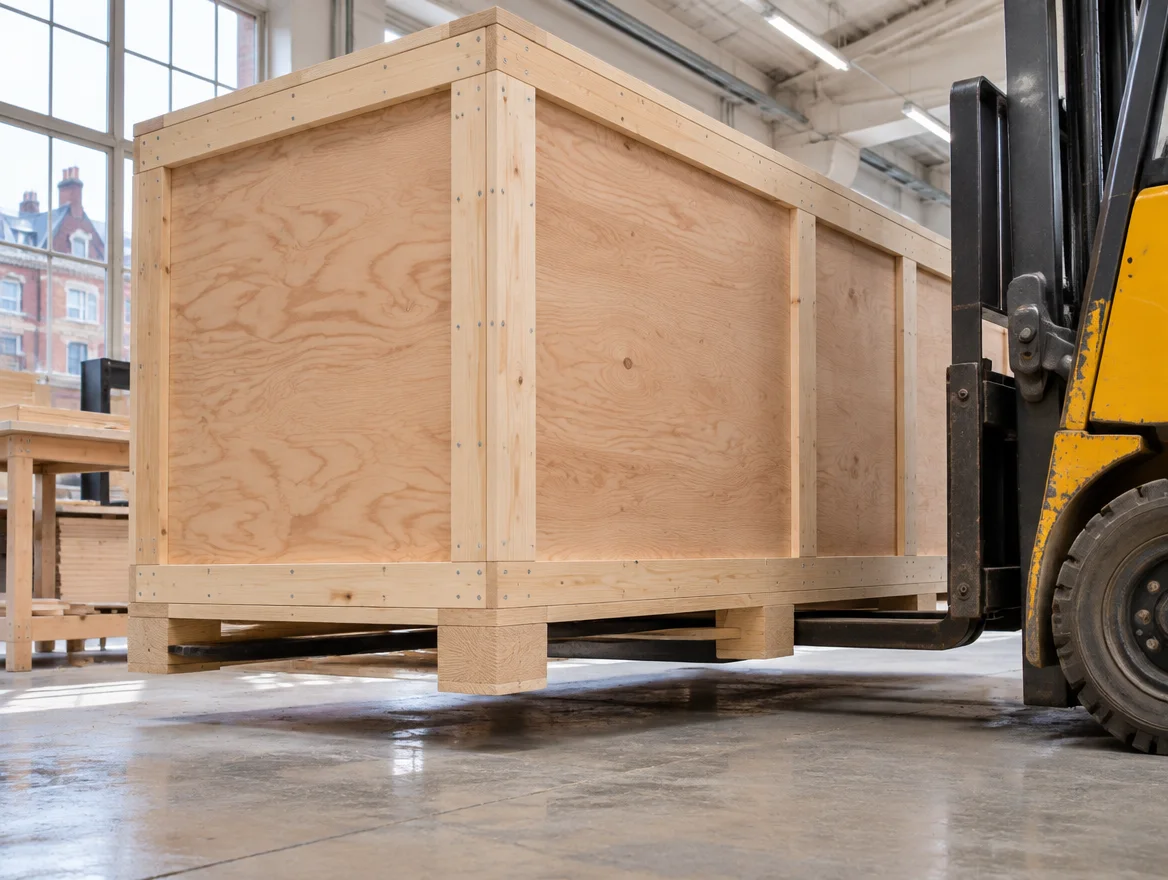
Skids: built for the forklift
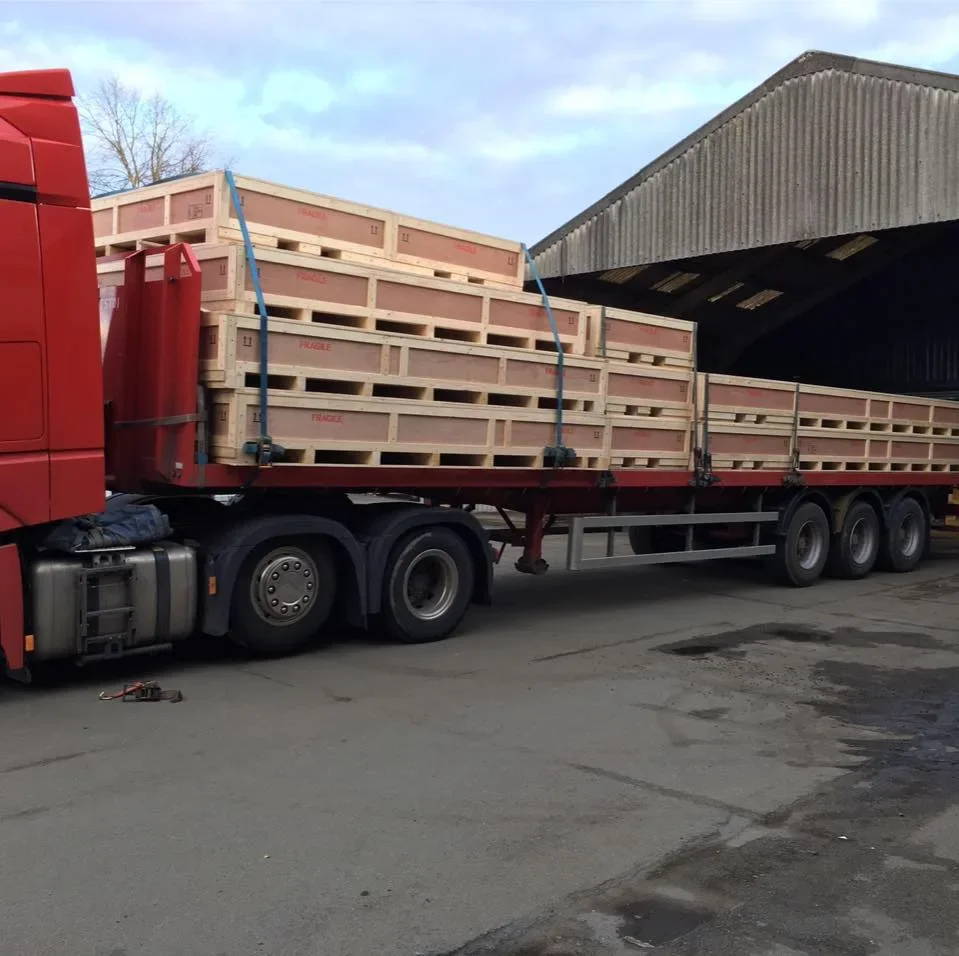
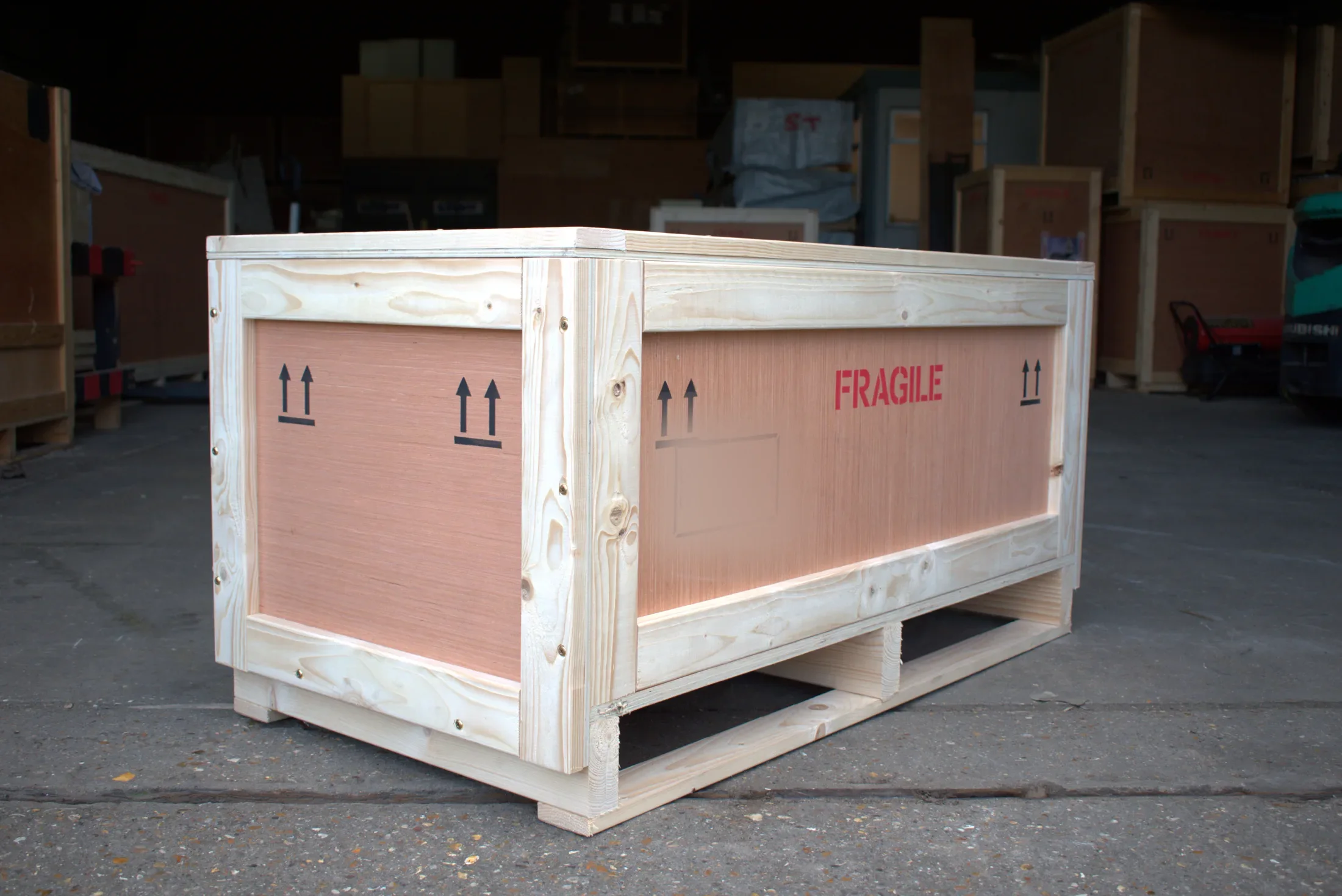
Our crates sit on skids: lengths of timber fixed underneath that lift the crate off the floor. The gap lets forklift forks slide in, so the crate is lifted from below instead of being dragged, tipped or carried by hand.
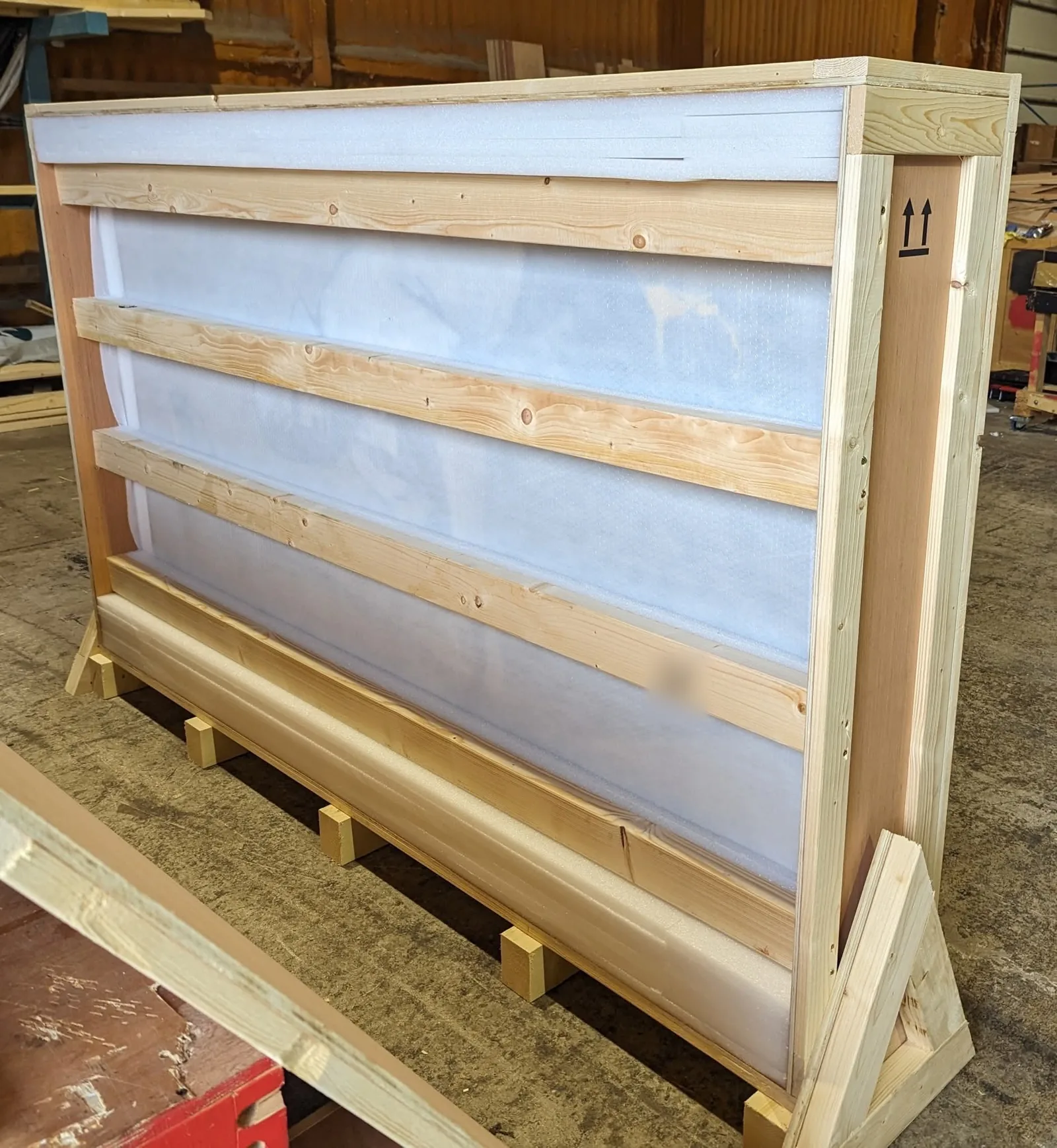
Heavy crates get a stronger base. The crate we built for 500 kg of concrete street art stood upright on skids with A-frame supports, so it could be moved without tipping.
The three linings: high density foam, HLB22 and polystyrene
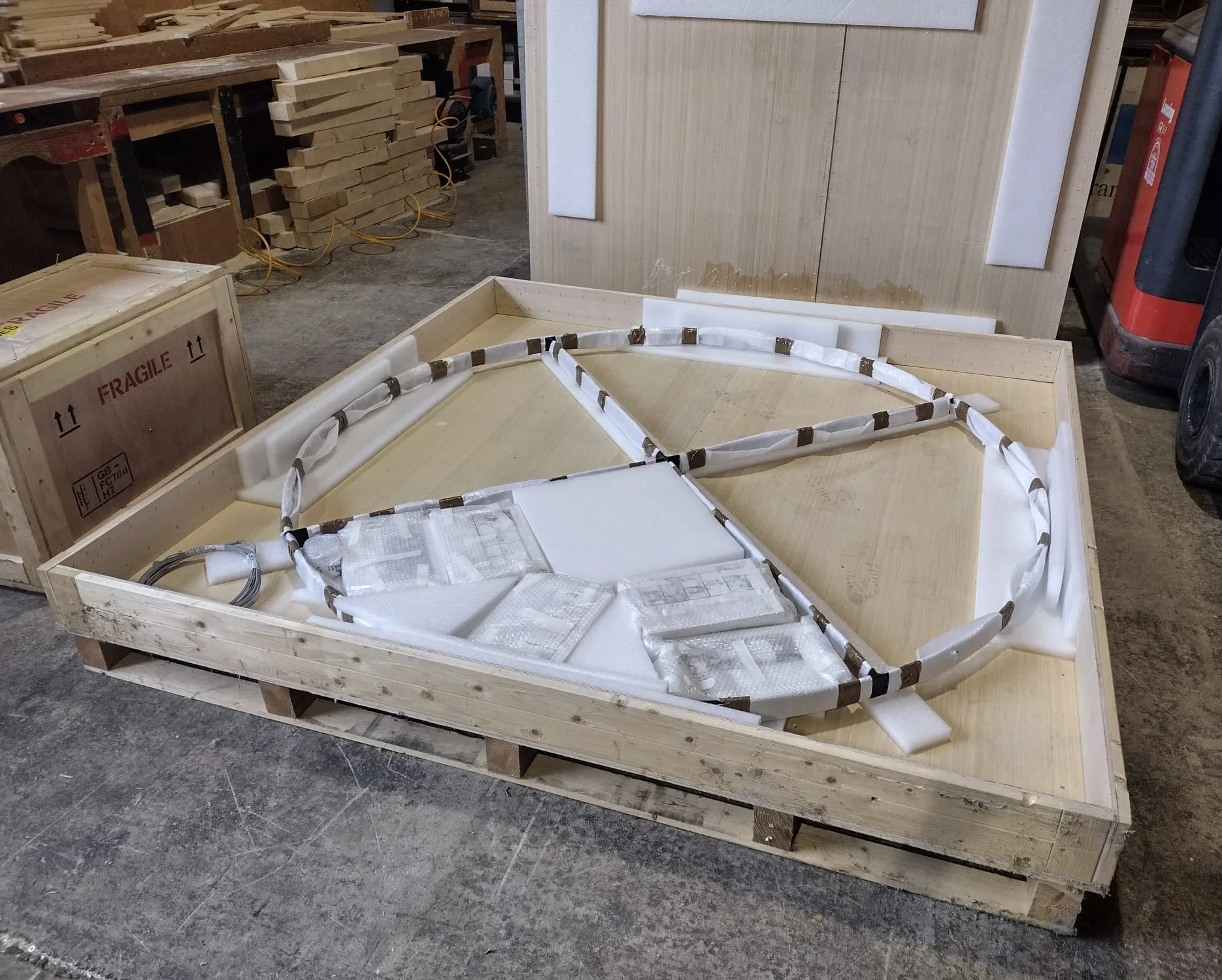
The lining covers the inside walls, floor and lid of the crate. It soaks up knocks and vibration before they reach your piece. We use three materials and choose the one that suits what is going in.
Each lining comes in 25 mm, 50 mm and 75 mm, and thicker where a piece needs it. Thicker foam gives more room to soak up a knock, so heavier and more fragile pieces usually get more.
How we choose between them comes down to two questions: how heavy is the piece, and how delicate is its surface?
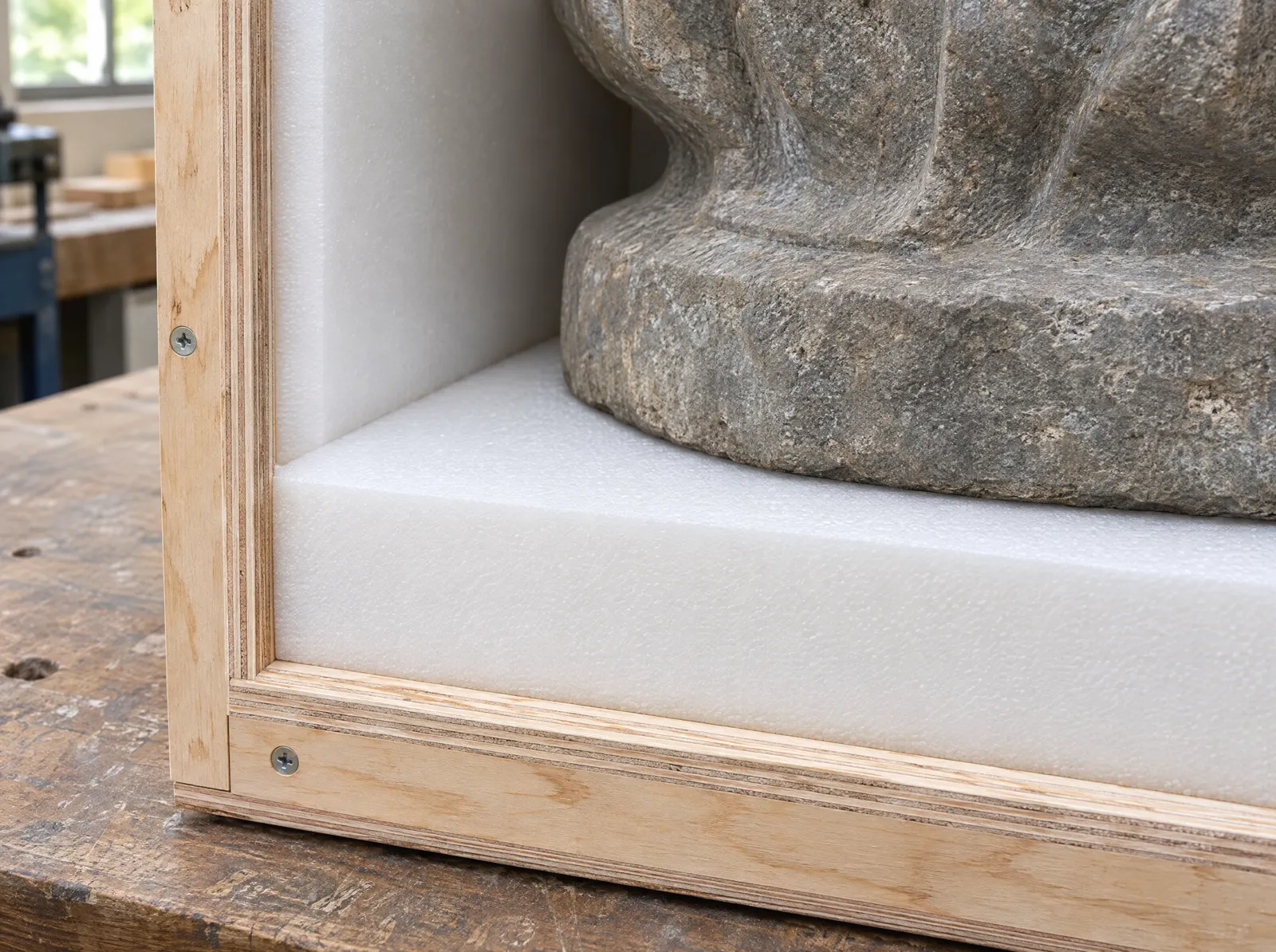
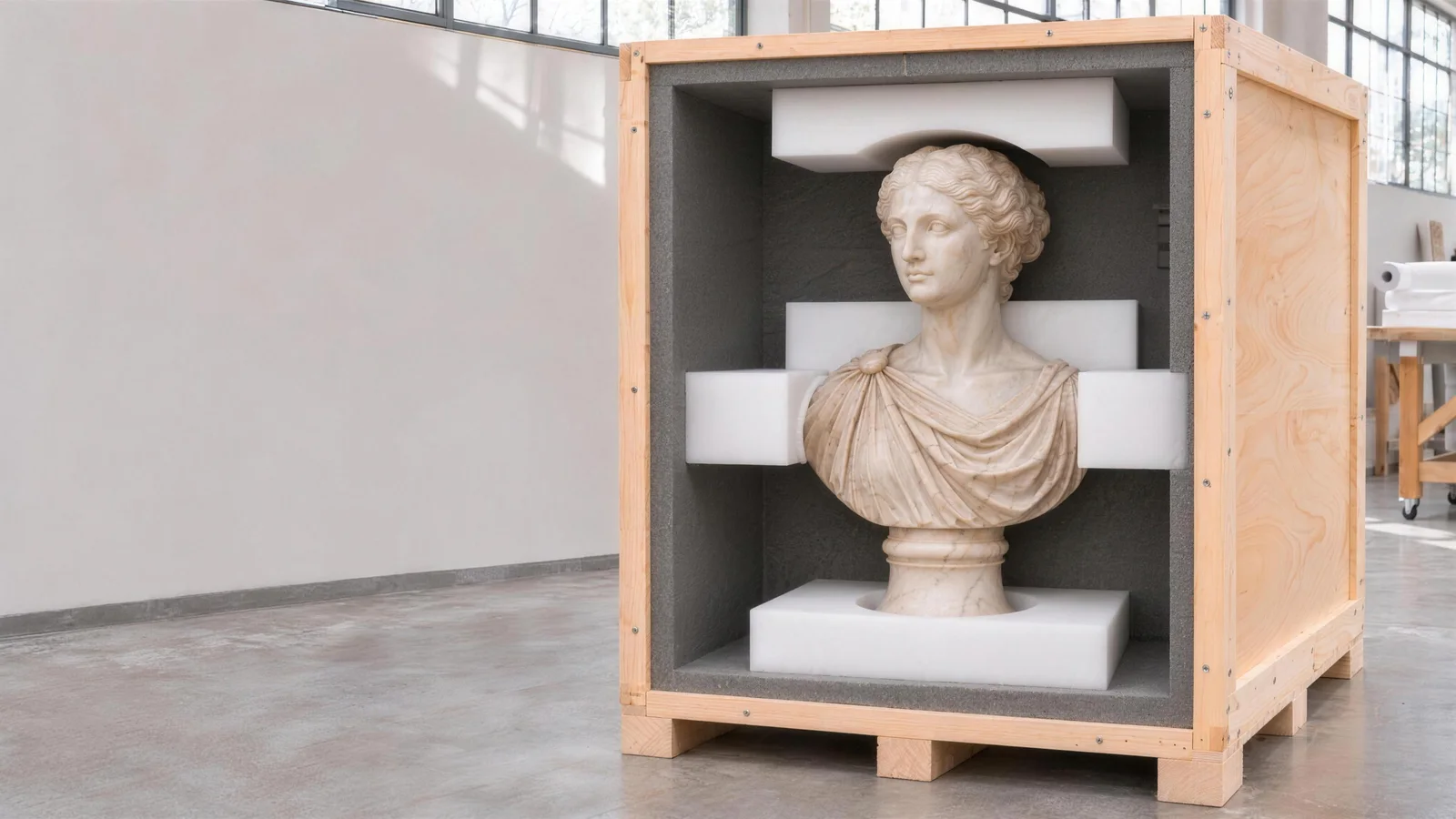
Some crates use more than one. A bust, for example, can sit in a crate lined with grey foam and be held still by blocks of white high density foam.
Polystyrene is the most affordable lining. High density foam and HLB22 cost about the same as each other. Your quote says which lining and thickness we recommend, and why.
| Lining | Colour and feel | Best for | Relative price |
|---|---|---|---|
| High density foam | White, firm | Heavy pieces, sculpture, busts and stone, and the foam blocks that hold things still | About the same as HLB22 |
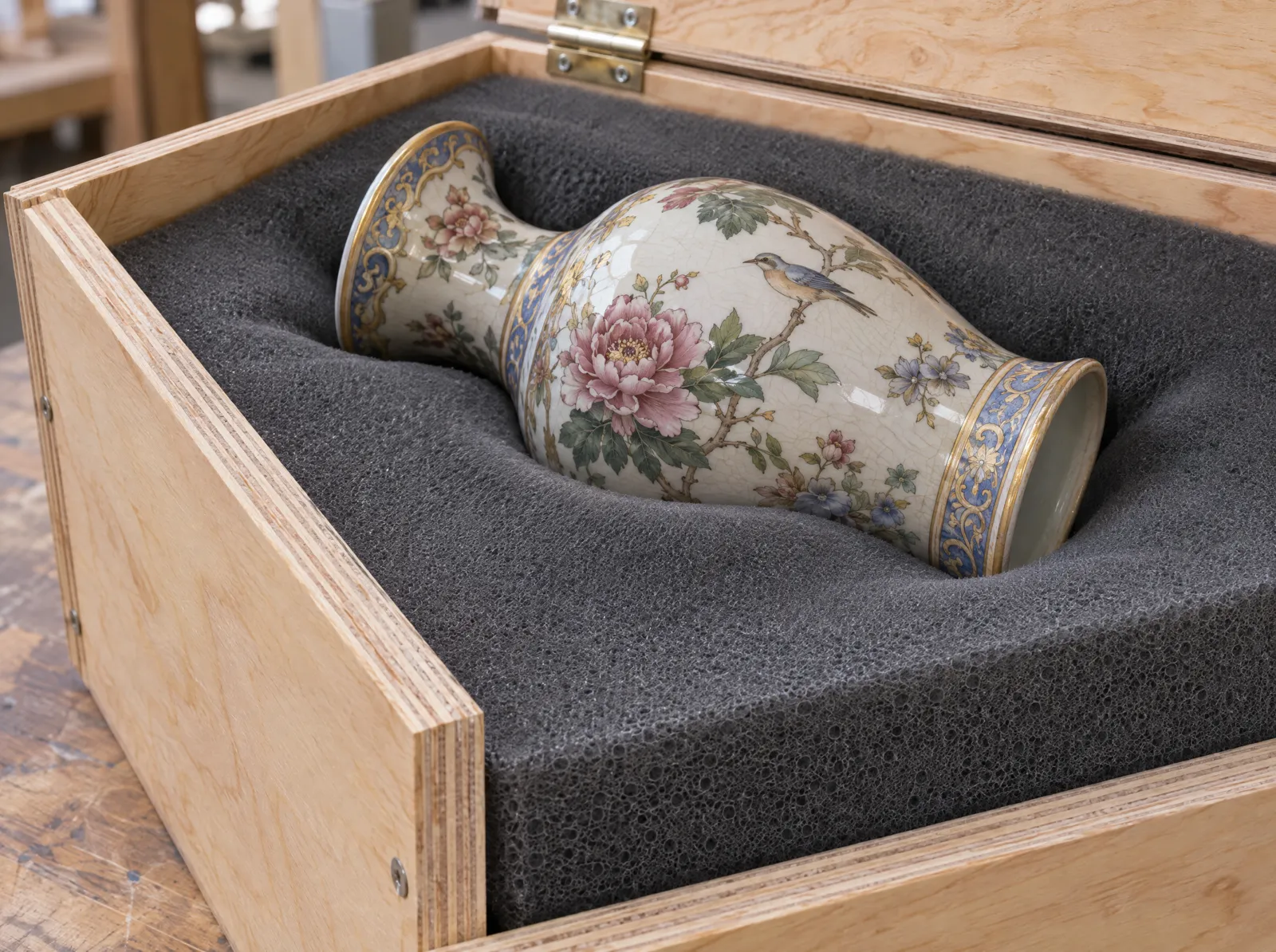
| HLB22 soft foam | Charcoal grey, soft | Fragile surfaces: glass, ceramics and gilded frames | About the same as high density foam |
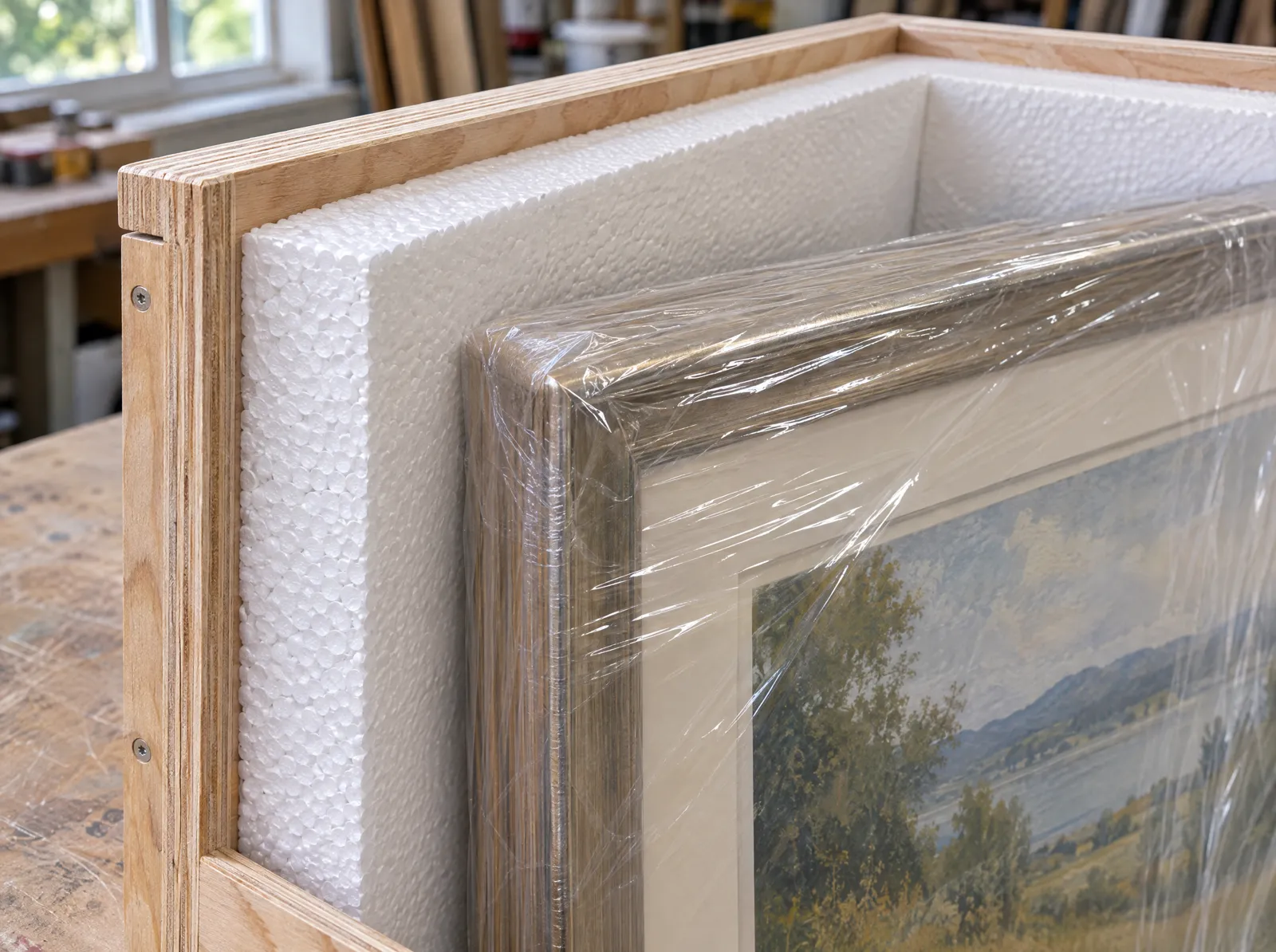
| Polystyrene | White, rigid and light | Lighter pieces, where a firm, light lining does the job | Most affordable |
High density foam. It stays firm under weight, so a bust or a piece of stone doesn't sink into the lining or shift as it travels.
HLB22 soft foam. It gives gently against glass, glaze and gilding, so the surface isn't pressed against anything hard.
Polystyrene. It is rigid and light, and the most affordable of the three.
Send us a photo and the measurements.
We’ll recommend the crate, the lining and the supports, and come back with a bespoke quote.
What touches your piece
Before the foam, your piece is wrapped. We keep it simple and use only what does the job.
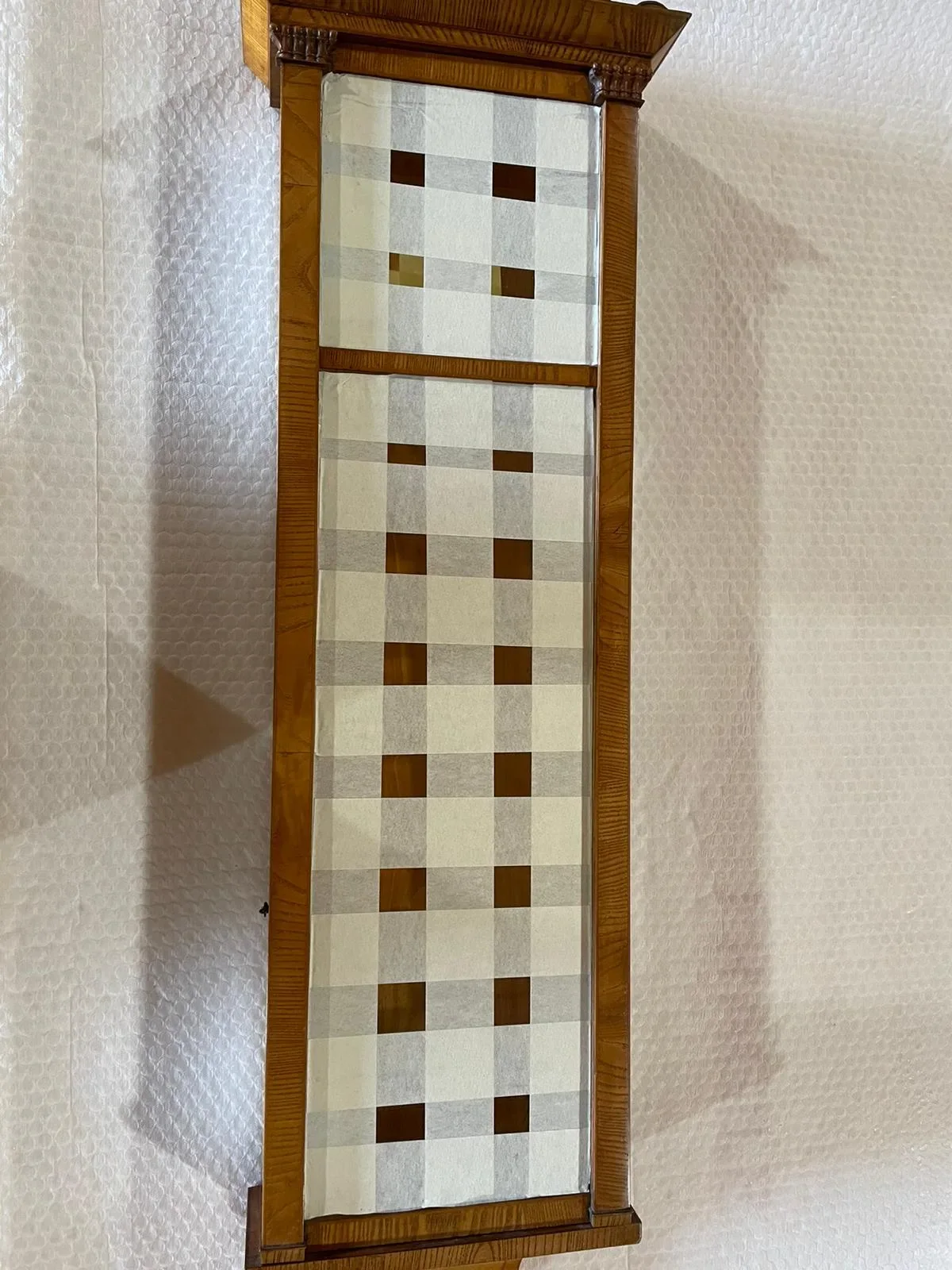
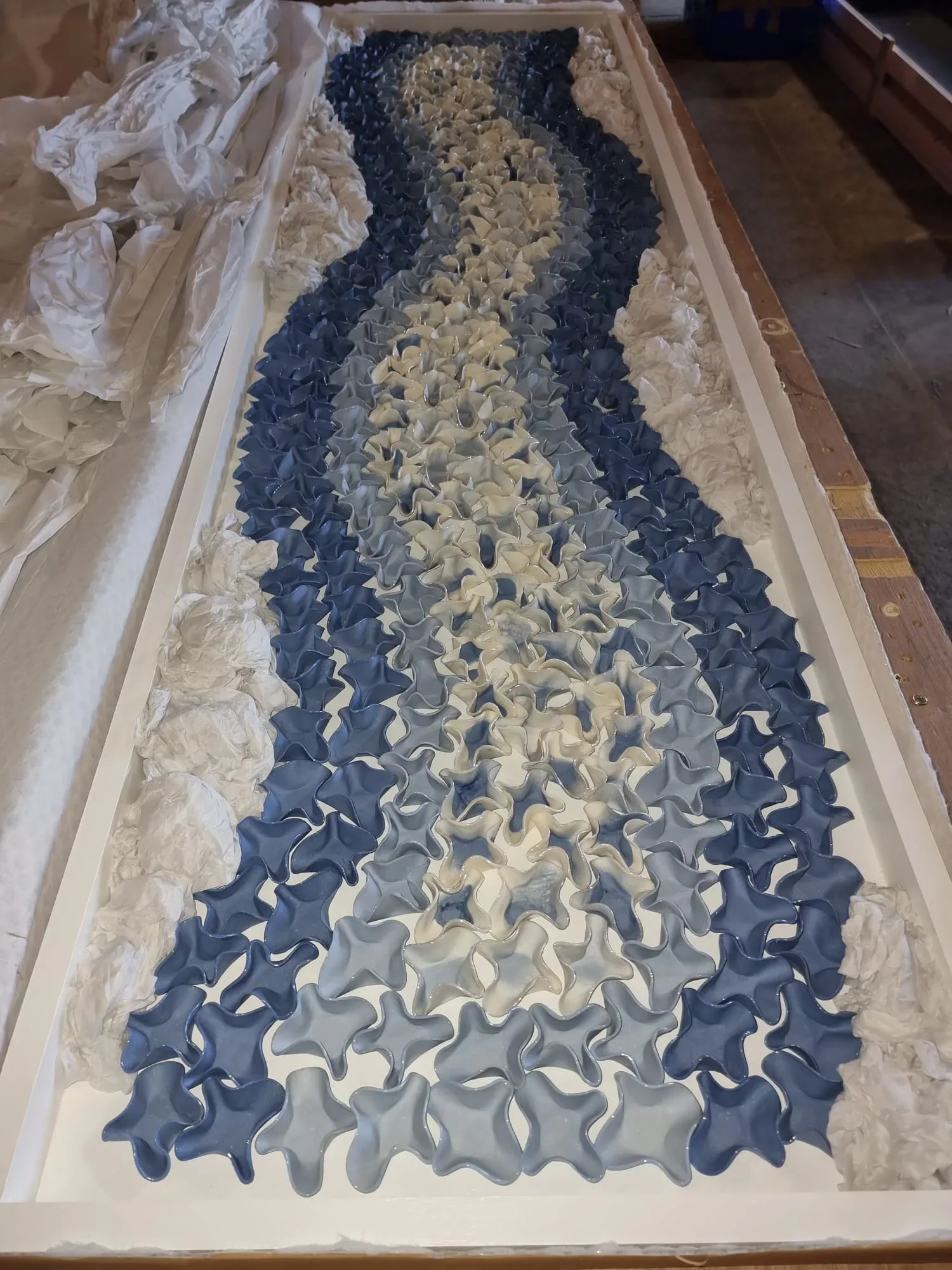
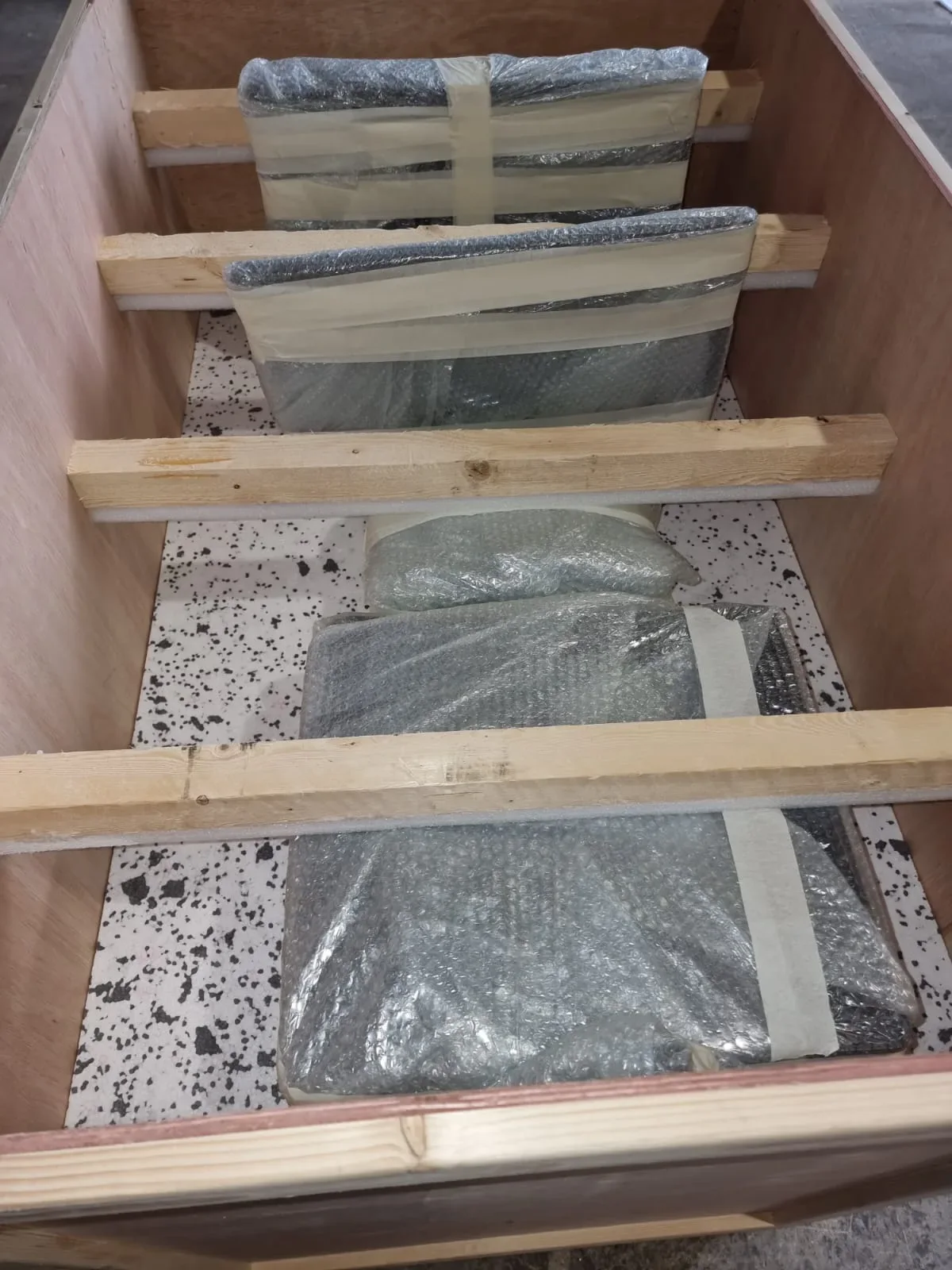
The order matters. Soft tissue goes on first, closest to the surface, then bubble wrap over it for cushioning. Only then does the wrapped piece go into the lined crate. Mirror glass is taped before the mirror is wrapped, so the tape is right on the glass where it does its job.
There is more on glass in mirrors and glass, and on paintings in crates for paintings.
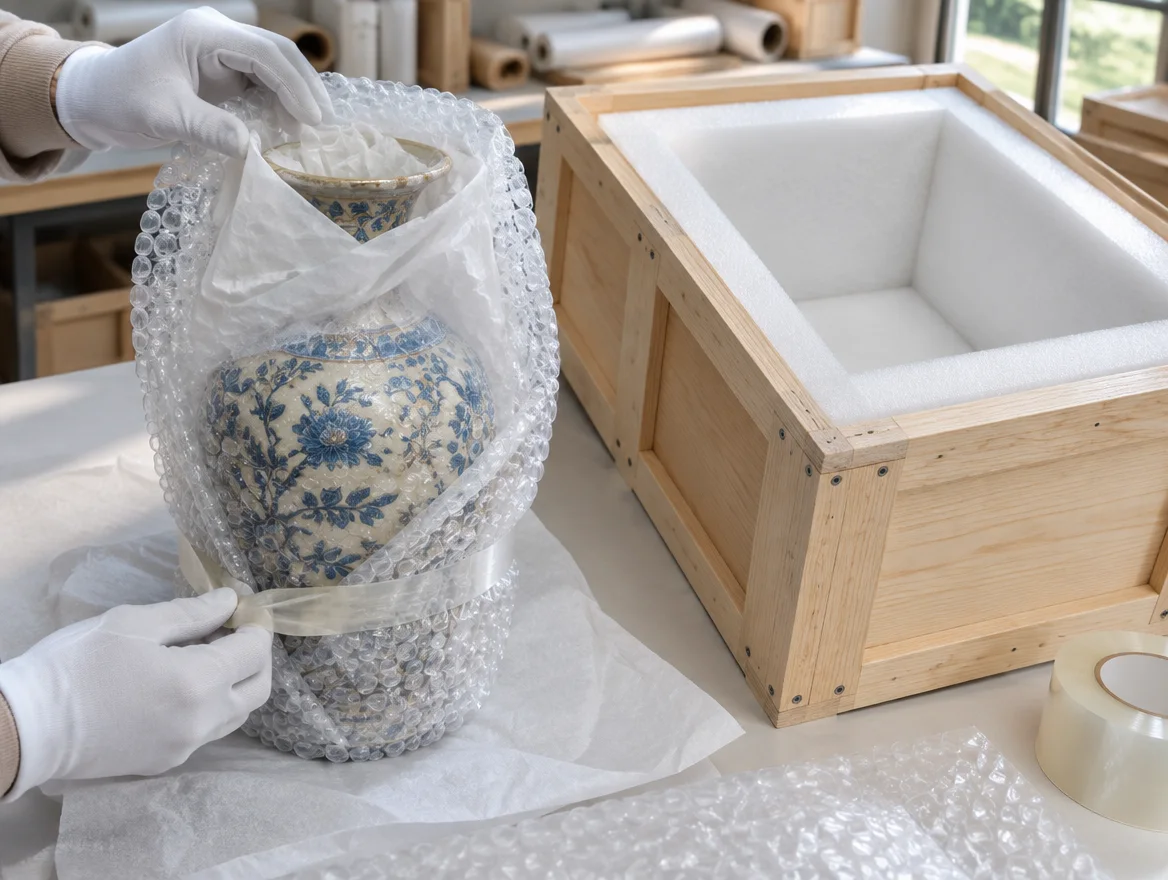
A cushioning layer around objects and flat works, so nothing hard touches them.
Soft paper for ceramics, small pieces and fine detail, and for filling hollows.
Masking tape across mirror glass in a lattice, so the glass holds together if it ever cracks.
Soft wood shavings that bed small pieces into presentation boxes.
Supports inside the crate: what holds it still
The lining softens knocks. Supports stop movement. Every piece is held so it can't slide, rock or rub.
- High density foam blocks for busts and sculpture. Firm white blocks hold the piece at its base and sides. See sculpture and heavy pieces.
- Padded battens for mirrors and flat works: timber battens faced with foam, fixed across the piece. See mirrors and glass.
- Cut foam cradles and compartments for installations, odd shapes and clock parts, each piece in its own place. See antique clocks.
- Drawers and racks inside drawer crates and rack crates, for parts and framed works. See industrial crates.
- A-frame supports and skids for very heavy upright pieces, like the 500 kg street art.
- Straps and wheel chocks for motorbikes. See motorbike crates.
Hardware, fitted by hand in-house
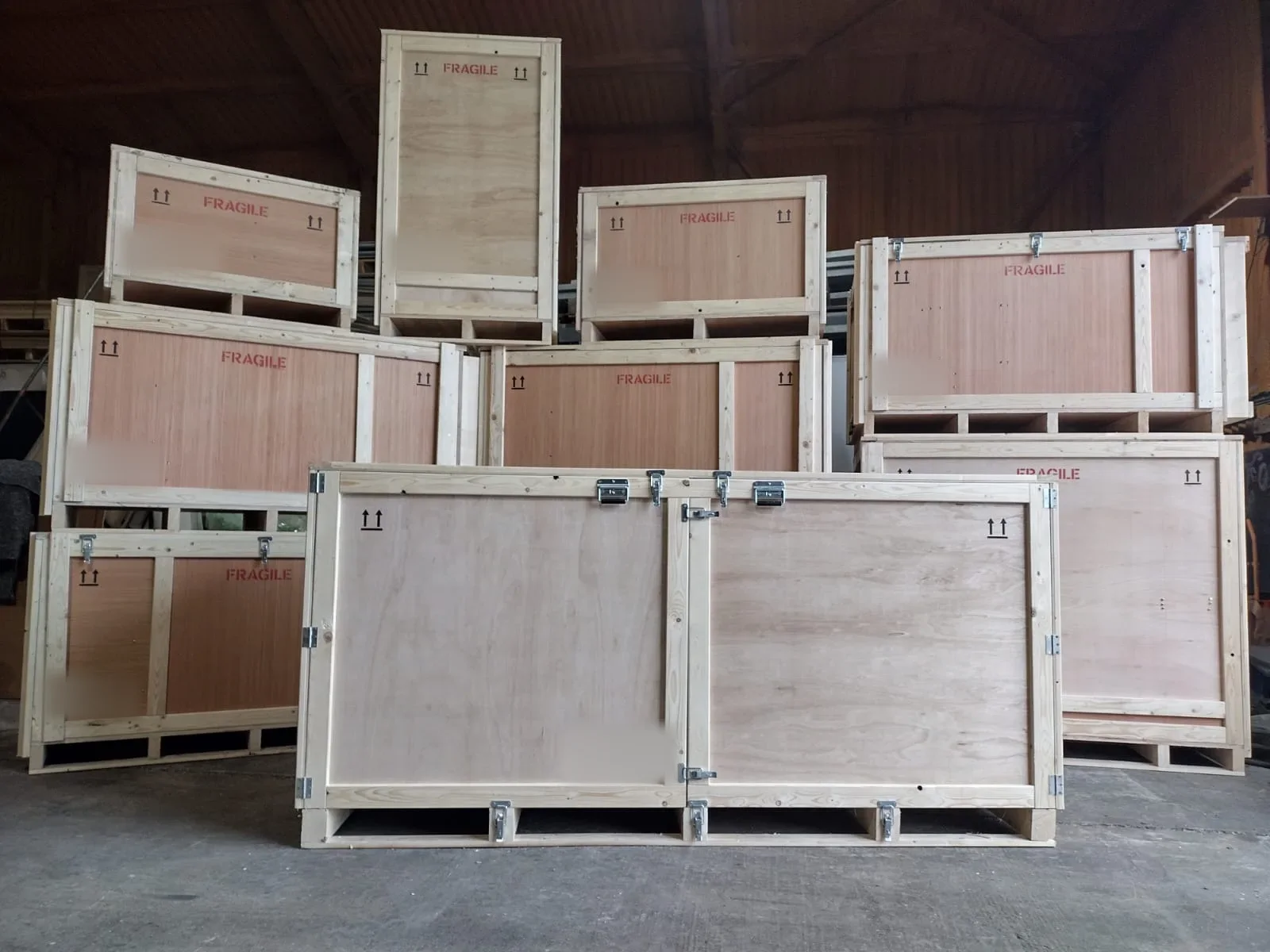
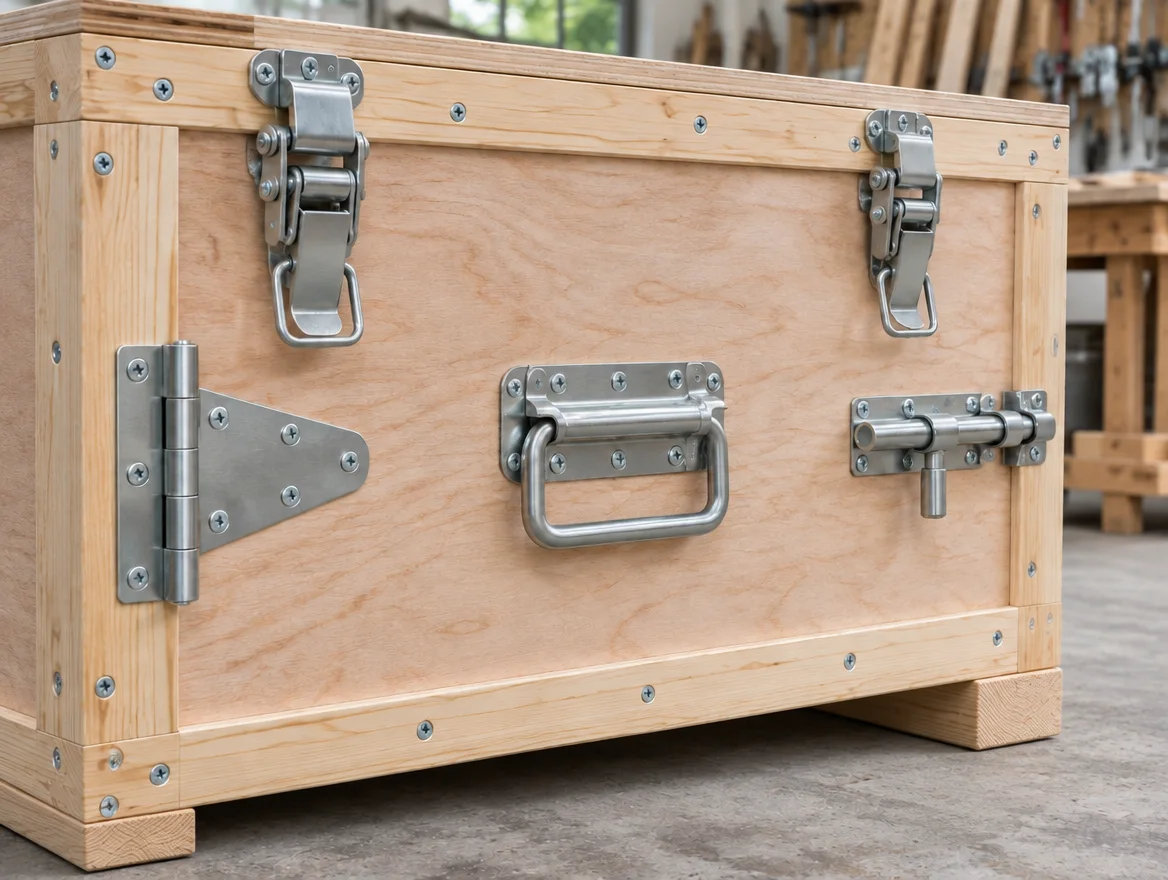
Everything on the outside of our crates is fitted by hand, in-house, by the person who built the crate. Nothing is bought in ready-made and bolted on. Because the same hands build the crate and fit the hardware, every latch lines up and every lid closes tight.
Our standard hardware is:
- Latches that pull a lid or door tight
- Hinges for doors and lids that are opened often
- Bolt locks to keep doors shut on the road
- Handles for lifting and moving
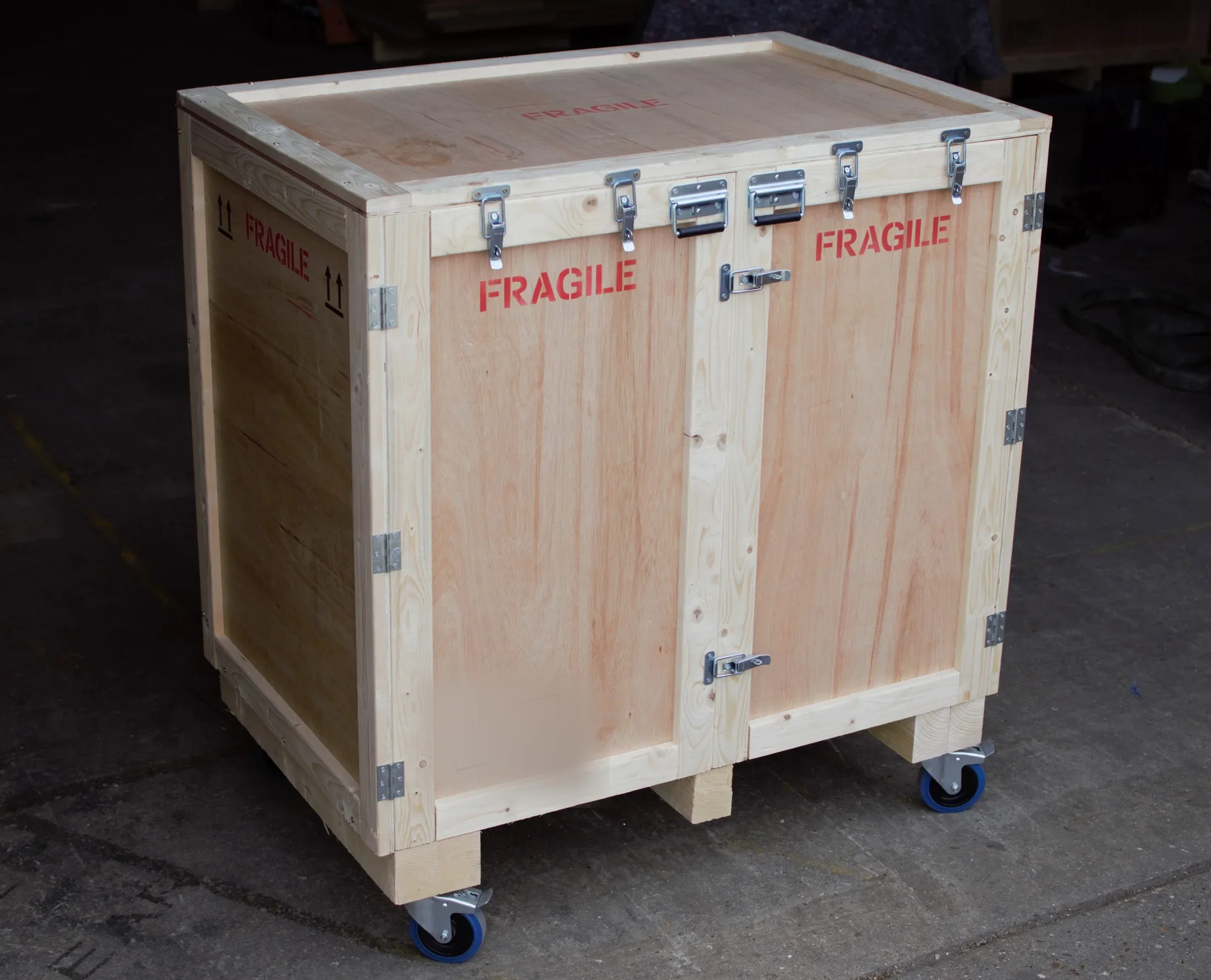
Castors are an extra, not part of a standard crate. We fit them to crates that need to roll around a site, such as drawer crates that are stored and moved inside a factory.
Hardware like this is what lets a crate work for years, like the drawer crate we built for a manufacturer.
Markings on the outside
The outside of the crate tells everyone who handles it what to do. We mark our crates Fragile, with This way up arrows, so the crate is handled with care and kept the right way up.
Not sure what your piece needs? Tell us what it is, its size and weight, and where it is going, and we'll recommend the crate, lining and supports. Request a quote.
Common questions
What are your crates made of? +
A pine timber frame with plywood panels, on skids. Inside, a foam lining and supports chosen for the piece. Every crate is built to measure.
What do you line your crates with? +
High density foam, HLB22 soft foam or polystyrene, in 25 mm, 50 mm, 75 mm and thicker, chosen for the piece. Polystyrene is the most affordable; high density foam and HLB22 cost about the same.
Which foam is best for my piece? +
High density foam for heavy pieces like sculpture, busts and stone. HLB22 soft foam for fragile surfaces like glass, ceramics and gilded frames. Polystyrene for lighter pieces where a firm, light lining does the job. Your quote says which we recommend, and why.
How thick should the foam be? +
It depends on the weight and how fragile the piece is. We use 25 mm, 50 mm and 75 mm, and thicker for pieces that call for it. Heavier and more fragile pieces usually get more.
How do you protect mirror glass? +
We tape the glass with masking tape in a lattice, so it holds together if it ever cracks, then hold the mirror still with padded timber battens inside the crate.
What holds a bust or sculpture still? +
Blocks of white high density foam, cut to hold the piece at its base and sides, inside a lined crate.
Does a crate need ISPM 15 treatment? +
Solid timber packaging that crosses a border usually has to be heat treated and stamped. Plywood is processed wood and is usually exempt. Our crates are heat treated and carry our own registered ISPM 15 stamp. Our ISPM 15 guide has more. We don't handle customs paperwork.
Who fits the latches and handles? +
We do, by hand, in-house. Every latch, hinge, bolt lock and handle is fitted by the person who built the crate.
Do your crates have wheels? +
Not as standard. We add castors as an extra to crates that need to roll around a site, such as drawer crates kept in a factory.
Tell us what needs to travel.
Every quote is bespoke, based on the piece itself. Send us the details and we'll come back to you.