

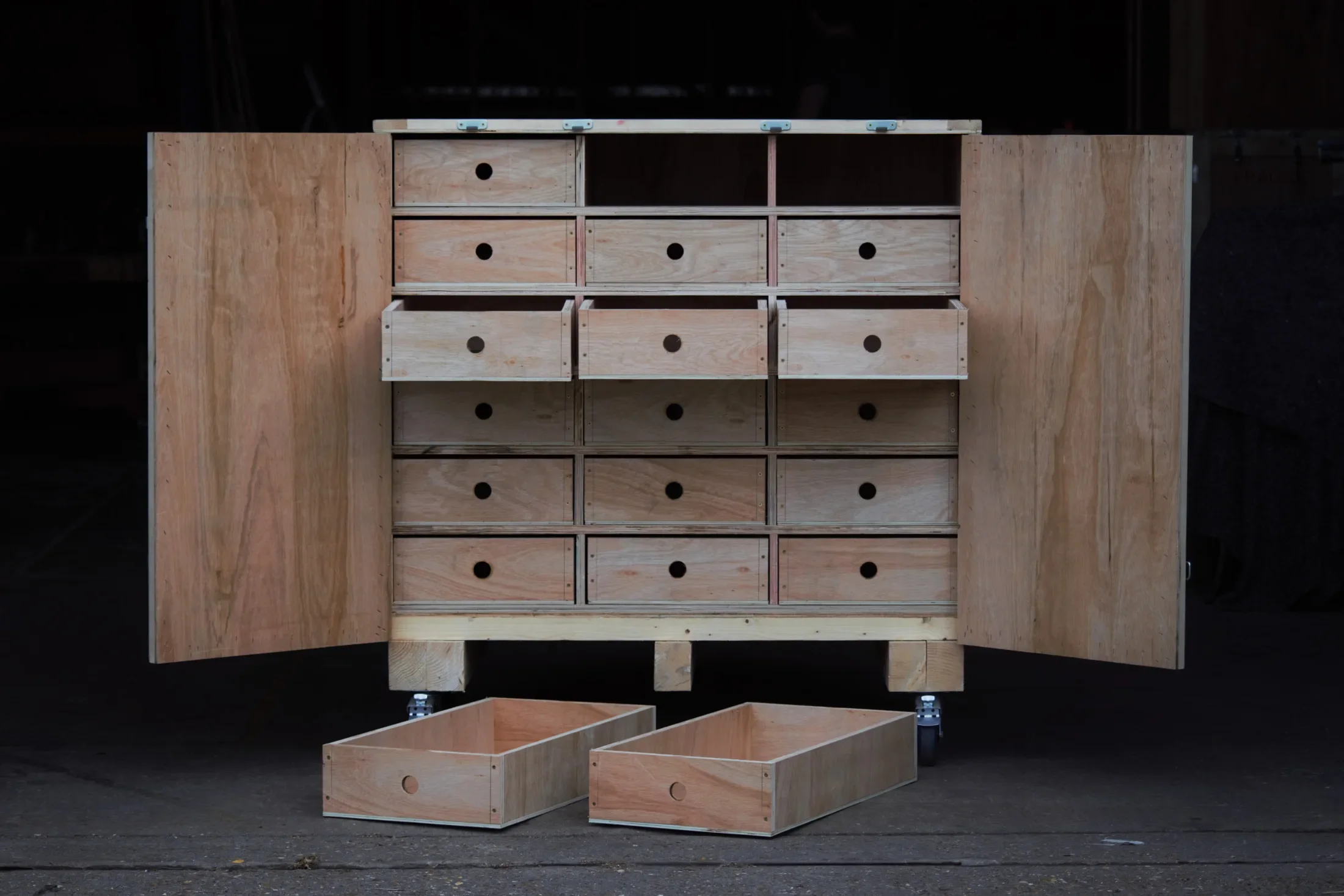
Industrial wooden crates, built around your parts
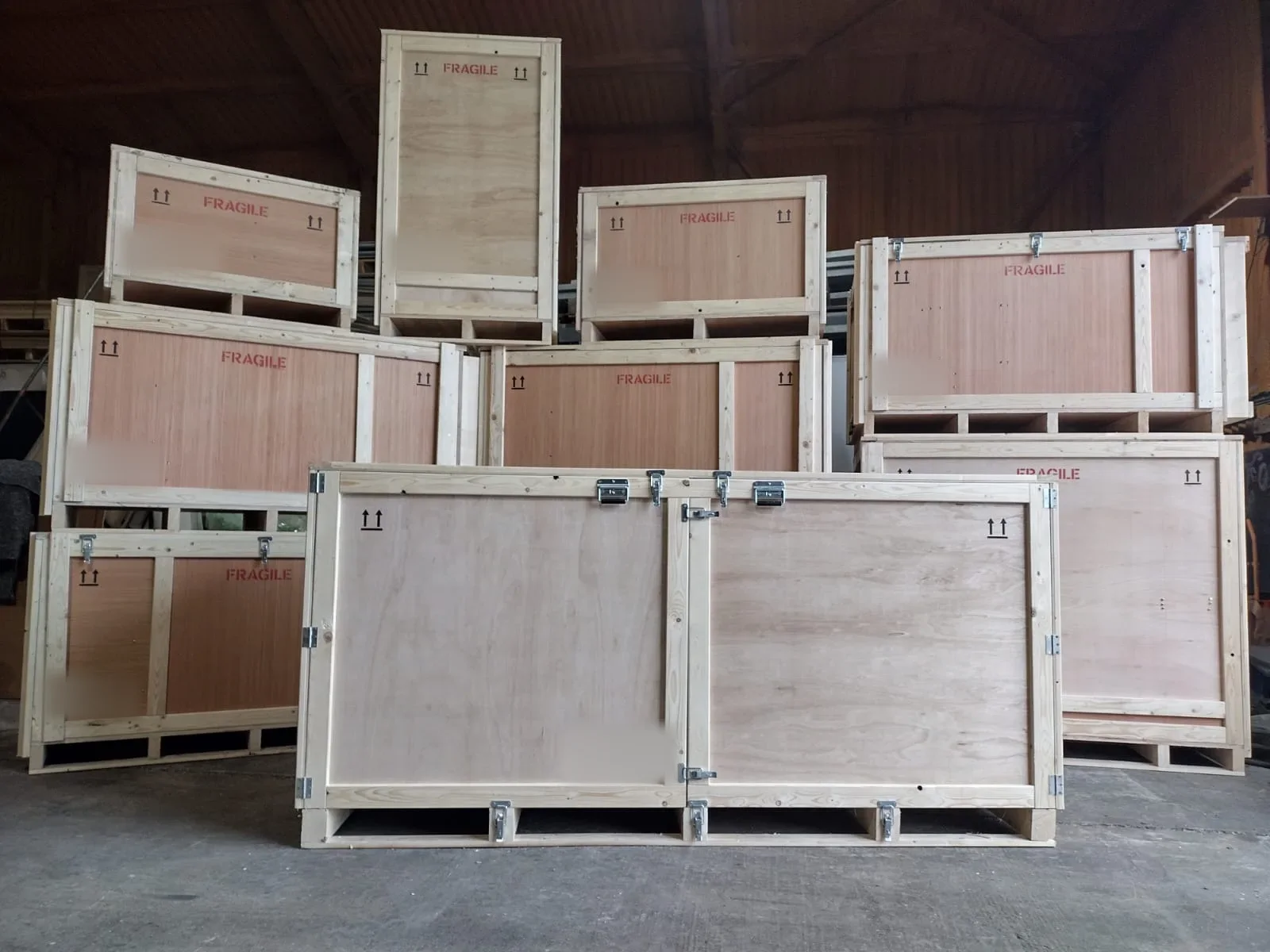
We design and build industrial wooden crates for businesses: reusable crates for moving parts between sites, drawer crates that store and transport in one, and heavy duty export crates for equipment and machinery. Each one is built around your parts, so they arrive the way they left.
- For
- Manufacturers and businesses
- Crates
- Reusable, export, heavy duty
- Proof
- Tens of thousands of pounds a year saved for one customer
Industrial packaging that pays for itself
If parts are being damaged in transit, the cost isn't just the repair. It's the delay, the rework, the second delivery and the time spent chasing it. A crate built around the parts stops most of that at the source.
A manufacturer was losing tens of thousands of pounds a year repairing unfinished parts damaged between its factories. We designed and built bespoke drawer crates for them, paid for once, and those repair bills stopped. Read the full job.
One-off cost, repeated use. A reusable crate is paid for once and protects the parts on every trip after that.
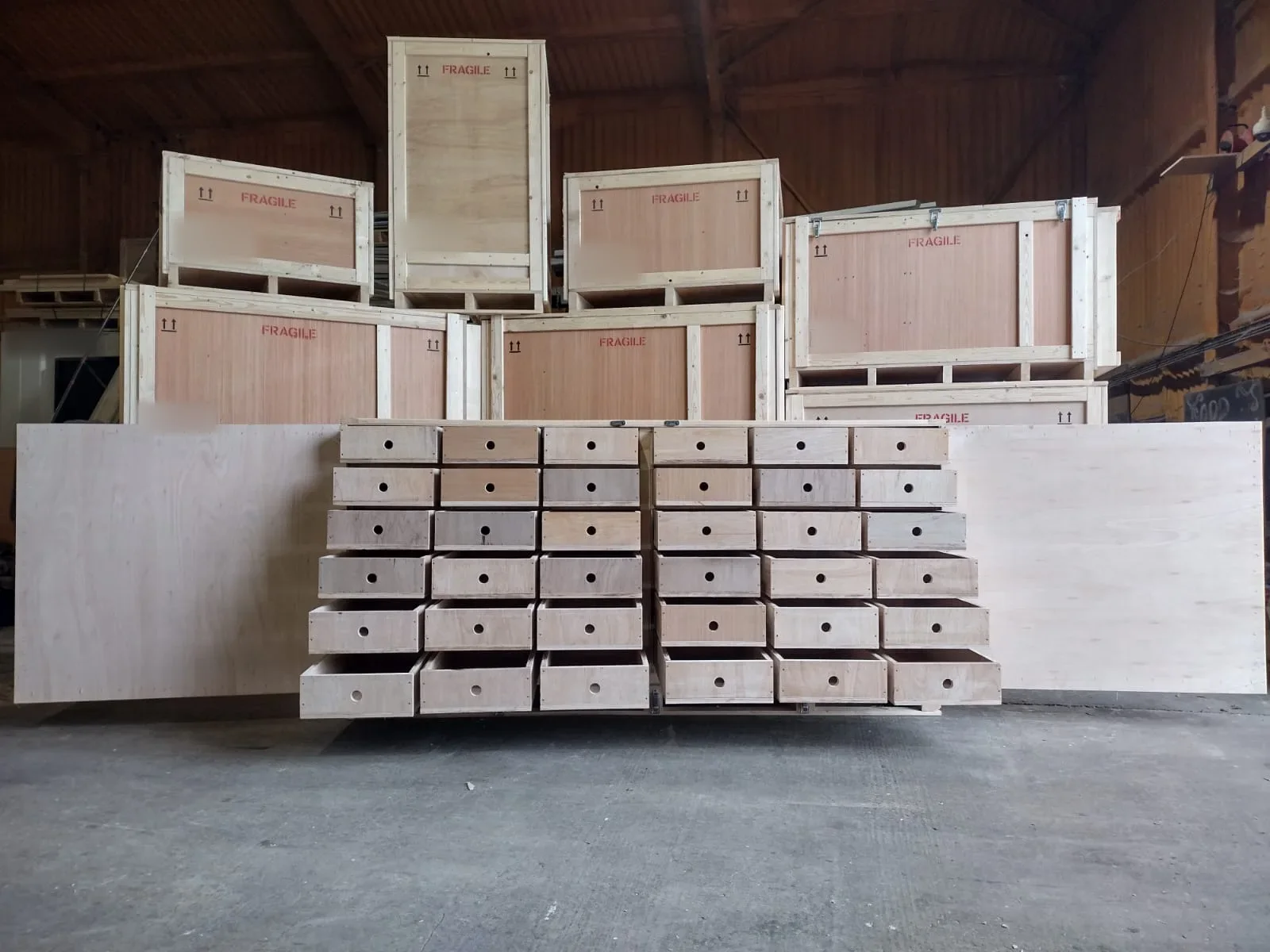
What we build for businesses
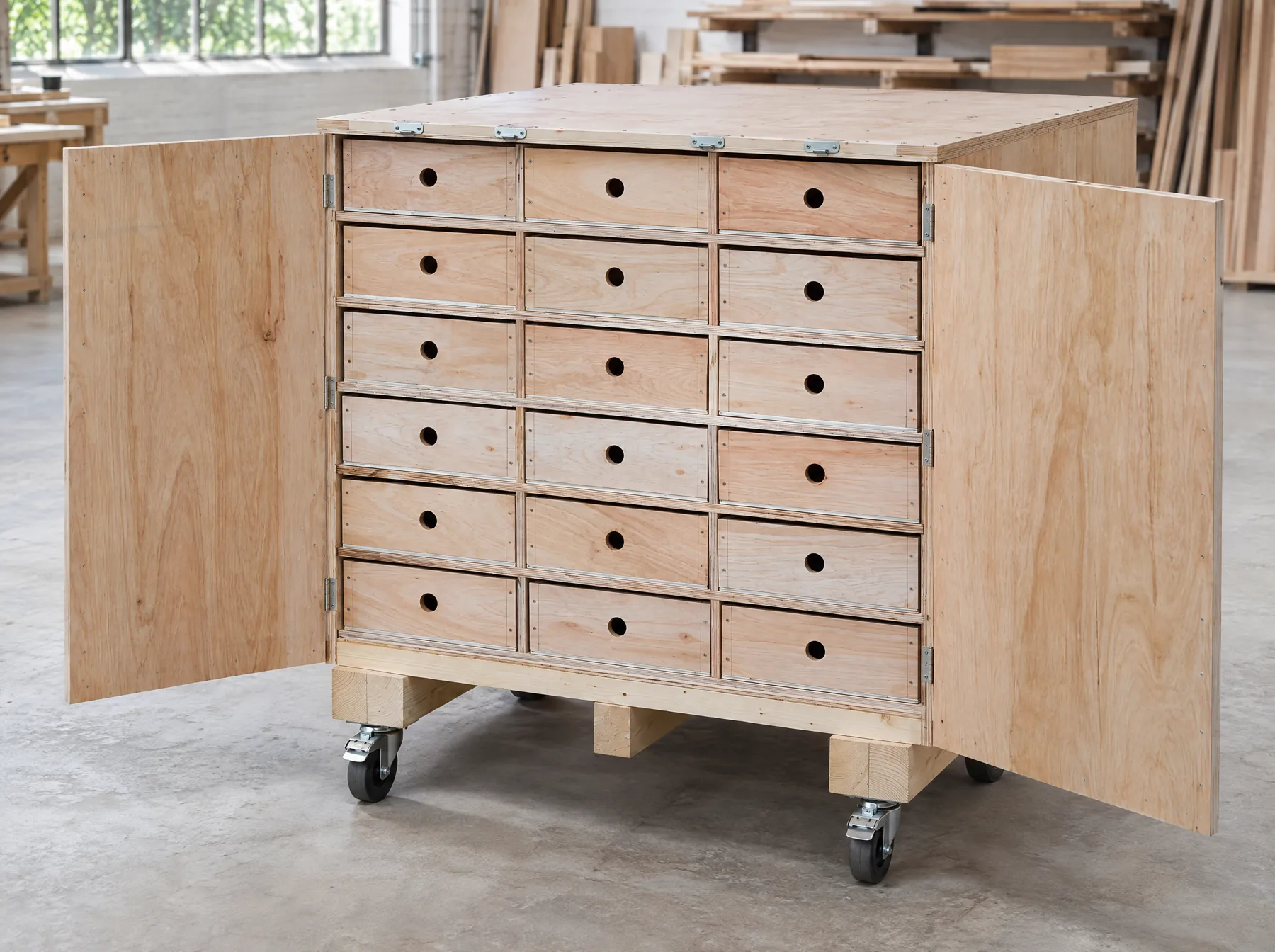
For regular trips between sites, with drawers, racks or foam inserts, built to be opened and closed again and again.
Every part has its own place. The crate stores the parts and moves them, so nothing is repacked between trips.
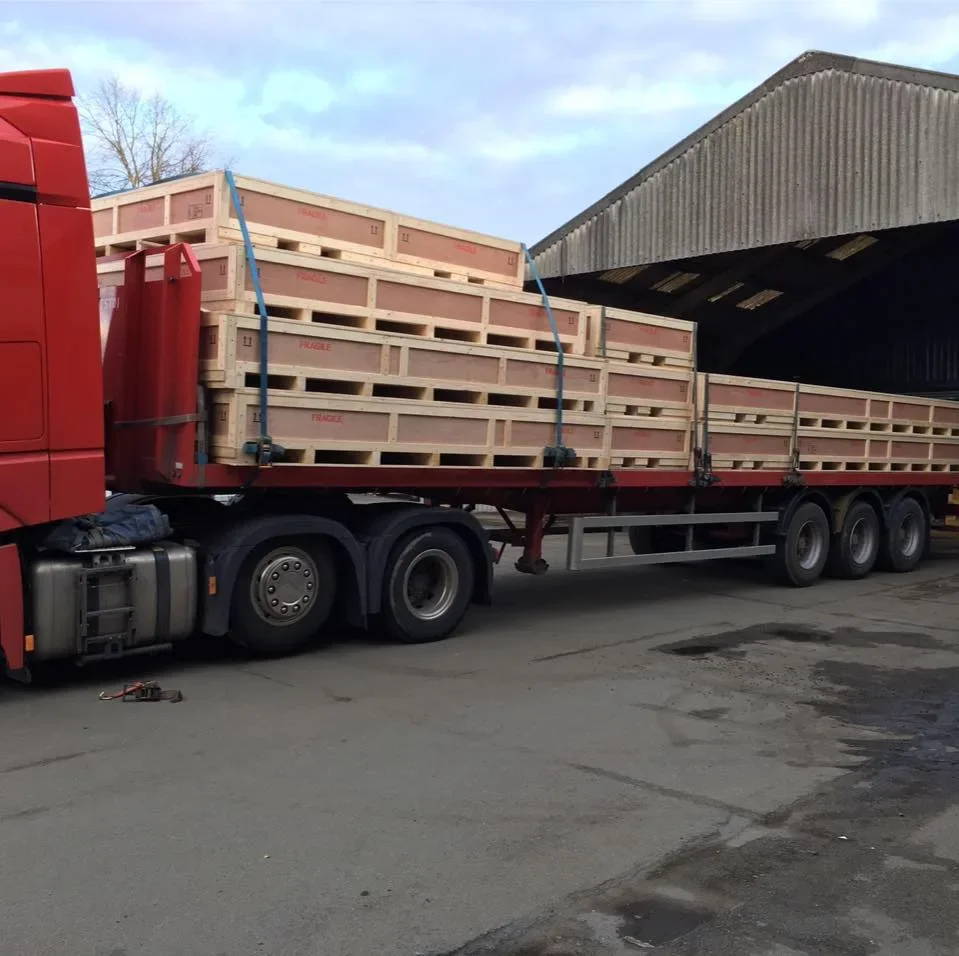
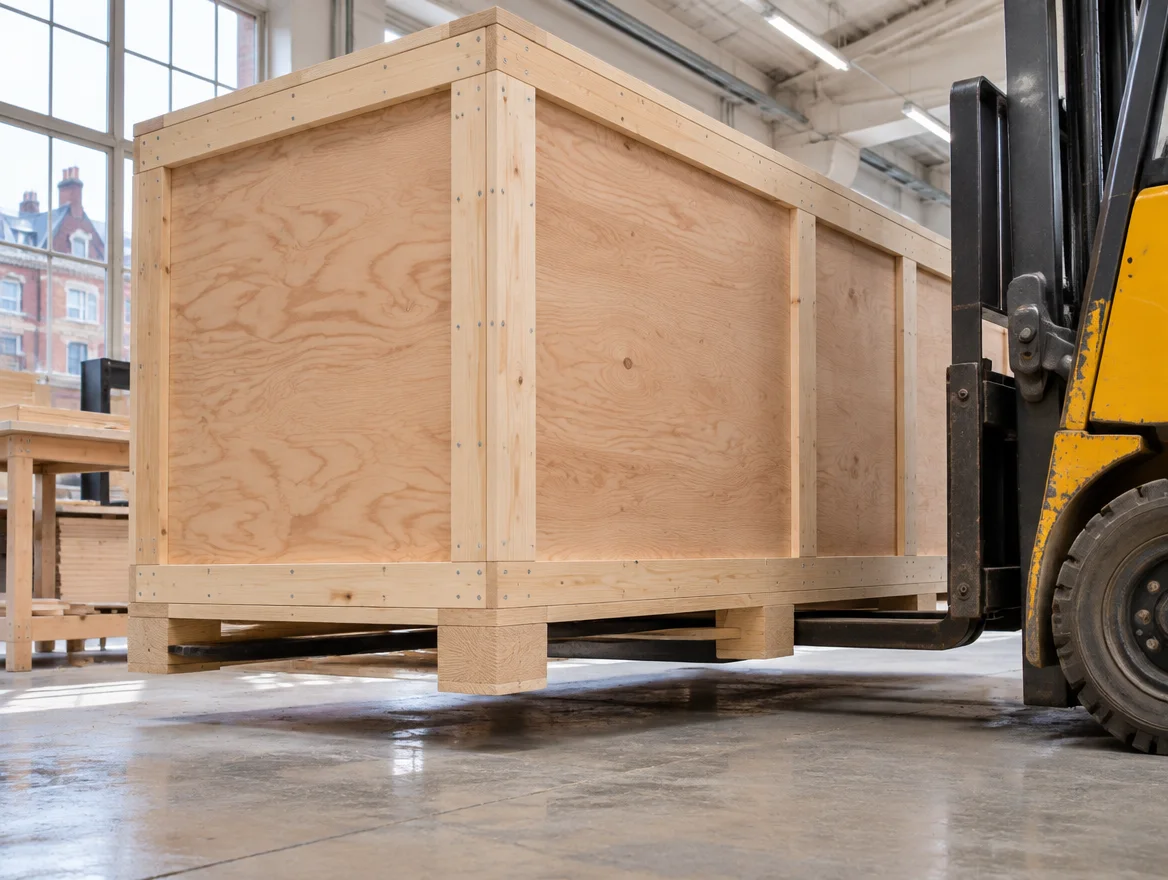
Stronger frame, bracing and a base on skids for equipment and machinery going abroad.
Wheel them across the factory floor, then lock the brakes. They work as storage when they're not travelling.
Recent work: drawer crates for a manufacturer
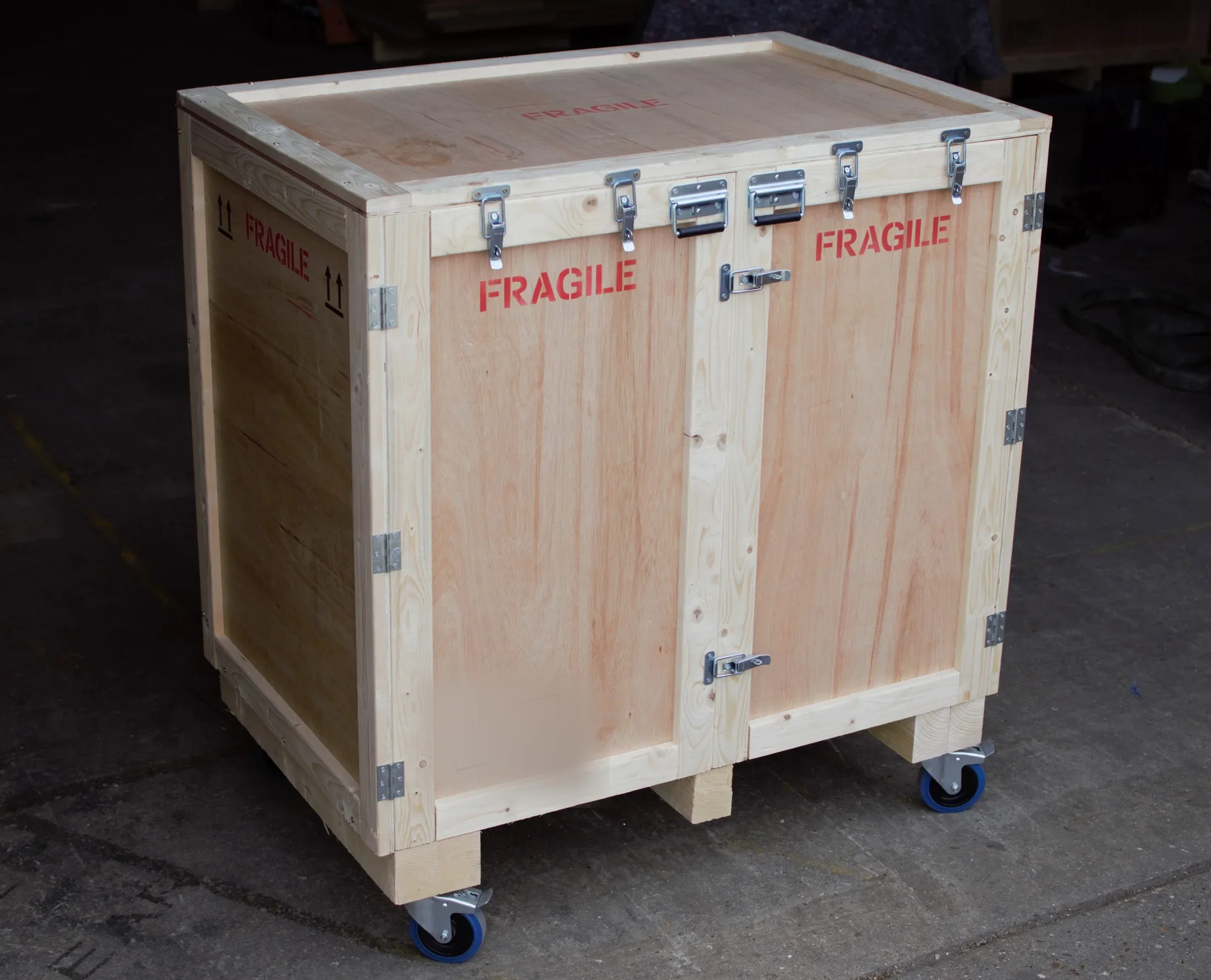
The manufacturer moved unfinished components between its factory sites on a regular basis, and the way they were being moved was damaging them. We designed a wooden drawer crate around their parts and built it in several sizes, all to the same design, for everyday use.
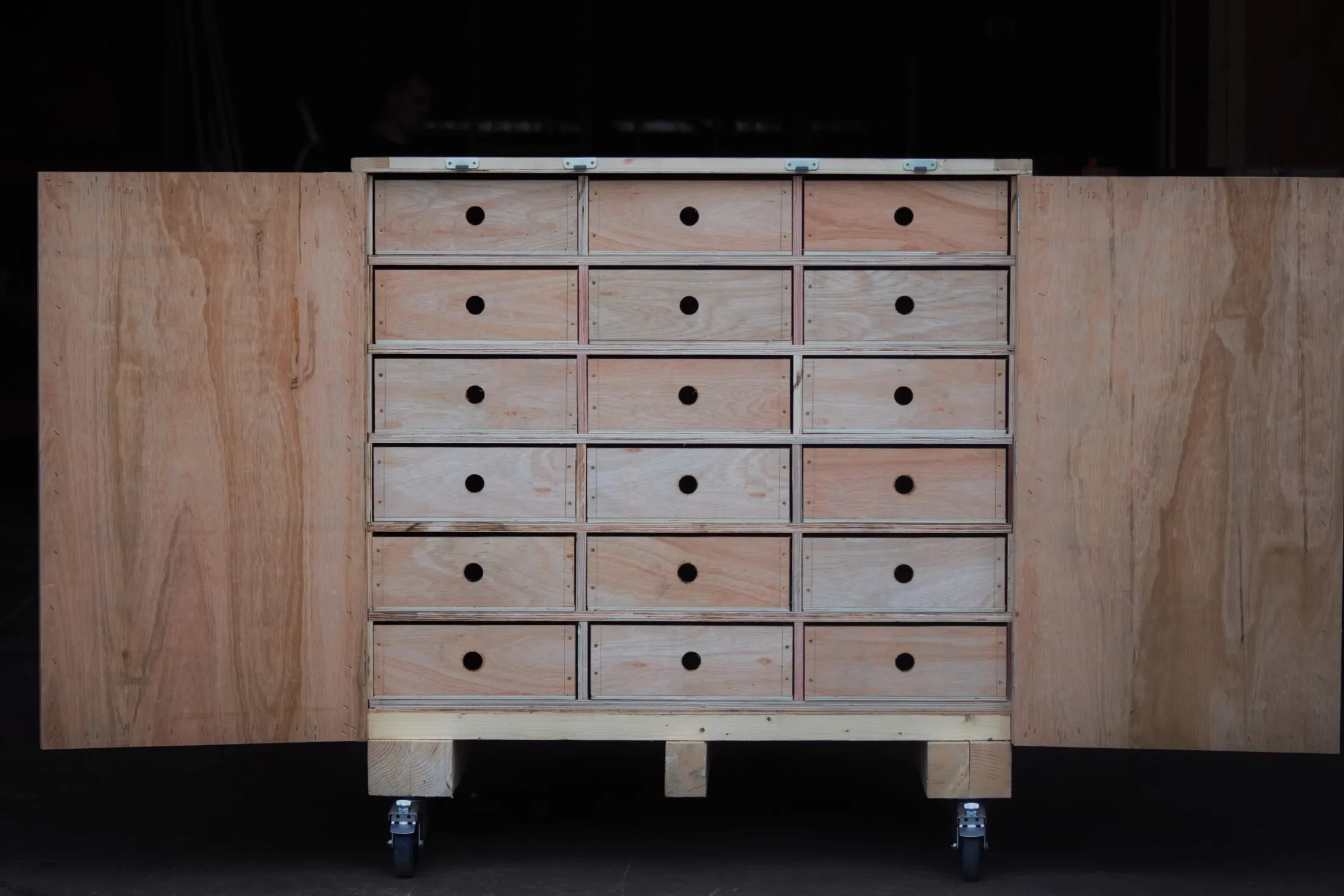
- 01Outside
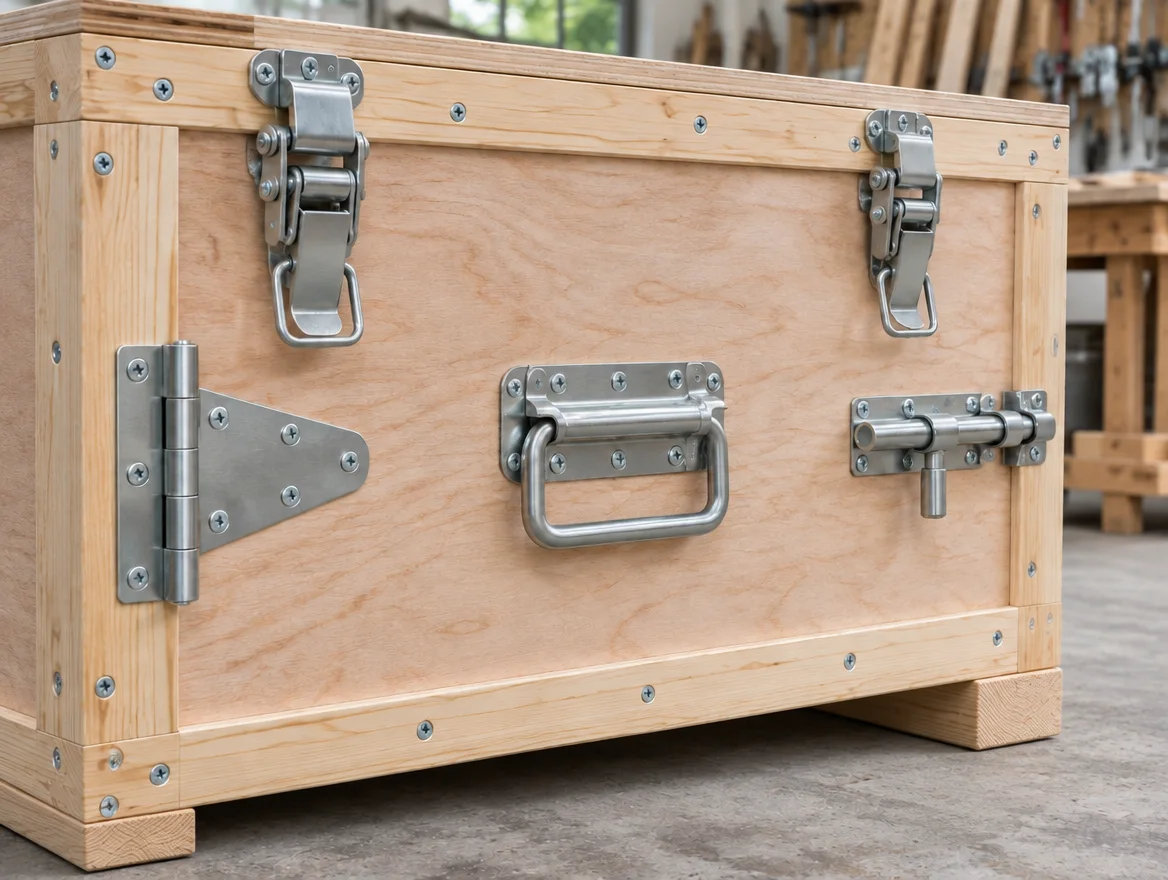
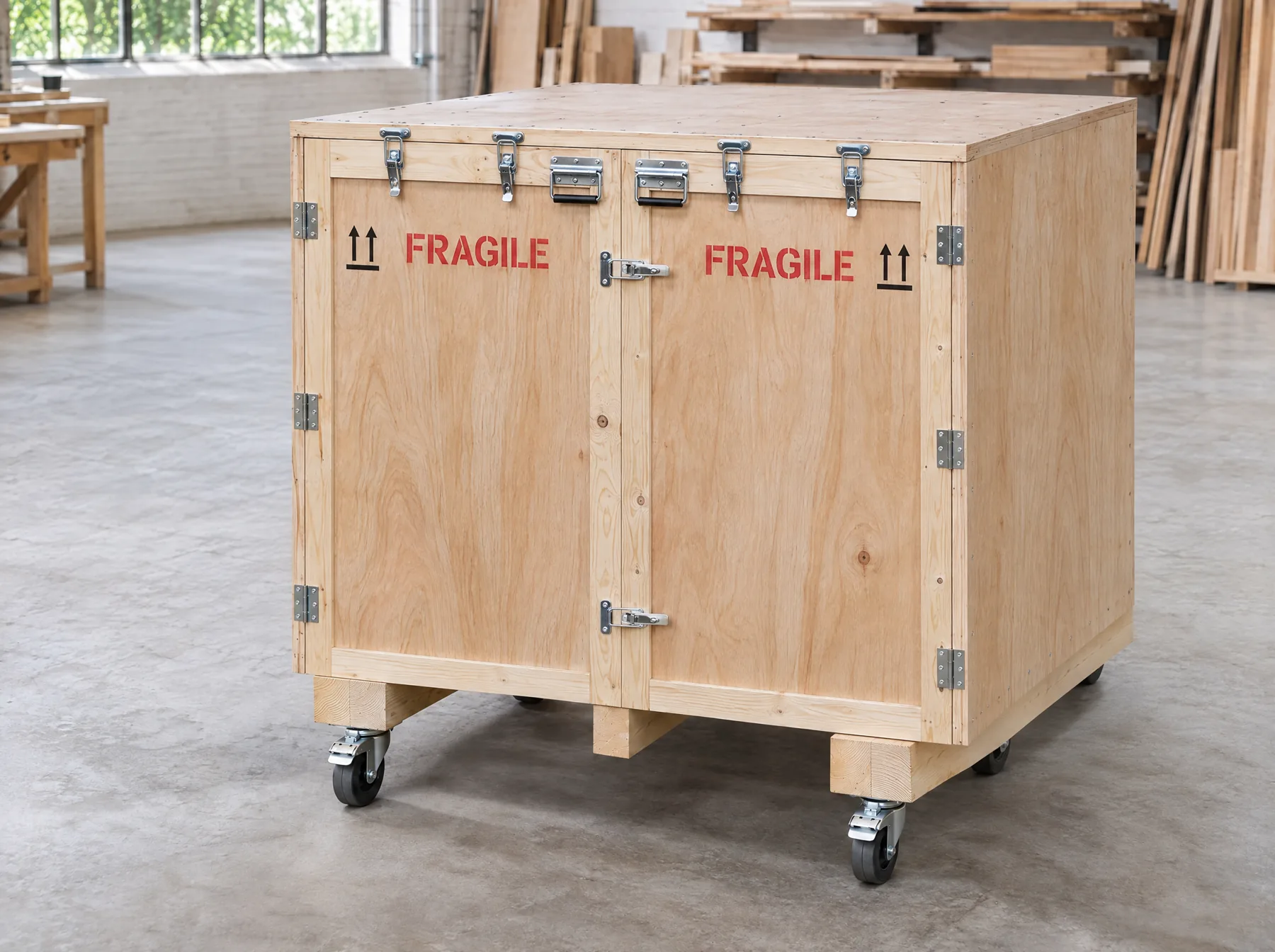
Hinged doors, toggle latches and bolt locks, on braked castors so the crate can be moved and parked safely.
- 02Inside
Removable plywood drawers, 18 in one size and 36 in a larger one, so parts are stored and moved in the same place.
- 03Hardware
Every latch, hinge and bolt lock fitted by hand, in-house.
- 04Result
One-off cost. Tens of thousands of pounds a year in transit repair bills, gone.
Reusable crate or one-way export crate?
They're built differently, so it helps to know which you need before we design it.
Some jobs need both: a crate that goes abroad and comes back. Tell us how it will be used and we'll build for that.
| Reusable transit crate | One-way export crate | |
|---|---|---|
| Used for | Regular trips between your own sites | Sending equipment or parts abroad, usually once |
| Opening | Doors, hinged lids and latches, opened every trip | Lid screwed down, opened at the other end |
| Inside | Drawers, racks or cut foam that stay in place | Lining and blocking fitted to one load |
| Moving it | Often on castors | On skids, lifted from below |
| Built for | Years of repeated use | One journey, with handling and weather on the way |
Crates for heavy parts and machinery
With heavy equipment, the crate has to carry the weight safely as well as protect it. These are the things we design around:
- The weight and where it sits. A heavy item that's off-centre needs the base and bracing designed for it, and the crate marked so handlers know.
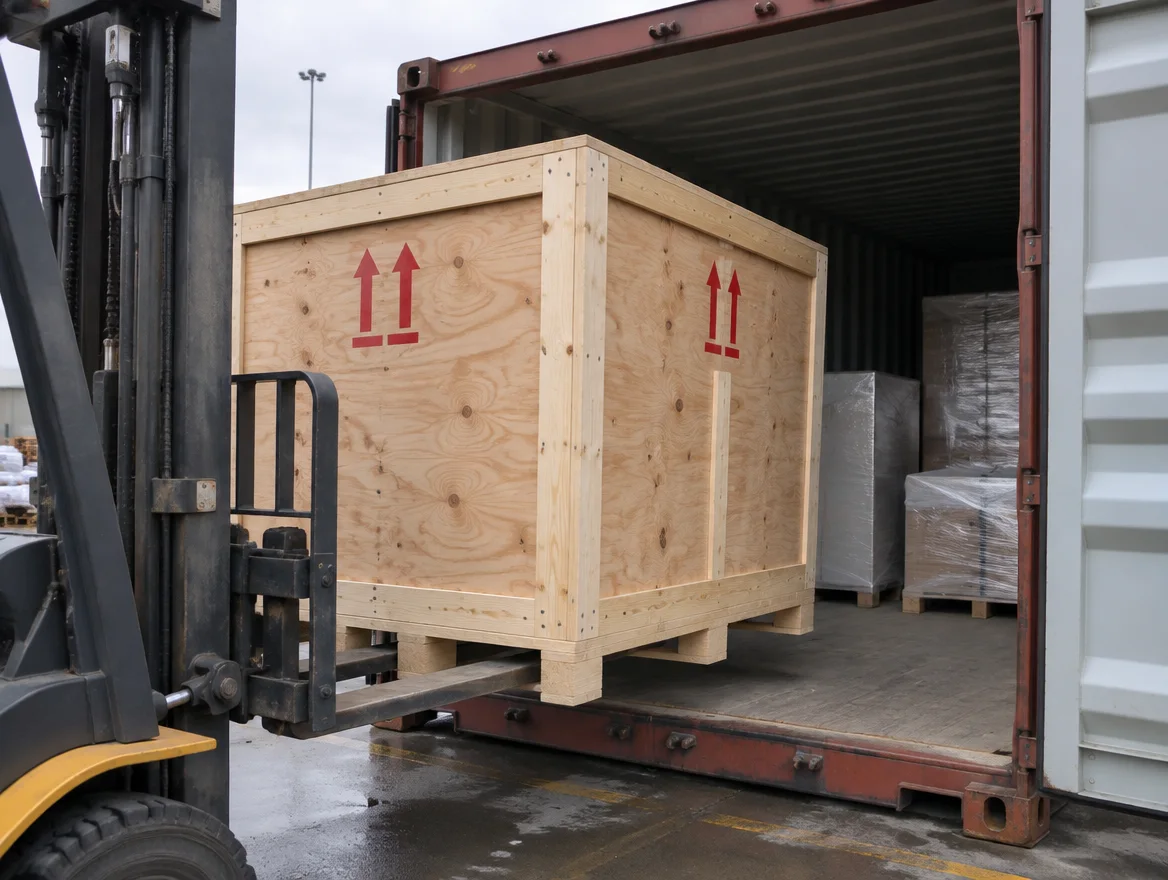
- A base built for lifting. Timber skids under the crate, so it's lifted from below rather than dragged.
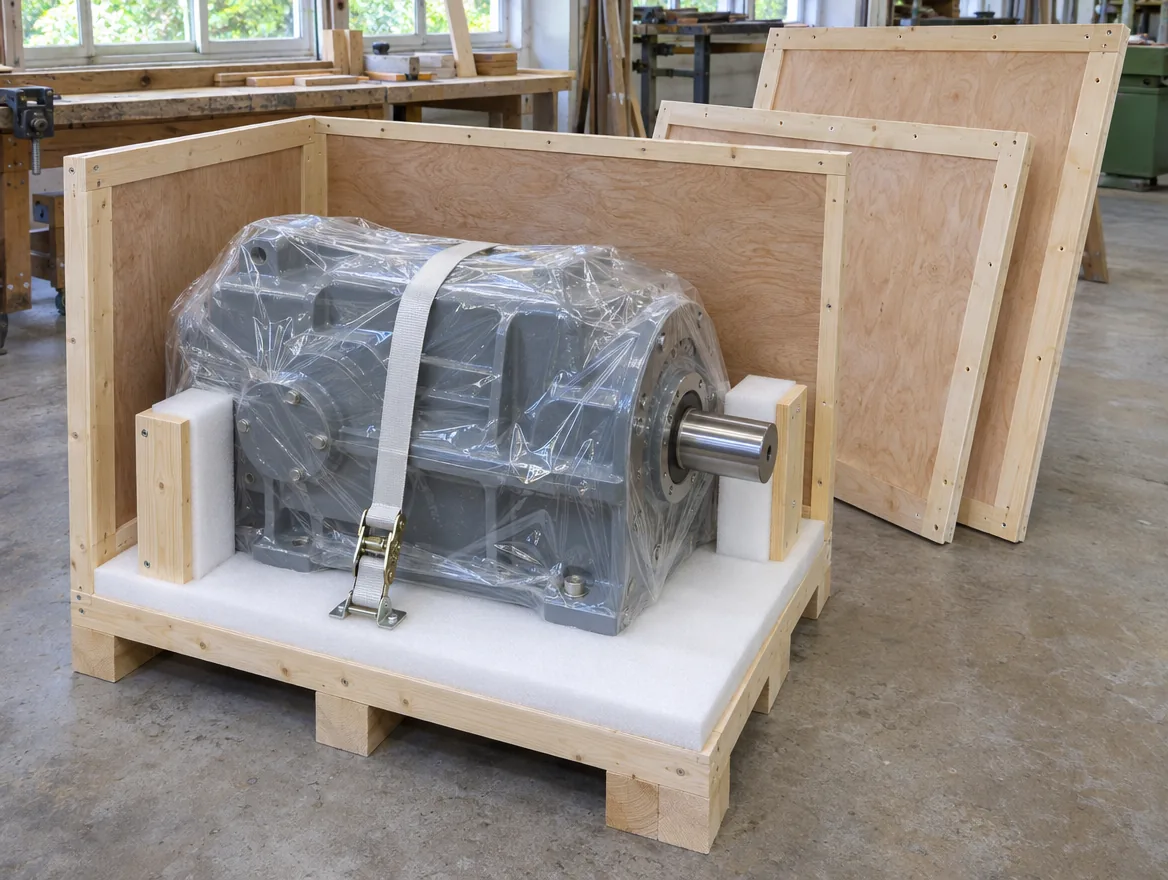
- Holding it still. High density foam blocks, timber blocking and battens, so the item cannot slide or tip inside.
- Surfaces that must not be marked. Machined faces and finished panels get soft foam or a wrap where they touch anything.
- How it will be handled at the other end. Tell us what lifting equipment there is at delivery, so the crate suits it.
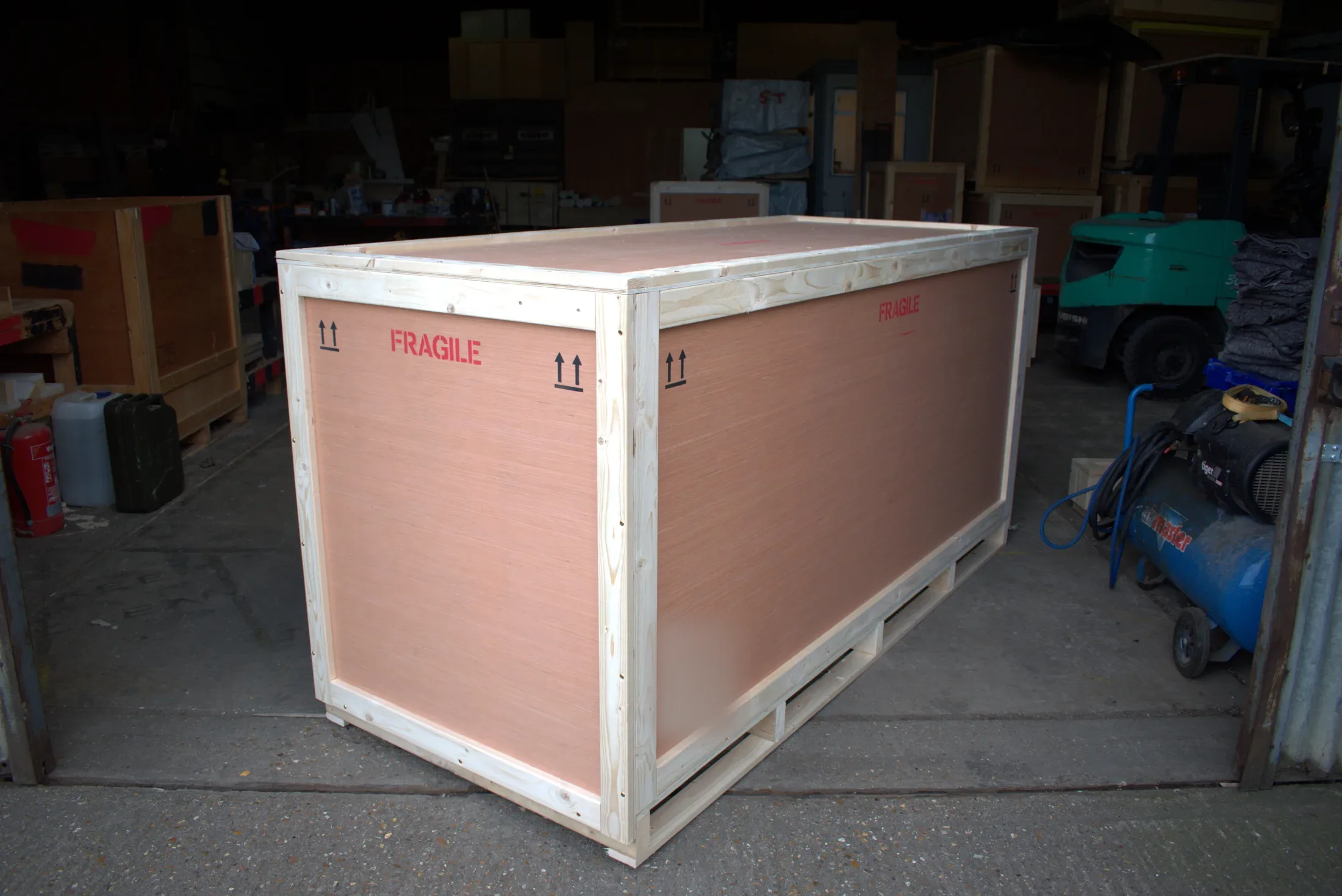
We've built a heavy duty crate for a load of over 500 kg. Send us the weight, the size and photos, and we'll design around them.
Send us a photo and the measurements.
We’ll recommend the crate, the lining and the supports, and come back with a bespoke quote.
Protecting parts inside the crate
If your parts can rust or are sensitive to damp, tell us when you request your quote, and ask us what protection we'd suggest.
| Parts | Usual protection | Why |
|---|---|---|
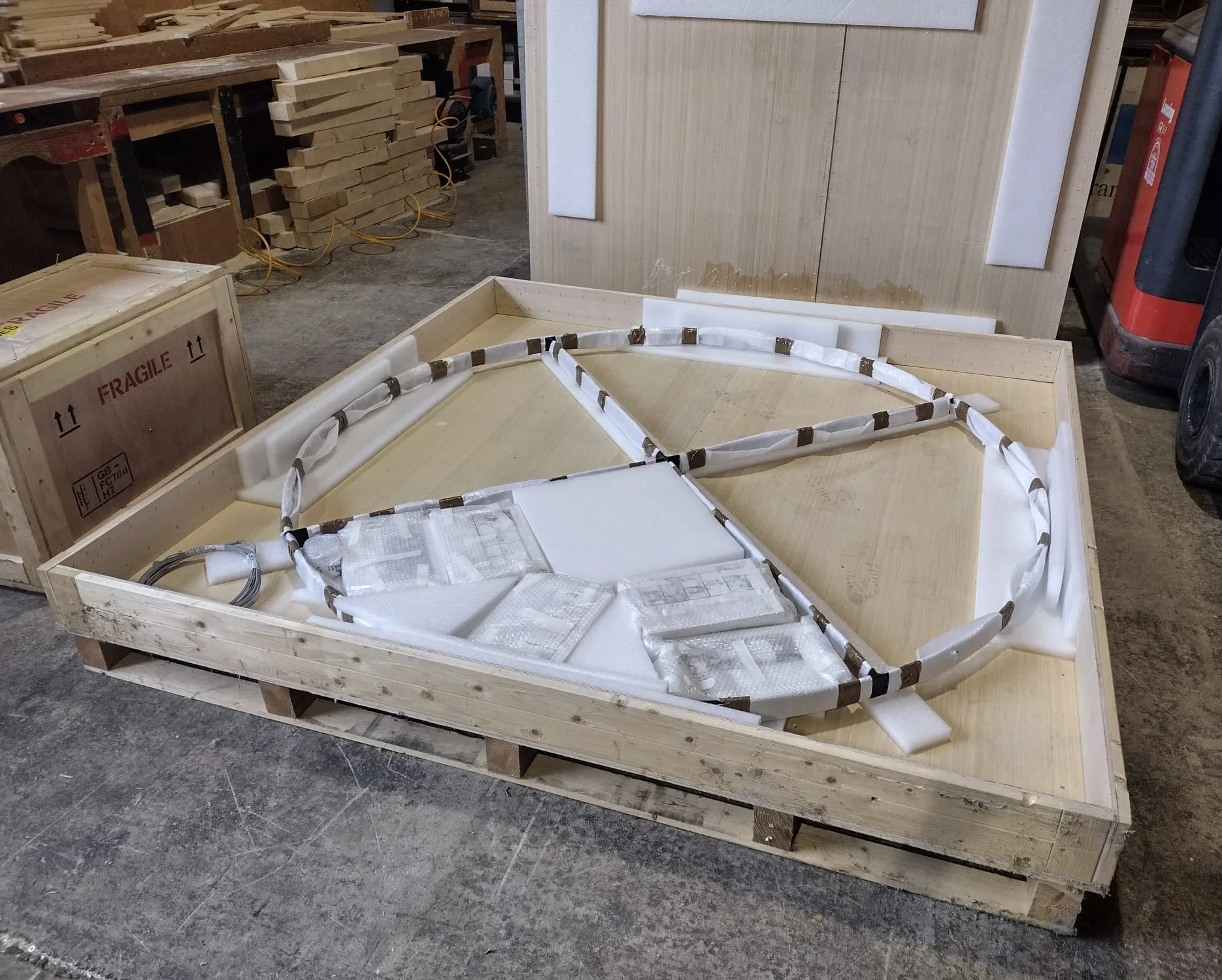
| Heavy or solid components | High density foam blocks or cut-outs | Firm, so heavy parts stay put instead of sinking in. |
| Finished or delicate surfaces | HLB22 soft foam | Soft. It cushions knocks and vibration. |
| Light parts in bulk | Polystyrene | Rigid, light and the most affordable lining. |
| Many small parts | Drawers or compartments | Each part has its own place and can't knock into the next. |
Wooden crates, plastic tote boxes or cardboard?
Off-the-shelf plastic crates and cardboard boxes are fine for light, sturdy, standard-sized items. They stop working when parts are heavy, an awkward shape, easily marked or worth a lot.
If your parts already fit a standard box and arrive undamaged, you may not need us. If they don't, a bespoke wooden crate is usually the answer.
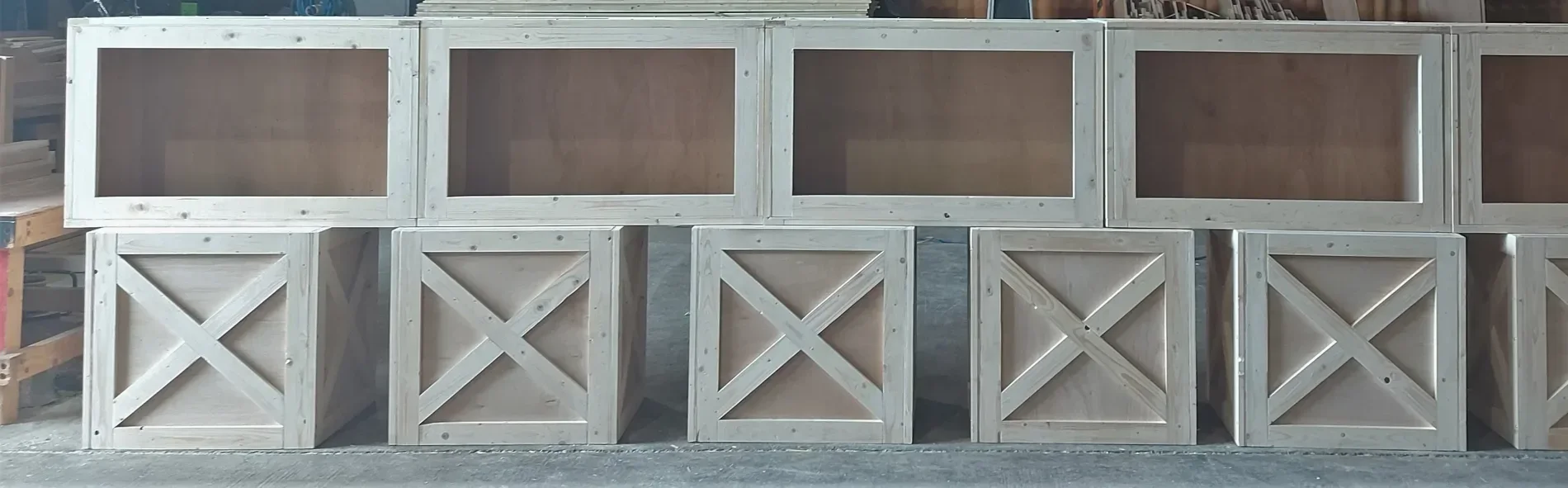
Built to your parts' sizes and weight, fitted inside, strong enough for heavy loads, and repairable.
Light and cheap in standard sizes, but parts move about inside unless you add inserts.
Fine for one light trip. Weakens with damp and handling, and rarely survives reuse.
Exporting industrial crates: ISPM 15 and paperwork
Industrial crates going abroad are covered by the same wood rules as any other crate. Under ISPM 15, solid wood packaging, including crate frames, skids, battens and loose timber used to brace a load, usually has to be heat treated and marked before it crosses a border. Plywood is usually exempt.
For reusable crates there's good news: the US plant health authority says treatment does not expire once wood is treated and officially marked, so a compliant crate can be reused without treating it again. Check the rules for each destination.
We don't handle export paperwork. For business goods, things like commodity codes and export declarations are handled by you as the exporter, your shipper or a customs agent.
Our crates are heat treated and carry our own registered ISPM 15 stamp, ready for export. Our ISPM 15 guide explains what the stamp means.
Will a bespoke crate pay for itself?
Usually, if parts are being damaged now. A few honest questions show whether it's worth it:
- How often are parts damaged in transit, and what does each repair or replacement cost?
- How many trips a year do the parts make?
- Is time lost waiting for repairs or replacements?
- Are parts repacked every trip, and how long does that take?
- Would a crate that also stores the parts save floor space or handling?
Add those up for a year and compare them with a one-off crate. For our manufacturer, the answer was tens of thousands of pounds a year.
What to send us for an industrial crate quote
- What the parts or equipment are, with photos
- Size and weight of each item
- How many items go in each crate
- How many crates you need, and whether they should all be the same design
- How often they travel, and between which sites or countries
- How they'll be handled: forklift, pallet truck, by hand
- Any surfaces that must not be touched or marked
- When you need them
Then request your quote. For one-off pieces, see bespoke wooden crates.
Common questions
Is a bespoke crate worth it for regular shipments? +
If parts are being damaged, usually yes. One customer's drawer crates removed tens of thousands of pounds a year in repairs, for a one-off cost.
What are industrial wooden crates? +
Wooden crates built for business use: moving parts between sites, storing components, or shipping equipment and machinery. Ours are built around the parts, with drawers, racks, foam inserts or heavy duty bases as needed.
Can you build several crates of the same design? +
Yes. Our drawer crates for a manufacturer were one design built in several sizes. Ask us with the numbers you need and we'll quote for it.
Can a crate store parts as well as move them? +
Yes. Drawer crates on castors work as storage on the factory floor and travel without the parts being repacked.
How heavy can an industrial crate be? +
Heavy crates get a stronger frame, bracing and a base on skids. We've built a crate for a load of over 500 kg. Tell us the weight and we'll design for it.
Can a reusable crate go abroad more than once? +
Usually. The US plant health authority says ISPM 15 treatment does not expire once wood is treated and marked, so a compliant crate can be reused. Check the rules for each destination.
Do wooden crates need a stamp to go abroad? +
Most countries require solid wood packaging, such as crate frames, skids and battens, to be heat treated and stamped under a rule called ISPM 15. Plywood is usually exempt. Our crates are heat treated and carry our own registered ISPM 15 stamp. See our ISPM 15 guide.
How much does a bespoke crate cost? +
Every quote is bespoke, based on the item itself: its size, weight, how fragile it is, where it's going and how quickly. Send us the details and we'll come back with a price for your piece, never a standard rate card.
Related
Tens of thousands of pounds a year saved in repairs.
Crates built for sea and air freight, from machinery to art.
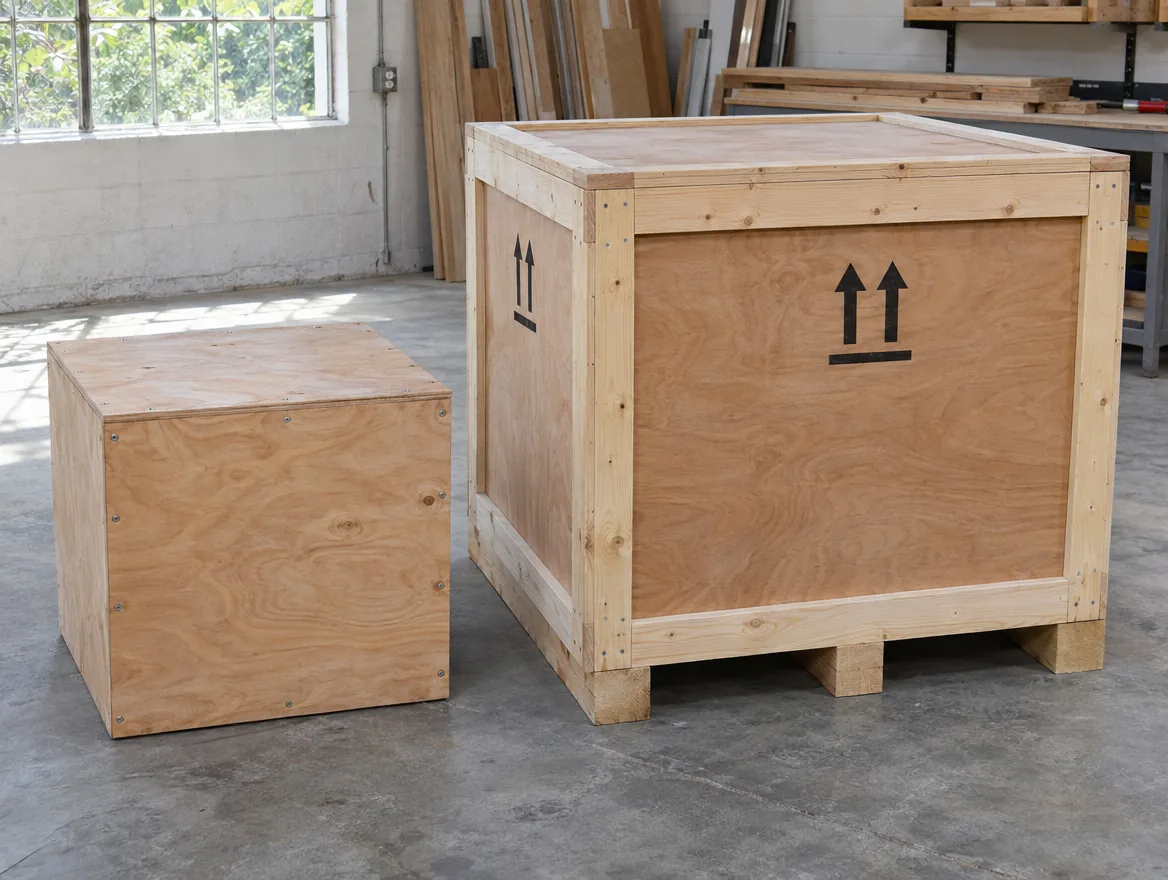
Plain plywood box or timber-framed crate: which one you need.
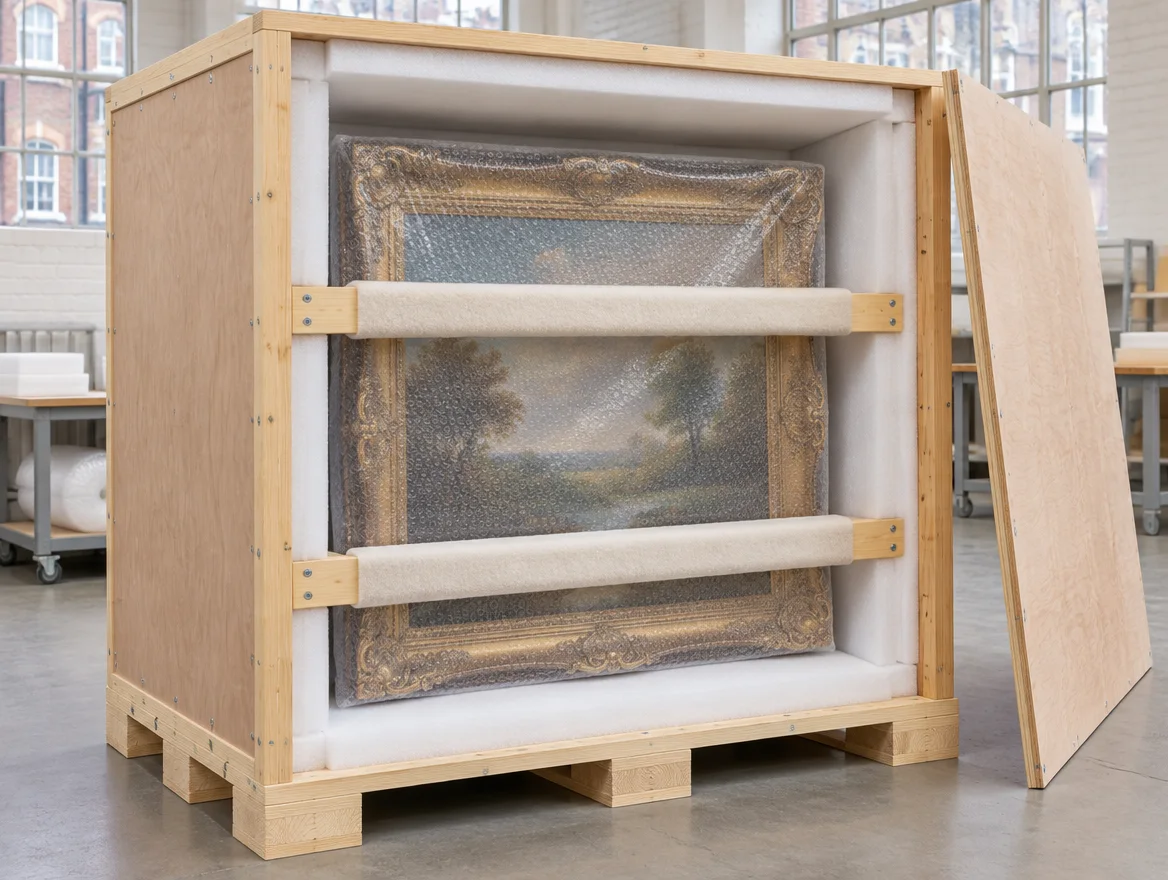
Which crate your piece really needs.
Swipe for more →
Tell us what needs to travel.
Every quote is bespoke, based on the piece itself. Send us the details and we'll come back to you.