

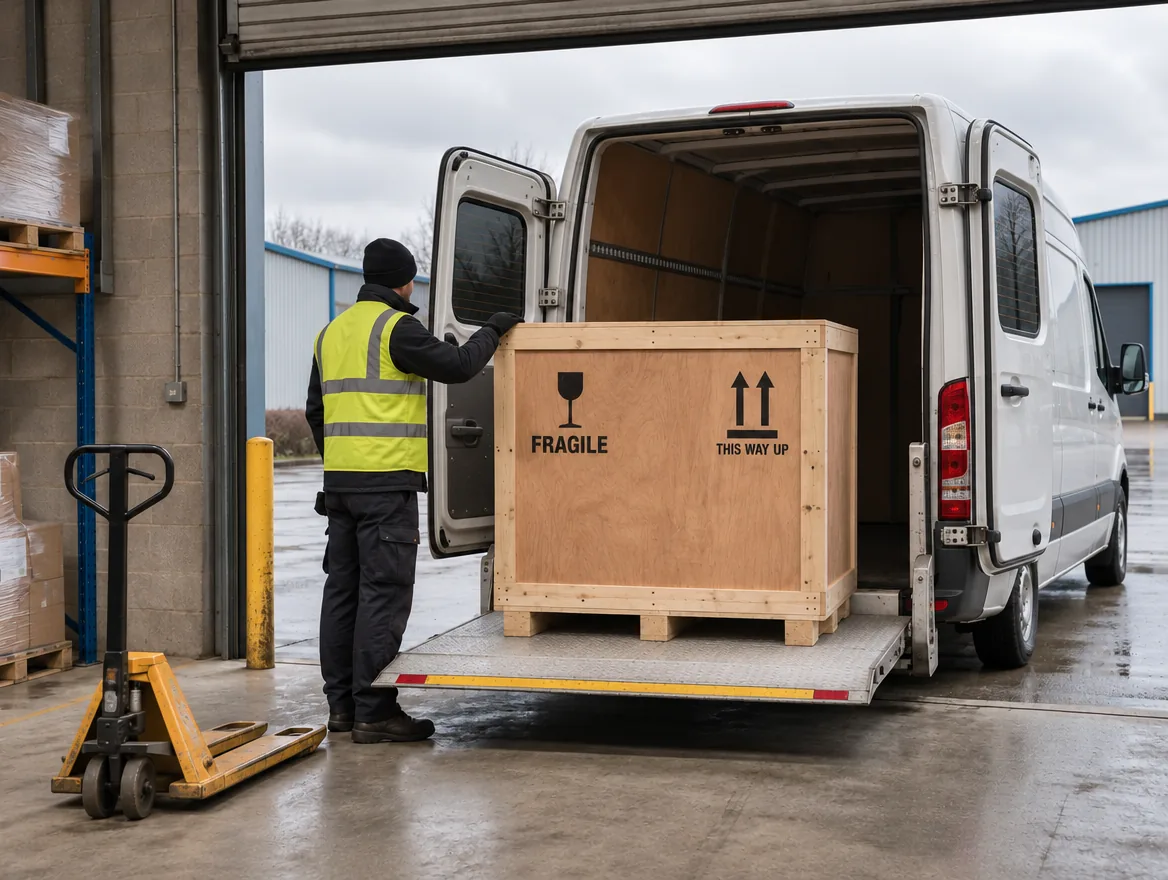
Our packing and crating service: we collect, we crate, your courier collects
Our packing and crating service is the simplest way to get a valuable piece ready to travel. We collect it from wherever it is, take it to our warehouse and build a crate around the piece itself. Your courier or shipper then collects the finished crate from us. You don't measure anything.
- We collect from
- Homes, galleries, auction rooms, dealers, storage
- Crate built
- Around the piece, in our warehouse
- You measure
- Nothing
- Hours
- 9am to 4pm, 7 days a week
How does our packing and crating service work?
We go and get the piece, crate it in our warehouse and hand it to your courier. Because we have the piece in front of us, we build the crate around the object itself, not around a set of numbers. That is the main reason people choose this way of working. It is the same art packing and crating we do for every piece, from a single painting to a room of antiques, and the same bespoke crate, just with us doing the legwork.
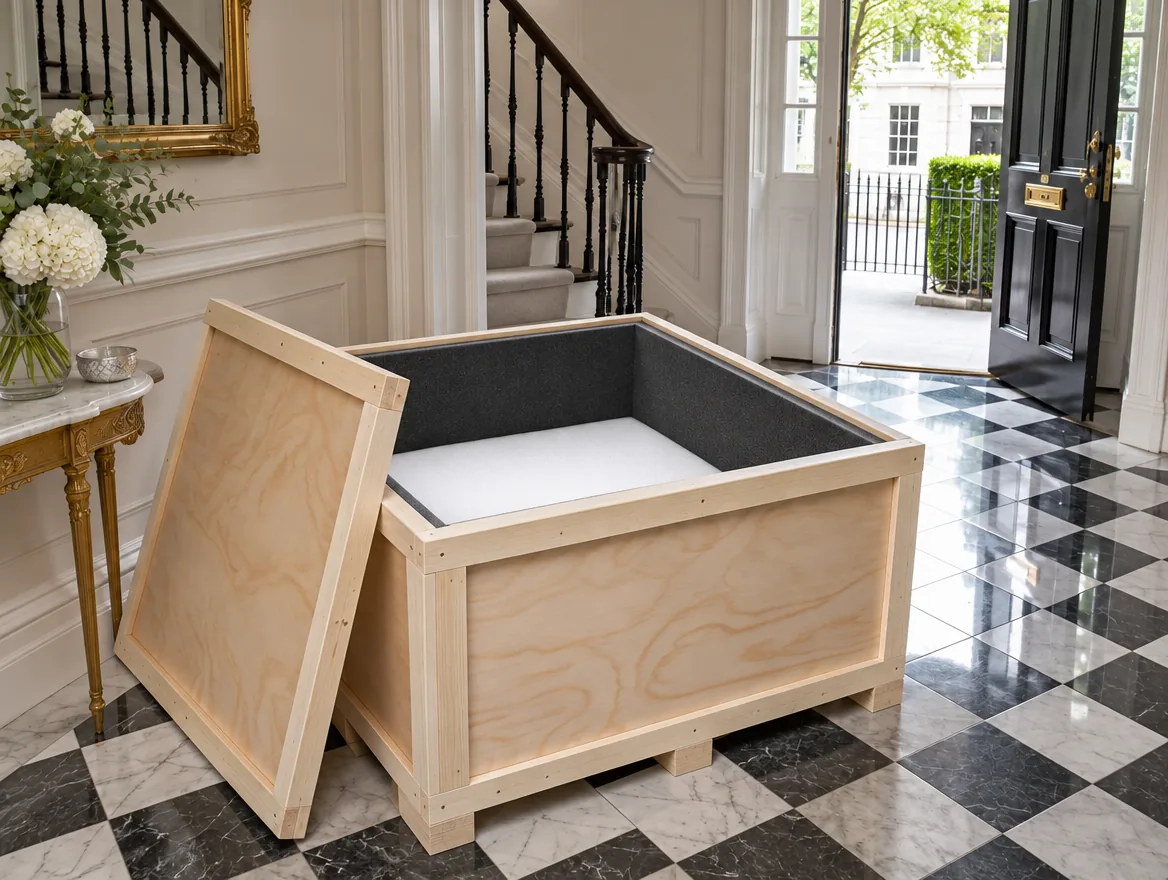
Prefer to have the crate delivered to you and pack it yourself? That is our other way of working: crates built to your measurements. The table further down compares the two.
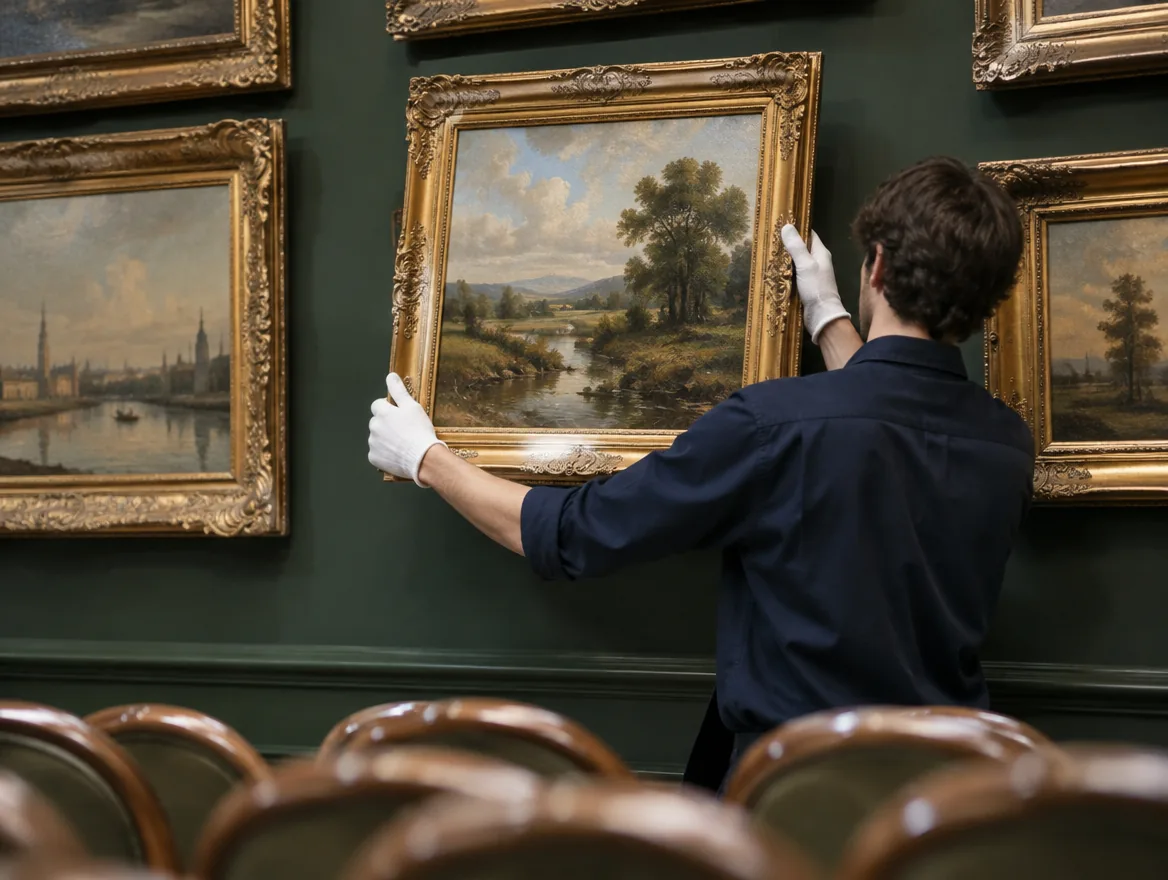
- 01Tell us about the piece
What it is, where it is, a few photos and where it is going. Every quote is based on the piece itself.
- 02We collect it
From a home, a gallery, an auction room, a dealer or a storage unit, in or out of London. The person who collects it is the person who packs it.
- 03Into our warehouse
The piece comes back to our warehouse, where it is unwrapped from any temporary packing and looked over before work starts.
- 04We build the crate around it
A pine frame and plywood panels, sized to the piece, with the lining and supports it needs: foam blocks, padded battens or cut-out foam.
- 05We give you the crate details
The outside size and the weight of the finished crate, so your courier can book the right vehicle.
- 06Your courier collects
Your courier or shipper collects the finished crate from our warehouse at a time we agree.
Who is this way of working for?
Among crating services in London, this is the one that asks least of you. It suits anyone who can't easily measure the piece, isn't there to do it, or wants the whole job done by people who crate for a living.
It also suits awkward objects. A gilt mirror with a carved crest, a chair with splayed legs or a bust with a fragile nose are hard to measure accurately. With the piece in our warehouse, those points are padded and supported where they actually are.
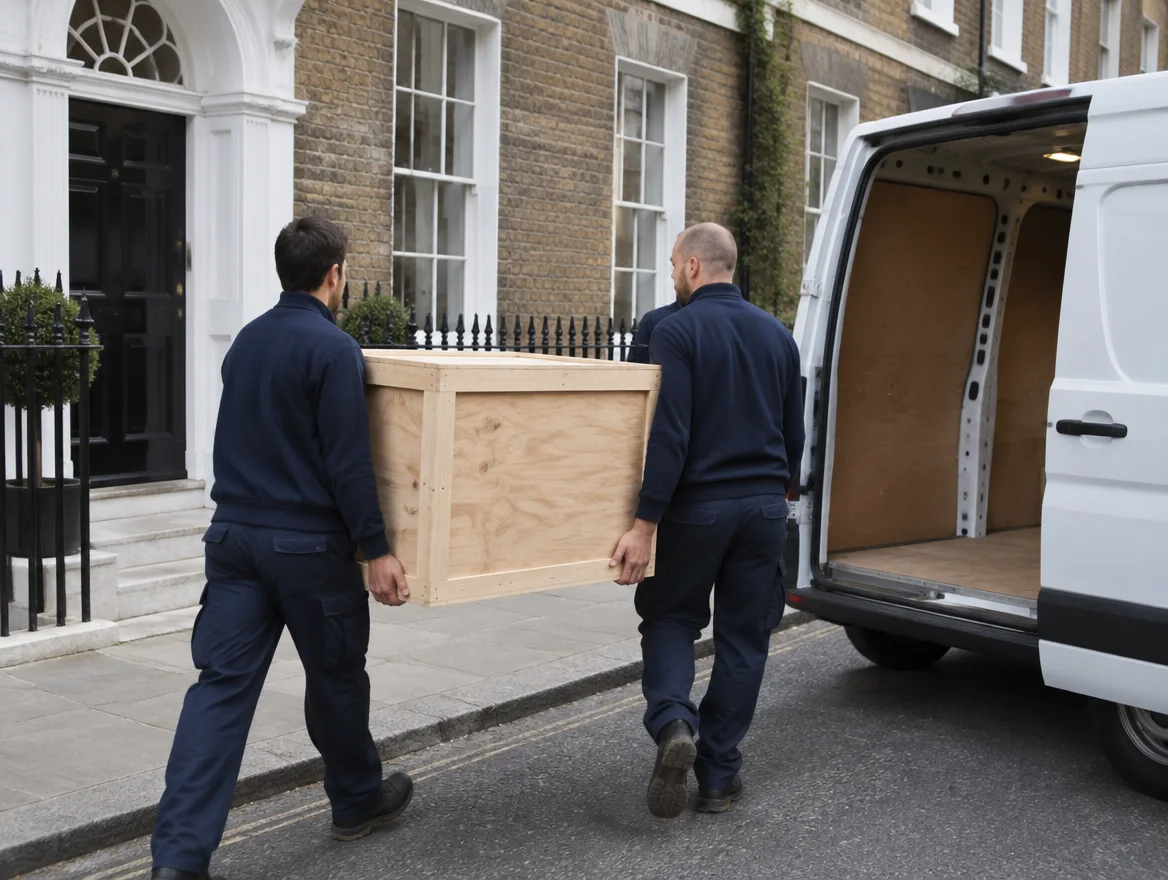
You've won a lot in a London saleroom and need it out before storage charges start. We collect it and crate it. See crating for auction buyers.
You're in New York, Geneva or Dubai and the piece is in London. You don't need to be here; we deal with it on the ground.
You already have a courier or freight forwarder. We prepare the crate; they take it from our warehouse.
A sold piece needs to leave properly packed. See galleries and art fairs and dealers and interior designers.
What happens to the piece in our warehouse?
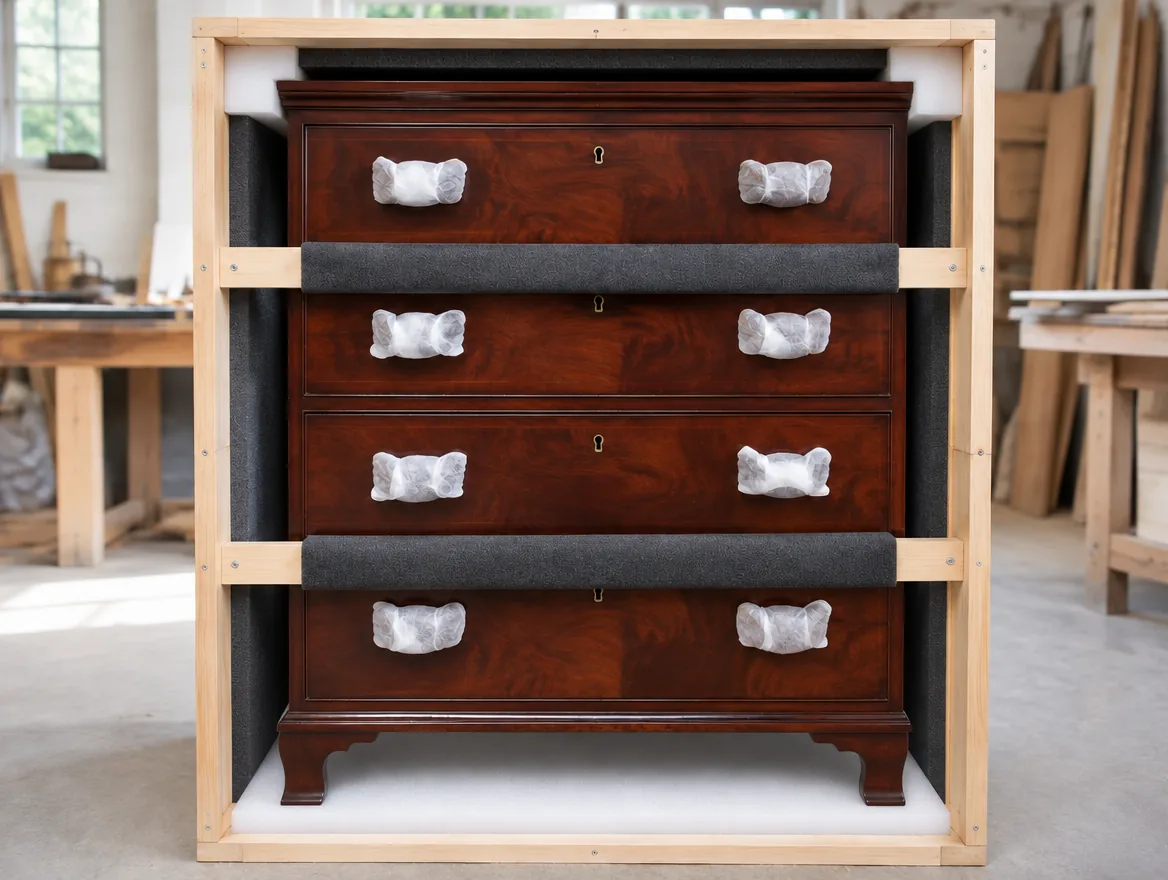
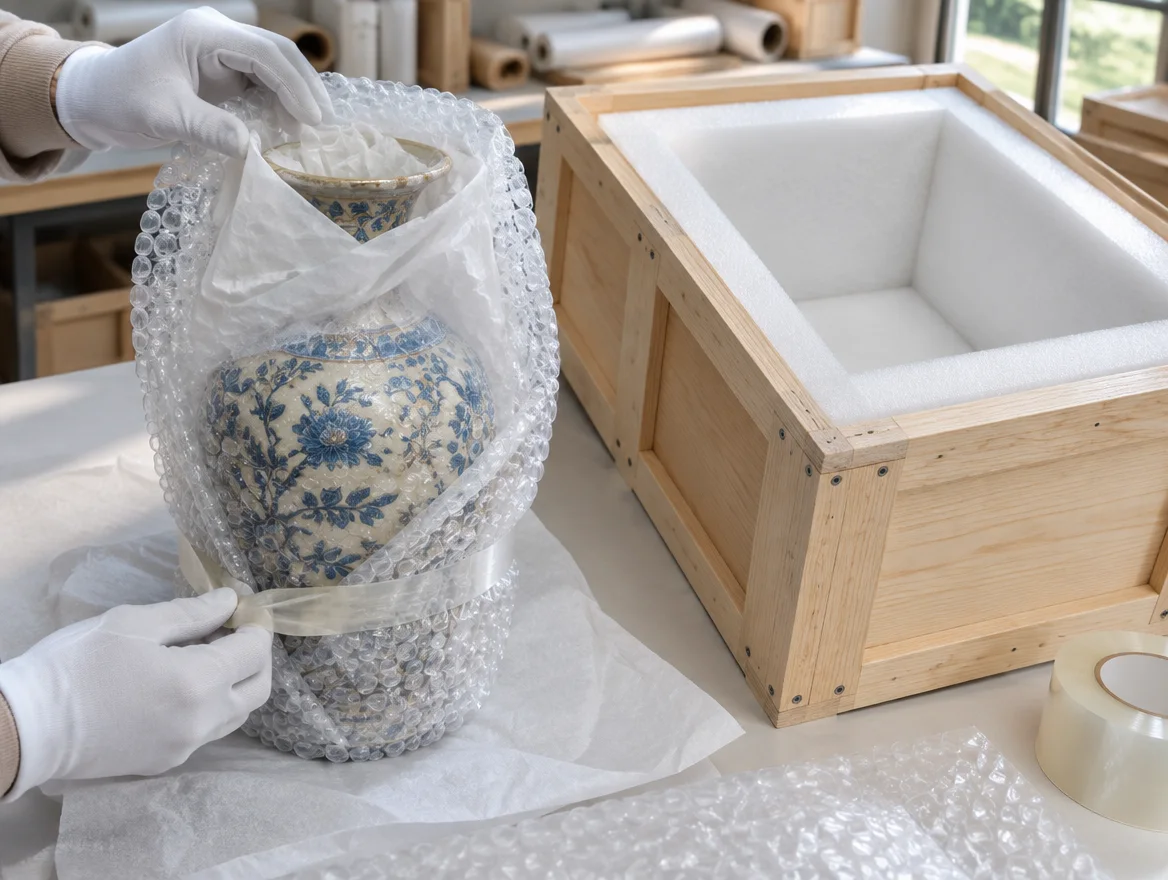
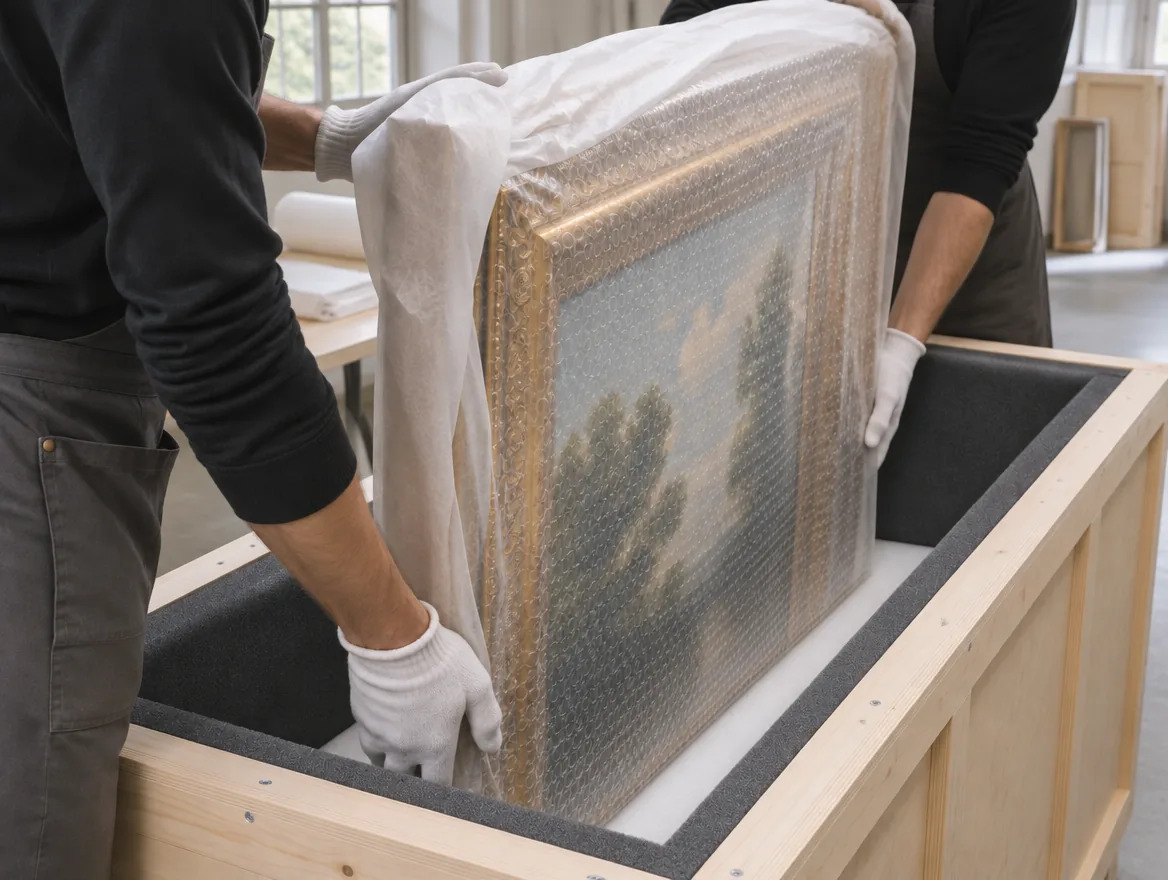
The piece is wrapped first, then the crate is built and lined around it, then it is held so it cannot move. The order matters, because the surface is protected before anything else touches it.
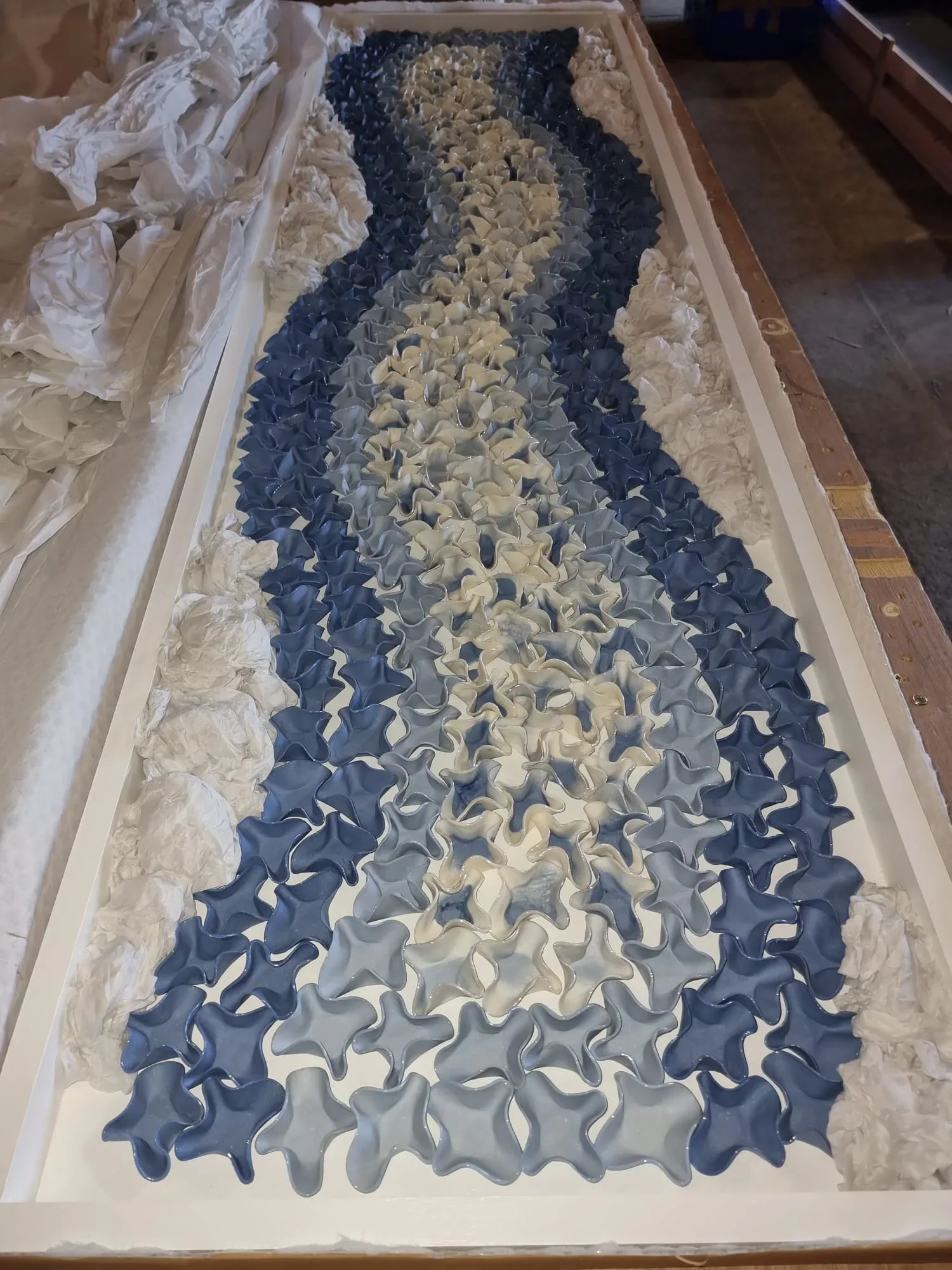
- Wrapping. Tissue paper against delicate surfaces, then bubble wrap over that. Mirror and picture glass is taped in a lattice so it holds together if it ever cracks. See mirrors and glass.
- The lining. High density foam for heavy pieces, HLB22 soft foam for fragile surfaces, or polystyrene where a light, firm lining is enough. All three come in 25 mm, 50 mm, 75 mm and thicker. More on our materials page.
- Holding it still. Padded battens for paintings and mirrors. High density foam blocks for busts, sculpture and stone. Cut-out foam or separate compartments for parts, as we do with antique clocks.
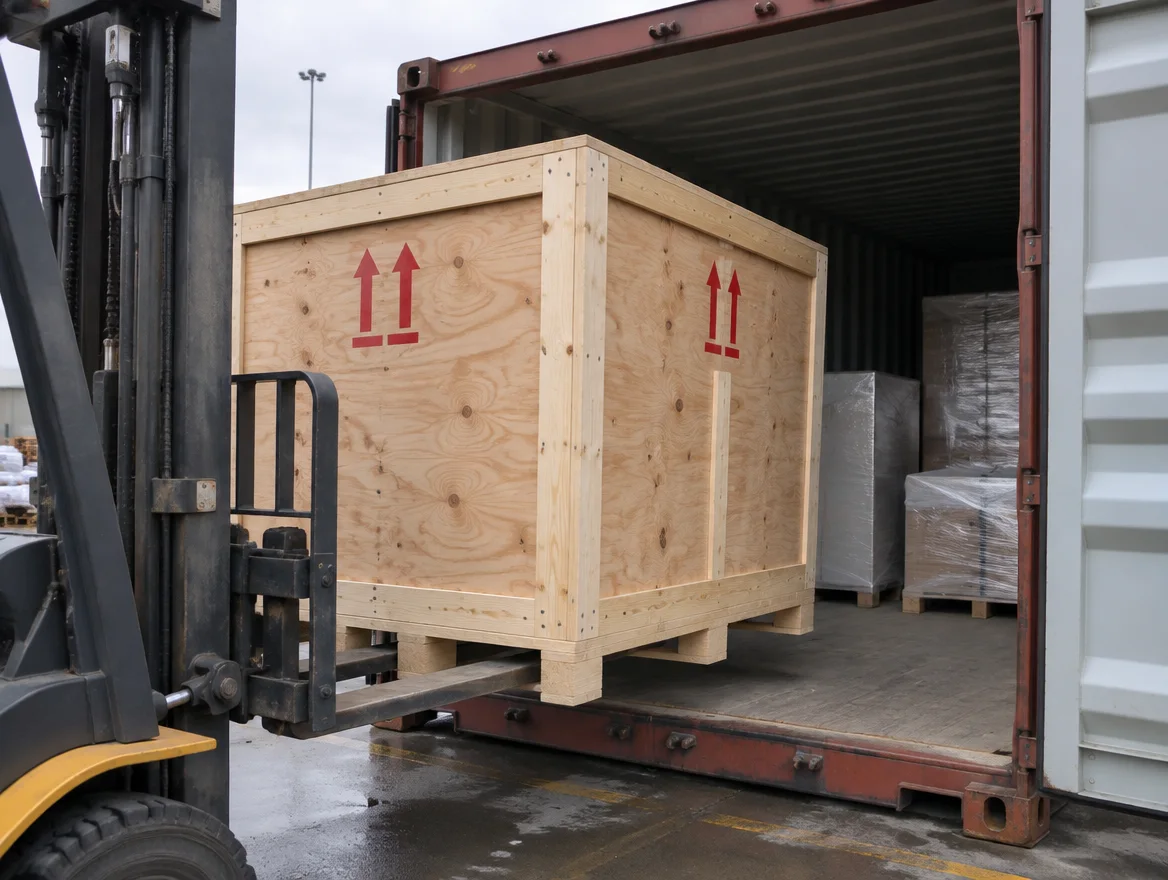
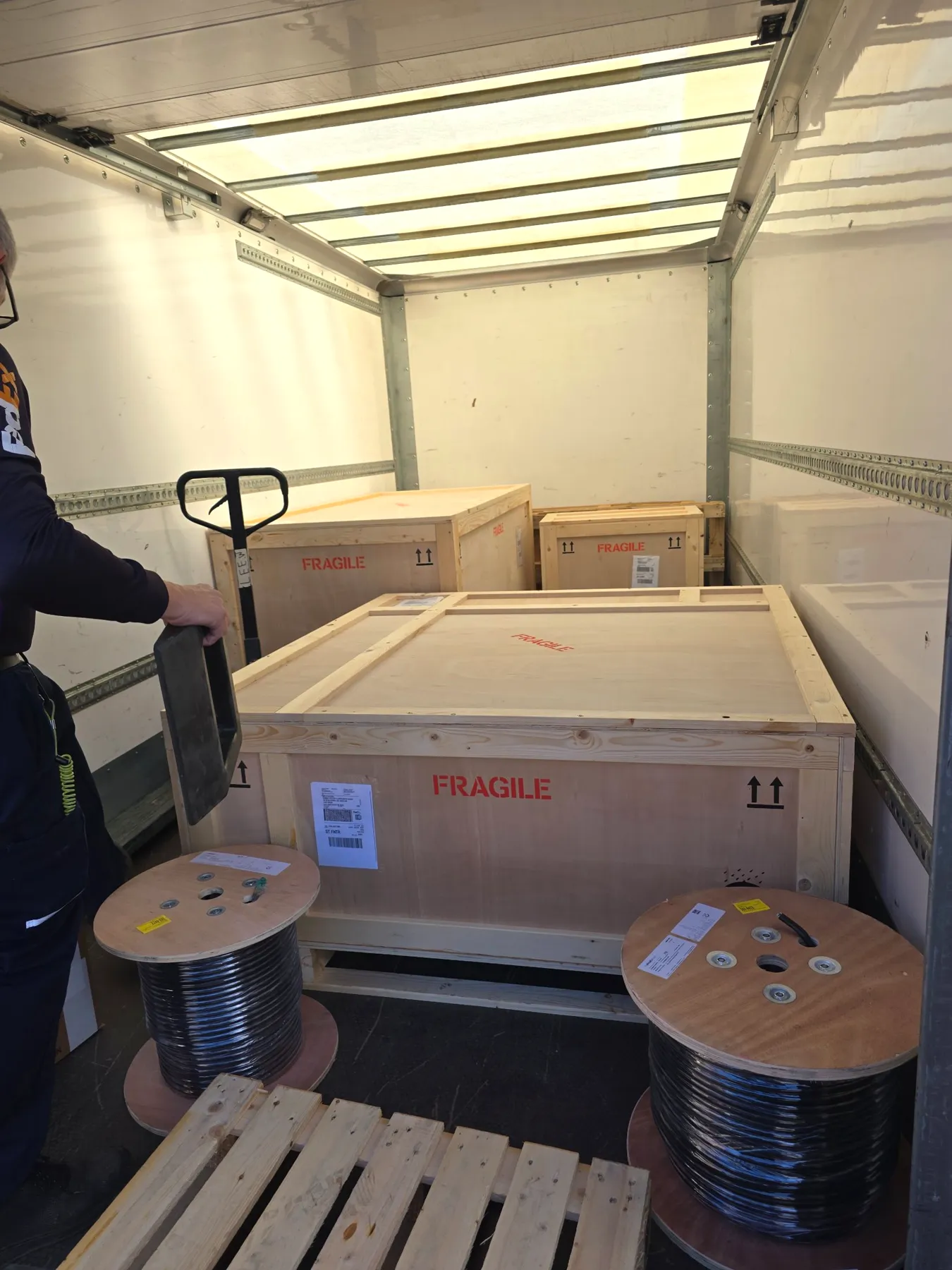
- Closing and marking. The lid is screwed down so it can be opened and closed again. The outside is marked Fragile and This way up.
What we need from you
Very little. You don't need a tape measure. A phone photo and an address are usually enough to start.
- What the piece is, and a few photos from different sides
- Roughly how big and heavy it is, if you know (a guess is fine)
- Where it is: the address, and a name and number for whoever is there
- Access: stairs, lifts, parking, loading bays, opening hours
- For a saleroom or storage unit: the lot or reference number, and written authority for us to collect
- Where it is going, and whether you already have a courier
- Anything fragile: glass, gilding, loose parts, a painted surface
Auction houses and storage firms usually release a piece only once it is paid for and the owner has authorised the collector. Sort the release before the collection day and nothing gets held up.
Then request your quote.
Send us a photo and the measurements.
We’ll recommend the crate, the lining and the supports, and come back with a bespoke quote.
What does your courier need to know?
Your courier needs the crate's outside size and weight, where to collect it, and a collection time. We give you the first two once the crate is built; you pass them on.
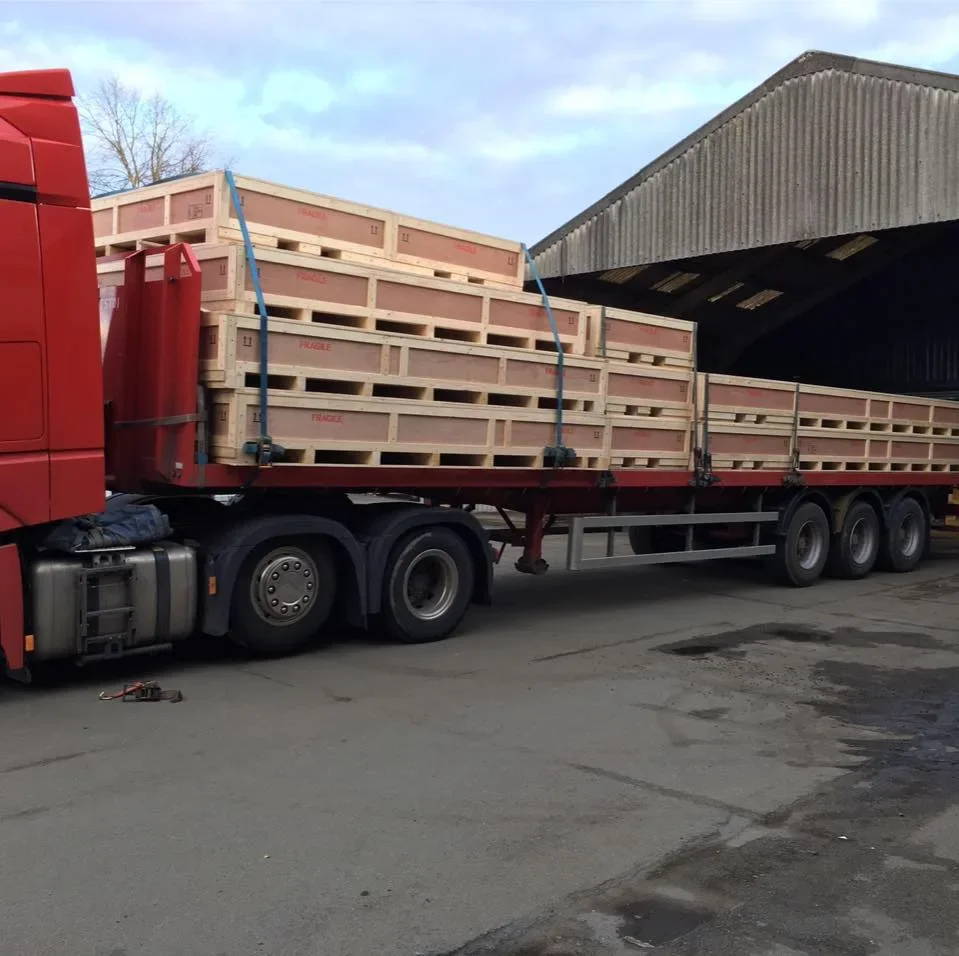
Shippers, especially by air, often charge on the space a crate takes up as well as its weight. Our crates are light for their size: a crate's own weight is usually far below its volumetric weight, so its outside size is what counts most. A crate built close around the piece keeps that space down, which is one more advantage of building around the object itself.
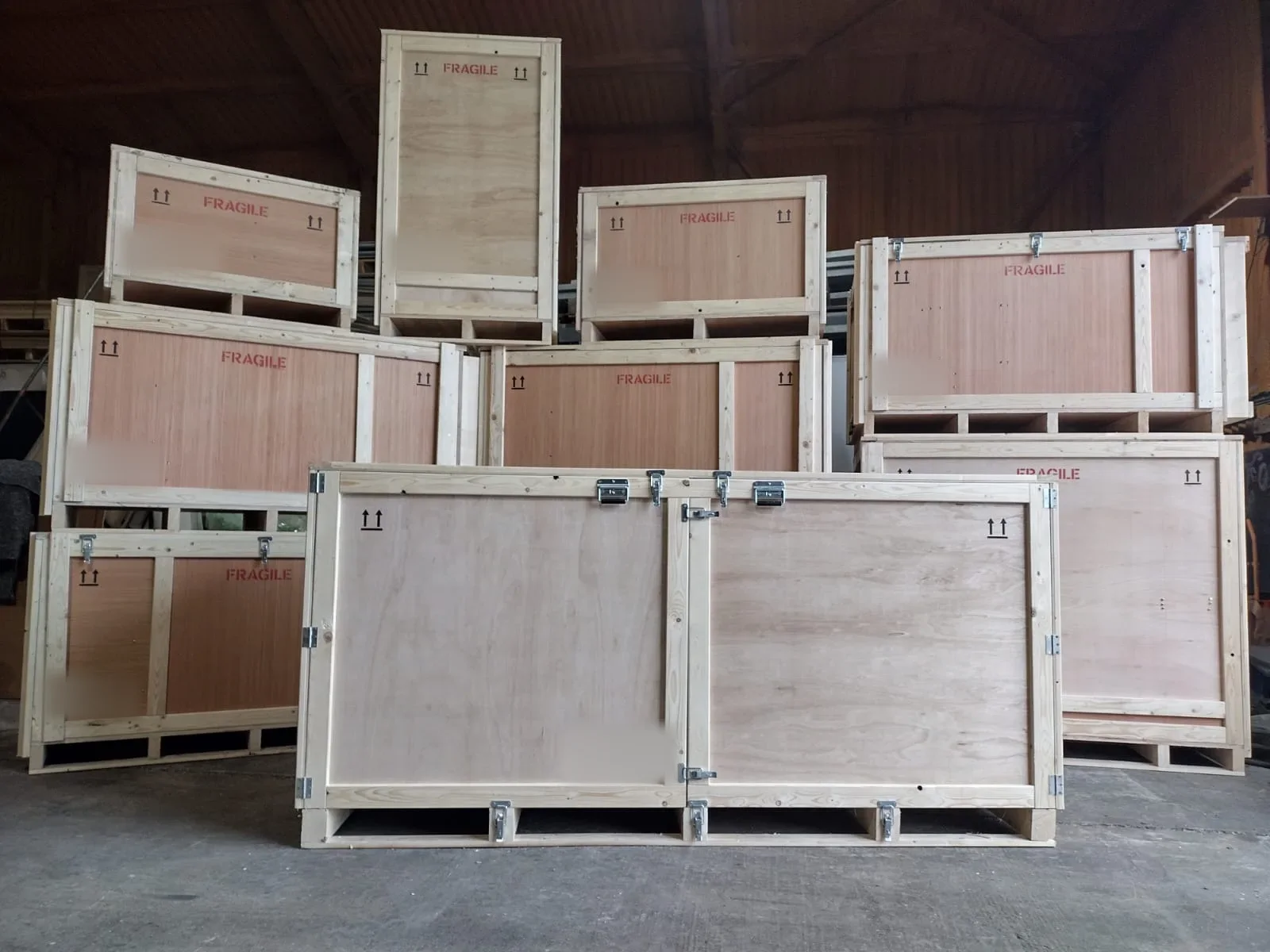
We give you the finished crate's outside dimensions, with its weight estimated from the volume of materials. That is what the courier quotes and books on, not the size of the piece inside. If an exact weight is needed, we weigh the crate once it's built.
The crate is collected from our warehouse. The address is given when the collection is booked.
Your courier contacts us to agree a time. We work 9am to 4pm, 7 days a week.
A heavy crate needs a vehicle that can load it safely, such as a van with a tail-lift. Ask us about loading when you book.
Condition photos and records
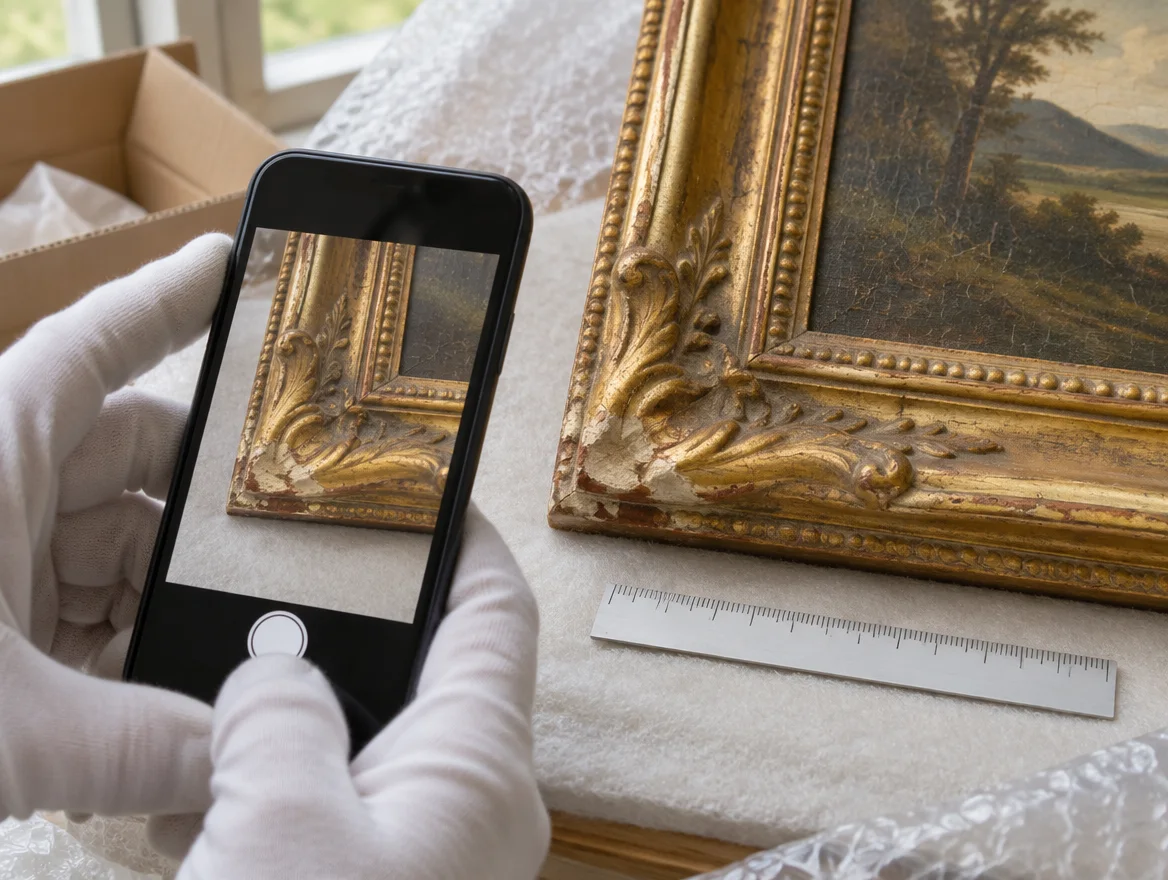
A dated record of the piece before it travels protects everyone. If anything is questioned later, you can show how it looked before it left.
- If the piece is with you, take your own dated photos before collection: front, back, corners, and close-ups of any existing chips, cracks or repairs.
- If it is in a saleroom, ask the auction house for its condition report and keep it with your invoice.
- Keep the photos with your insurance details. Your insurer may ask for them.
Ask us whether we can photograph the piece when it arrives at our warehouse. Our insurance page explains what to photograph.
Two ways of working, side by side
Both get you a bespoke wooden crate built in timber and plywood. The difference is who measures, where the piece is packed and who moves it.
Not sure which suits you? Tell us about the piece and we'll say. More on the other option: crates built to your measurements.
| We collect and crate | Built to your measurements | |
|---|---|---|
| Who measures | Nobody: we build around the piece | You, and we confirm the numbers with you |
| Where the piece goes | To our warehouse | Stays with you |
| Who packs it into the crate | We do | You or your own packers |
| Where the crate goes | Your courier collects it from us | We deliver it to your address |
| Best for | Auction buyers, people abroad, anyone with a shipper booked | Dealers, galleries, own packers, pieces that can't leave |
Can you arrange the shipping too?
Yes, if you'd like us to. Instead of your courier collecting the crate, we can arrange the onward shipping as well, so one firm handles collection, packing, crating and shipping. All we need are the item details and the delivery address. See how it works.
The one thing we don't handle is customs paperwork. Export declarations, licences and import entries are arranged by you, your shipper or a customs agent. Our route pages explain what to check: the USA, Europe and Dubai and the UAE.
Common questions
Do I need to measure the piece? +
No. We collect it and build the crate around the piece itself in our warehouse. A rough idea of size and weight helps us quote, but a guess is fine.
Where do you collect from? +
Wherever the piece is: a home, a gallery, an auction room, a dealer or a storage unit. We're in and out of London regularly making collections.
Can my own courier collect the crate? +
Yes. That is how this way of working is set up. We give you the crate's size and an estimated weight, and your courier collects it from our warehouse at a time we agree. If they need the exact weight, we weigh it once it's built.
Where is your warehouse? +
We give the address when a courier collection is booked. It isn't published on the website.
Can you collect from an auction house for me if I live abroad? +
Yes. Send us the lot details and written authority to collect, and make sure the lot is paid for. You don't need to be in the UK.
Can several pieces go in one crate? +
Often, yes, each with its own space or compartment so nothing touches. Tell us everything that's going and we'll suggest the best way to split it.
Do you handle the customs paperwork? +
No. Export declarations, licences and import entries are arranged by you, your shipper or a customs agent. What we do is make sure the crate is ready for the journey, clearly marked and easy to open and close again if customs want to look inside.
Is the piece insured? +
Transit insurance for exports is available, bought by you job by job, so the cover matches the piece. We have public and product liability insurance. See our insurance page for what to ask.
How much does it cost? +
Every quote is bespoke, based on the piece itself: its size, weight, how fragile it is and what it needs. We don't use a rate card. Send us the details and photos and we'll come back with a price for your piece.
Related
You measure, we confirm, build and deliver.
We collect from the saleroom, crate it and get it to your shipper.
Wrapped by hand, crated to measure.
Six steps, one specialist.
Swipe for more →
Tell us what needs to travel.
Every quote is bespoke, based on the piece itself. Send us the details and we'll come back to you.