

Types of crate, and which one your piece needs
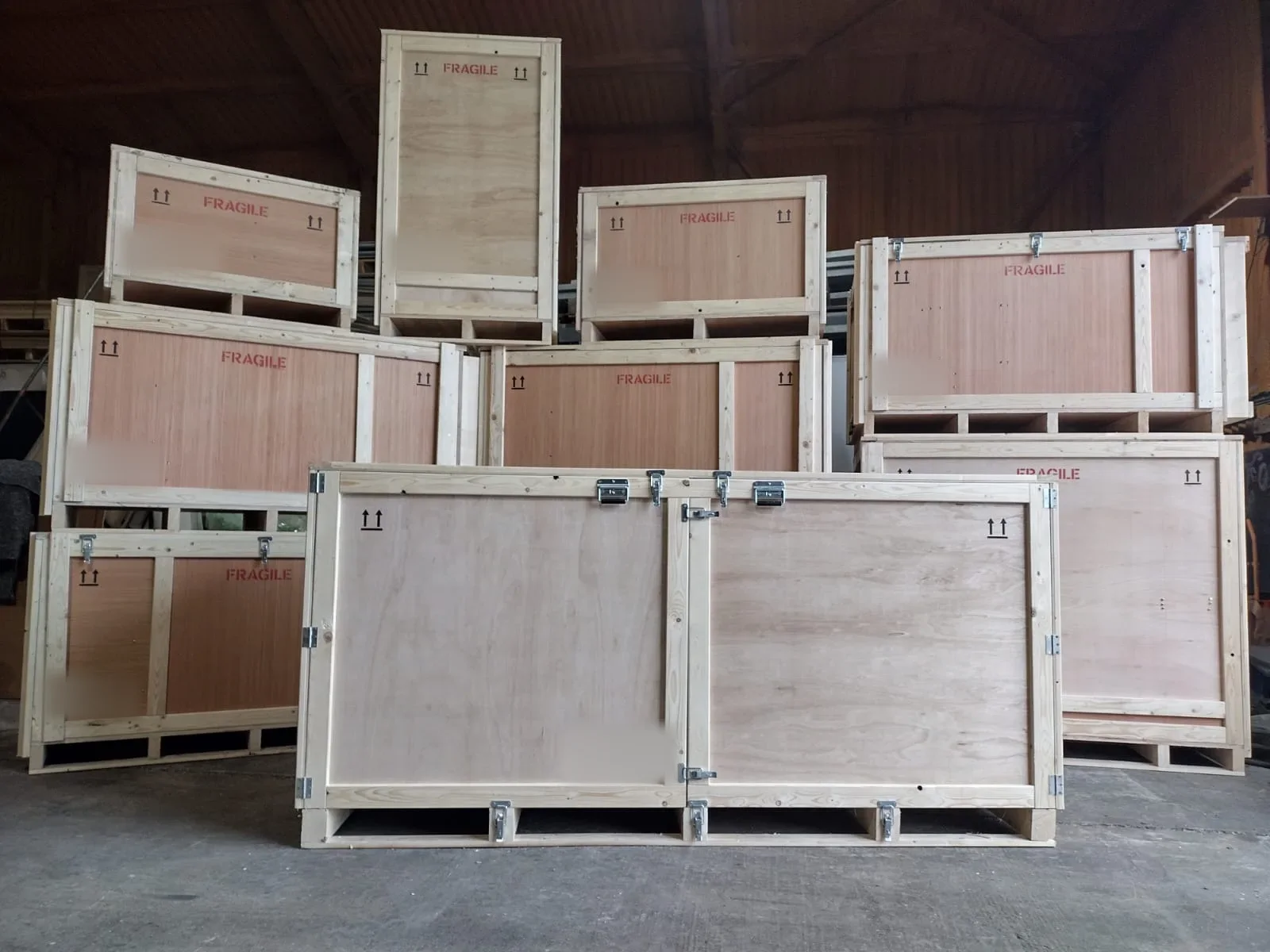
Most valuable pieces travel best in a closed wooden crate built to measure. But very heavy pieces need a heavier build, parts that travel often suit drawers, and a group of framed works suits a rack. Here are the types of crate we build, what each one is for, and examples from our recent work.
- Types
- Export, heavy duty, drawer, rack
- Also
- Display, presentation box, foam compartments, motorbike
- Built
- To measure, for each piece
- Hardware
- Fitted by hand, in-house
Which type of crate do you need?
Start with three questions. How heavy and fragile is it? What shape is it? And how often will it travel? The table gives the short answer, and each type is explained below.
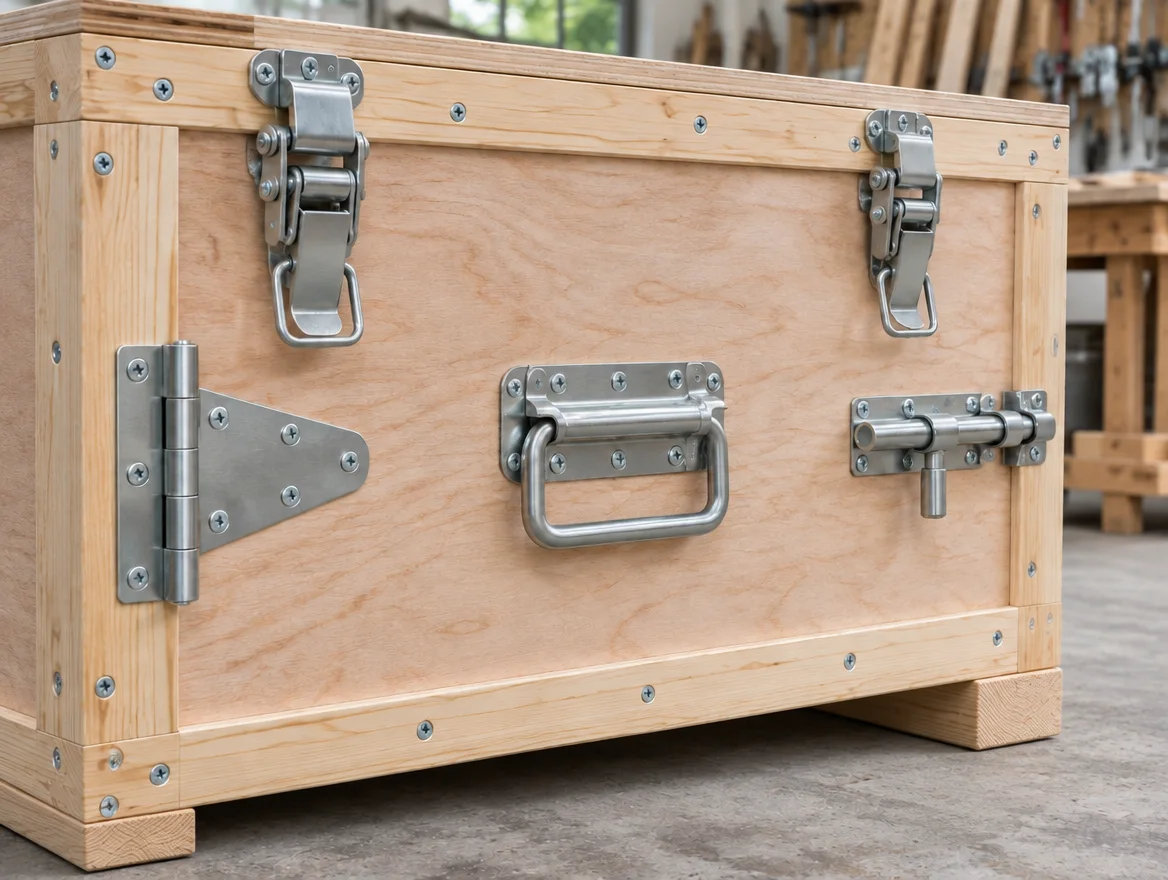
Every type on this page starts the same way: a pine timber frame and plywood panels, built to measure for the piece, with latches, hinges, bolt locks and handles fitted by hand in-house. What changes is the shape, the base and what goes inside. Castors are an extra we add only to crates that need to roll around a site.
Whichever type you choose, what goes inside matters as much as the shell. See what our crates are made of.
| Type | What it is | Choose it when | From our recent work |
|---|---|---|---|
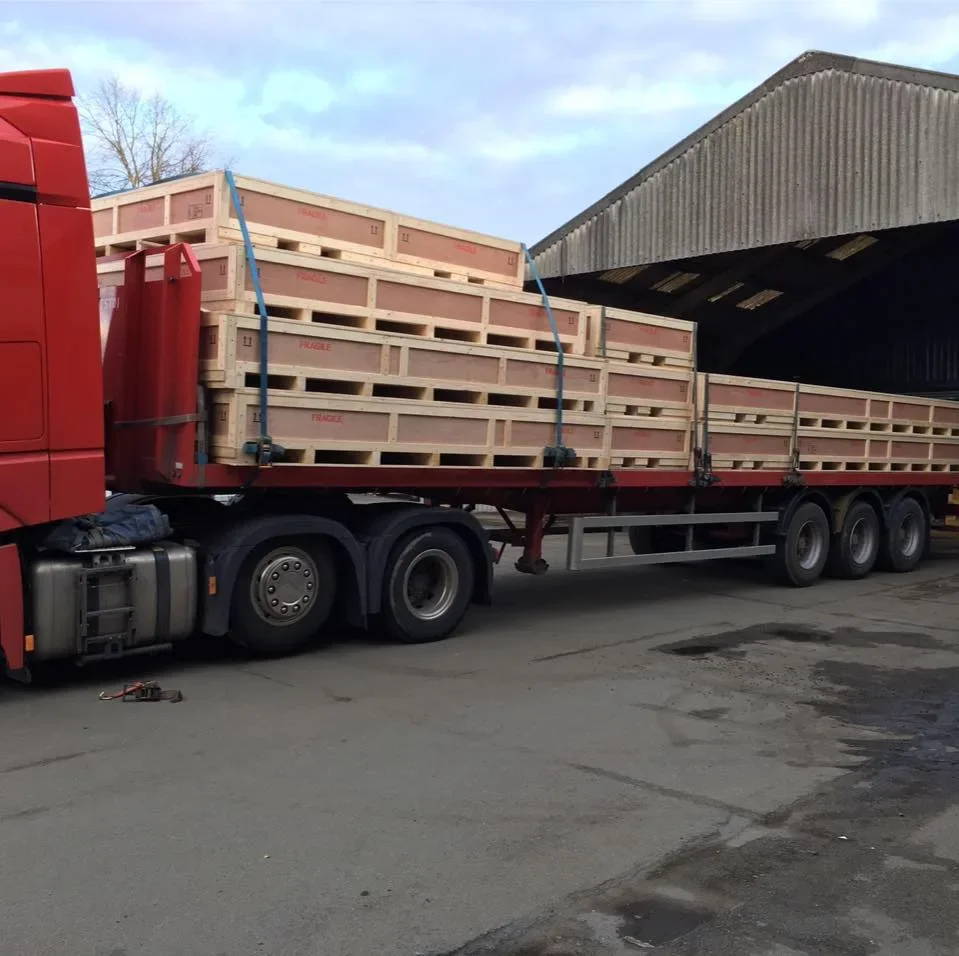
| Standard export crate | Pine frame, plywood panels, closed on every side, on skids | It's valuable or fragile, or going abroad | Export crates in many sizes |
| Heavy duty crate | A heavier build on A-frame supports and skids | It's very heavy and must travel upright | 500 kg of concrete street art |
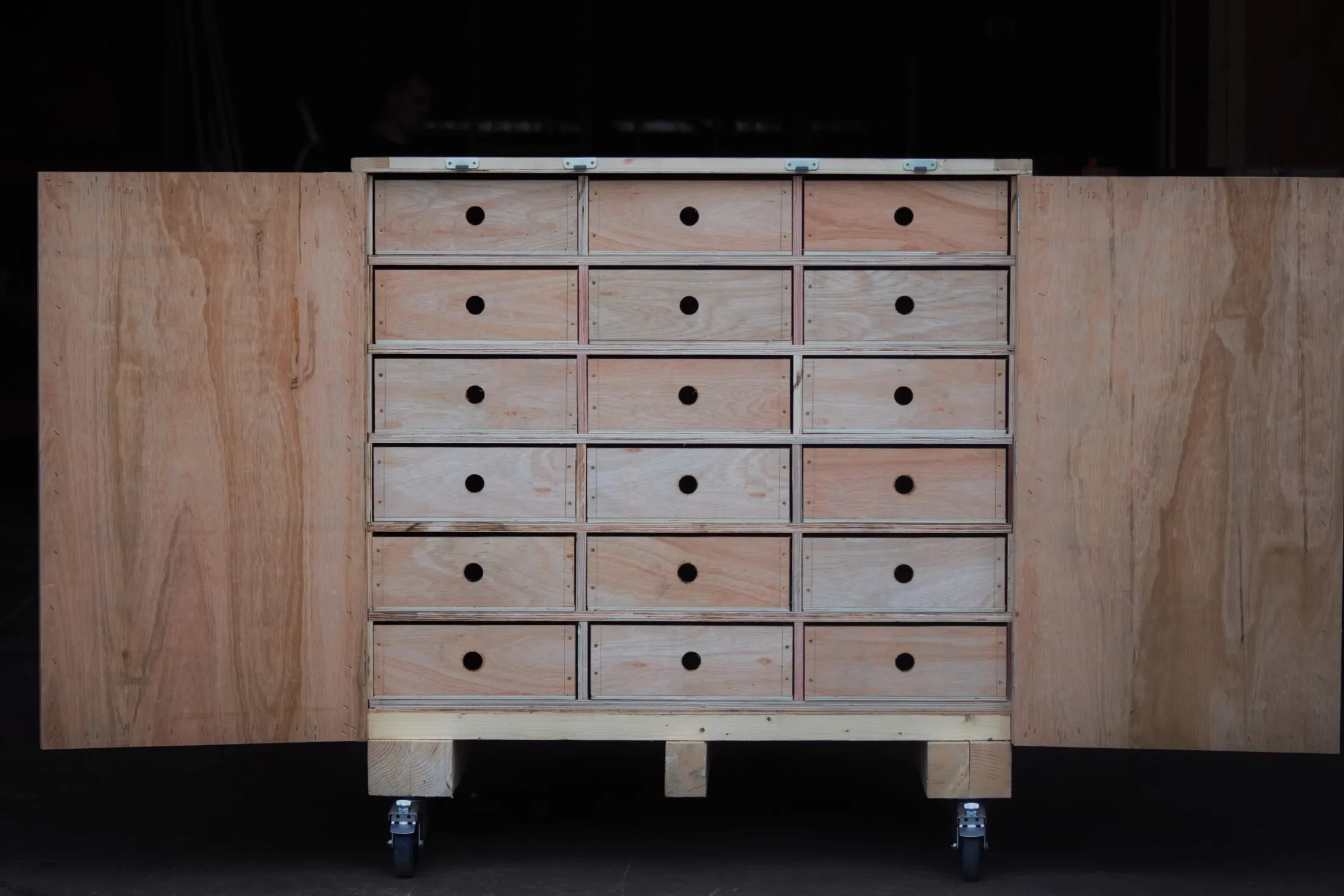
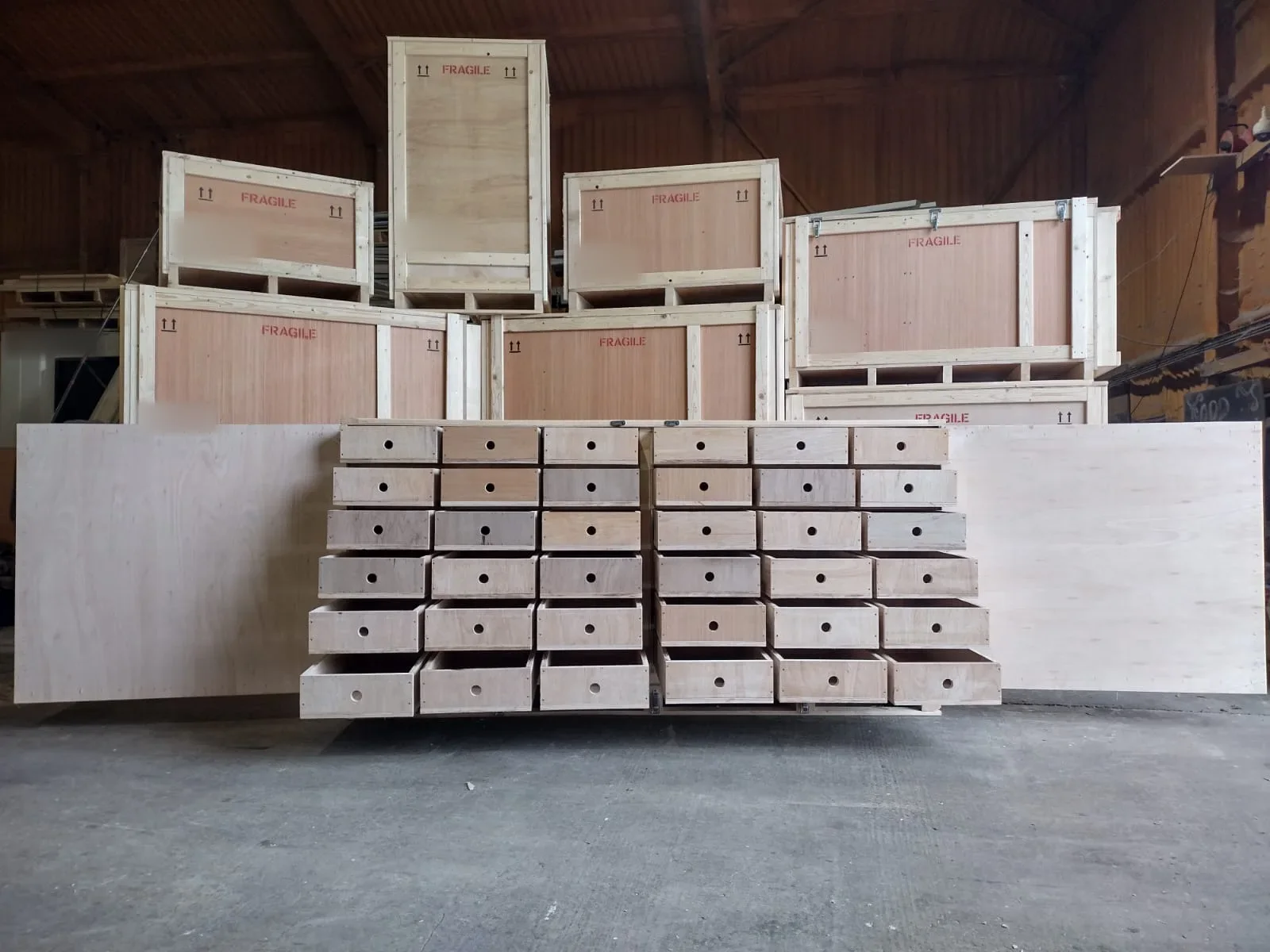
| Drawer crate | Doors and removable drawers inside | Parts travel often and need storing too | Drawer crates with 18 and 36 drawers |
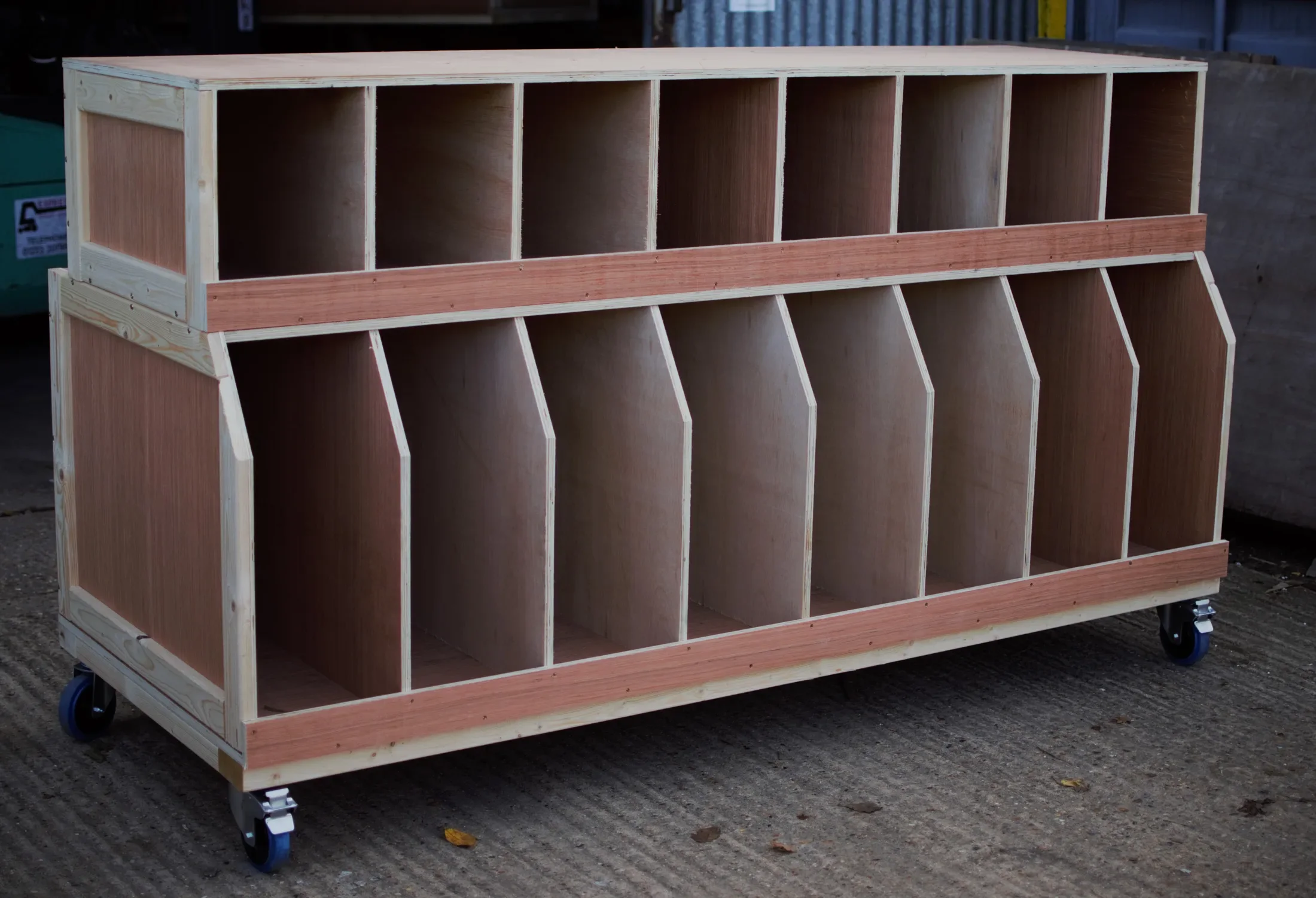
| Rack or pocket crate | A slot for each framed work, on castors | You're moving several framed works | A mobile rack crate with pigeonholes above |
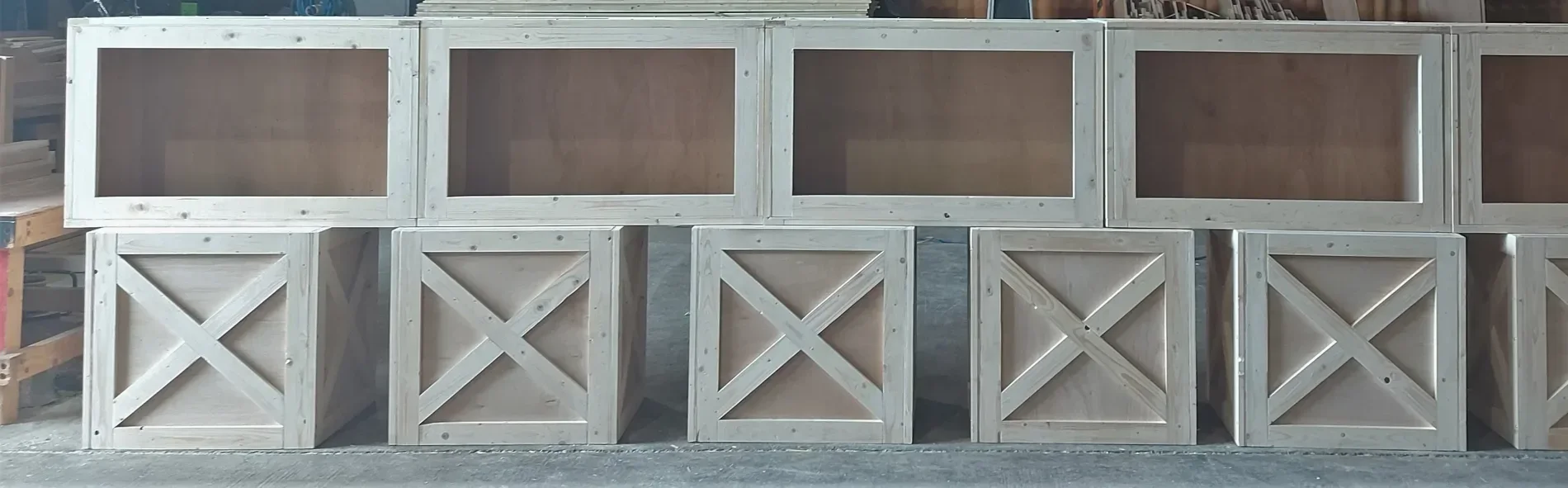
| Display crate | Crate-style boxes built to be seen | You need the crate look for a shop or event | A row of X-braced display crates |
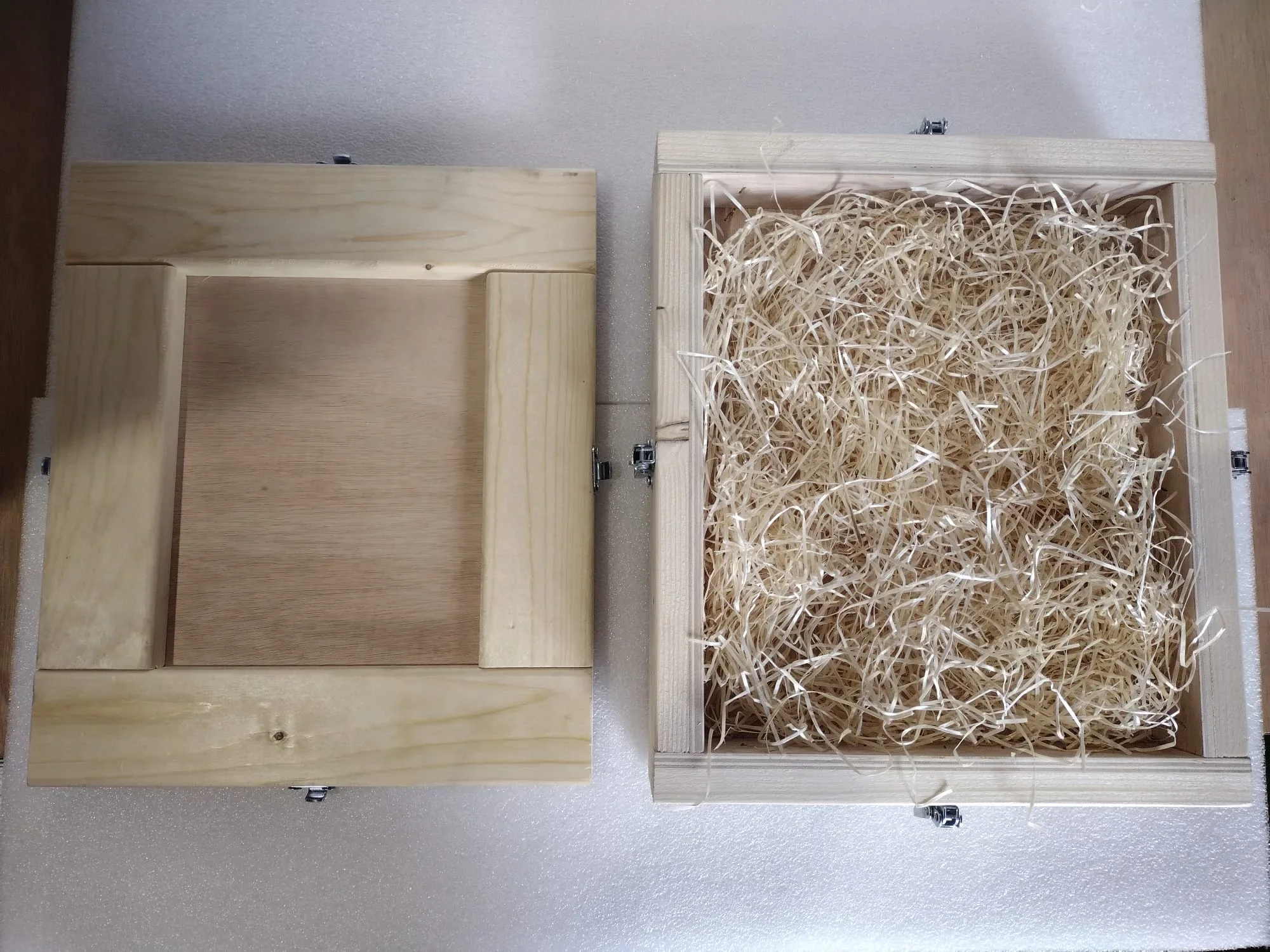
| Presentation box | A small box bedded with wood wool | It's a small piece or a gift | A small box filled with wood wool |
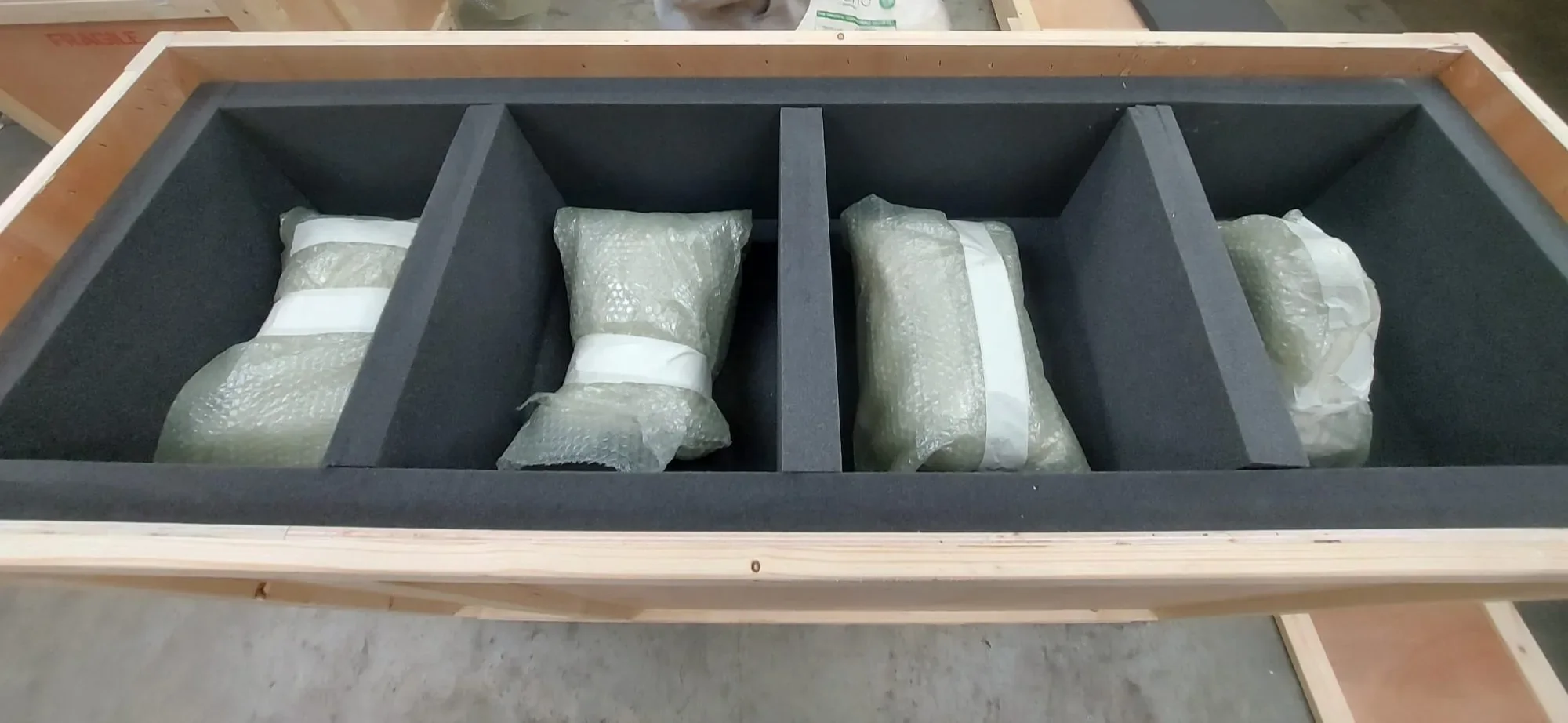
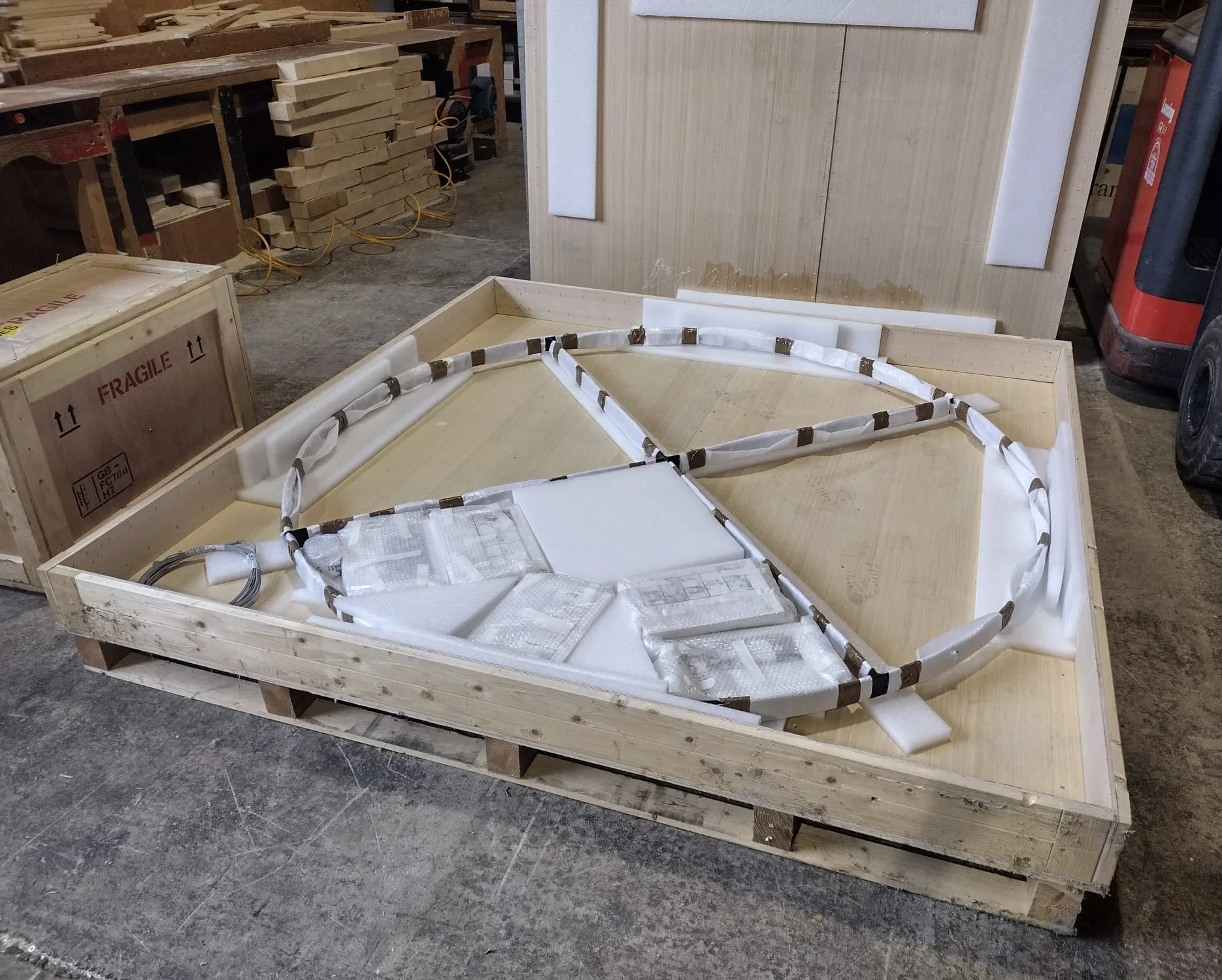
| Cut foam compartments | Foam cut to hold each piece in its place | Several fragile parts travel together | Antique clock parts; an art installation |
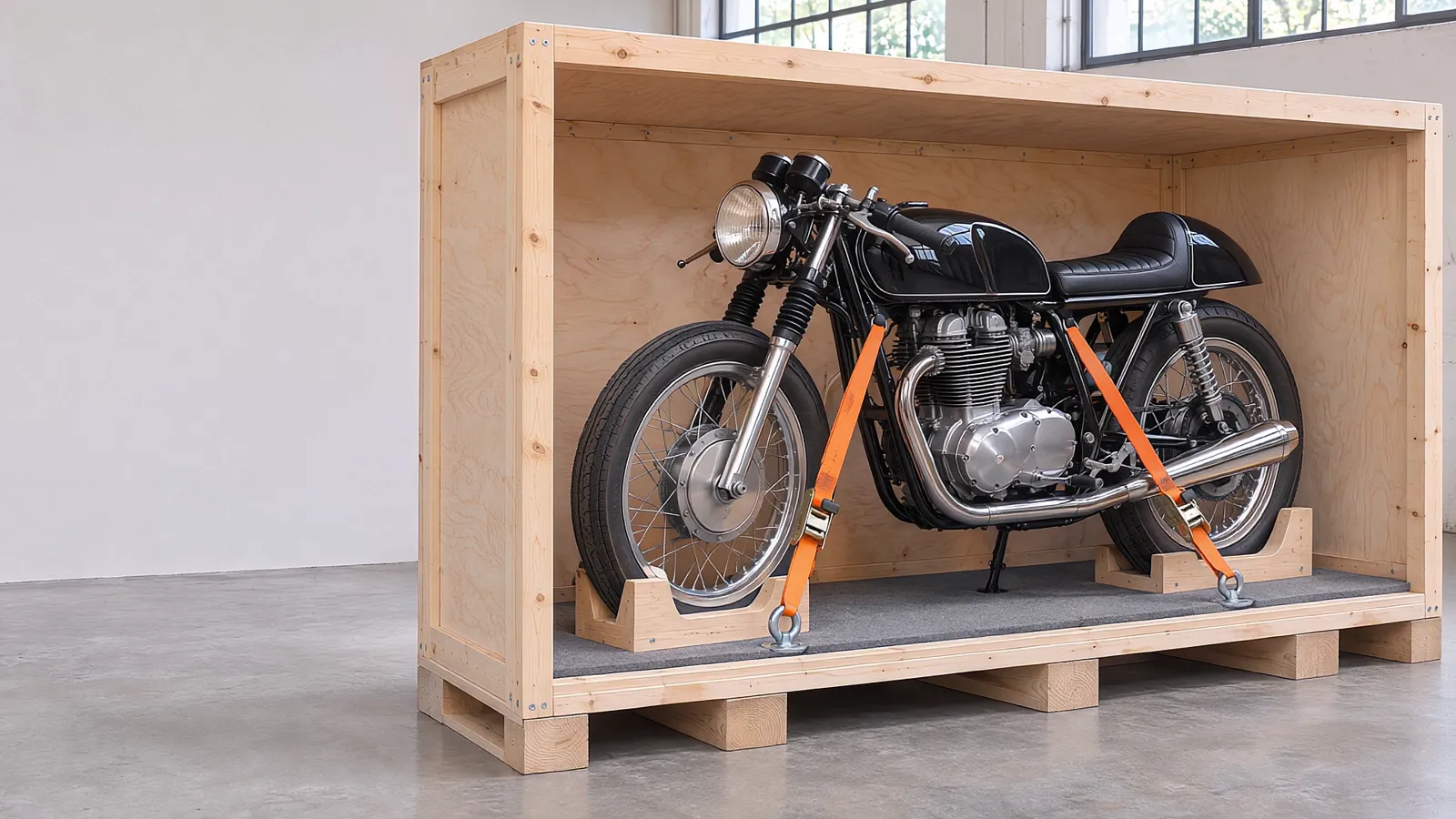
| Motorbike crate | Wheel chocks and straps on a crate floor | You're shipping a motorbike | A motorbike on chocks, strapped down |
Standard export crates
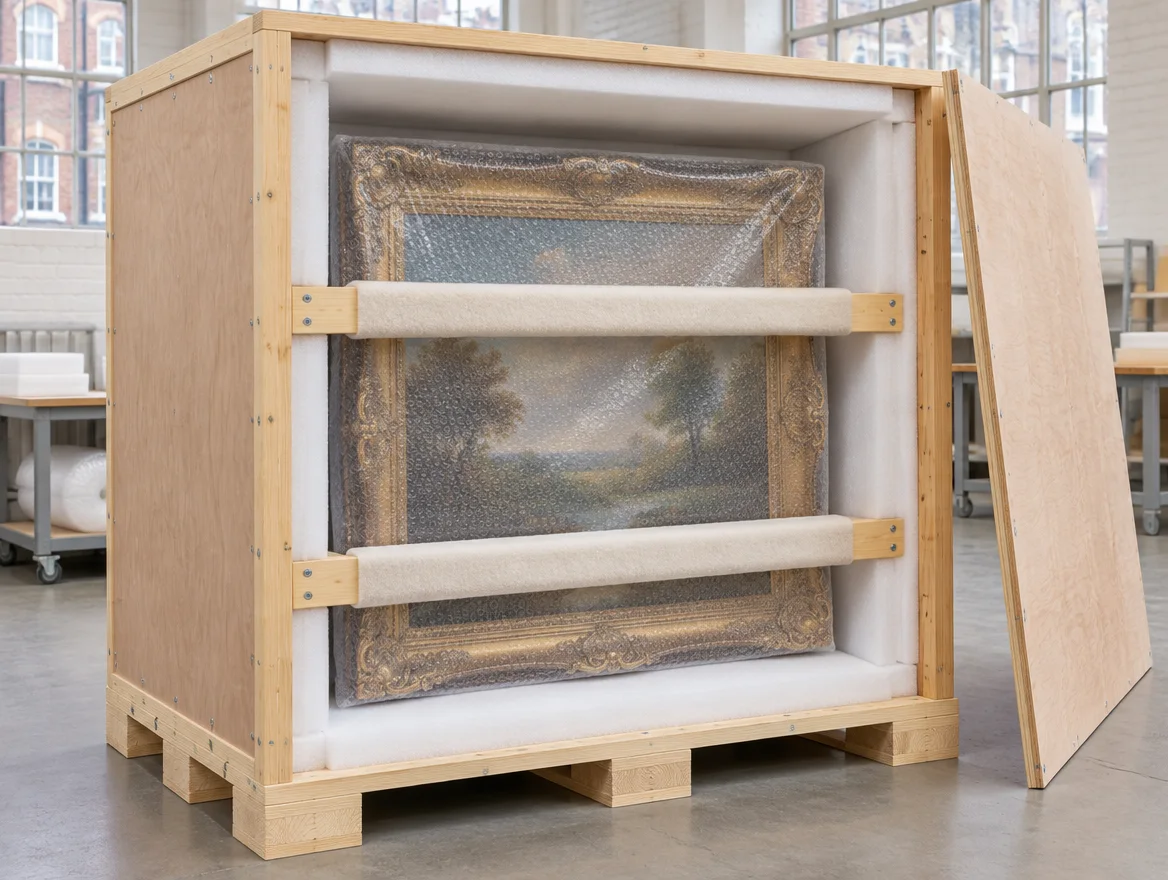
Our standard crate is a pine timber frame with plywood panels, closed on every side, on skids for the forklift. Inside, it is lined with foam and fitted with supports so the piece can't move. It's what we recommend for anything valuable or fragile, and for anything going abroad.
Every crate is built to measure, so the piece fits closely and can't shift. The lining is chosen for the piece: high density foam for heavy pieces, HLB22 soft foam for fragile surfaces, or polystyrene where a lighter, more affordable lining does the job. Mirrors and flat works are held by padded battens, and busts and sculpture by blocks of high density foam. Our bespoke crates page explains more.
Heavy duty crates
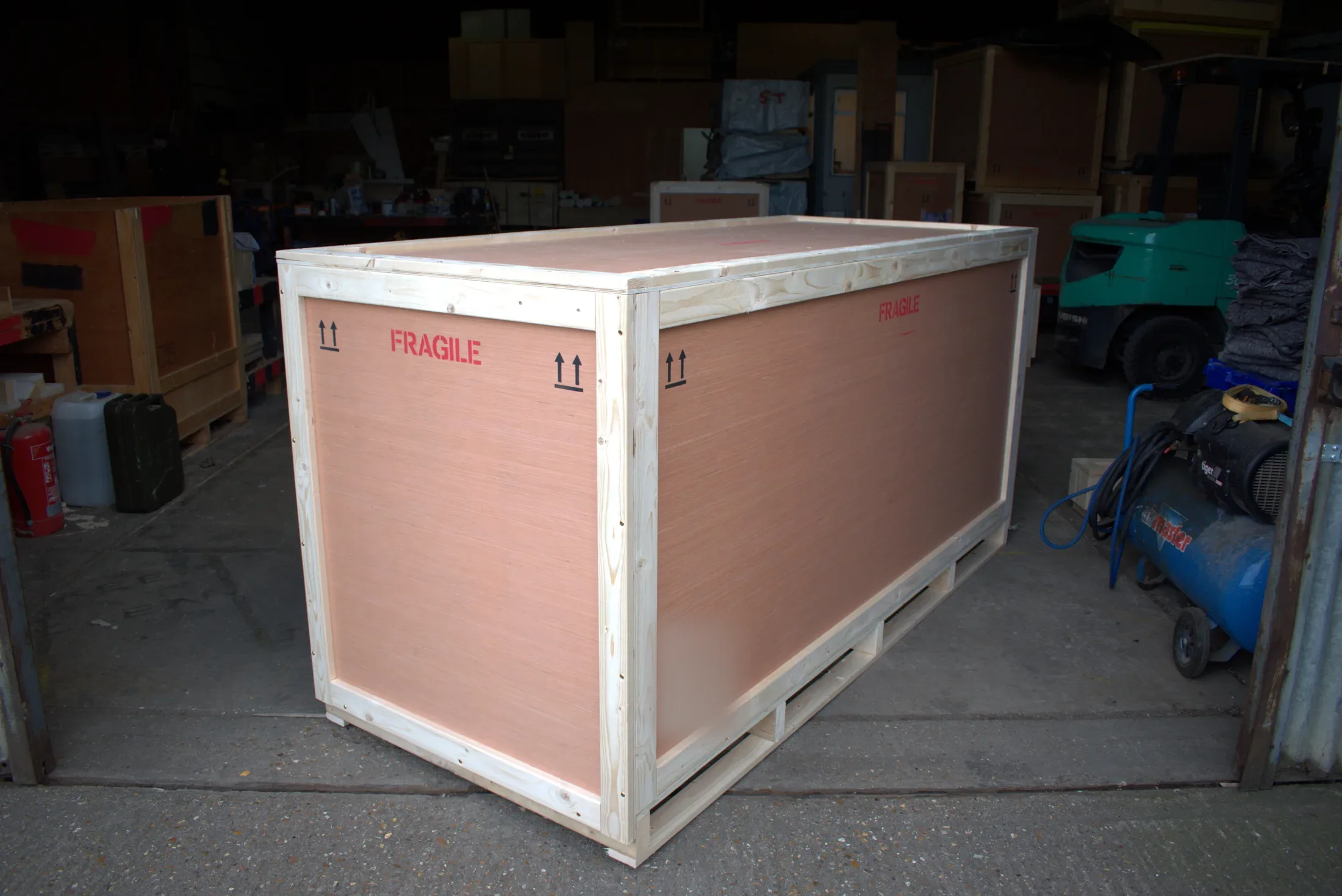
Some pieces are too heavy for a standard build. A heavy duty crate uses a stronger frame and base, sized to the weight, and can stand upright on A-frame supports and skids so it can't tip while it is moved.
Recent work: a gallery was sending a piece of street art, painted on over 500 kg of concrete, to the United States. We designed a heavy duty crate around its weight and shape, standing on A-frame supports and skids. Read about the job, or see sculpture and heavy pieces.
Drawer crates
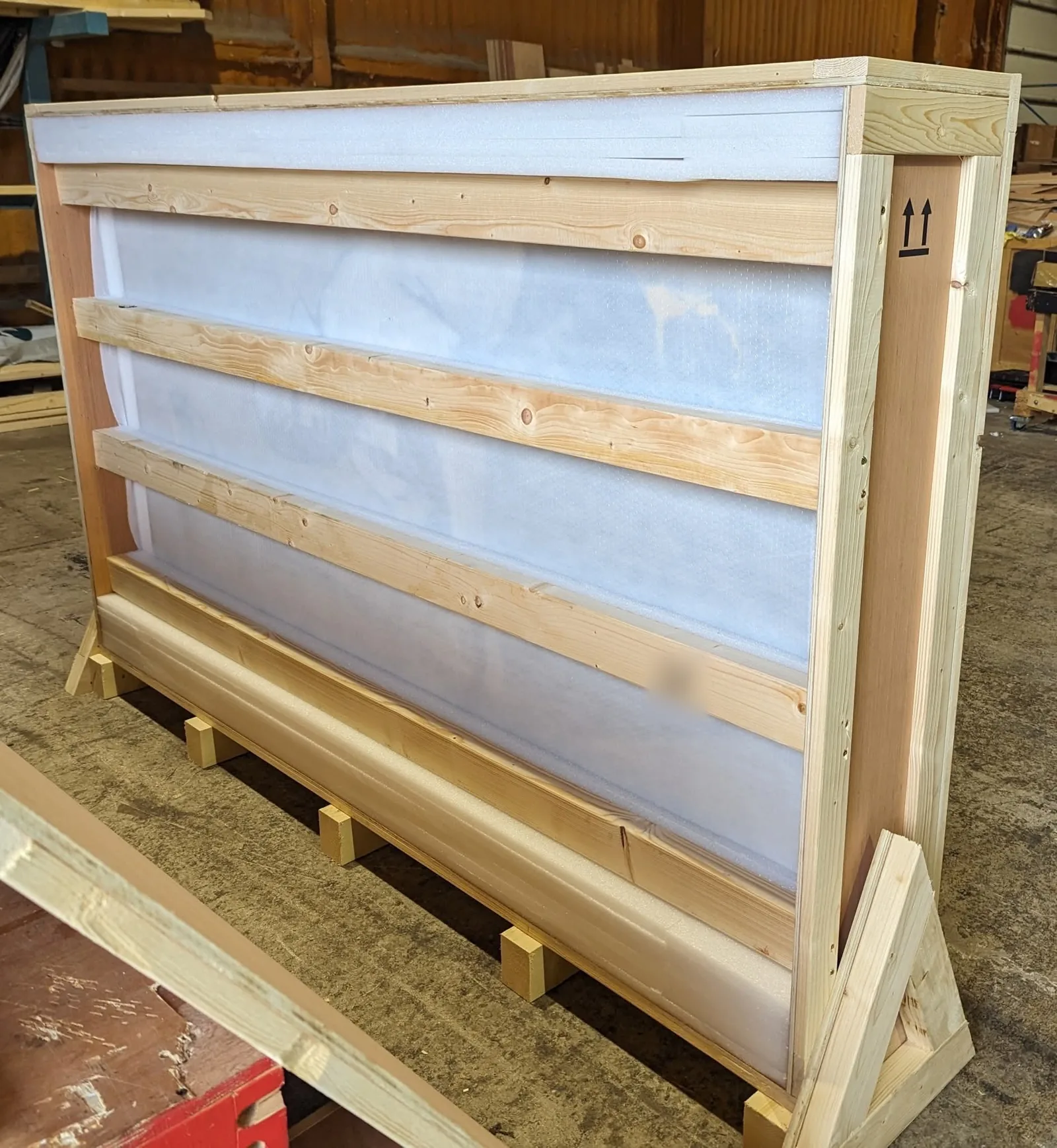
A drawer crate looks like an export crate from outside, with hinged doors, latches and castors. Inside are removable plywood drawers, so parts are stored and moved in the same crate, each in its own place. We build them with 18 and with 36 drawers.
Recent work: a manufacturer was paying to repair parts damaged between its factories. The drawer crate we built for it ended a repair bill of tens of thousands of pounds a year. Read the full job, or see industrial crates.
Rack or pocket crates for framed works
A rack crate, sometimes called a pocket crate, has a slot for each framed work, so several pieces stand side by side without touching. It's quicker to load and unload than packing each one separately, and on castors it doubles as storage.
More on crates for paintings.
Send us a photo and the measurements.
We’ll recommend the crate, the lining and the supports, and come back with a bespoke quote.
Display crates
Not every crate is made to travel. Display crates are crate-style boxes in pine and plywood, built for shops, stands and events. They have the look of a crate without the export markings.
Small presentation boxes
For small pieces and gifts, we build a small pine and plywood box and bed the piece in wood wool. The wood wool holds it softly in place, and the box looks good when it is opened.
For anything valuable or going a long way, ask us whether a full crate is the safer choice. Our guide crate or box helps you decide.
Crates with cut foam compartments or cradles
When several fragile parts travel together, we cut foam to hold each one in its own compartment, so nothing knocks against anything else. For odd shapes, we cut foam cradles that follow the piece.
Recent work: antique clock parts, each in its own foam compartment, and an art installation held in cut foam cradles. See antique clocks.
Motorbike crates
A motorbike crate has wheel chocks fixed to the floor and straps that hold the bike upright, so it can't roll or lean on the journey.
See motorbike crates for more.
Still not sure? Tell us what you are sending
You don't need to know the right type before you contact us. Send us the details and we'll recommend the crate, the lining and the supports.
Request a quote and we'll come back with a price for your piece.
- 01Tell us what it is
What the piece is, its size and weight, and photos if you have them.
- 02Tell us where it's going
Collection and delivery addresses, and whether it's one trip or many.
- 03We recommend the crate
Your quote says which type of crate, lining and supports we suggest, and why.
- 04We build it
Built to measure, with every latch and hinge fitted by hand, in-house.
Common questions
Which crate do I need? +
For most valuable or fragile pieces, a standard export crate built to measure. Very heavy pieces need a heavy duty crate, parts that travel often suit a drawer crate, and several framed works suit a rack crate. Tell us what you are sending and we'll recommend one.
What is a heavy duty crate? +
A crate with a stronger frame and base, sized to the weight. Our crate for 500 kg of concrete street art stood upright on A-frame supports and skids.
What is a rack or pocket crate? +
A crate with a slot for each framed work, so several pieces stand side by side without touching. Ours are on castors, so they double as storage.
Can a crate be used for storage too? +
Yes. Drawer crates and rack crates on castors are built to store things as well as move them.
How many drawers can a drawer crate have? +
We have built drawer crates with 18 and with 36 drawers. Tell us what you need to store and we'll design around it.
Can you crate a motorbike? +
Yes. The bike stands on wheel chocks fixed to the crate floor and is held upright with straps.
How much does a crate cost? +
Every quote is bespoke, based on the piece: its size, weight, how fragile it is and where it's going. Send us the details and we'll come back with a price for your piece.
Related
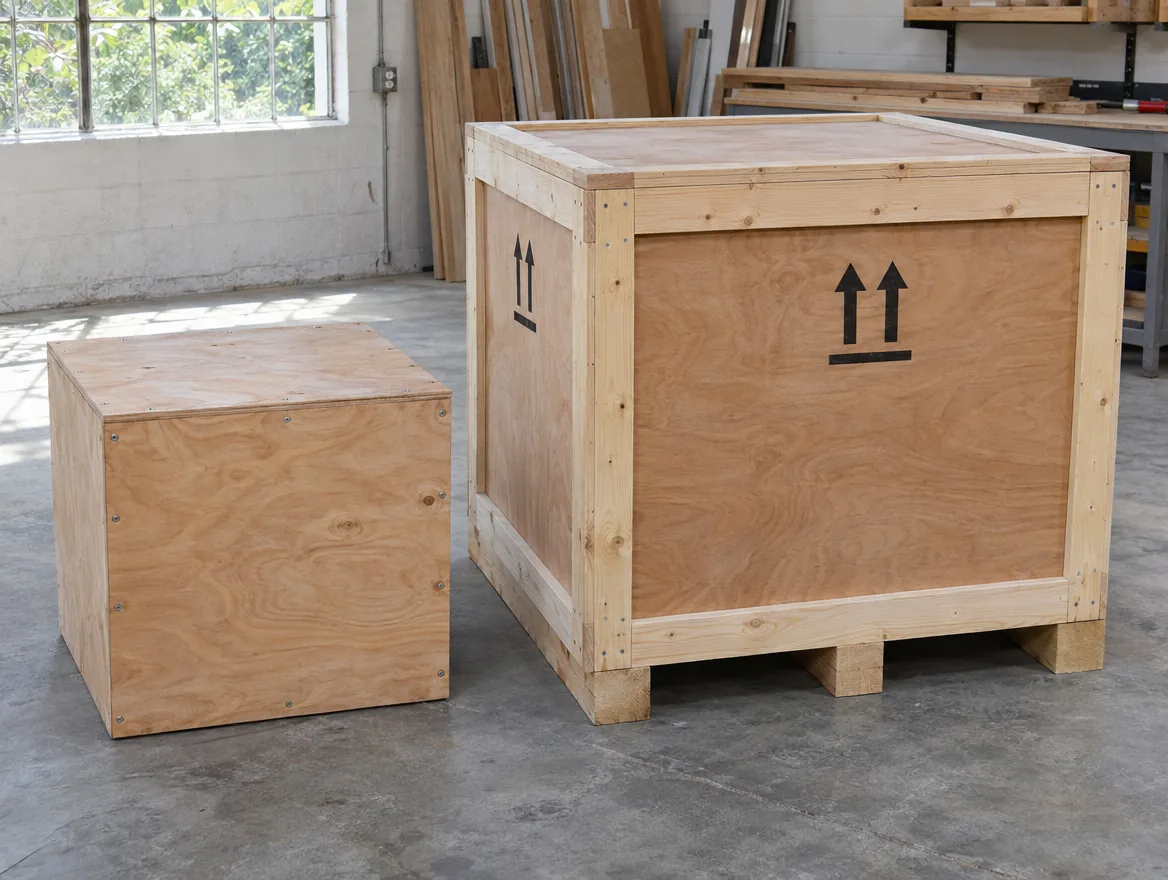
Plain plywood box or timber-framed crate: which one you need.
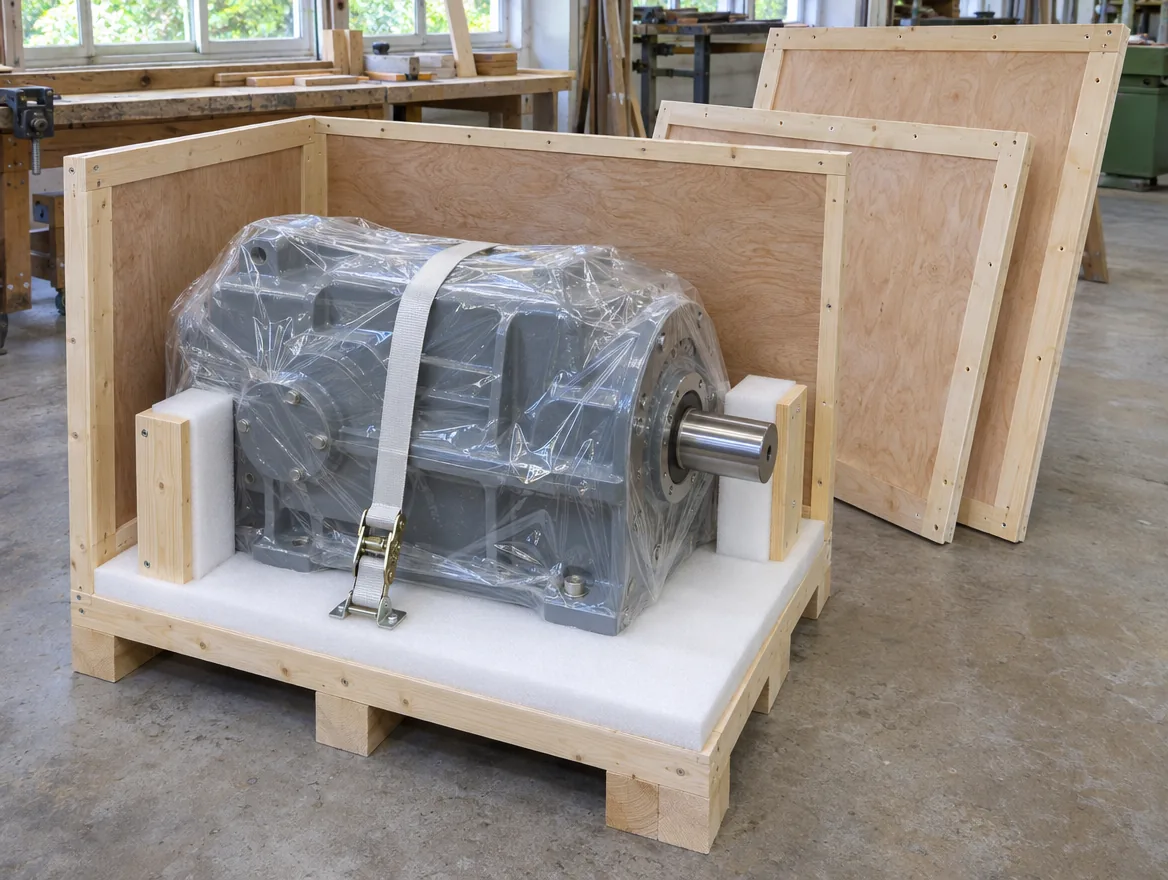
Crates built for sea and air freight, from machinery to art.
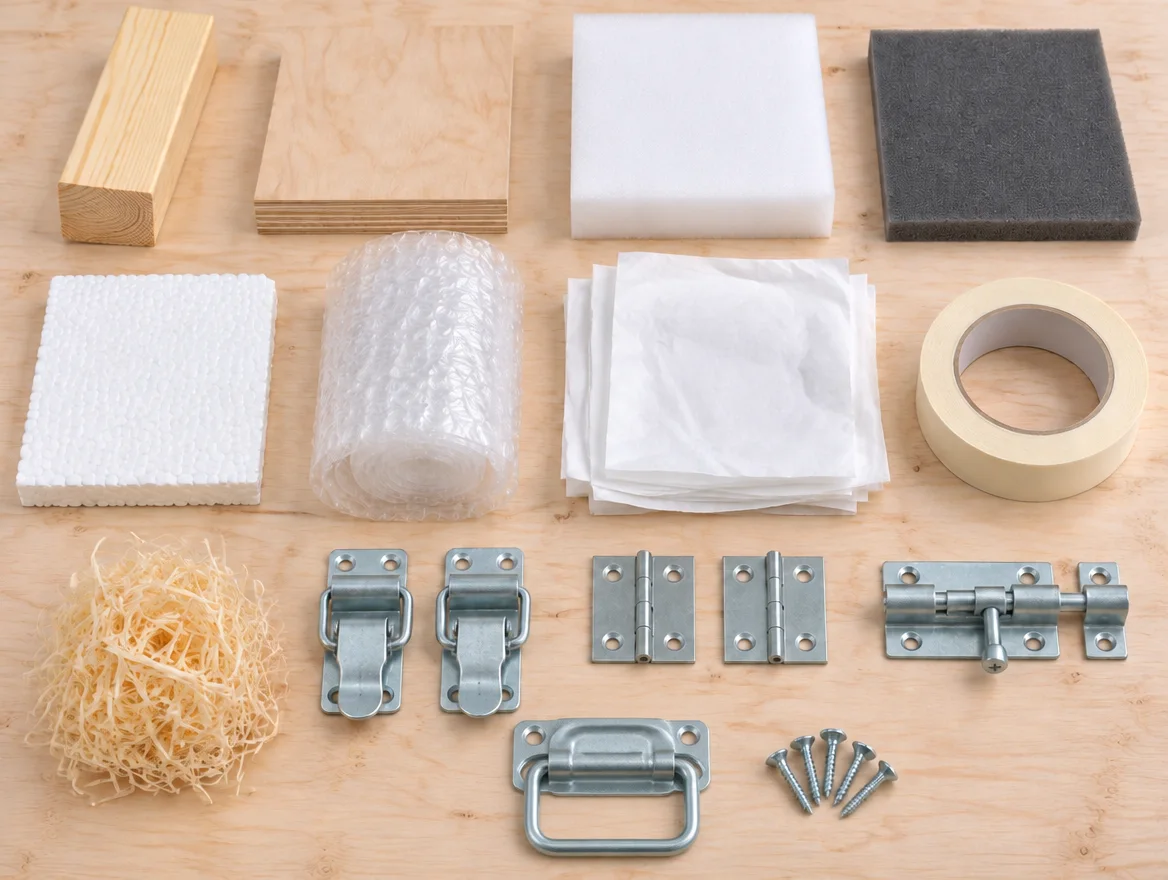
Timber, foam, wraps and hardware, layer by layer.
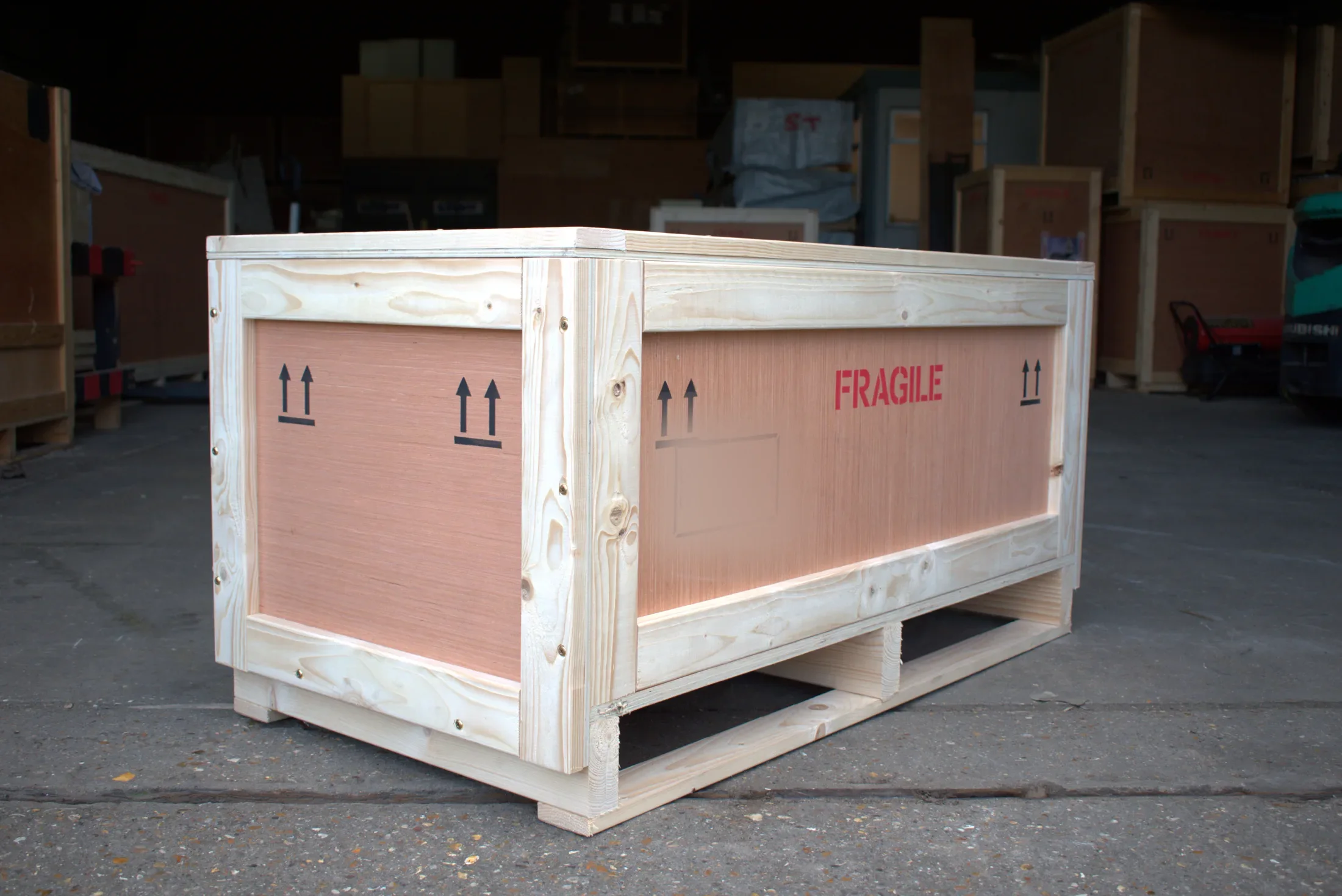
Built to measure around your item.
Swipe for more →
Tell us what needs to travel.
Every quote is bespoke, based on the piece itself. Send us the details and we'll come back to you.