

Shipping marble and stone safely
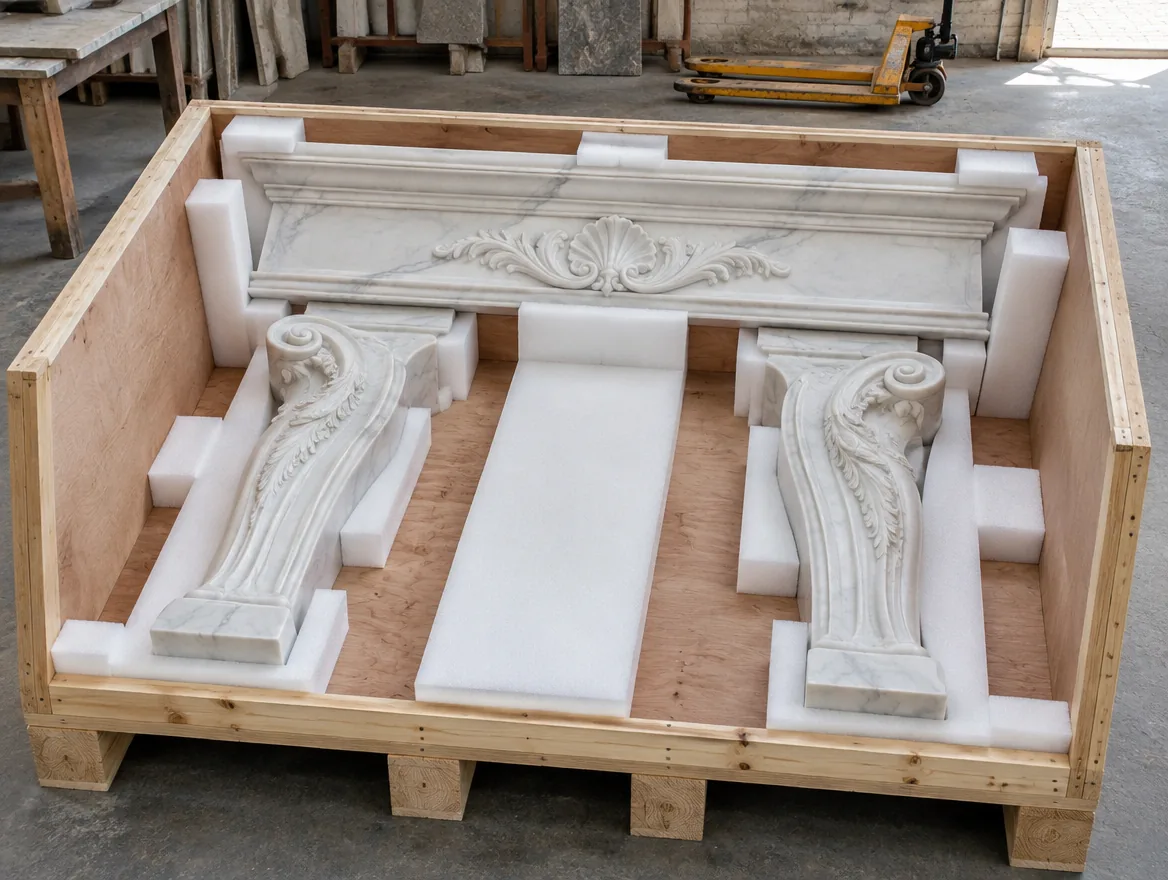
Shipping marble is mostly about weight and edges. We crate fireplaces, table tops, garden statues, plinths and stone sculpture on heavy timber bases with skids, hold them on firm high density foam blocks, and stand slabs on edge on a padded A-frame, so the stone carries its weight the way it's strongest.
- Pieces
- Fireplaces, table tops, statues, plinths
- Slabs
- On edge, on a padded A-frame
- Held by
- High density foam blocks
- Base
- Timber skids for forklift handling
What does shipping marble involve?
Shipping marble means planning around three things: how heavy it is, where it can chip or crack, and how it gets in and out of the building. A marble piece that is perfectly crated but can't be lifted off a lorry, or won't go through a door, is still stuck.
Marble is heavy and brittle at the same time. It carries great weight pressing straight down, but it cracks if it bends, and it chips at any edge or corner that takes a knock. Old marble often has natural veins and old repairs that are weaker again. Everything about a marble crate is designed around those facts.
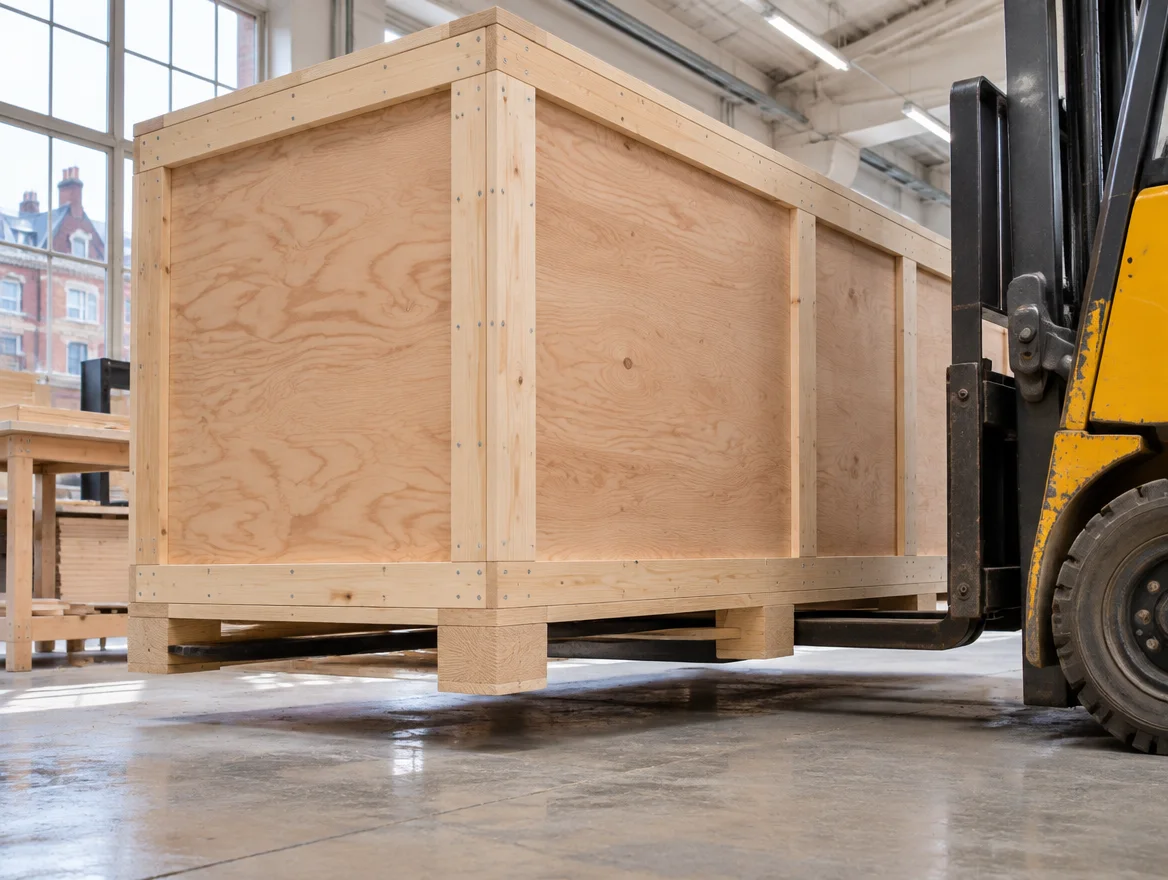
A strong timber base and skids, sized to the load.
Foam on every edge, nothing hard touching the stone.
Slabs on edge on a padded A-frame, never flat and unsupported.
Doors, steps, floors and lifting gear checked at both ends.
How heavy is marble?
Heavier than most people expect. Marble weighs roughly 2.7 tonnes per cubic metre. A table top 2 metres long, 1 metre wide and 3 cm thick is about 160 kg before its base. A fireplace surround in several pieces can weigh hundreds of kilos, and a life-size stone figure far more.
That weight decides almost everything: how strong the crate's base must be, whether it needs skids for a forklift, how many people or what equipment are needed at each end, and whether the delivery address can take it. If you don't know the weight, measure the piece and tell us what it is, and we can estimate it from the size.
We've built crates for very heavy pieces, including a concrete artwork of over 500 kg going to the US. Read about that job.
Never try to move a heavy marble piece yourself, or tip it to look underneath. Stone that starts to fall can't be stopped, and it's dangerous as well as damaging.
Edges and corners: the weak points
Marble seldom breaks in the middle of a face. It chips at edges and corners, cracks along veins and snaps at thin parts: the toes of a statue, the corner of a mantel shelf, the narrow legs of a console. So the edges get the most protection.
- Every edge and corner gets foam guards, so nothing hard can touch it in the crate or during handling.
- Polished faces are covered with tissue paper first, then padding. Tape never goes on the stone itself, as it can mark polished marble and pull at old repairs.
- Veins and old repairs are recorded in the condition photos and kept free of any point load.
- Projecting parts on statues and carved pieces are never used to hold the piece still or to lift it.
High density foam blocks
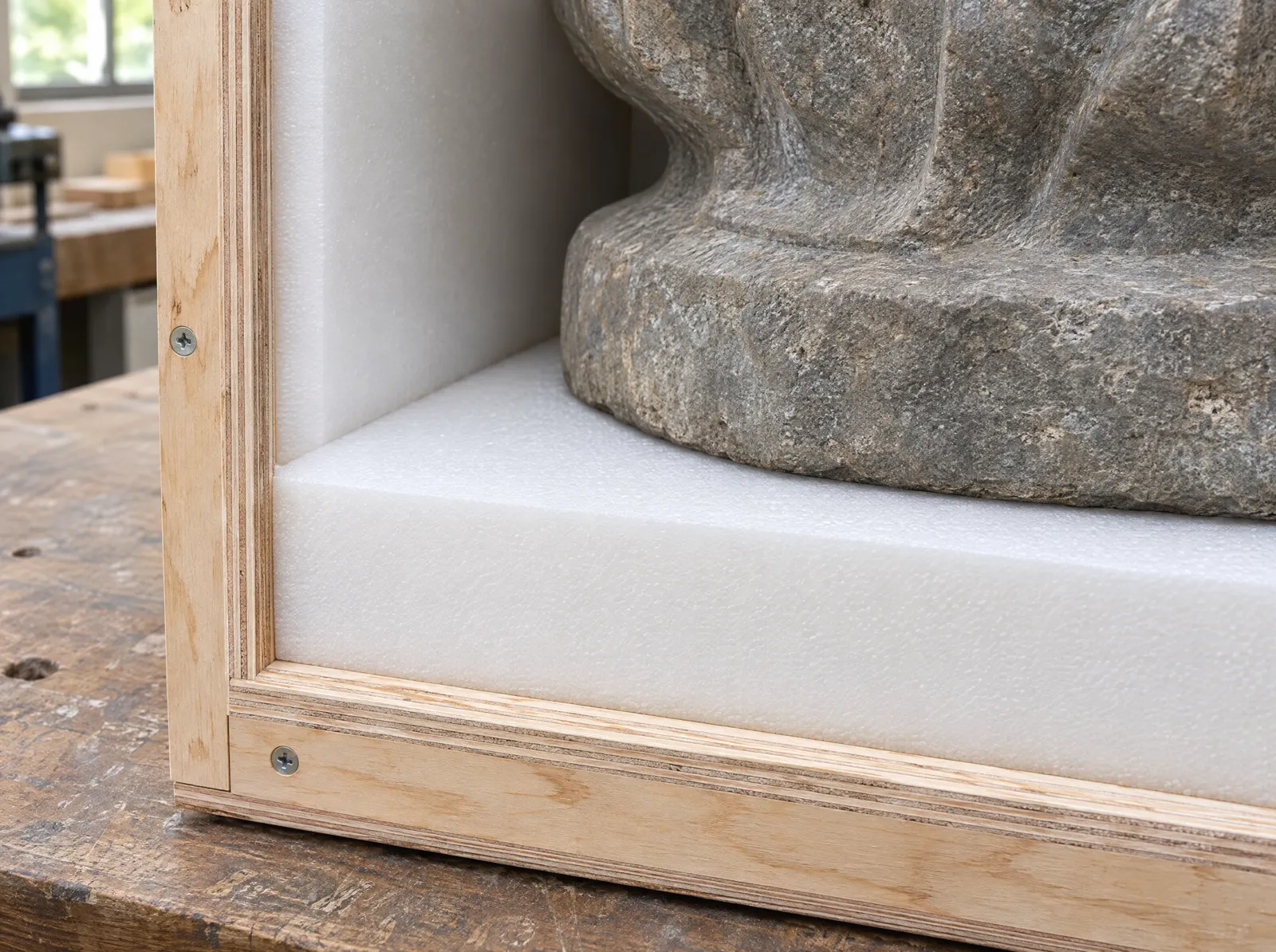
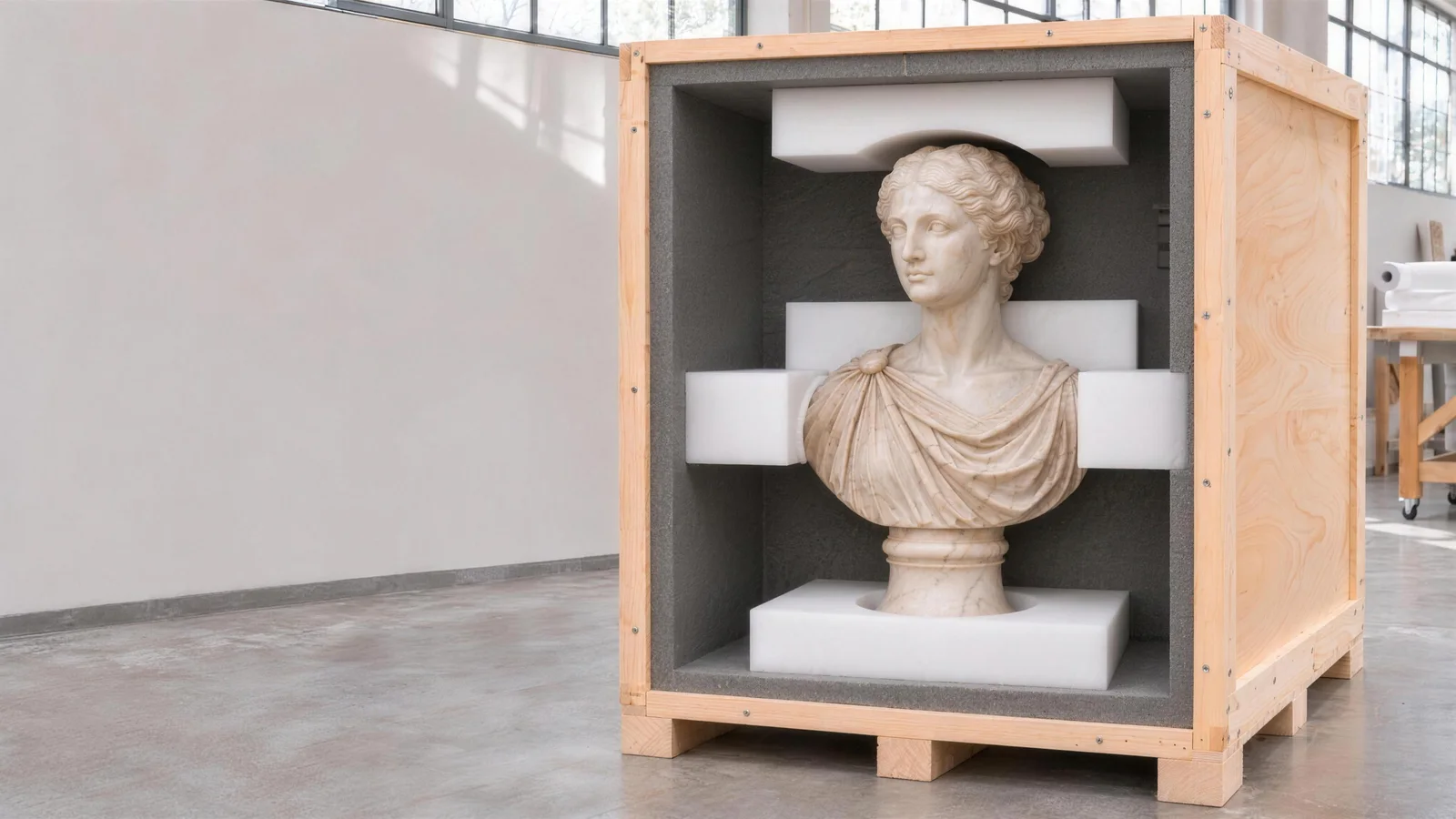
Stone is held with high density foam, a firm white foam that keeps its shape under weight. Soft foam on its own would let a heavy piece sink, settle and start to move, and once a heavy piece moves it gathers force with every bump. Blocks of high density foam, cut to fit and placed at the strong points of the stone (the base, the solid mass of a carving, the thick parts of a slab), hold it still from several sides at once.
On carved and polished faces, a layer of tissue or softer foam sits between the stone and the blocks, so the surface is cushioned while the blocks do the holding. Busts and figures are held the same way: see sculpture and heavy pieces.
Send us a photo and the measurements.
We’ll recommend the crate, the lining and the supports, and come back with a bespoke quote.
Why marble slabs travel on edge, not flat
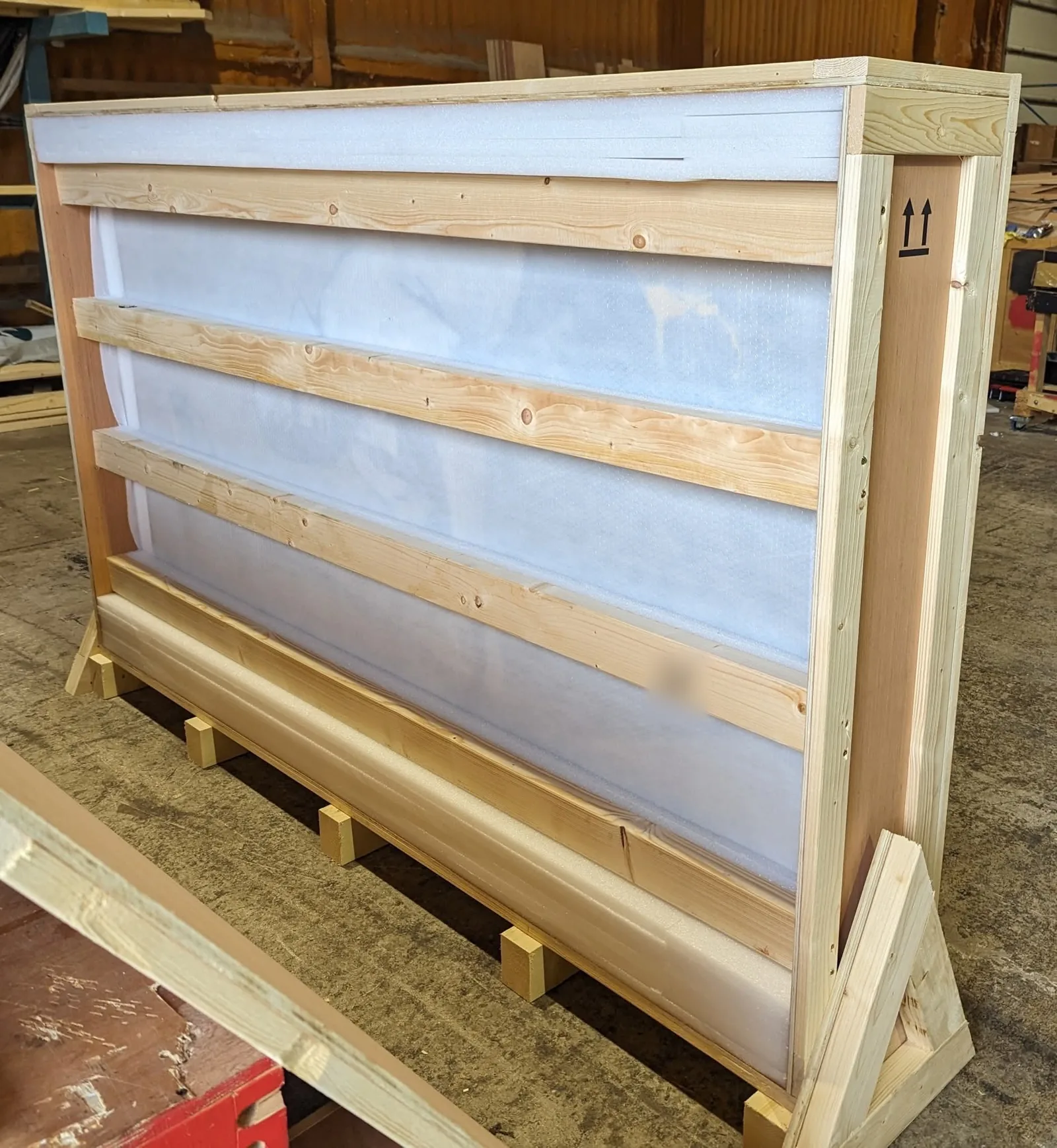
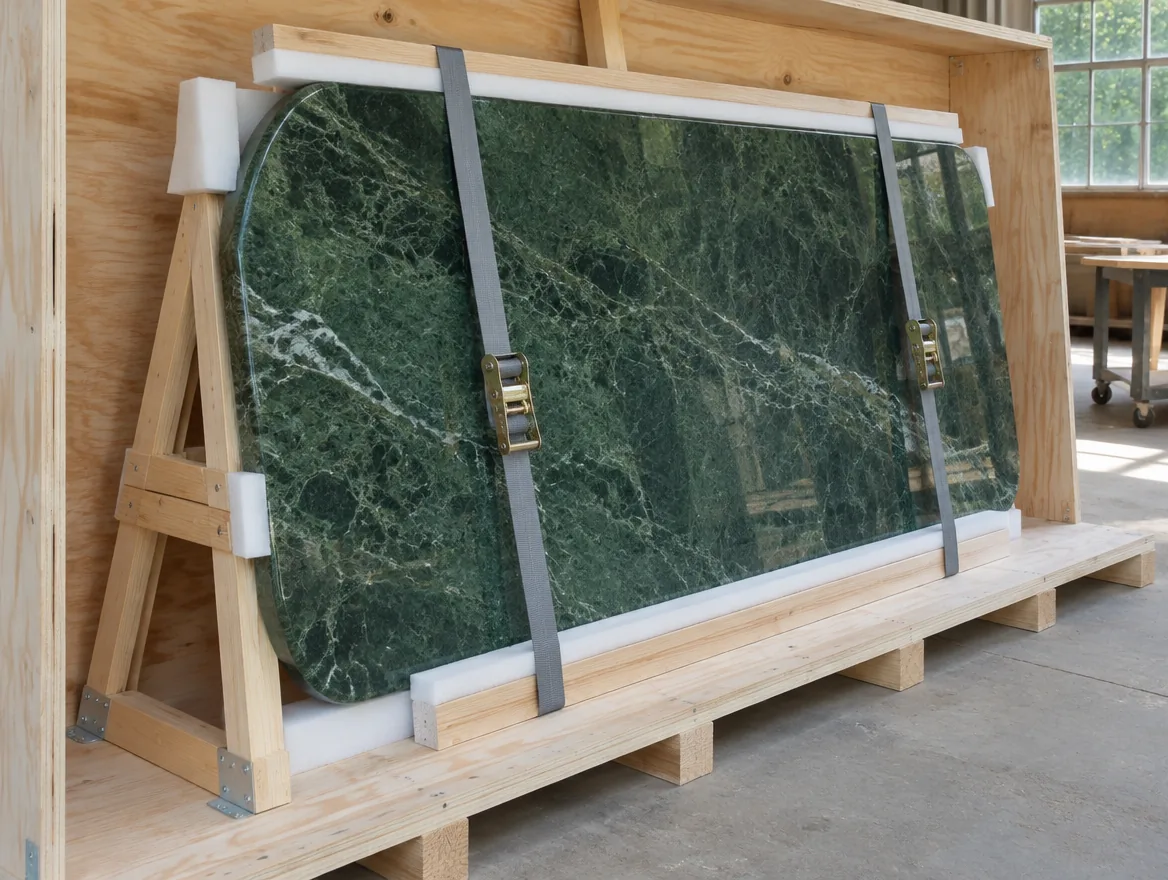
A marble table top, a hearth slab or a mantel shelf should travel standing on its long edge, not lying flat. Stone is strong when weight presses straight through it and weak when it bends. Lying flat, a long slab sags under its own weight between whatever supports it, and every bump makes it flex a little more, until a vein or an old repair gives way. On edge, the slab is at its stiffest and carries its own weight easily.
So slabs are strapped to a padded A-frame inside the crate: a timber frame shaped like the letter A and faced with foam. The slab stands on a padded base along its whole bottom edge and leans gently against the frame, held by straps over foam. Two slabs can stand one on each side, balancing the load.
Marble table tops, hearths and shelves travel on edge on a padded A-frame, never flat and never resting on their corners.
Marble fireplaces
A marble fireplace surround usually comes apart into its pieces: the two jambs at the sides, the frieze across the top, the mantel shelf, and sometimes a hearth slab and inner slips. Each piece is photographed, numbered and its position marked before it's packed, so the fireplace can be put back together correctly.
Long, thin pieces like the shelf and frieze travel on edge, on an A-frame or between high density foam blocks. Carved jambs are held at their solid parts, with the carving padded and free of pressure. The pieces usually travel together in one heavy crate on timber skids.
Taking a fireplace out of a wall is a job for a builder or a fireplace specialist, as old fixings, mortar and iron cramps are often hidden behind the stone. If the house is listed, Historic England says you will almost certainly need listed building consent to take out a chimneypiece, so check with the local council first.

Garden statues, plinths and bolted bases
- Garden statues are often heavy, weathered and fixed down with dowels or mortar, which need freeing by a mason or builder before collection. Lichen and weathering are part of the surface, and cleaning is a job for a conservator, not a packer. Tell us if a piece has stood outdoors, as stone can hold water in cracks.
- Statues on plinths. If a figure is pinned to its plinth or simply rests on it, the two usually travel apart, each held on its own. Packed together, a loose joint can rock and break.
- Bolted bases. Where a piece has a solid base with existing fixings, it can be bolted down through the crate base so it can't slide or rock, with foam blocks holding the upper part. Tell us how your piece is fixed.
- Stone sculpture with thin or projecting parts is held at its mass, never by the projections. More on crating sculpture.

Skids, forklifts and delivery access
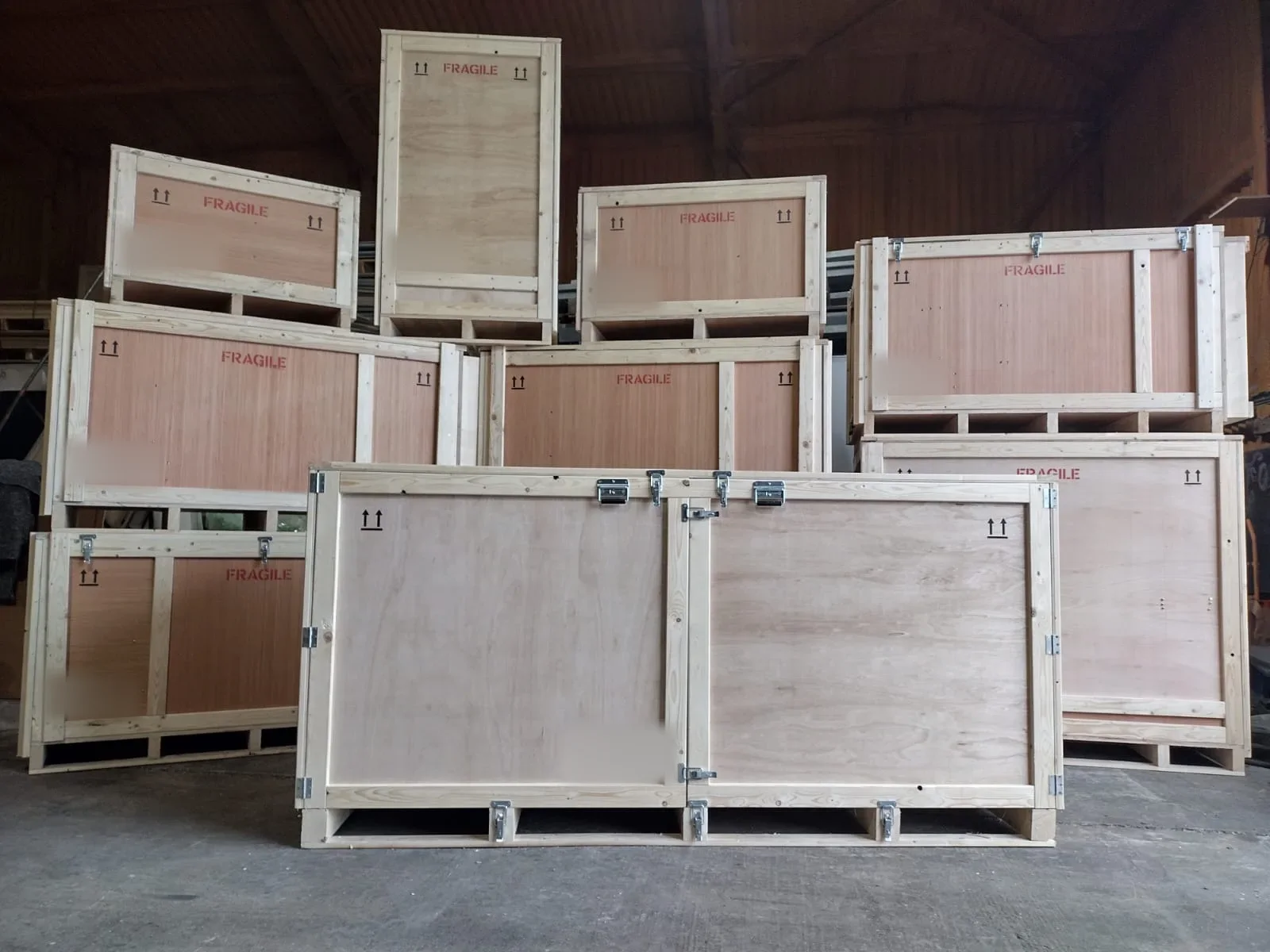
Every heavy marble crate is built on timber skids: runners underneath that lift the crate off the ground, so a forklift or pallet truck can get under it. Skids also keep the crate off wet ground. Crates going abroad usually need to meet ISPM 15; our ISPM 15 guide explains what that means.
The harder question is often the last few metres. Before we build, check the delivery address:
- Space and firm ground for a lorry with a tail-lift, or a forklift, to unload
- Steps, gravel drives, lawns or narrow side gates between the lorry and where the piece is going
- Door widths, tight turns, and any lift with a weight limit
- Floors: old timber floors and upper storeys may not take a heavy crate
- Who will unpack it, and how the stone will be moved into place
The same questions apply where we collect from. Send us photos of any tight spots and we'll plan the crate around the route as well as the stone.
Two ways to work with us
Marble crates are heavy and built to fit closely, so getting the size right matters even more than usual.
Measuring marble: for slabs, the length, width and thickness, and the shape of any moulded edge. For a fireplace, each piece separately. For a statue, the tallest, widest and deepest points, including any plinth, arm or projecting carving.
We can also arrange the onward shipping, so the whole journey is handled together. Then request a quote.
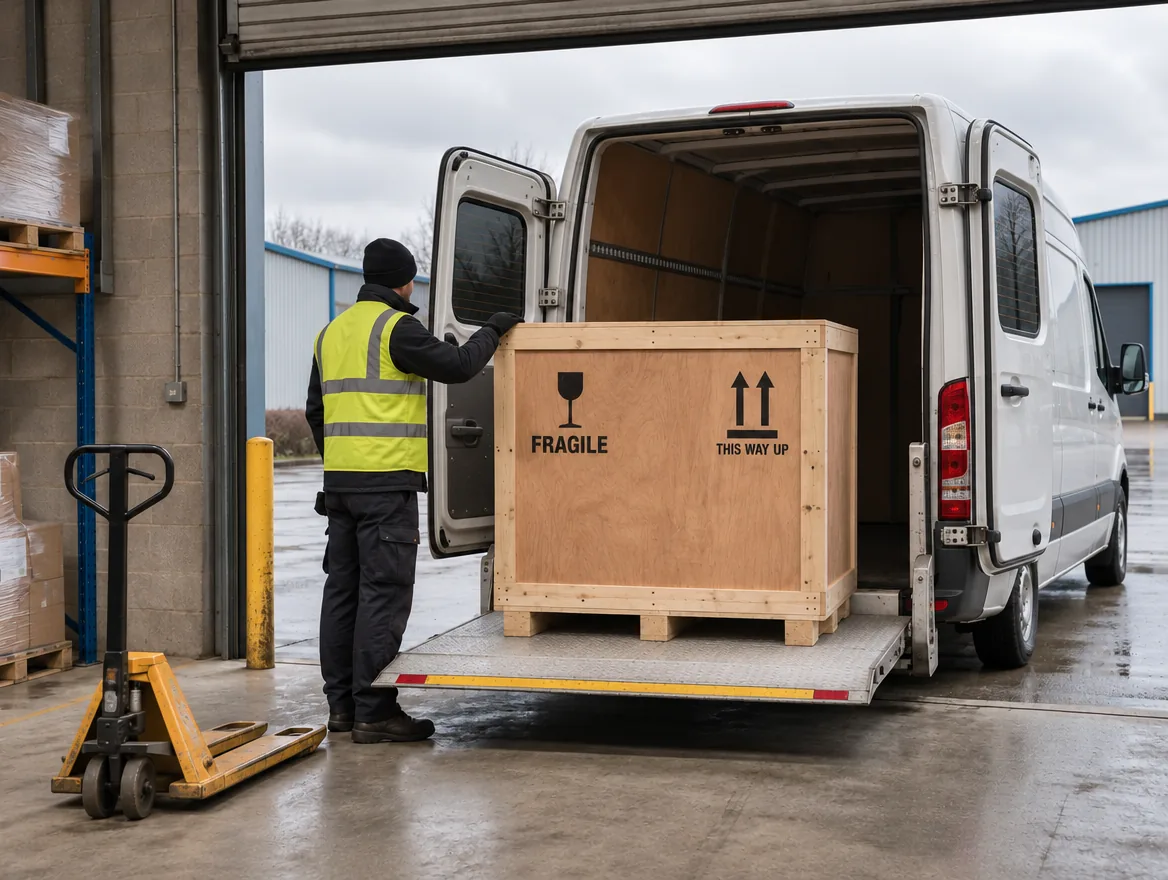
Once the piece is free to move, we collect it from a home, garden, dealer, saleroom or storage and build the crate around it at our warehouse. Your courier or shipper collects the finished crate from us, and if they need the exact weight, we weigh it once it's built. Collect and crate
Send us the measurements, what it is and roughly what it weighs. We confirm them with you before we build, then deliver the crate to your address, ready for the stone to go in. Crates built to your measurements
Common questions
How do you ship a marble table with its base? +
Usually in parts. The top comes off and travels on edge on a padded A-frame; the base is wrapped and held on foam blocks, in the same crate or its own. Tell us how the top is fixed.
Can you ship a marble fireplace abroad? +
Yes. It travels in its pieces, numbered and photographed. An antique fireplace is a cultural object like any other antique, so a valuable one may need a UK export licence, which you, your shipper or a customs agent will arrange. We don't handle customs paperwork.
What equipment is needed to unload a marble crate? +
It depends on the weight. Lighter crates can be handled by a team; heavy ones need a tail-lift, pallet truck or forklift. Tell us the delivery address and access, and ask us what your piece will need.
Can you collect a garden statue that's fixed down? +
Once it's free. Statues fixed with dowels or mortar should be released by a mason or builder first. Tell us how it's fixed and we'll plan the collection around it.
Do you crate other stone, like granite, limestone or slate? +
Yes. The same rules apply: weight carried by the base, edges protected, slabs on edge. Softer stones such as limestone and sandstone chip more easily, so their edges get extra care.
Is the crate safe to stack other freight on? +
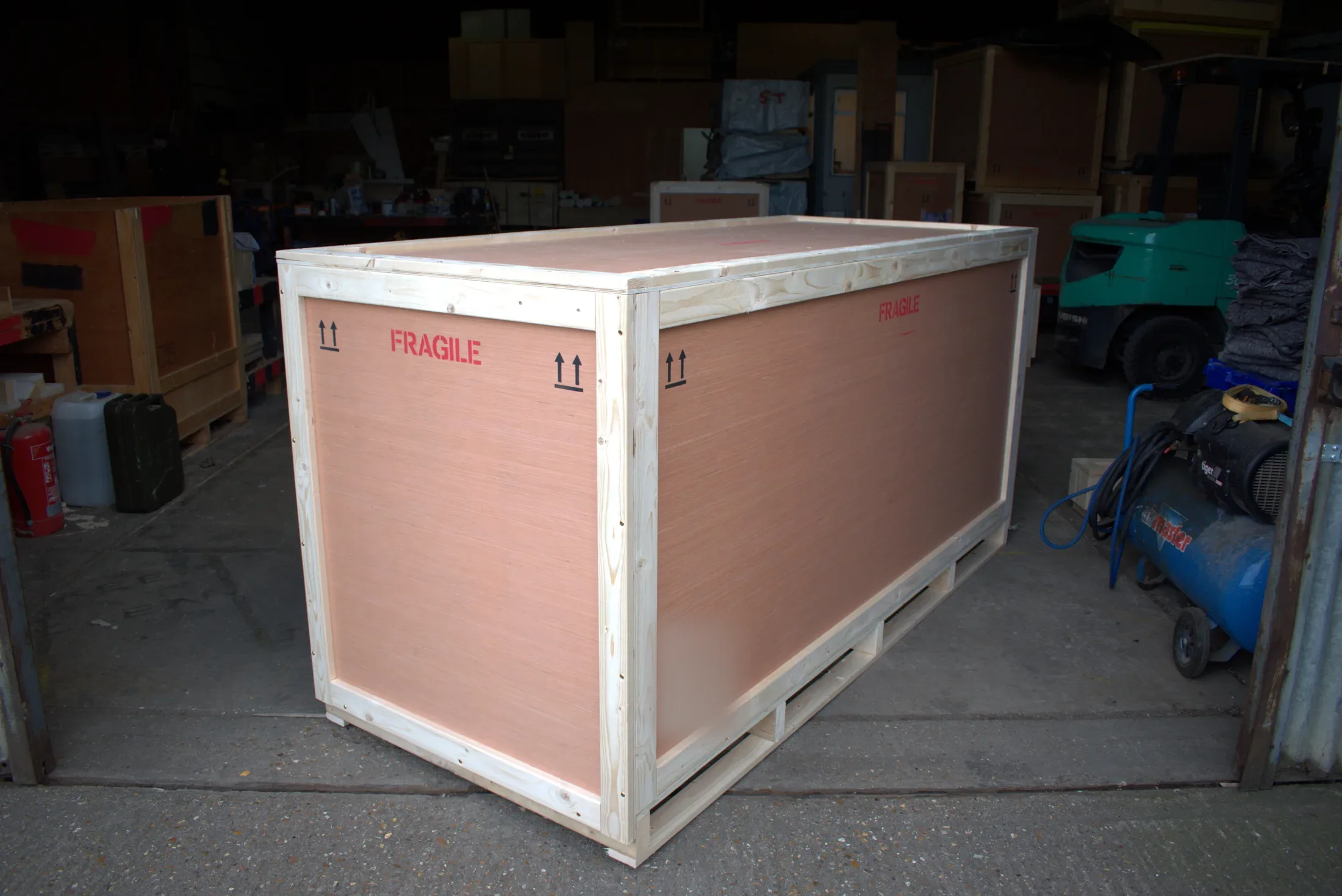
Treat any marble crate as one that shouldn't have weight put on it. It's marked Fragile and This way up, so handlers know what they're dealing with. If your shipper needs the exact weight, we weigh the crate once it's built.
How much does it cost to ship marble? +
Every quote is bespoke, based on the piece itself: its size, weight, how fragile it is, where it's going and how quickly. Send us the details and we'll come back with a price.
Is the marble insured in transit? +
Transit insurance is available for every export. It's bought by you, job by job, so the cover matches the piece being shipped. We also have public and product liability insurance.
Related
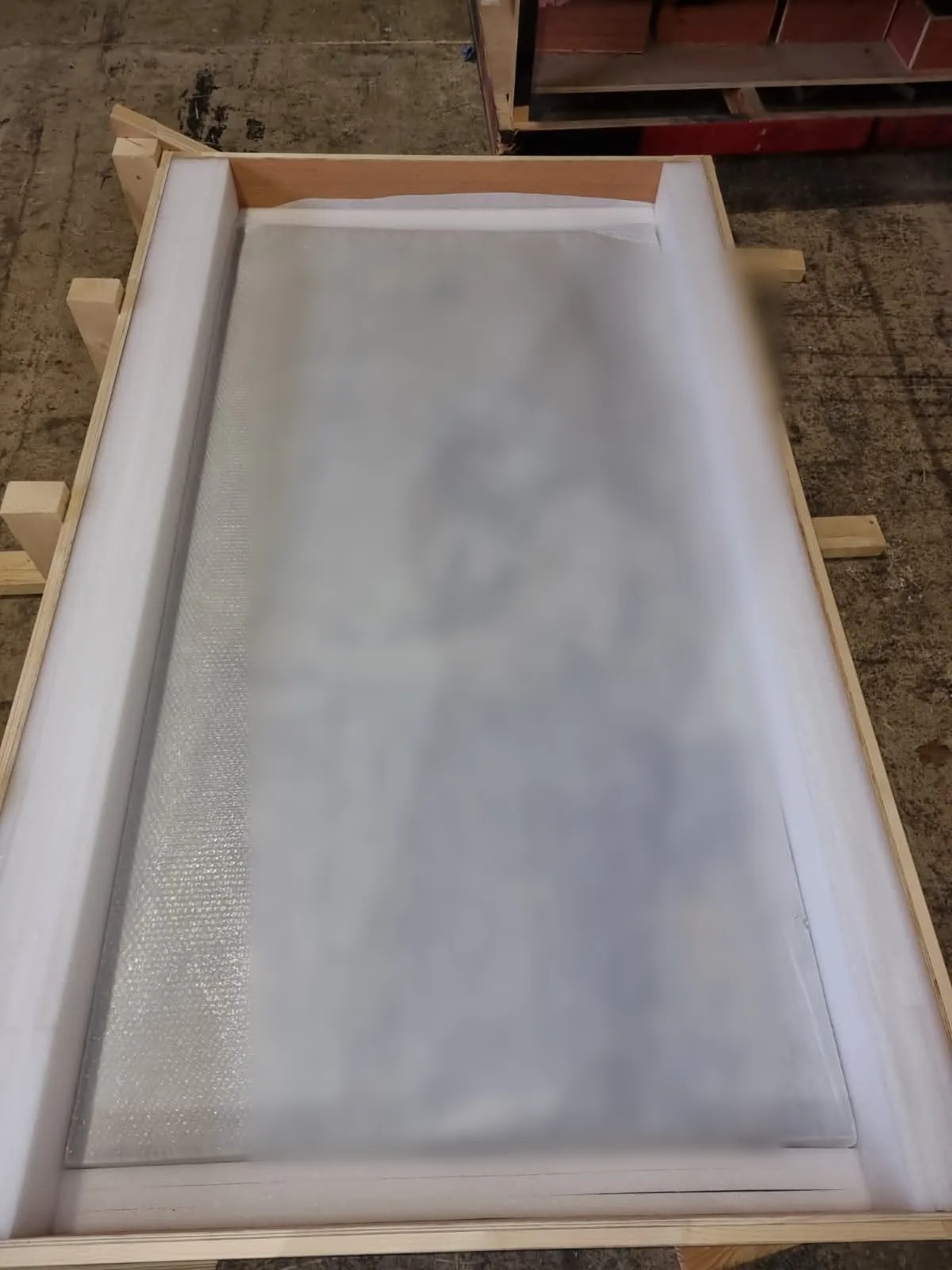
Engineered around the weight.
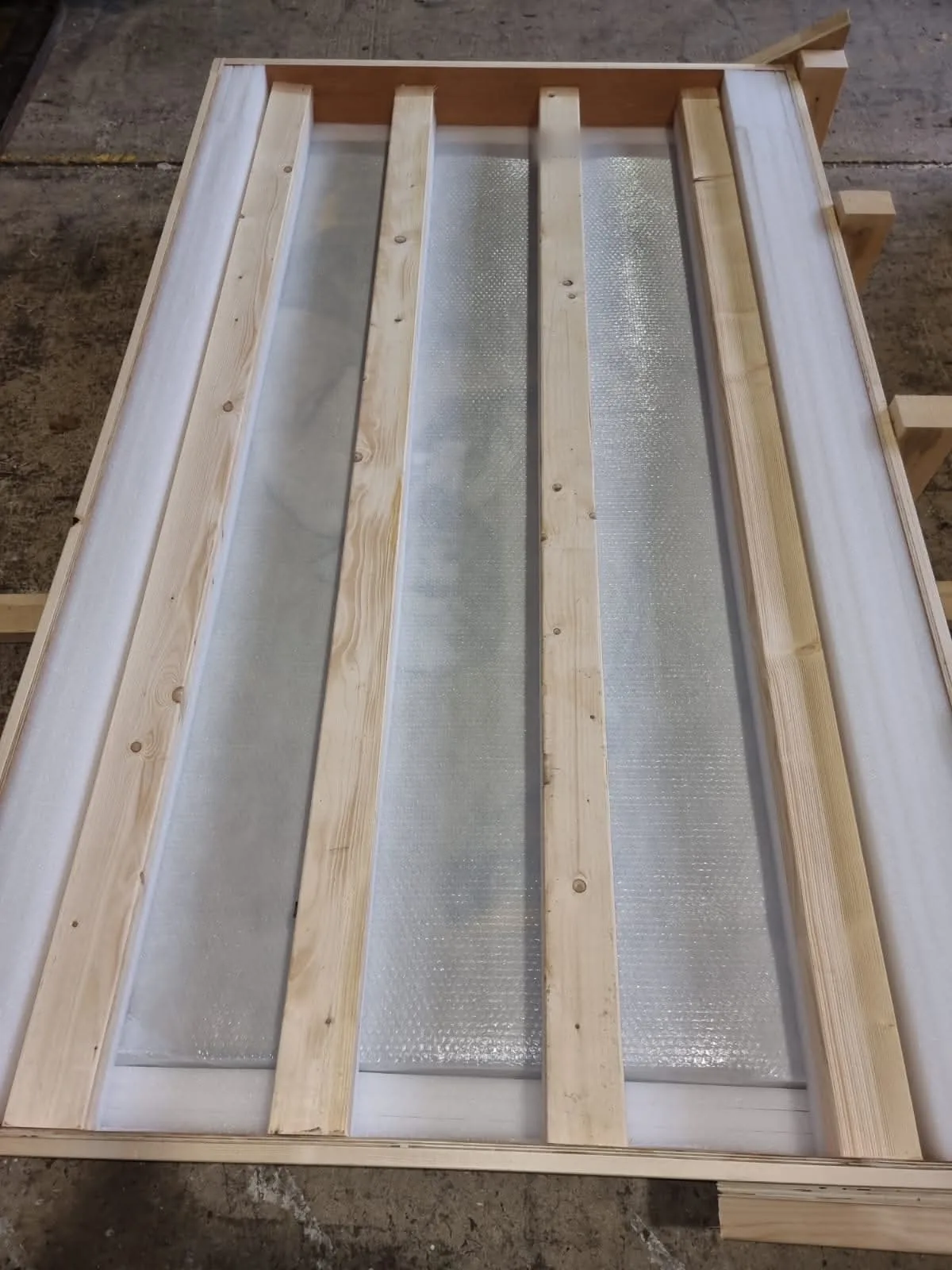
500 kg of concrete street art, crated for the US.
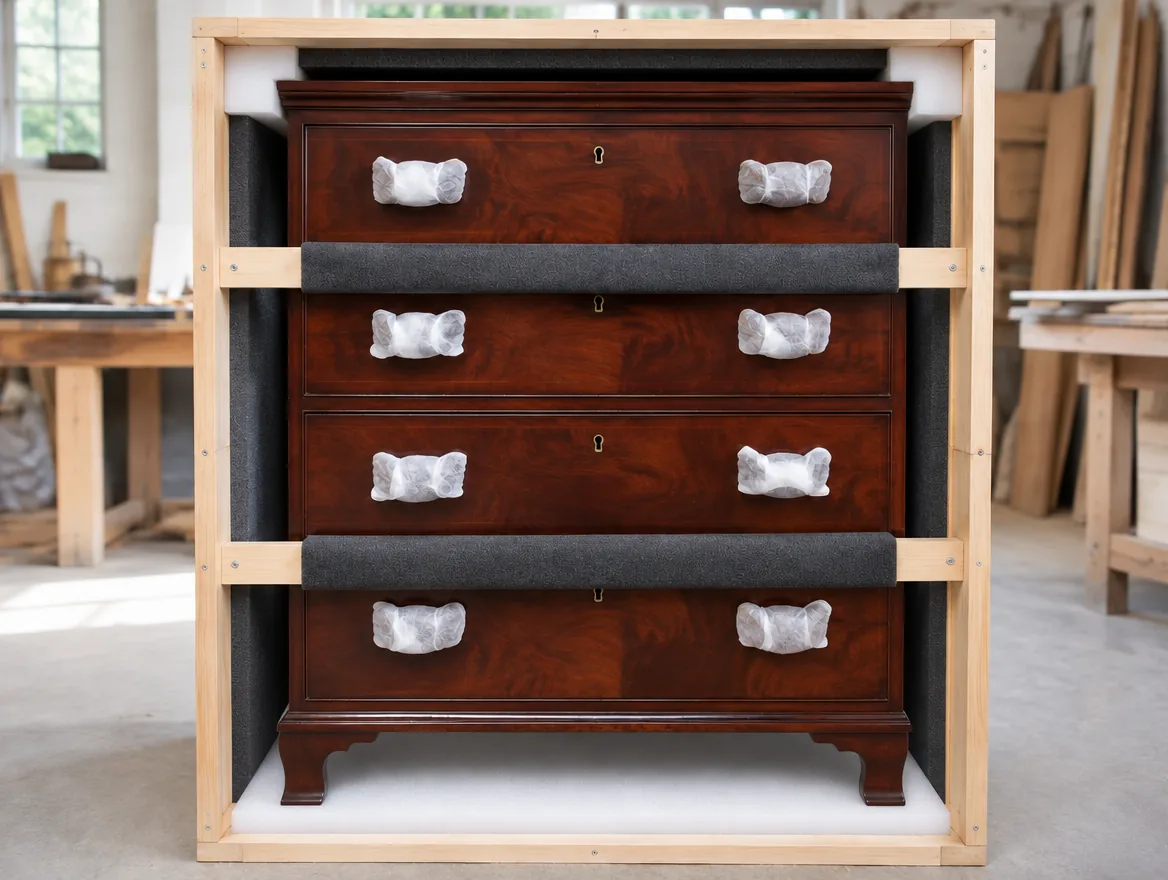
Parts packed apart, finish wrapped, crated upright.
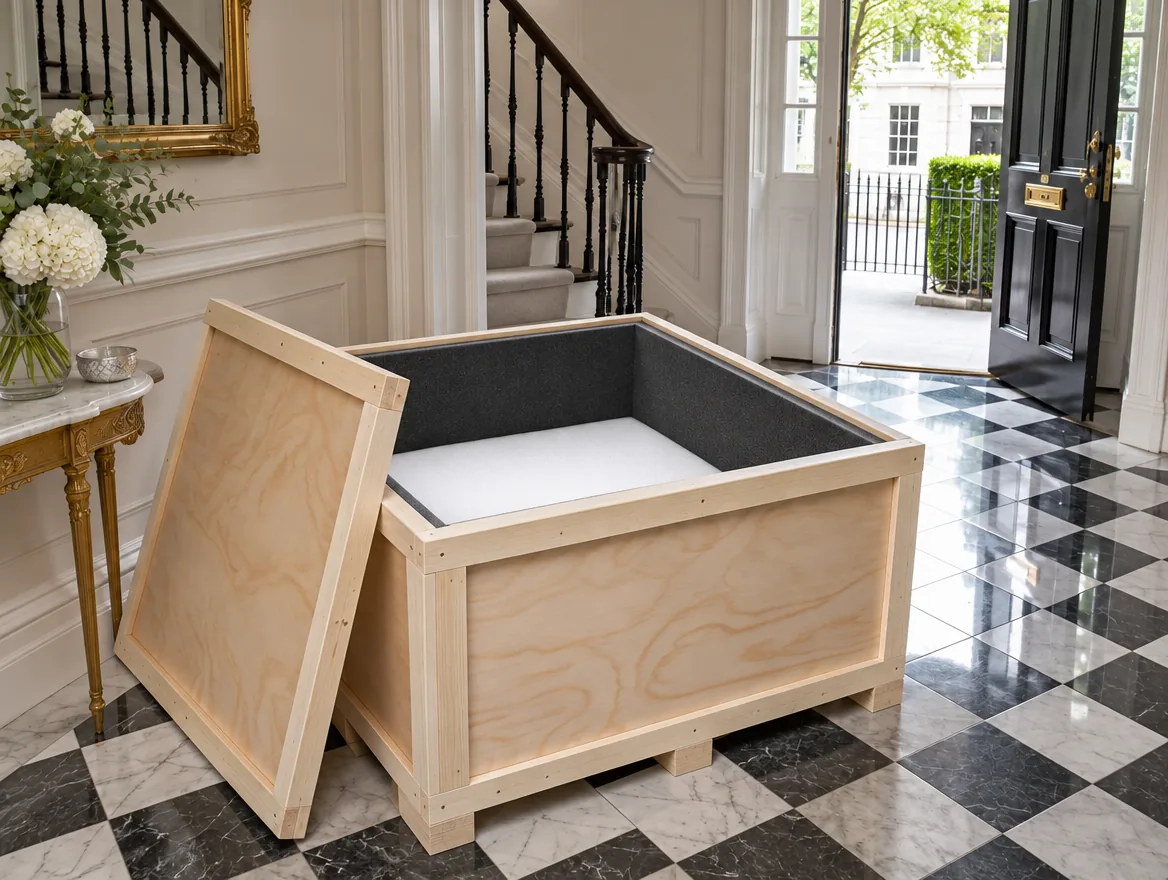
You measure, we confirm, build and deliver.
Swipe for more →
Tell us what needs to travel.
Every quote is bespoke, based on the piece itself. Send us the details and we'll come back to you.