

Shipping porcelain, ceramics and glass safely
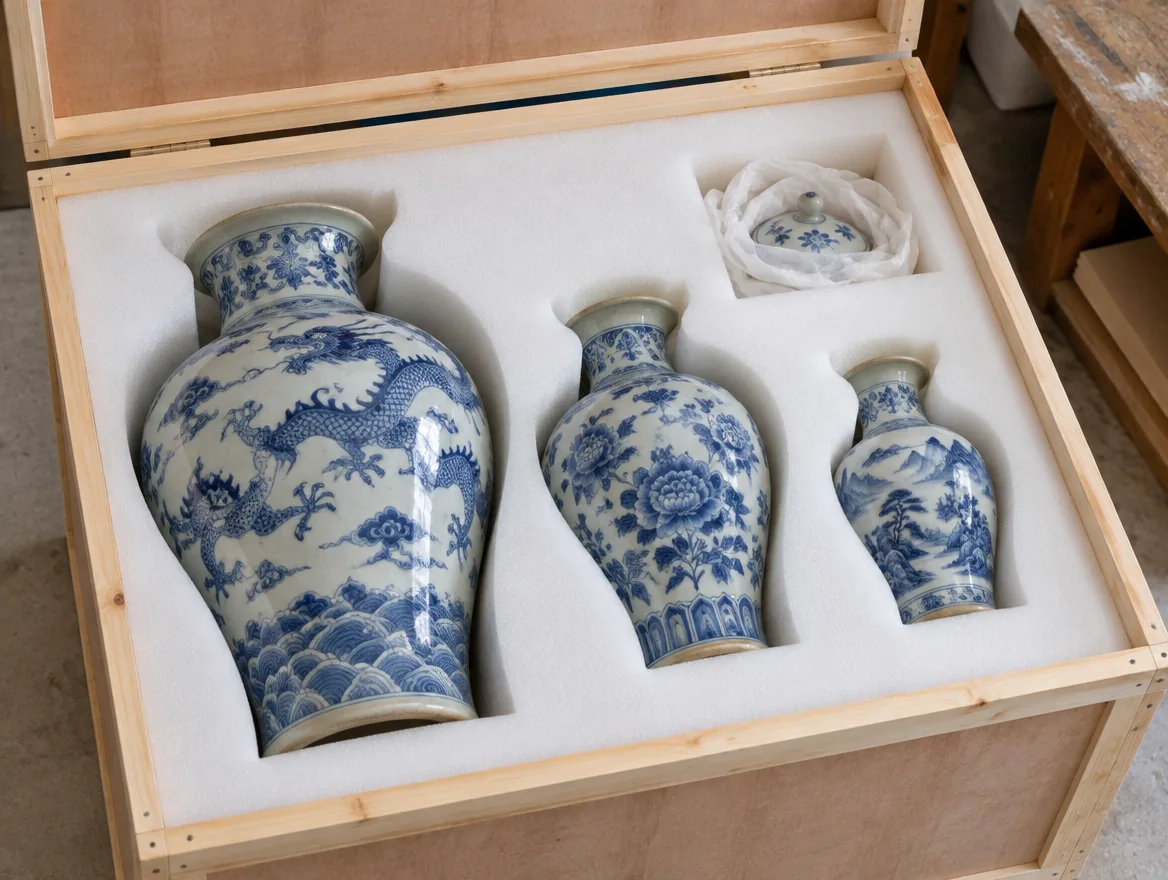
Shipping porcelain safely comes down to one thing: every piece held in its own space, so nothing touches anything else and nothing can move. We wrap vases, figures, dinner services and glass by hand, set each piece in its own foam cavity or slot, and crate the lot to measure.
- Pieces
- Vases, figures, services, glass
- Held in
- Cut foam cavities and slots
- Plates
- On edge, never stacked
- Two ways
- We collect it, or built to your sizes
What is the safest way of shipping porcelain?
Give each piece its own space, wrap it softly, hold it firmly, and put two layers of protection between it and the outside of the crate. In practice that means a foam cavity cut to the shape of each piece, or a box within a crate, so a knock to the crate is absorbed twice before it reaches the porcelain.
Porcelain rarely breaks from one big drop. It breaks from small, repeated movement: a vase rocking against its neighbour for a week at sea, a lid rattling on its rim, a stack of plates grinding together. Take the movement away and most of the risk goes with it.
- 01Look and photograph
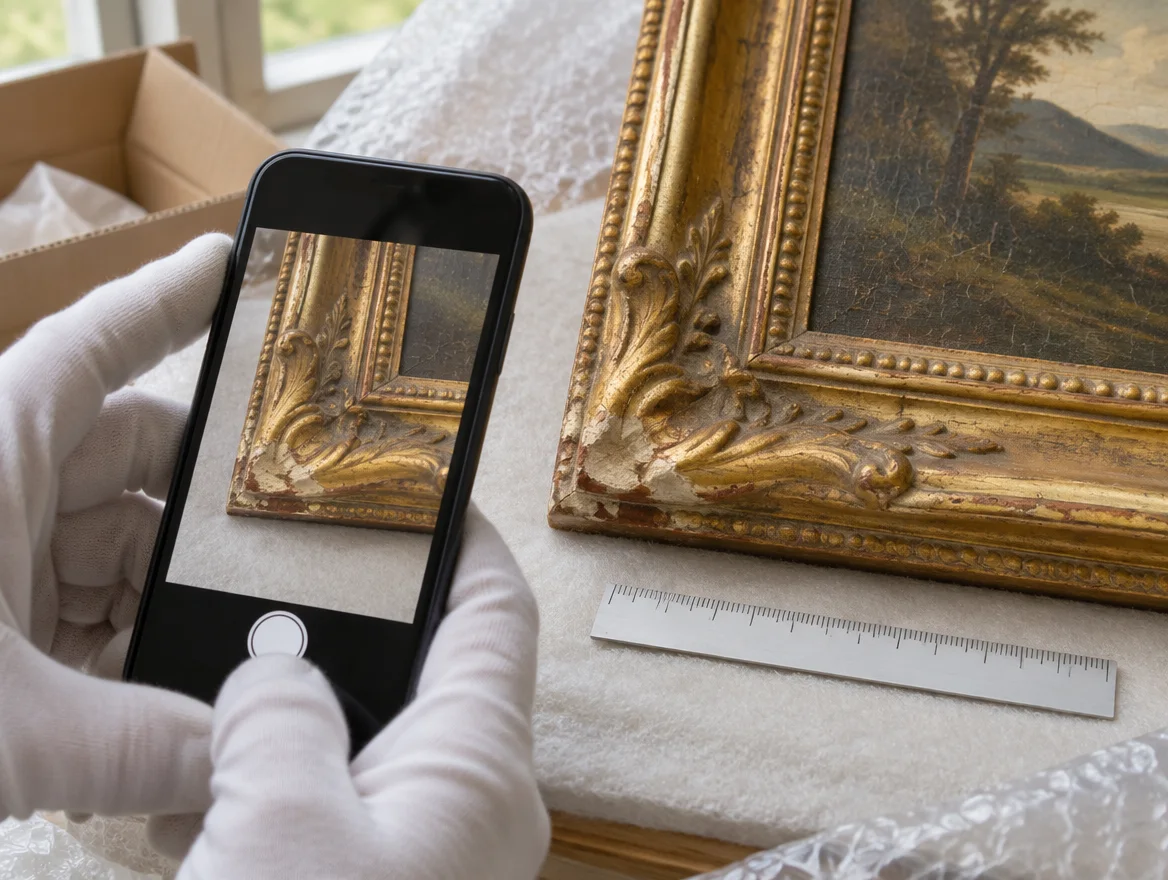
Every piece is checked and photographed before it's wrapped: chips, cracks, crazing, old repairs and the state of any gilding.
- 02Lids and loose parts off
Lids, stoppers and loose covers come off and are wrapped on their own, labelled to their piece.
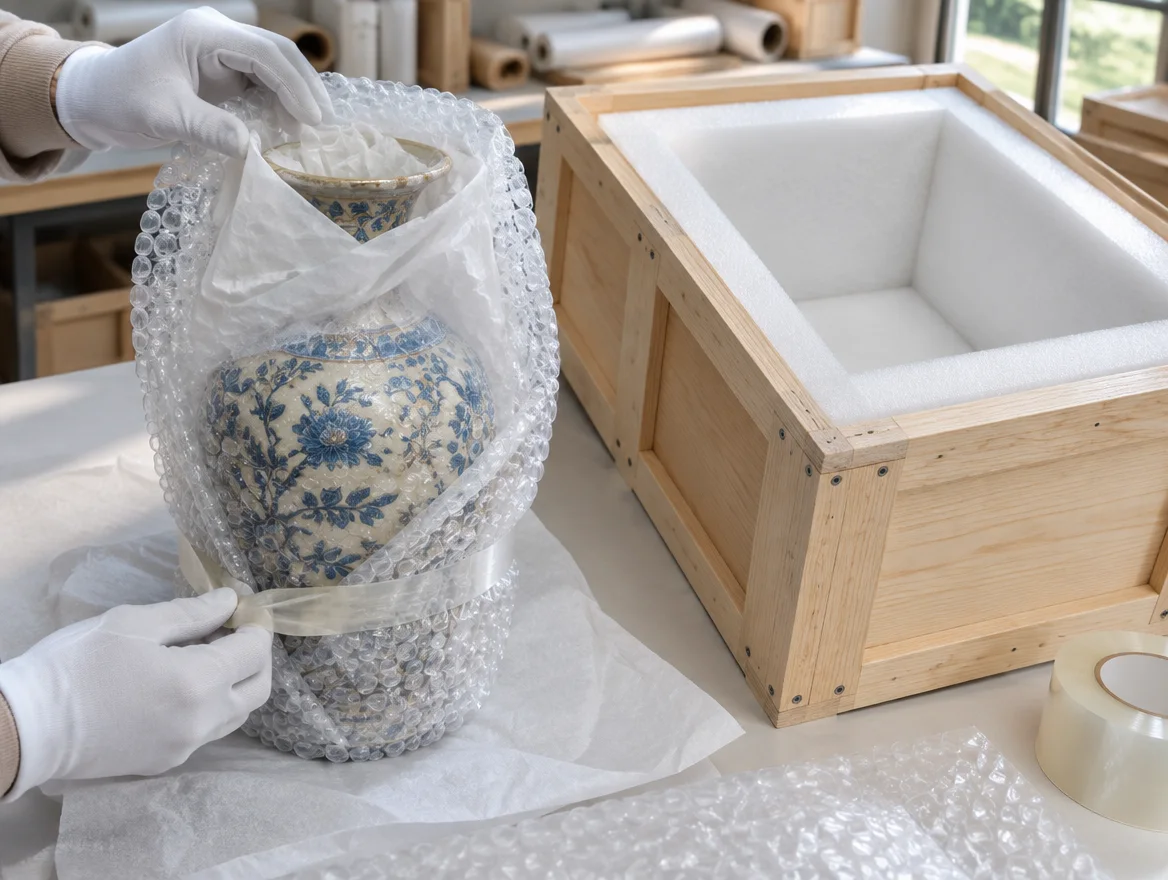
- 03Tissue first
Tissue paper goes on first, so nothing rough touches the glaze or gilding.
- 04Bubble wrap over the tissue
A layer of bubble wrap over the tissue, taped only to itself, never to the piece.
- 05Into its own space
Each wrapped piece goes into a foam cavity cut to its shape, or a slot of its own.
- 06Box, crate and close
Smaller pieces are boxed, the boxes held in a lined crate, and the crate closed and marked Fragile and This way up.
Cut foam cavities: why they work
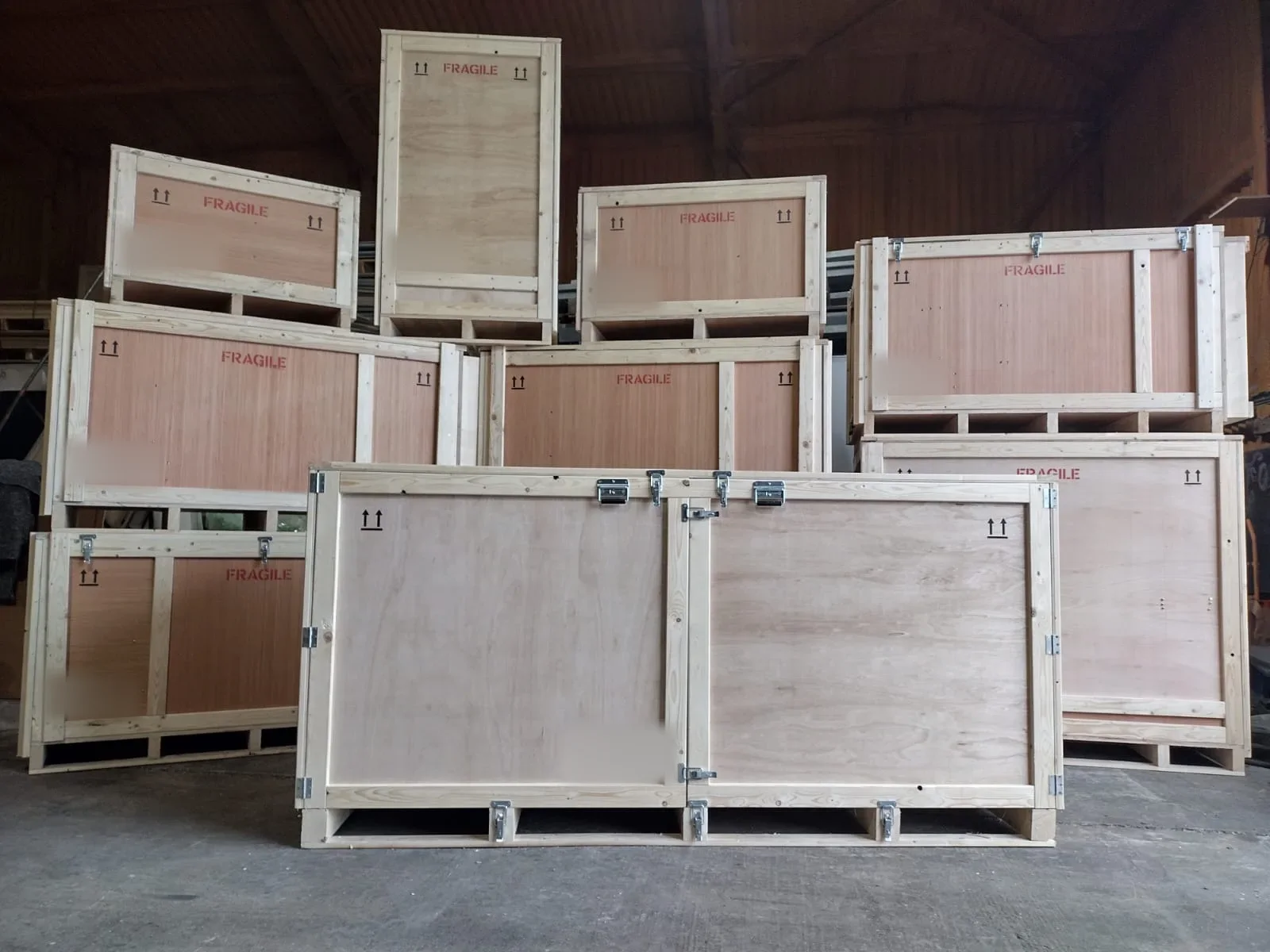
A cut foam cavity is a space shaped around one piece. Cut into a block of firm white high density foam, it holds its shape, so a heavy vase can't sink in and start to move. The piece sits snug on every side, top and bottom, and a foam lid closes over it.
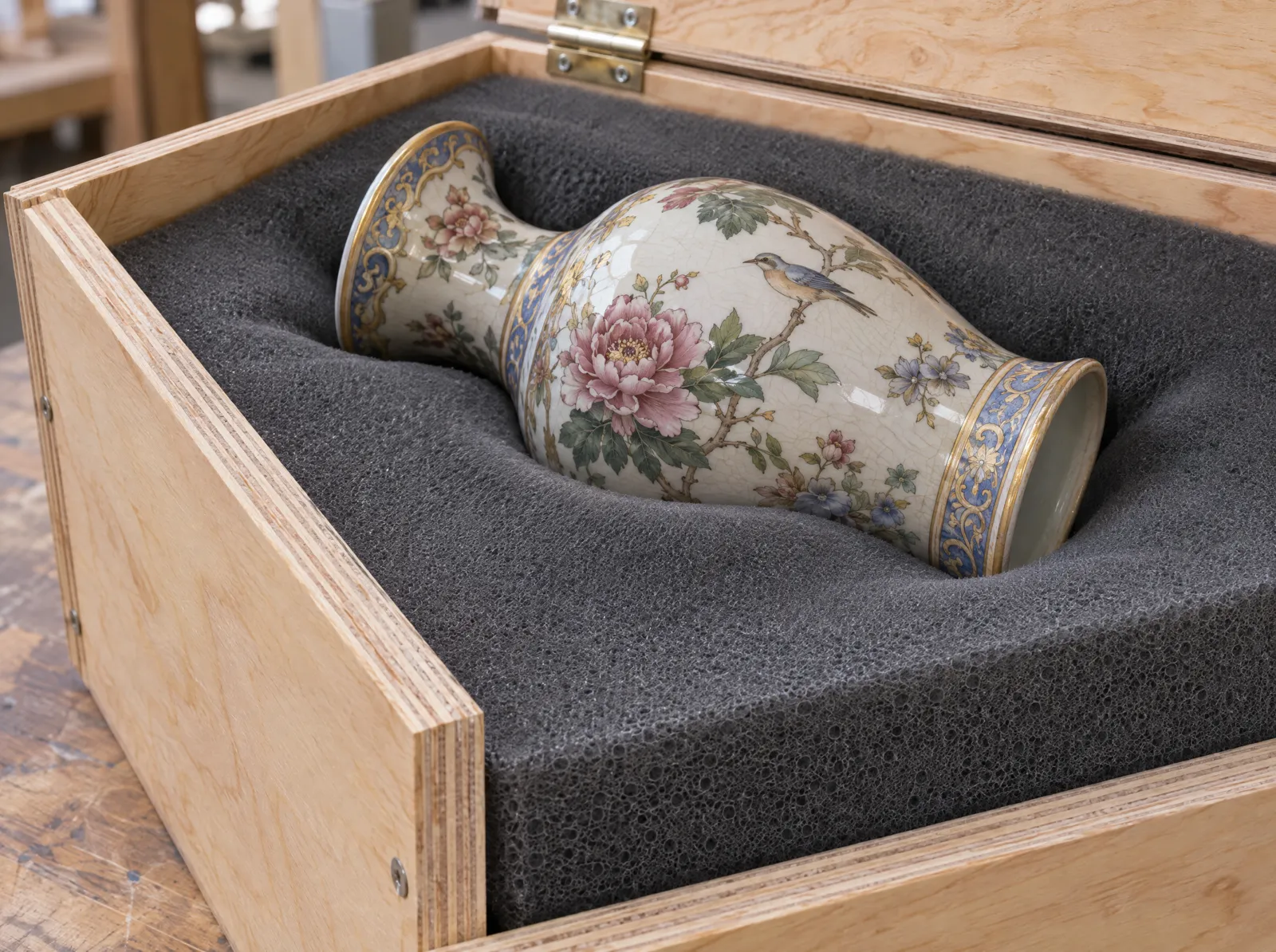
Firm foam holds; soft foam cushions. For thin, delicate pieces and fragile gilding, charcoal grey HLB22 soft foam gives a little more and is gentler on the surface. The right choice depends on the weight and shape of the piece, and we choose it when we quote.
| Piece | How it's held | Usual lining |
|---|---|---|
| Vases, urns and jars | Upright in a cavity cut to its shape, lid packed separately | High density foam, or HLB22 for delicate surfaces |
| Figures and groups | In a cavity, with soft foam around fingers, flowers and lace work | HLB22 soft foam |
| Plates and chargers | On edge, each in its own slot | High density or HLB22 foam |
| Cups, bowls and tureens | Each in its own space, lids and covers apart | HLB22 soft foam |
| Glassware and decanters | Upright, stoppers out, stems carrying no weight | HLB22 soft foam |
Lids, handles, spouts and rims
Handles, spouts, rims and knops are where ceramics are weakest. Conservation guidance is consistent on this: support a piece by its body, and never lift it by a handle, rim or spout. We pack the same way.
- Lids and covers come off and travel wrapped in their own space, labelled to their piece. A lid left on a teapot or tureen rattles on the rim for the whole journey and chips it.
- Handles and spouts are padded but never take any weight. The foam holds the body of the piece.
- Rims are the first place a piece chips. Nothing presses on them, and soft padding keeps them off the cavity walls.
- Applied flowers, lace work and fingers on figures are cushioned with soft foam all round, with no pressure on them at all.
Why plates travel on edge
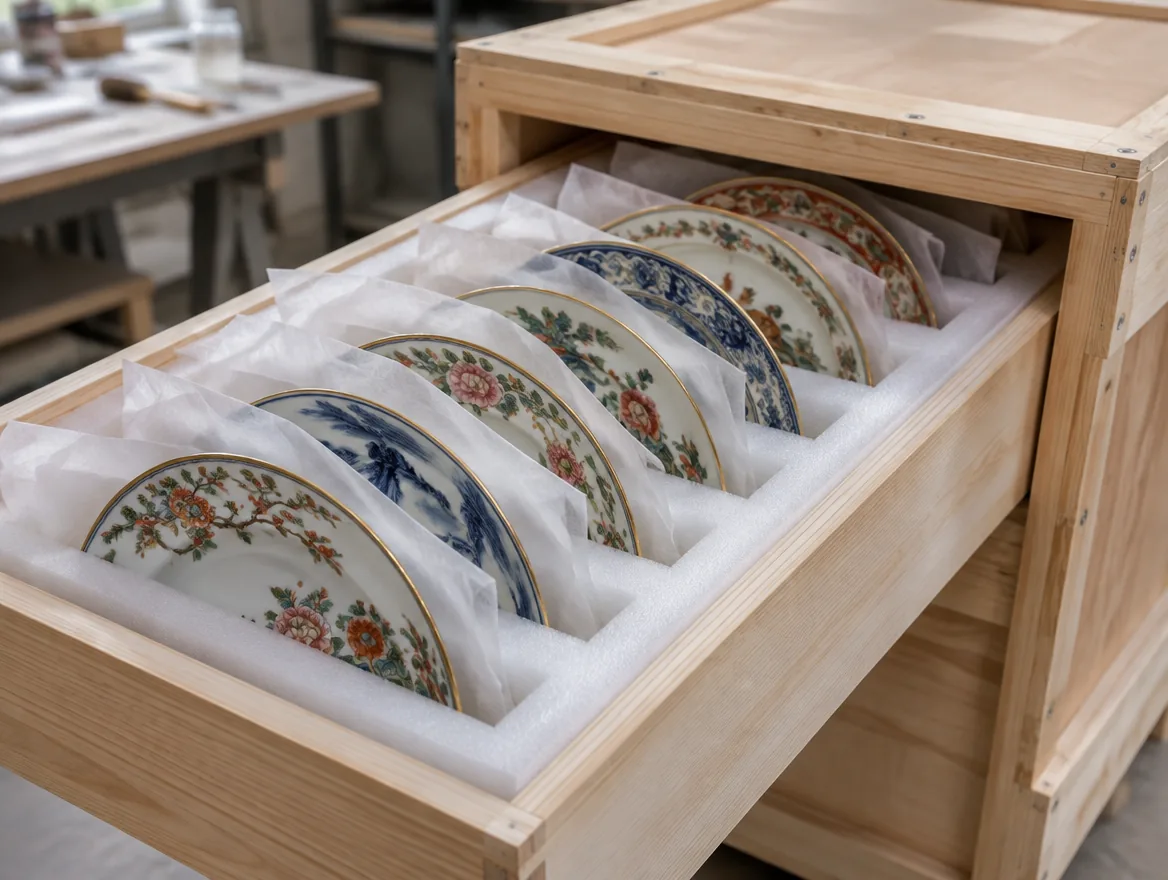
Plates, chargers and saucers travel standing on edge, each in its own slot, not stacked flat. In a stack, the bottom plate carries the weight of every plate above it, and every bump on the road grinds the stack together, chipping rims and scratching glaze and gilding. On edge in a slot, each plate carries only its own weight and touches nothing but foam.
A dinner service travels in shallow crate drawers or trays, with a slot for each plate and a space for each cup, bowl and cover. It keeps a large service in order and makes it simple to check at the other end that every piece has arrived.
Double boxing inside a crate
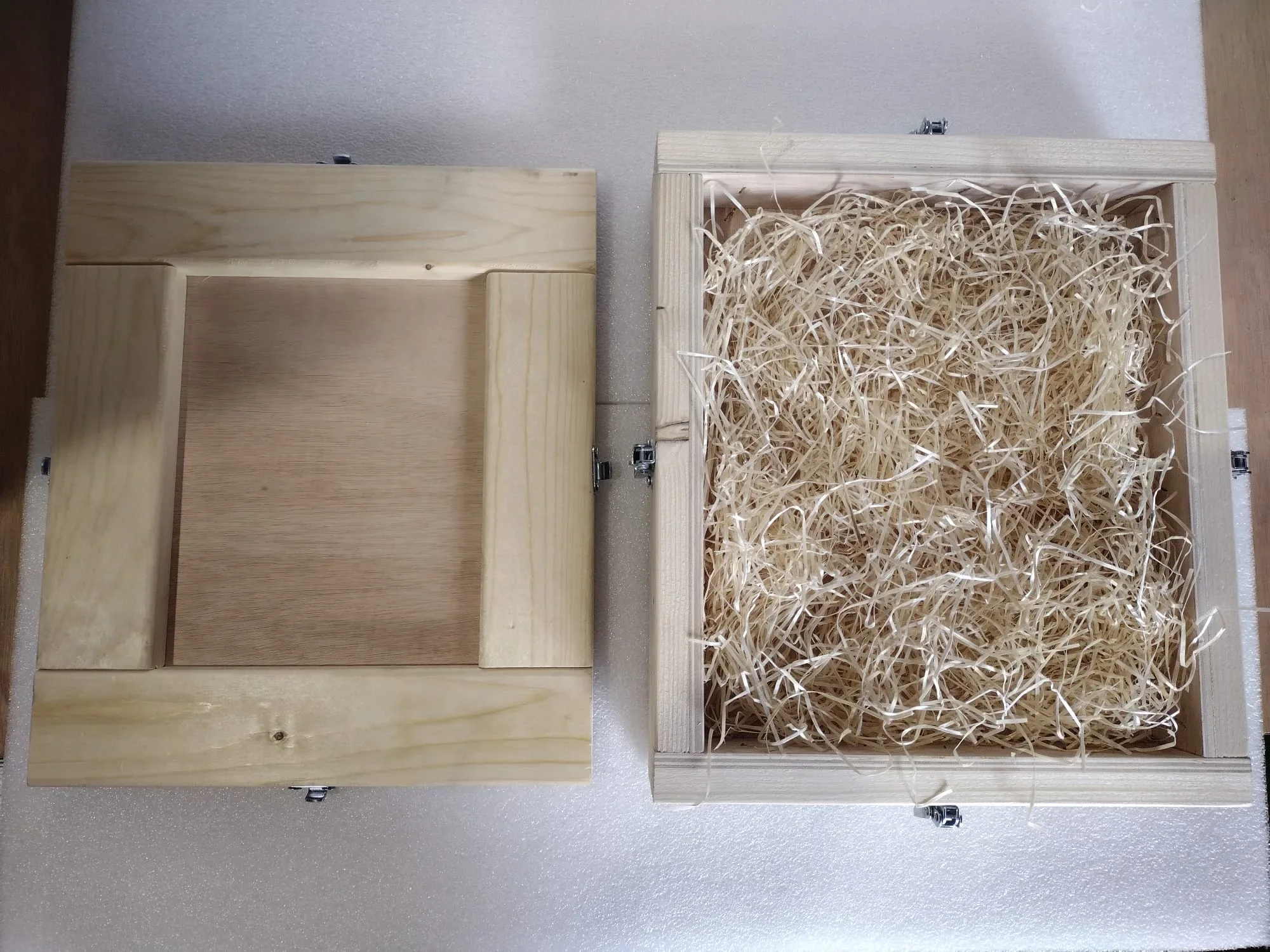
For smaller pieces and mixed collections, we often pack a box within a crate. Each wrapped piece goes into its own box with foam or wood wool around it, and the boxes are held in a lined crate with foam between them and the walls.
The idea is simple. A knock to the outside is absorbed by the crate and its lining first, then again by the box and its padding, before it reaches the porcelain. Two layers of protection with space between them do far more than one thick layer.
Nothing loose, nothing touching, and two layers between the piece and the outside of the crate.
Send us a photo and the measurements.
We’ll recommend the crate, the lining and the supports, and come back with a bespoke quote.
Restored and repaired pieces
Many antique ceramics have been repaired at some point, and a good restoration can be very hard to see. But even the best repair doesn't give a piece back its full strength, and old adhesives can weaken with age, heat and damp. A riveted crack, a reglued handle or a filled chip is where a piece is most likely to give way.
So tell us about any repairs you know of. We keep weight and pressure off repaired areas, pad them more, and include them in the condition photos. If you're not sure whether a piece has been restored, your restorer or the auction house's condition report may say.
Why we photograph every piece first
Every piece is photographed before it's wrapped, so there's a clear record of its condition when it left. It matters most with ceramics, where a hairline crack or a tiny chip on a footrim is easily missed until someone looks for it at the other end.
Take your own photos too. Clear pictures of each piece, including the base and any marks, help with insurance and with checking everything on arrival.
Glass, crystal and decorative glassware
Glass follows the same rules as porcelain, with a few of its own. Decanter stoppers come out and travel separately, as a stopper left in can crack the neck. Stemmed glasses are held at the bowl and the foot, so the thin stem carries no weight. Large glass vases and bowls stand upright in cut cavities.
For glass in frames, mirrors and cabinets, see mirrors and glass. For crystal chandeliers and their drops, see chandelier packing.
Two ways to work with us
With ceramics, most people ask us to collect, because the packing inside the crate matters as much as the crate itself. Both ways are open to you.
Measuring a vase or figure: the tallest point with its lid on, the widest point across any handles, spout or applied decoration, and the depth front to back. For a service, a list of pieces and the size of the largest plate and tureen is a good start.
We can also arrange the onward shipping, if you'd like the whole journey handled together.
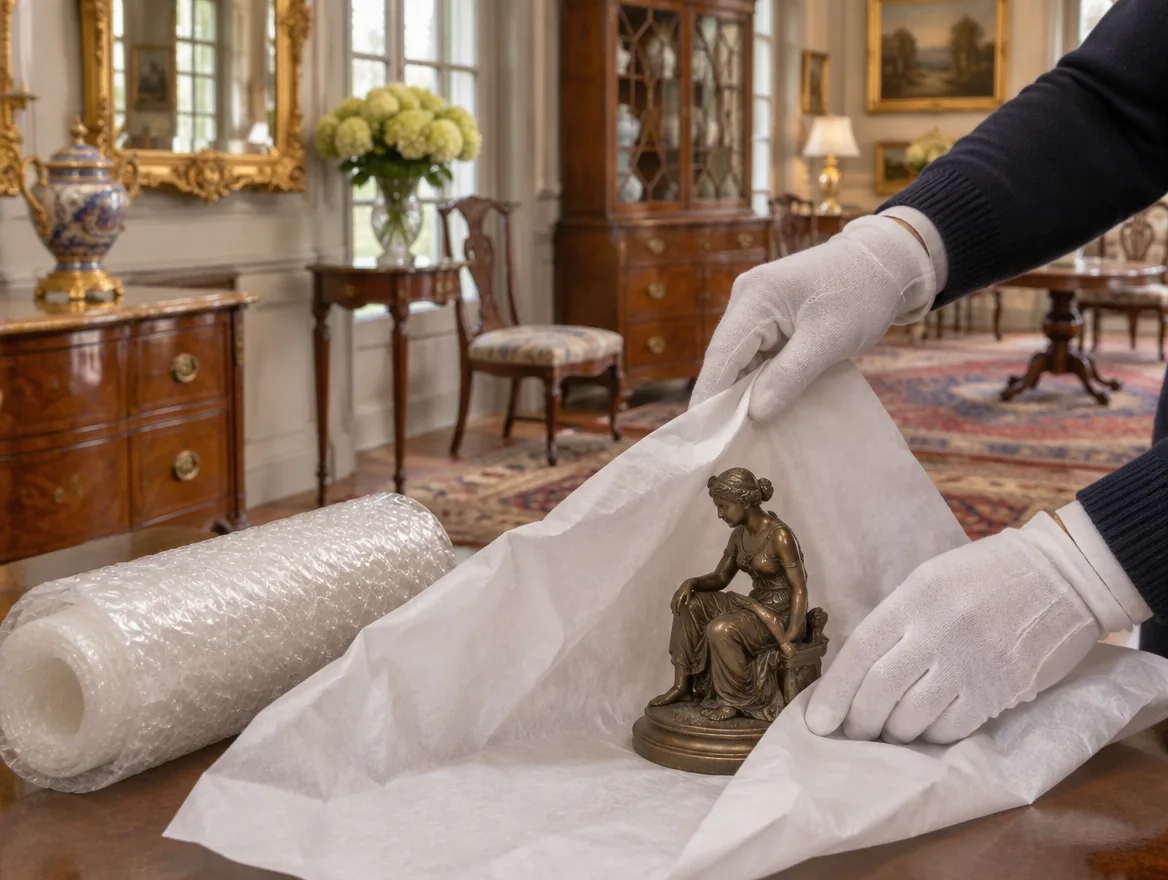
We collect your porcelain from your home, a dealer, a saleroom or storage, wrap each piece, cut the foam and build the crate at our warehouse. Your courier or shipper then collects the finished crate from us. Collect and crate
Already boxed, or packing it yourself? Send us the sizes of the pieces or boxes, roughly what they weigh and what they are. We confirm the measurements with you, build the crate and deliver it to your address. Crates built to your measurements
Unpacking at the other end
- Open the crate on a clear, padded table or floor, the right way up
- Take pieces out one at a time, lifting by the body, never the handle or rim
- Unwrap over a soft surface, so a small part can't fall far
- Check every wrapping for lids, stoppers and small loose parts before you throw it away
- Compare each piece with the photos taken before it left, and note anything new straight away
Before we collect, leave pieces where they are and don't wrap anything yourself. Tell us about repairs and loose lids, and arrange transit insurance for the collection's value (see insurance). Bought at a sale? See crating for auction buyers. Then request a quote.
Common questions
Is bubble wrap enough to ship porcelain? +
Not on its own. Bubble wrap stops scratches, but it doesn't stop a piece moving. Tissue goes on first, bubble wrap over it, and then the piece is held in foam inside a crate so it can't shift.
Is newspaper or loose fill OK for packing ceramics? +
We don't use them. Newsprint can mark glaze and unglazed bases, and loose fill settles on the journey, leaving pieces free to move and touch. Cut foam holds each piece in one place.
Can you ship porcelain bought at auction? +
Yes. We can collect from the saleroom, pack each piece and crate it, then either your courier collects it from us or we arrange the onward shipping. See crating for auction buyers.
Can a whole collection share one crate? +
Usually, yes, as long as every piece has its own space. A crate can hold trays, drawers or boxes for dozens of pieces, laid out so they're easy to check off at the other end.
Should a cracked or damaged piece be shipped? +
Tell us first. A crack can open further with movement, so it may be worth asking a restorer before it travels. If it goes as it is, we pad the damaged area and keep all pressure off it.
Do old ceramics need an export licence? +
Some do. Cultural objects over 50 years old above set values need an individual licence from Arts Council England to leave Great Britain; for most objects the limit has been £65,000. Check the current figures. We don't handle export licences or customs paperwork.
How much does it cost to ship porcelain? +
Every quote is bespoke, based on the pieces themselves: how many, their size, how fragile they are, where they're going and how quickly. Send us the details and we'll come back with a price.
Is the porcelain insured in transit? +
Transit insurance is available for every export. It's bought by you, job by job, so the cover matches what's being shipped. We also have public and product liability insurance.
Related
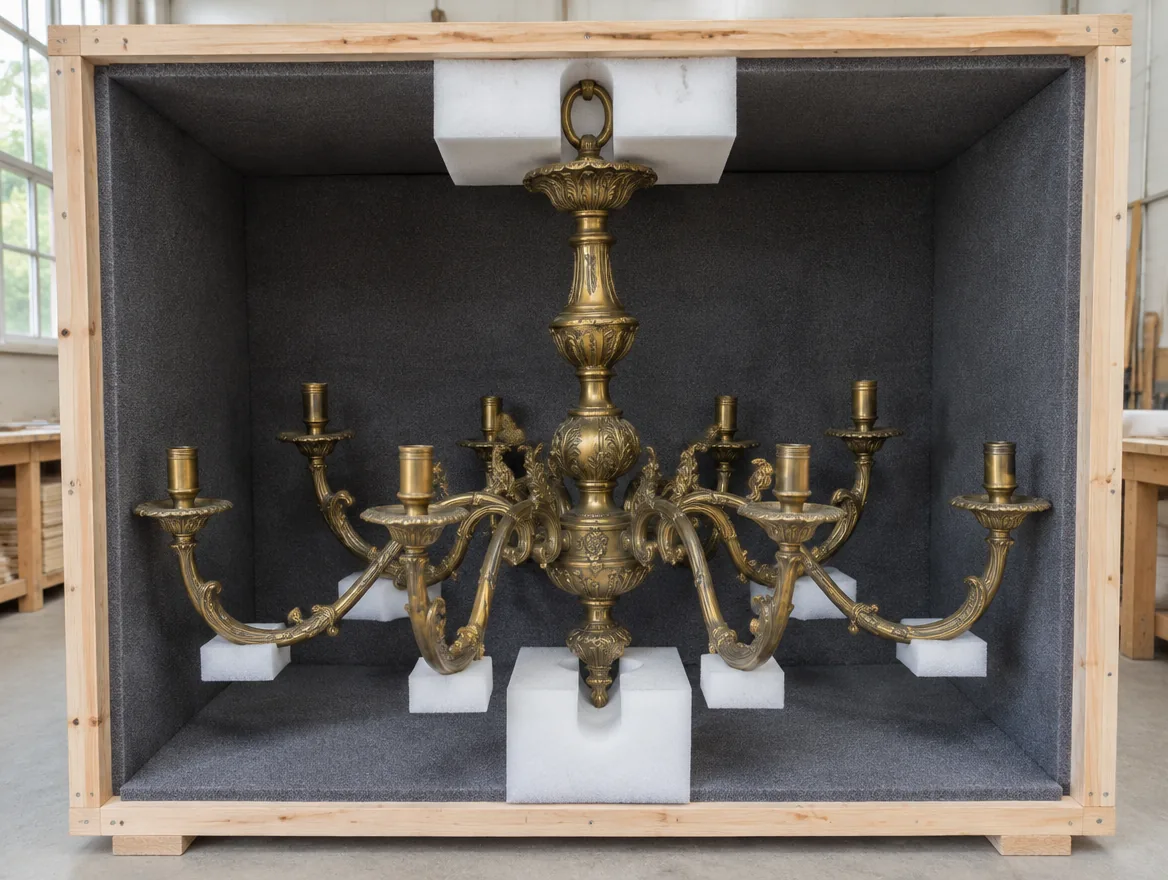
Every drop labelled, wrapped and trayed.
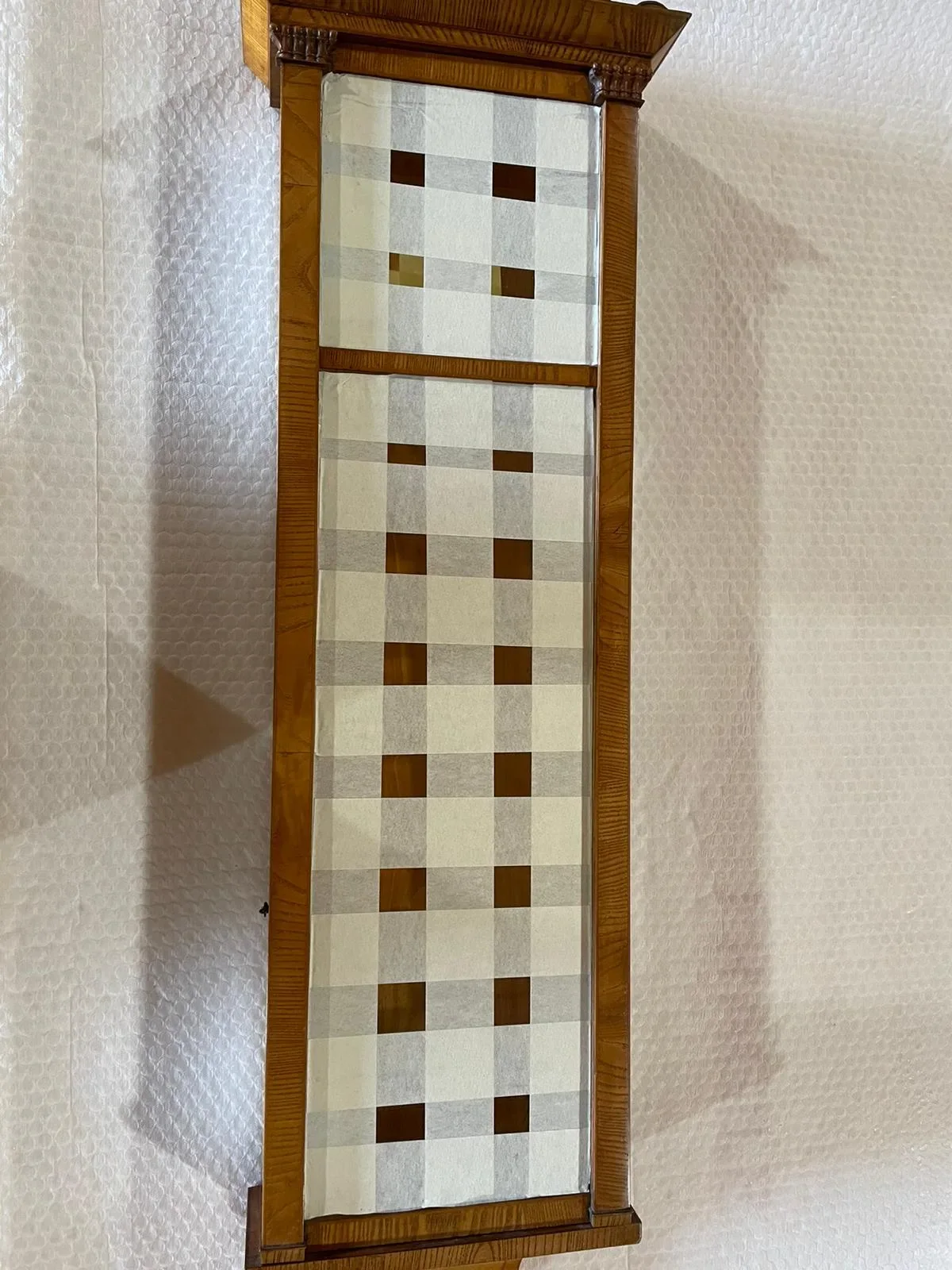
Clocks, mirrors, glass and collections.
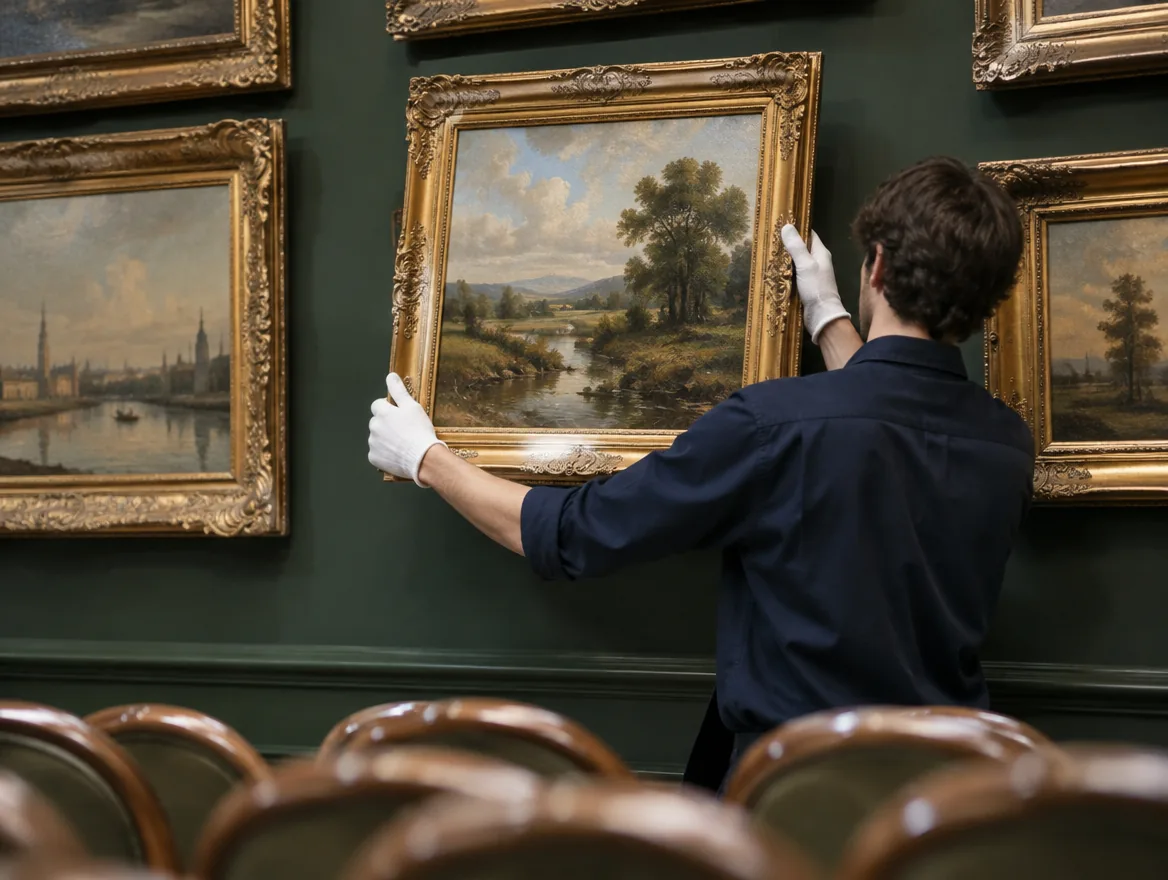
We collect from the saleroom, crate it and get it to your shipper.
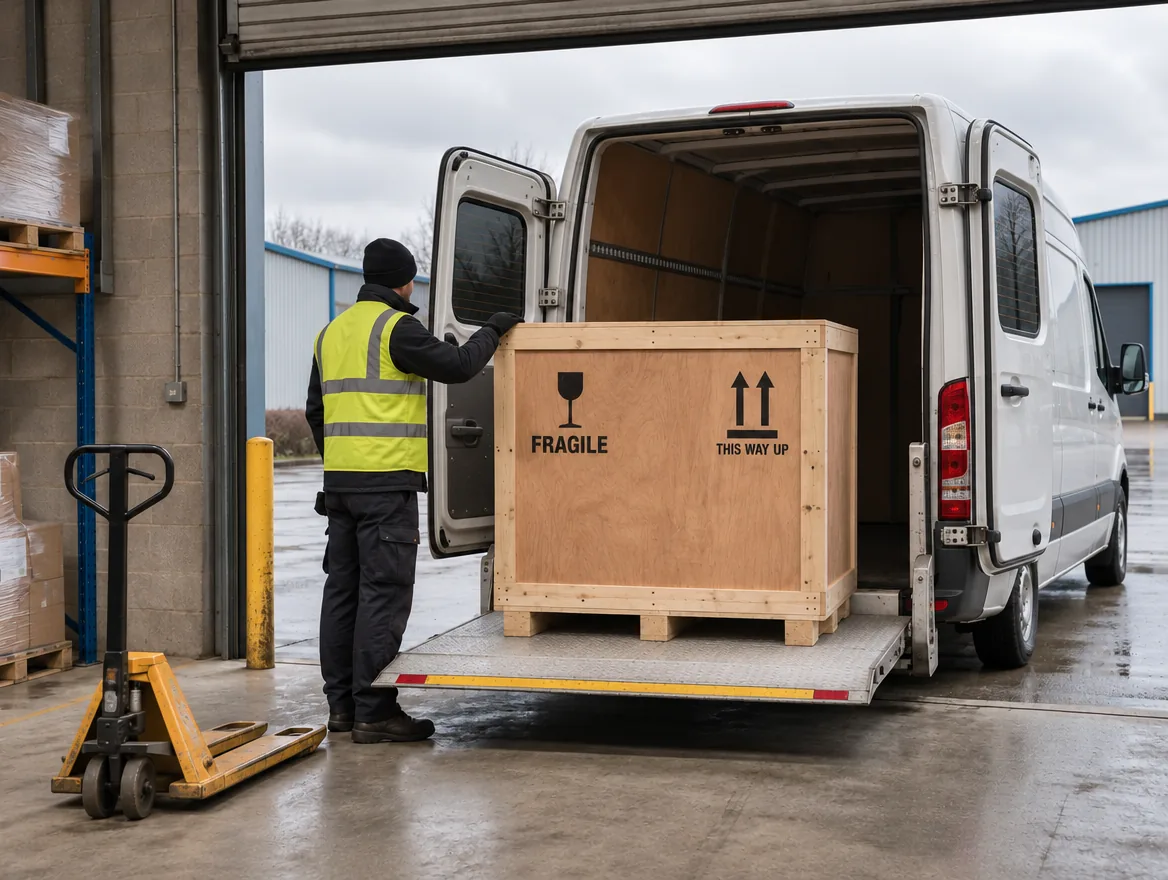
Nothing to measure. We build the crate around the piece.
Swipe for more →
Tell us what needs to travel.
Every quote is bespoke, based on the piece itself. Send us the details and we'll come back to you.