

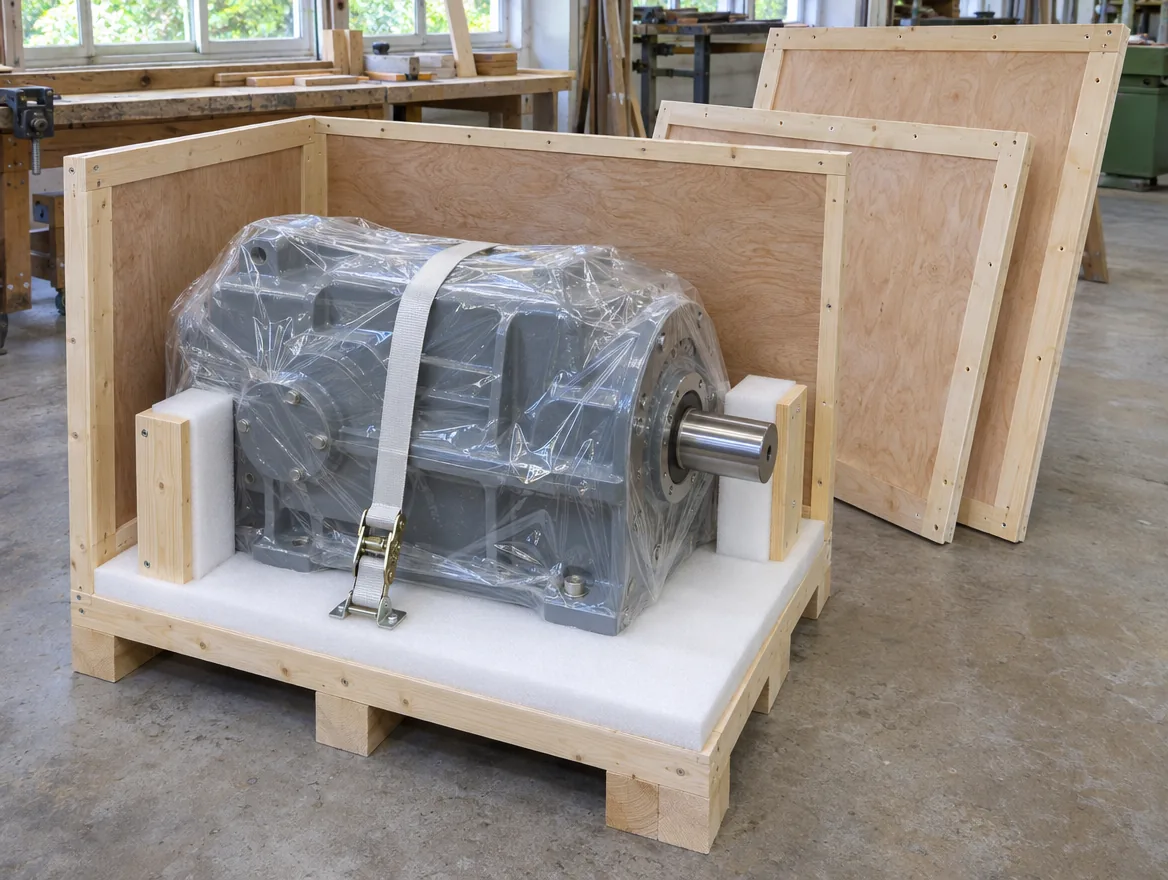
Export packing services and export crates
Export packing is packing built for the whole international journey: weeks in a container, forklifts and cranes at the ports, and several handovers between people who never see what is inside. We build export crates around machinery and parts, samples, exhibition goods, art and antiques, hold everything still and mark each crate for the trip. We can arrange the shipping too. The customs paperwork is for you, your shipper or a customs agent.
- We pack
- Machinery, parts, samples, art, antiques
- Built for
- Sea and air freight, many handovers
- Wood rules
- Heat treated, with our own ISPM 15 stamp
- Paperwork
- Arranged by you or your agent
What is export packing?
Export packing is packing built for the whole journey abroad, not just the first van ride. Goods going overseas are lifted, loaded and stored many times, often for weeks, by people who never see what is inside. The packing has to hold them still, keep damp out and tell every handler what to do.
One vehicle, a few hours, the same people at each end. Blankets and straps can be enough.
Several handovers: a haulier, a forwarder's warehouse, a port or airport, then the same again abroad.
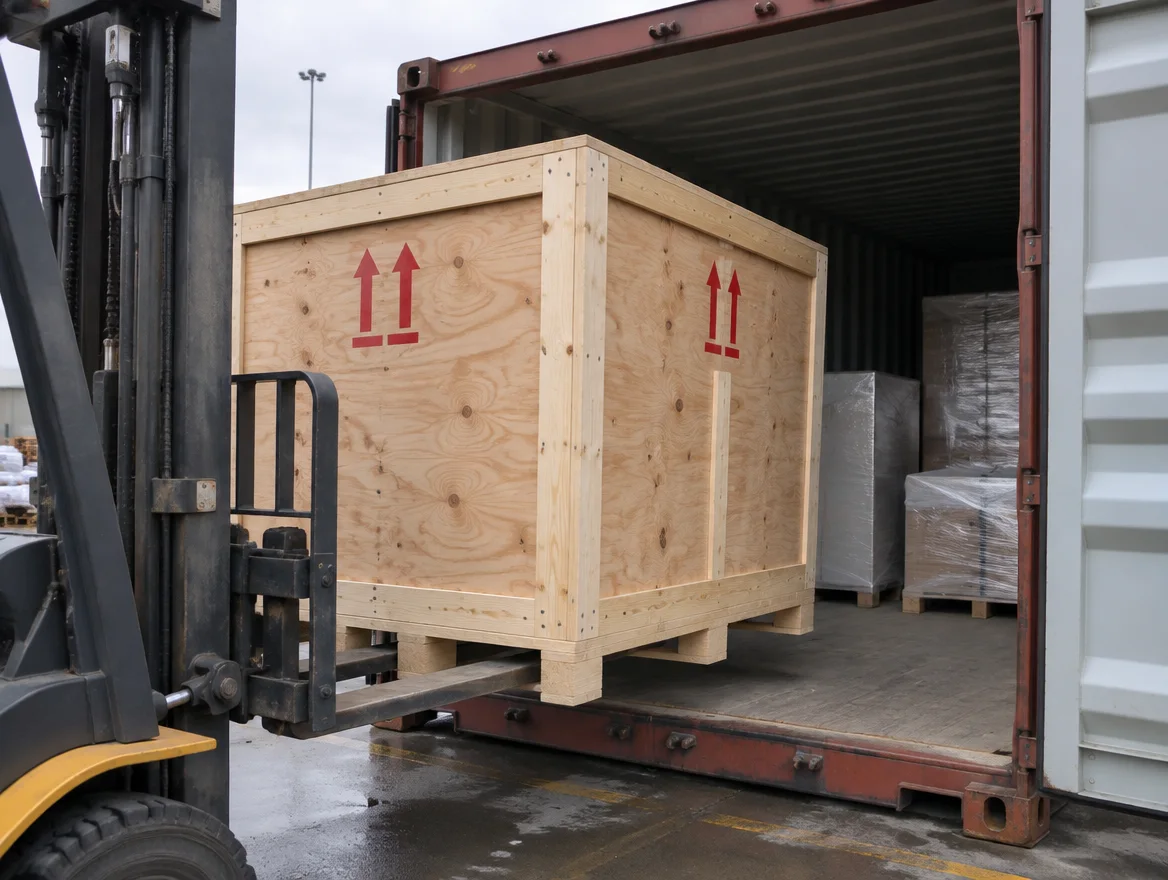
By sea, weeks in a steel container while the temperature rises and falls.
Solid wood packaging must meet ISPM 15, and every crate needs an accurate size and weight.
What do we export pack?
Anything that has to arrive abroad in the condition it left. We crate any object, any item and any weight, for businesses and for private clients.
Our recent work includes over 500 kg of concrete street art, crated for a gallery sending it to the US. See how that crate was built.
Machines, motors, tooling, spares and machined components. See industrial crates.
Samples, prototypes and equipment going to a customer, a factory or a site abroad.
Displays and products going to a show, often coming back afterwards. For art fairs, see galleries and art fairs.
For collectors, dealers and galleries. See art shipping and antique shipping.
Sea freight or air freight: what changes?
By sea, the risks are time, damp and other cargo. By air, weight and size decide the cost and what will fit.
Our crates are light for their size: a crate's own weight is usually far below its volumetric weight, so its outside size is what counts most. So an air crate is built close around the goods, with no wasted space. We don't quote transit times on the website; if there is a date, such as a trade fair opening, tell us and we'll give you the options.
| Sea freight | Air freight | |
|---|---|---|
| Journey | Weeks in a container, through changes of temperature | Shorter, with airport handling at both ends |
| Handling | Forklifts in warehouses; the container is craned at the ports | Forklifts and airport pallets |
| Other cargo | Packed against it, or stacked on it | Built up with it on airport pallets |
| Size and weight | Large, heavy crates are normal, within container door sizes | Limited by aircraft doors; charged on actual weight or volume weight, whichever is greater |
Crate, pallet or box for export?
It depends whether the goods can take a knock, a weight on top and damp.
If a knock from the side or a weight on top would damage the goods, they need a crate, not a pallet.
Every type we build is on types of crate, and plywood crates explains when plywood alone is enough.
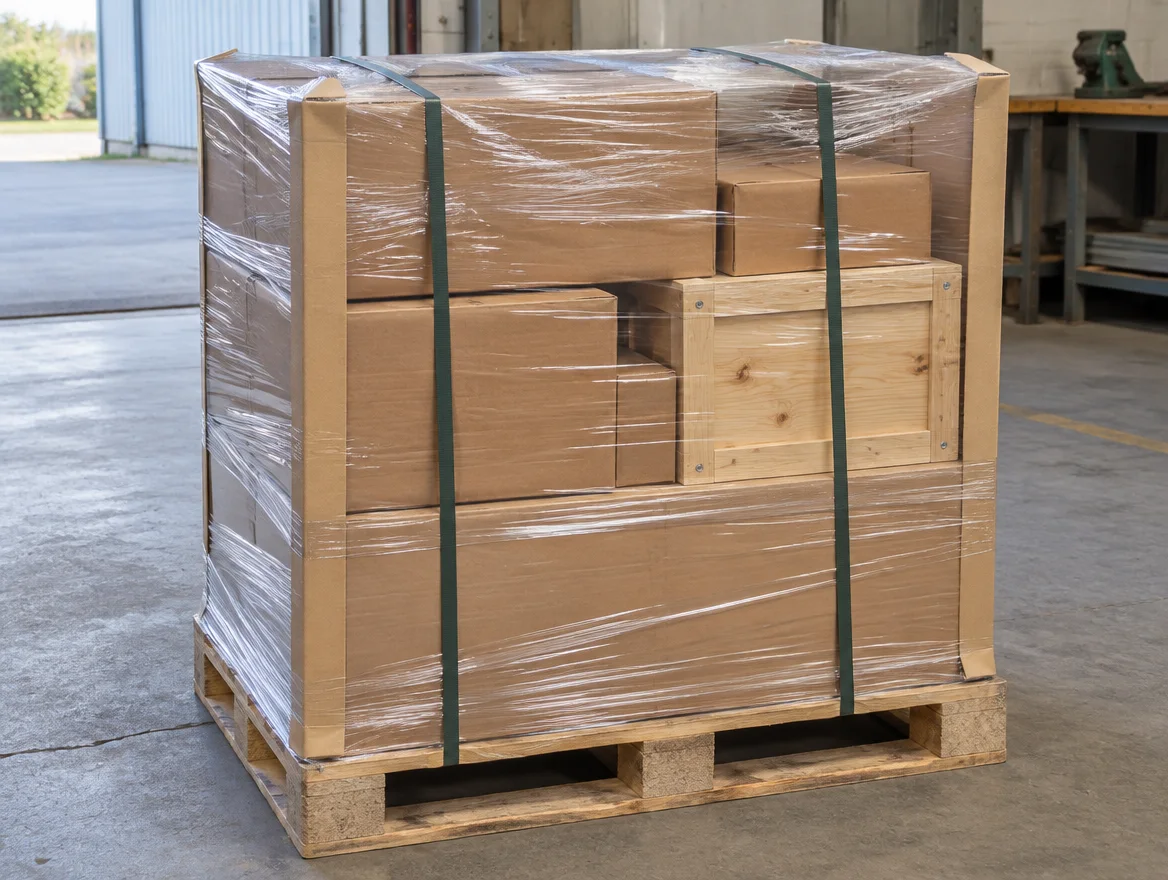
| Export crate | Pallet | Plywood box | |
|---|---|---|---|
| What it is | Pine frame, plywood on every side, on skids | Goods strapped and wrapped onto a timber base | Plywood panels, no frame |
| Protects | Every side, the top and the base | The base only; sides and top stay open | Small, light items |
| Suits | Machinery, fragile or valuable goods, art | Sturdy boxed goods of even size | Small samples and parts |
| ISPM 15 | Solid timber frame and skids covered | Solid timber pallet covered | Usually exempt if wholly plywood |
What makes a good export crate?
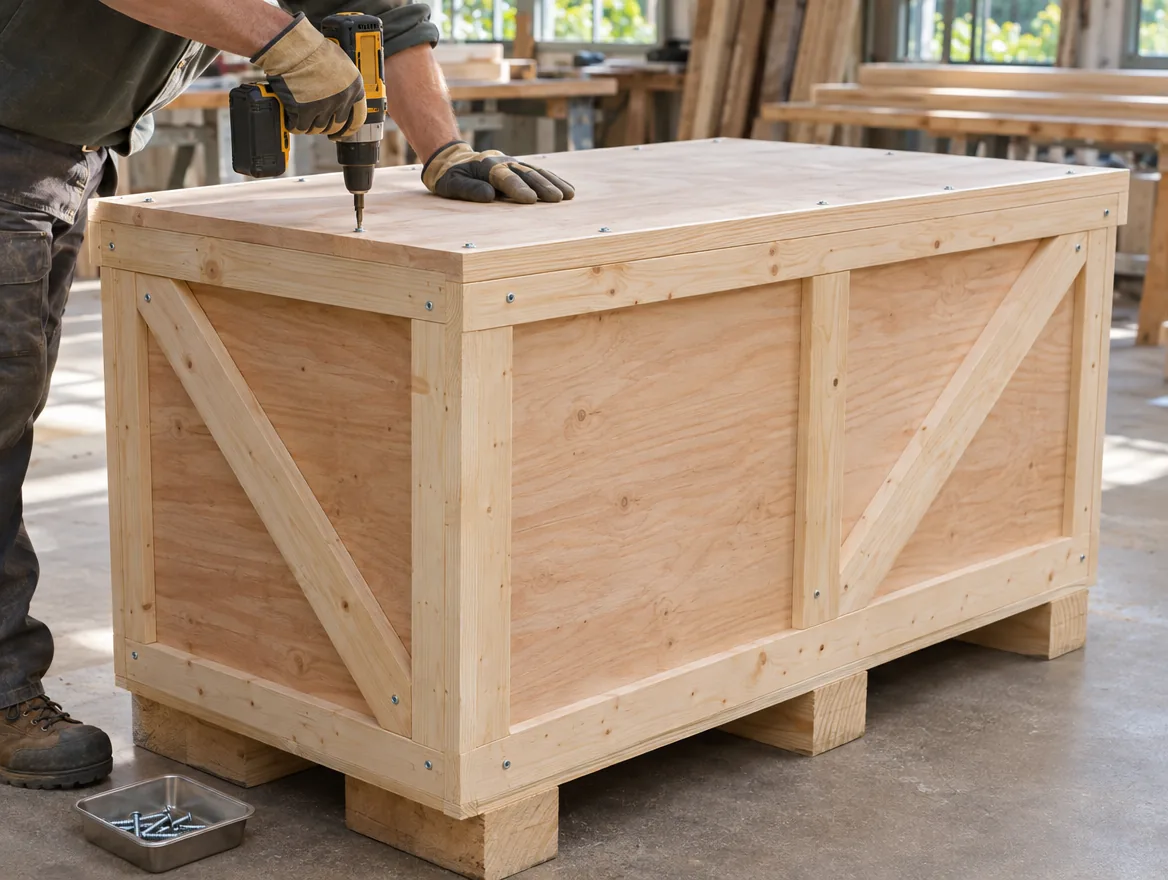
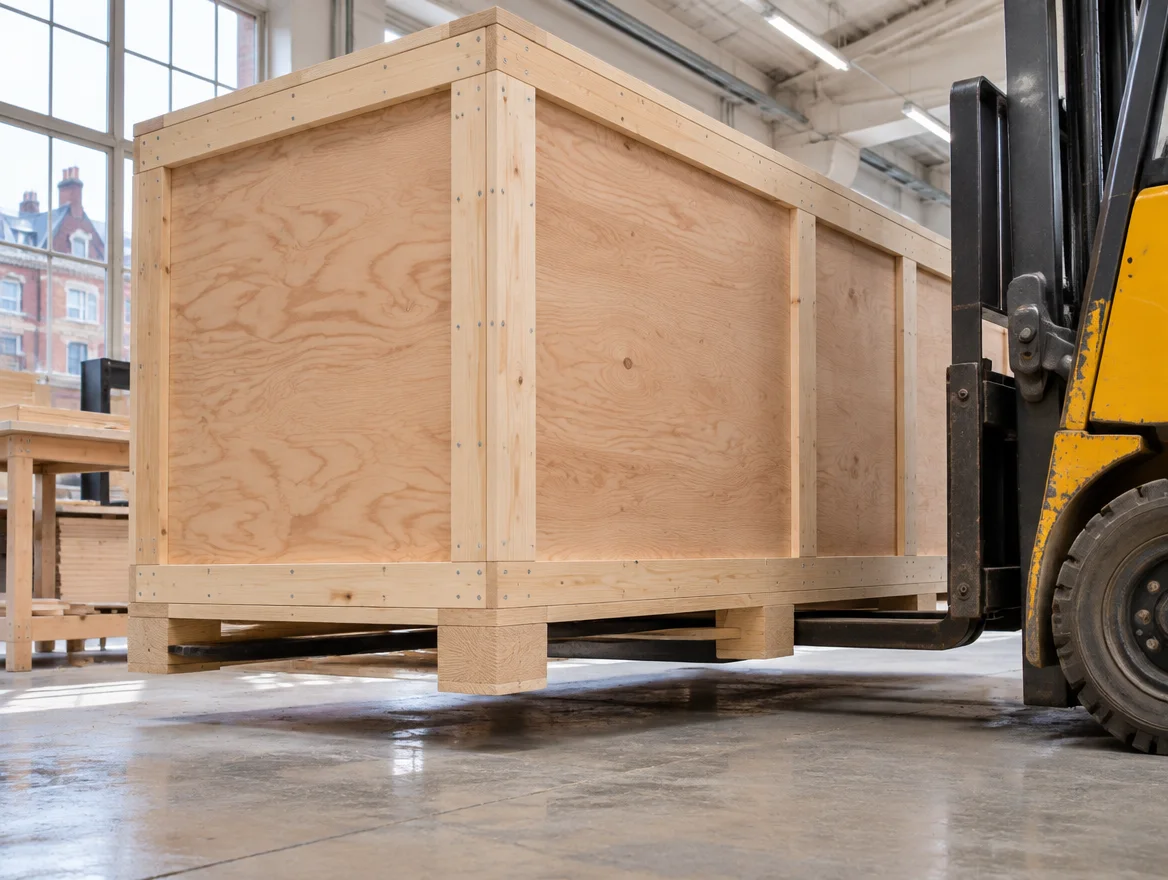
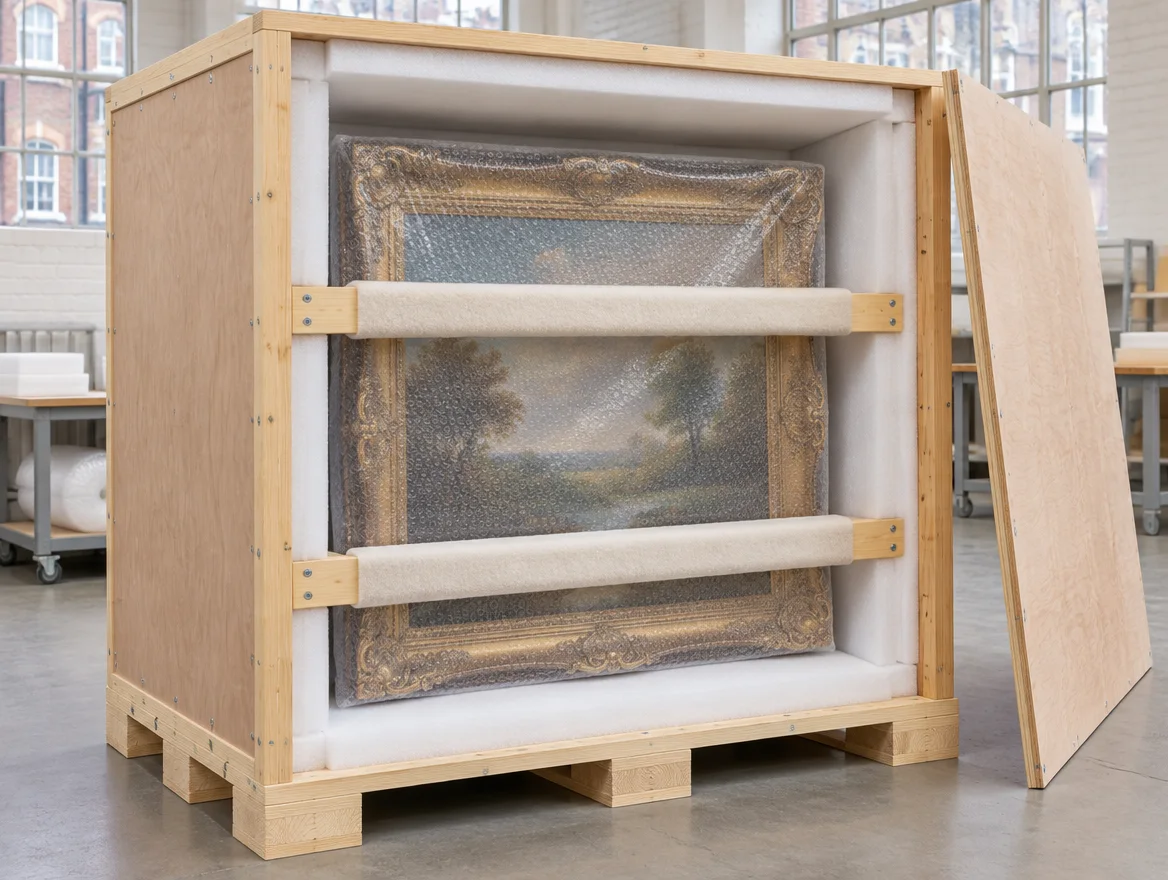
One that can be lifted safely from below, keeps its shape under load and holds the goods so they can't move:
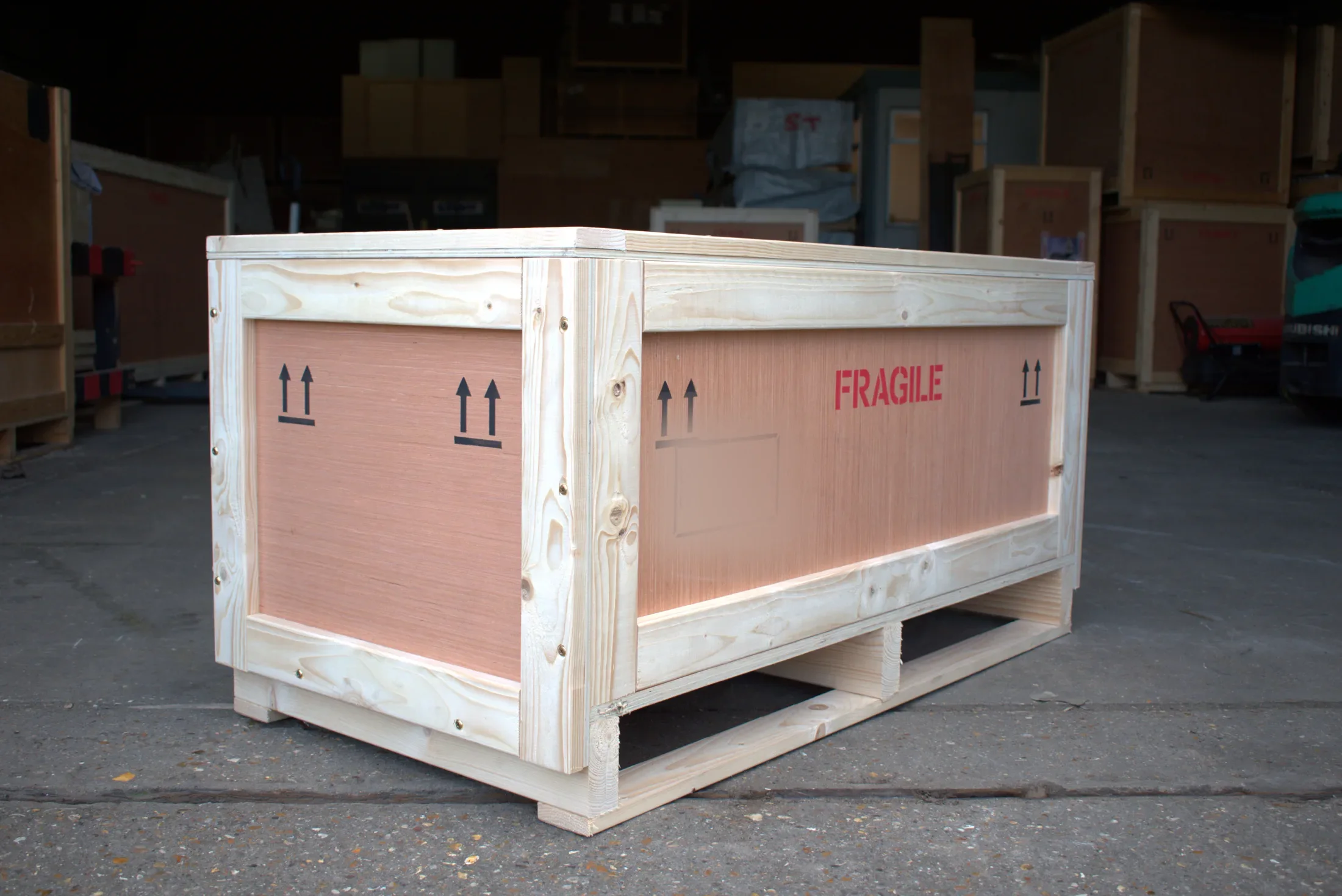
- Skids underneath, so a forklift or pallet truck gets under the crate without touching the panels.
- A base and frame sized to the load, so the crate stays square when it is lifted at one end.
- Firm white high density foam under the weight, running the full length with no gaps, never just at the corners.
- Foam-faced blocks and straps, so nothing slides when the vehicle brakes or the crate is tilted.
- Soft charcoal HLB22 foam wherever a machined, polished or painted surface is touched.
- Nothing loose. Parts made to come off are removed, wrapped and packed in their own place.
Is the weight off-centre? Tell us, so the base and the supports are built around where it sits.
How each crate is built is on bespoke wooden shipping crates, and what goes into it is on our materials page.
Send us a photo and the measurements.
We’ll recommend the crate, the lining and the supports, and come back with a bespoke quote.
Does an export crate need ISPM 15?
Usually, for any solid wood in it. ISPM 15 is the international standard for wood packaging that crosses a border. Crates, pallets, skids and loose timber bracing a load normally have to be debarked, heat treated or fumigated, and marked. It has applied between Great Britain and the EU since 1 January 2021, and many other countries use it too.
Plywood is exempt, because it is made with glue, heat and pressure. So an all-plywood box can usually travel without the mark, but a crate with a solid pine frame and skids normally can't. Wood packaging that doesn't comply can be rejected or destroyed at the border.
Our crates are heat treated and carry our own registered ISPM 15 stamp. Our ISPM 15 guide explains the mark.
How do you keep damp out of an export crate?
On a long sea journey, a closed container warms by day and cools by night. Moisture condenses under the roof and drips back onto the cargo, which shipping guidance calls container sweat. Cold goods opened in warm, humid air can sweat too, and that is hardest on bare steel and machinery.
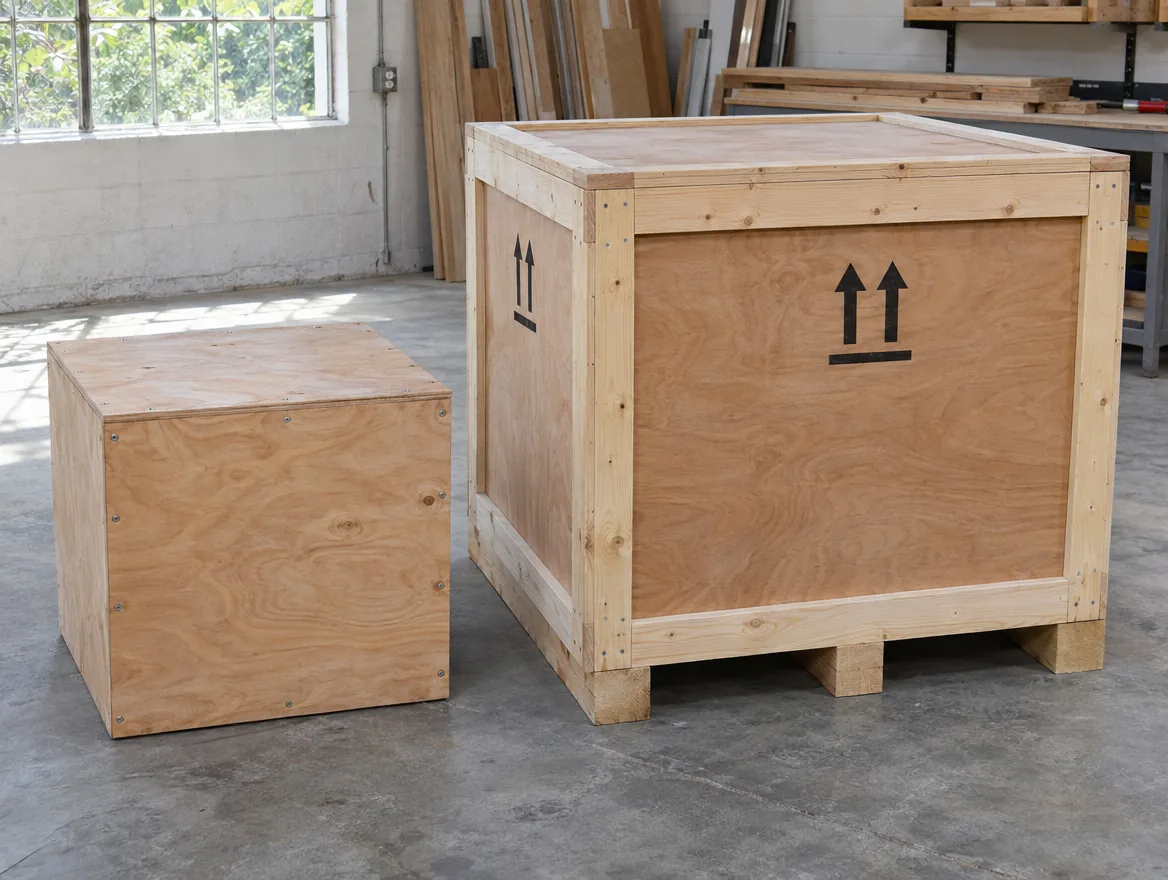
- Closed on every side, with skids keeping the crate off a wet floor.
- Wrapped first, so no surface is left bare.
- Extra protection if the goods need it. Across the industry, bare metal is often coated against corrosion, or sealed in plastic with desiccant bags. Tell us if your goods can rust or mark, and ask us what we'd suggest.
- Settle before opening. Cold goods arriving somewhere warm and humid should stay crated until they have warmed up.
How should an export crate be marked?
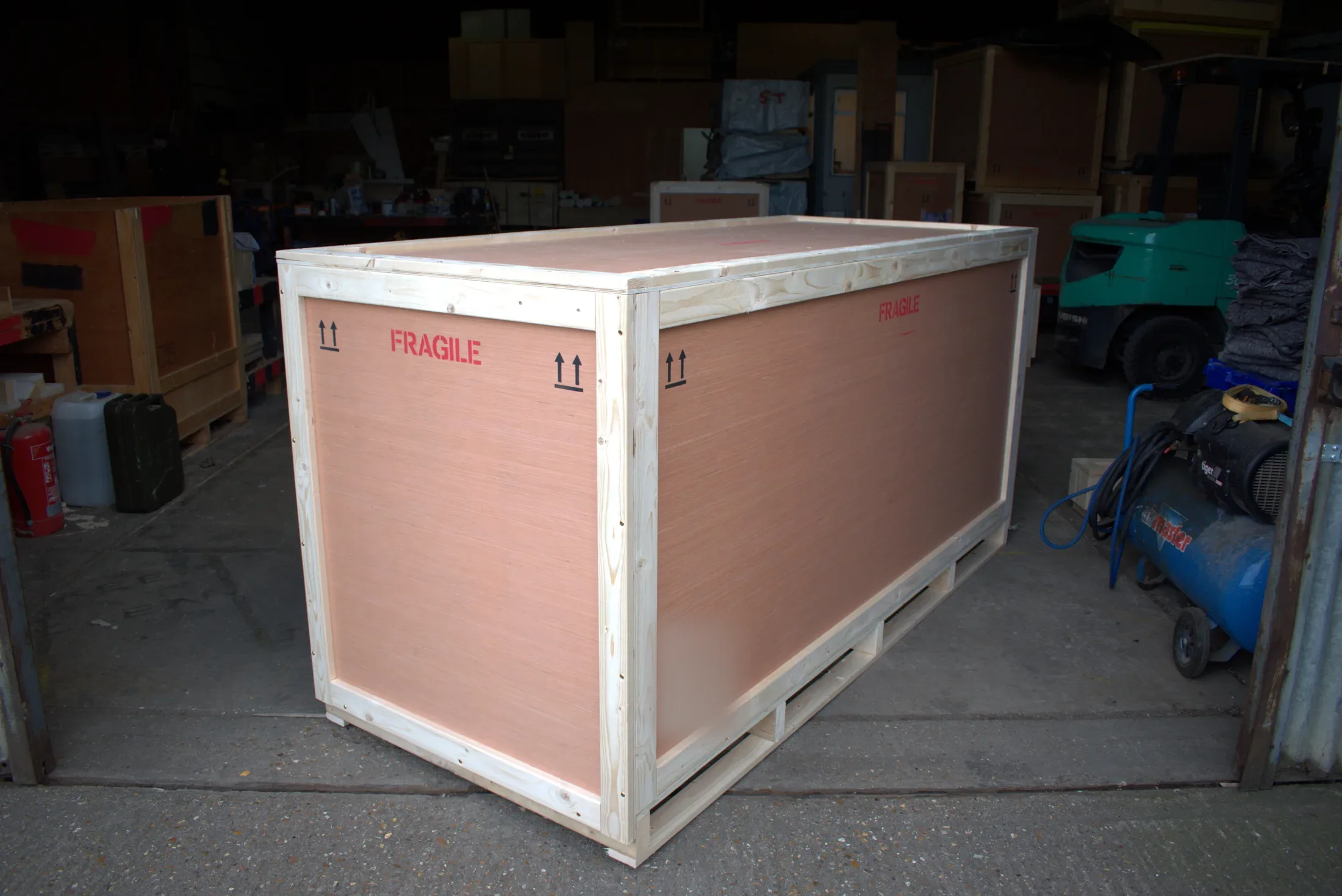
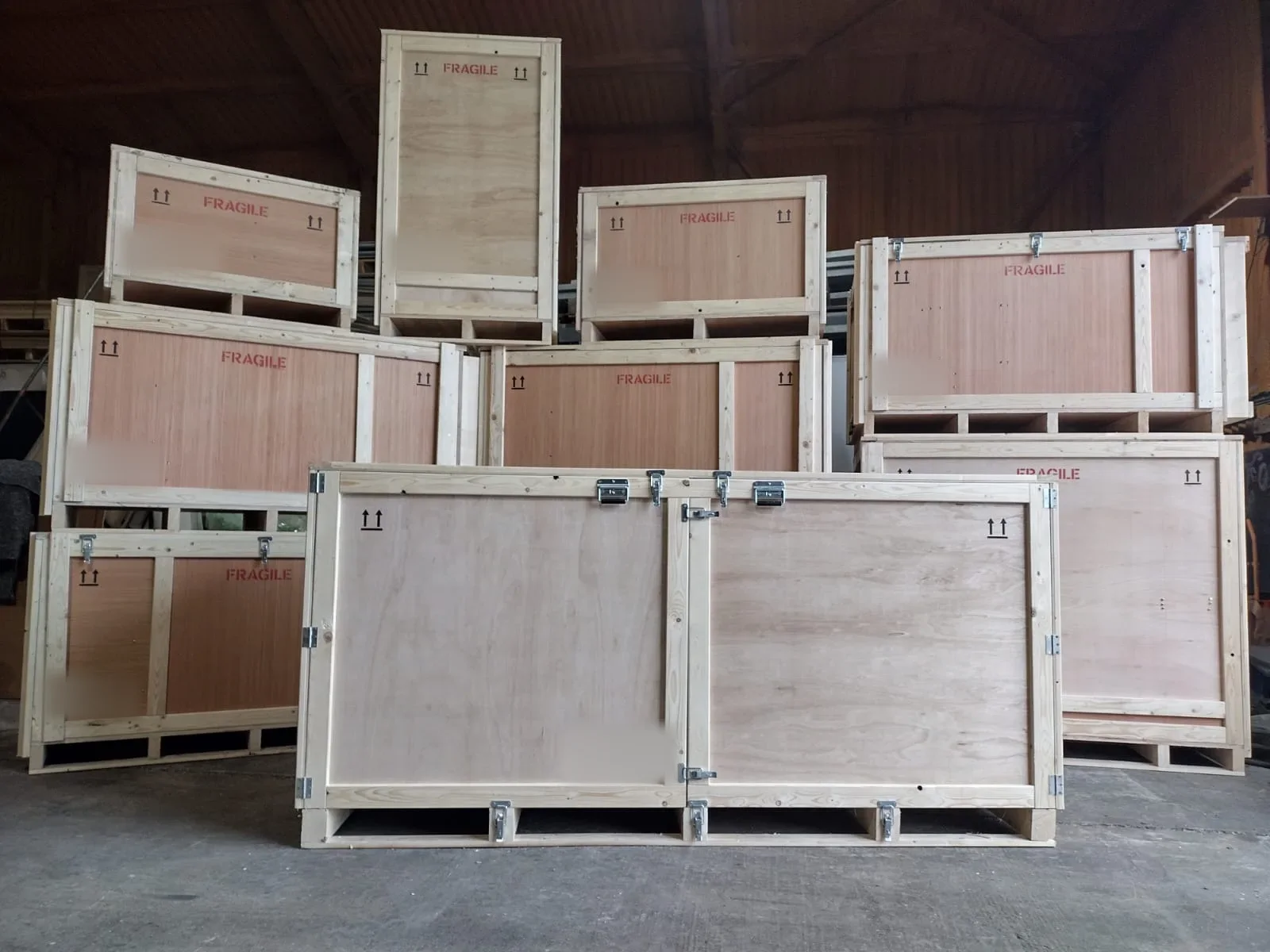
With symbols, not just words. The international handling symbols in ISO 780 tell every handler what to do, in any language. The usual ones:
Your shipper may also want each crate numbered, such as 1 of 3, with its gross weight and their shipping marks. Tell us what they need when you ask for a quote.
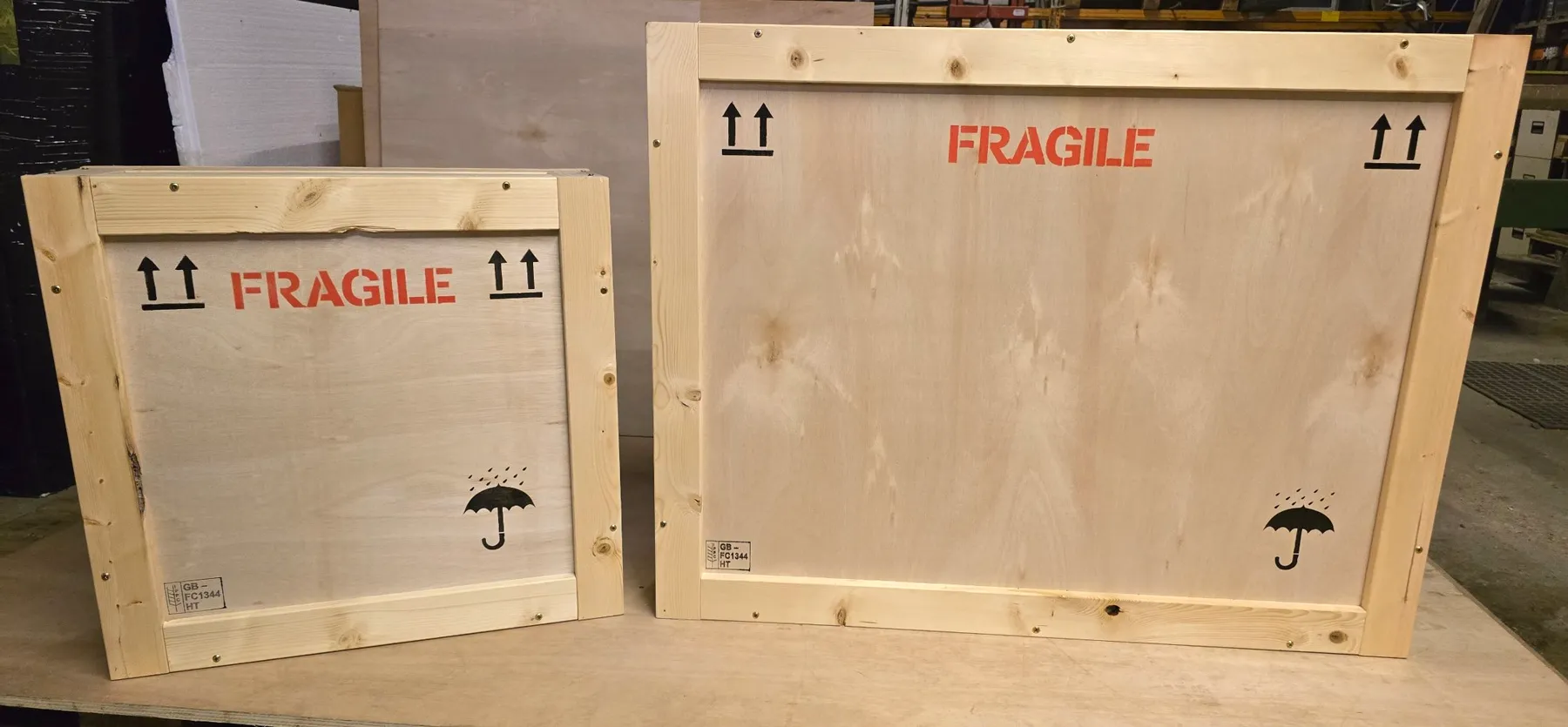
| Mark | What it tells the handler |
|---|---|
| This way up | Which way is up, shown on all four sides |
| Fragile | Handle with care |
| Keep dry | Keep it out of the rain |
| Centre of gravity | Where the weight sits |
| Do not stack | Put nothing on top |
| Sling here | Where lifting slings go |
Weights and sizes for the booking and the paperwork
Your shipper needs the outside size and gross weight of every crate. They decide what the crate travels in, how it is lifted and what it costs, and a packed sea container needs a verified gross mass before it is loaded.
- Outside length, width and height of each crate
- Gross weight of each crate, packed
- A numbered packing list of what is in each one
- Any crate that must not be stacked or tipped
We give you each crate's outside size for the booking, with its weight estimated from the volume of materials. If you or your shipper need the exact gross weight, for example for a sea container, we weigh each crate once it's built.
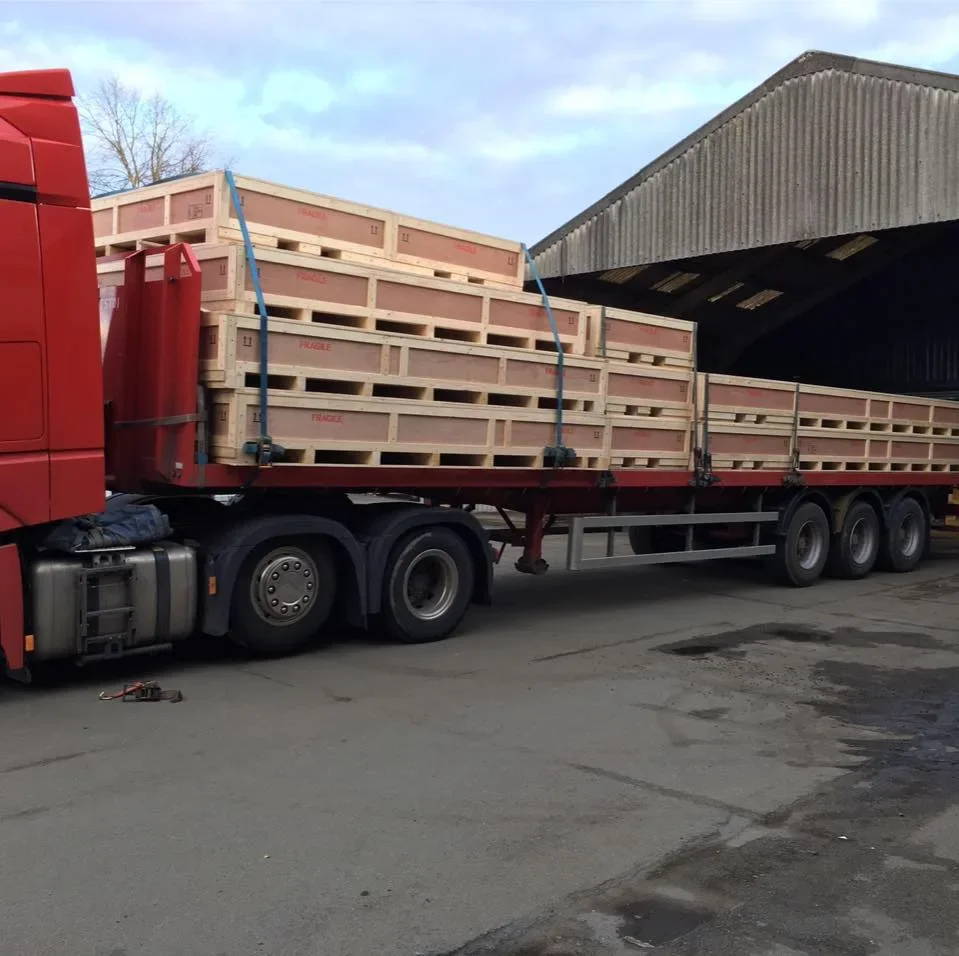
What doesn't export packing include?
The customs side. That is arranged by you, your shipper or freight forwarder, or a customs agent.
- Controlled goods. Some machinery, electronics and technology need an export licence, even for a short trip.
- Trade fair goods. Goods going to a show and coming back may travel on an ATA Carnet, issued through a chamber of commerce.
- Fuel, oil and batteries can make machinery dangerous goods. Tell your shipper, and us, before anything is packed.
- Art and antiques can need an Arts Council England export licence, or CITES permits for ivory and protected woods.
Import rules differ by country: see art shipping, shipping to Canada, furniture to the USA, Europe and Dubai.
Collect, wrap, crate, line and mark the goods, and arrange the shipping if you want us to.
Export declarations, commodity codes, licences, carnets, import entries, duties and taxes.
Recent industrial work, and how to start
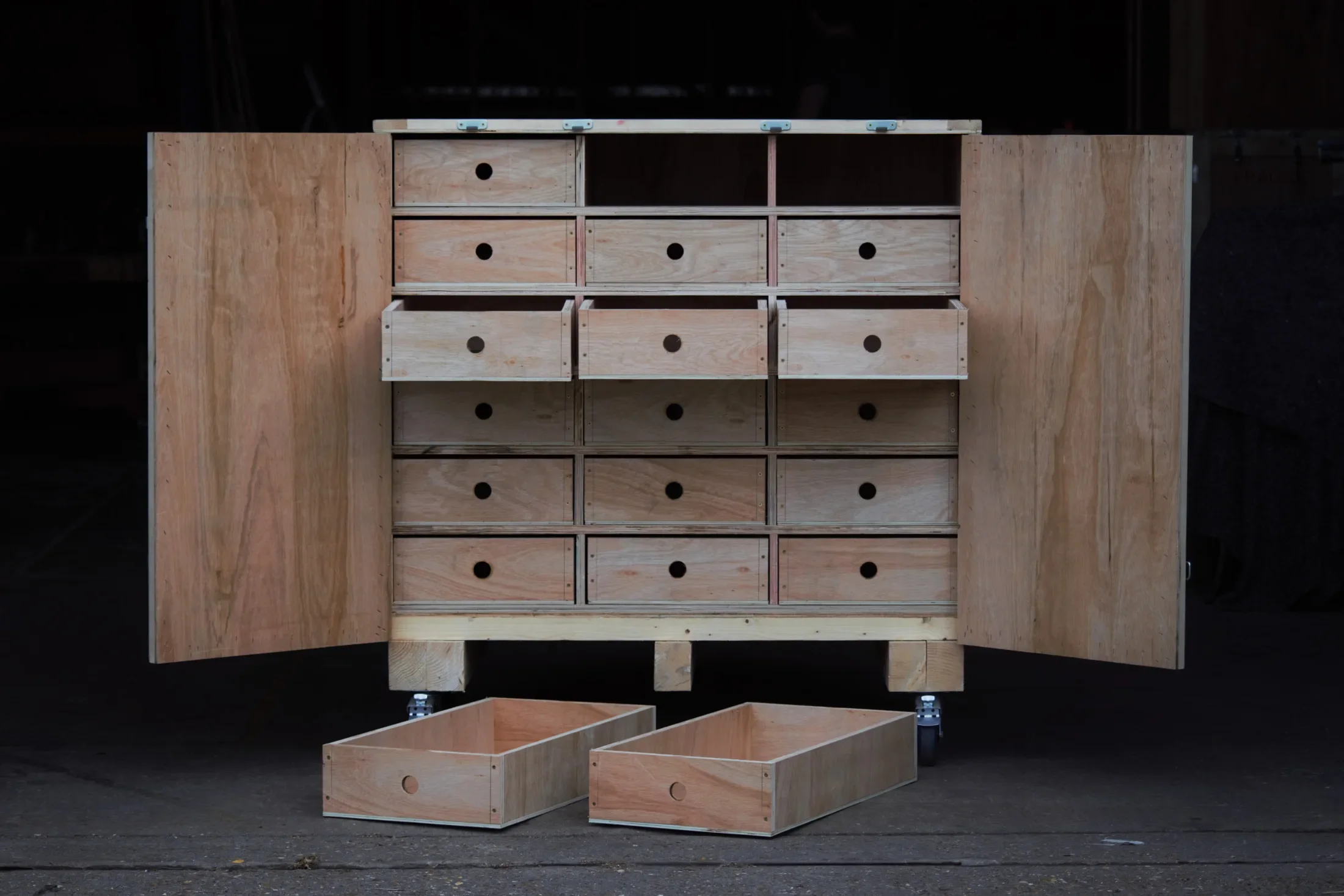
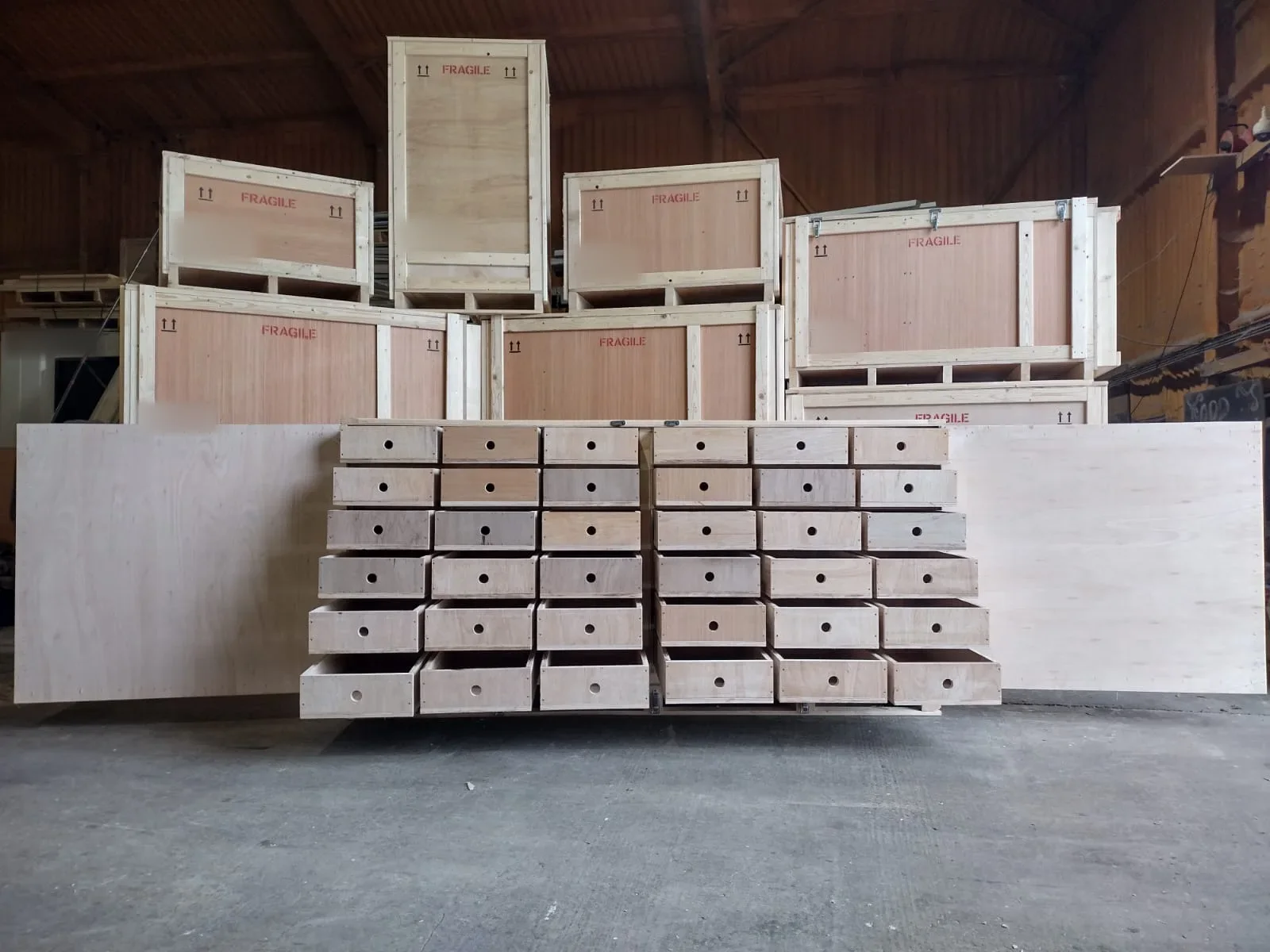
Our recent industrial work includes reusable drawer crates for a manufacturer that was paying to repair parts damaged between its factories. See the drawer crates we built.
We work 9am to 4pm, 7 days a week. Request a quote with what you're sending, its size and weight, a few photos and where it is going.
We collect the goods, crate them at our warehouse, and your shipper collects the crates from us. How it works.
You send the sizes and weights, we confirm them, then build the crates and deliver them to you. How it works.
If you'd like, we arrange the onward shipping too.
Common questions
Do you do export packing for businesses, or only for art? +
Both. We crate machinery, parts, samples, equipment and exhibition goods for businesses, and art, antiques and furniture for collectors, dealers and galleries. We crate any object, any item and any weight.
How do I measure equipment for an export crate? +
Measure the widest, deepest and tallest points, including shafts, handles, feet and anything that sticks out, and tell us the weight and where it can be lifted. If it is awkward to measure, we can collect it and build the crate around it instead.
Can several items go in one export crate? +
Often, yes. Each item gets its own section or compartment so nothing touches anything else, and a numbered packing list says what is where. Very heavy or very fragile items are usually better in a crate of their own.
Can the same crate bring trade fair goods back? +
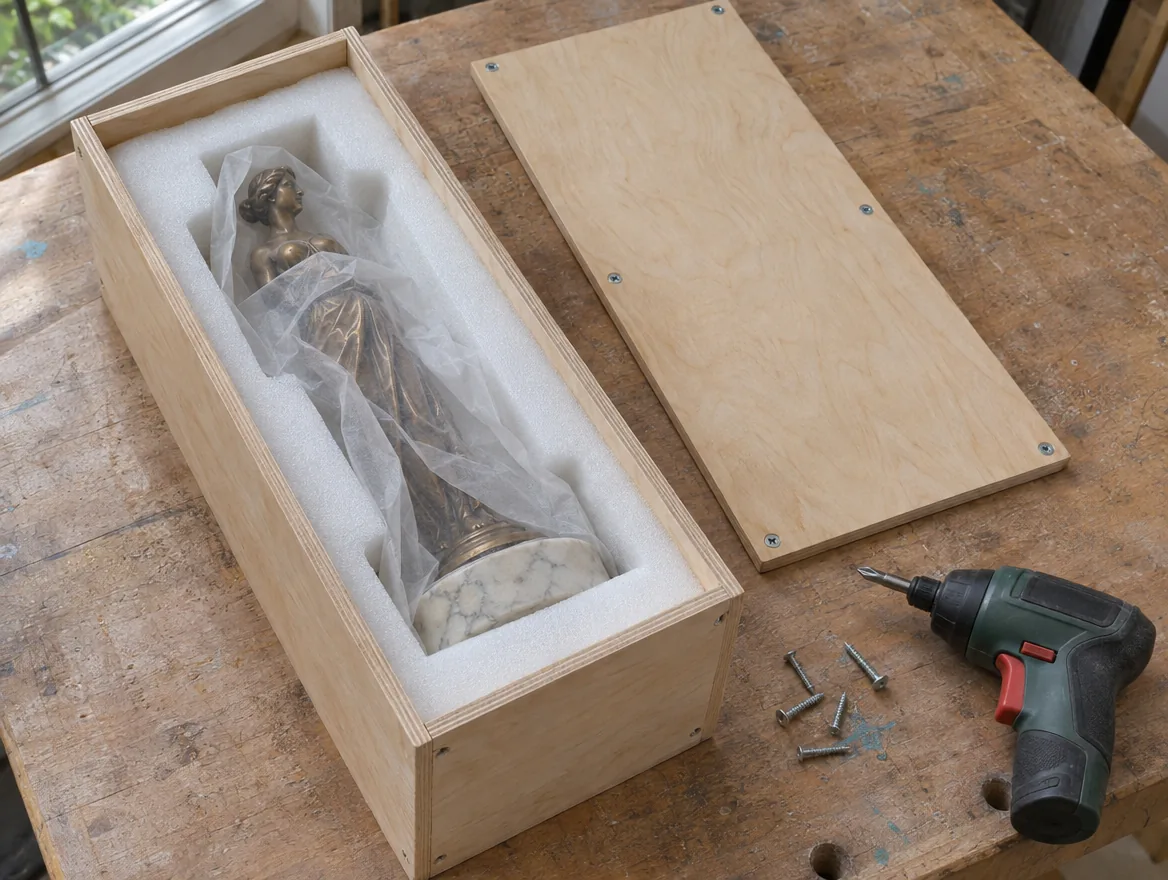
Often, yes. The lid is screwed down, so it opens cleanly and closes again; keep the linings with the crate for the return trip. If the goods travel on an ATA Carnet, you or your agent arrange it.
My machine has fuel, oil or batteries in it. Can you still crate it? +
Tell us and your shipper before anything is packed. Machinery containing fuel, oil or batteries can count as dangerous goods, and the shipper has to classify and declare it and will tell you how it must be prepared.
Can you build several export crates to the same design? +
Yes. Our drawer crates for a manufacturer were one design built in different sizes. Tell us how many you need and how they will be used.
Do you handle the customs paperwork? +
No. Export declarations, commodity codes, licences, carnets and import entries are arranged by you, your shipper or a customs agent. What we do is make sure each crate is ready for the journey, clearly marked and easy to open and close again if customs want to look inside.
Are the goods insured in transit? +
Transit insurance is bought by you, job by job, so the cover matches what is being shipped and its real value. We have public and product liability insurance. See our insurance page for what to ask.
How much does export packing cost? +
Every quote is bespoke, based on the goods themselves: their size, weight, how fragile they are, how many crates they need and where they are going. We don't use a rate card. Send us the details and a few photos and we'll price your job.
Tell us what needs to travel.
Every quote is bespoke, based on the piece itself. Send us the details and we'll come back to you.