

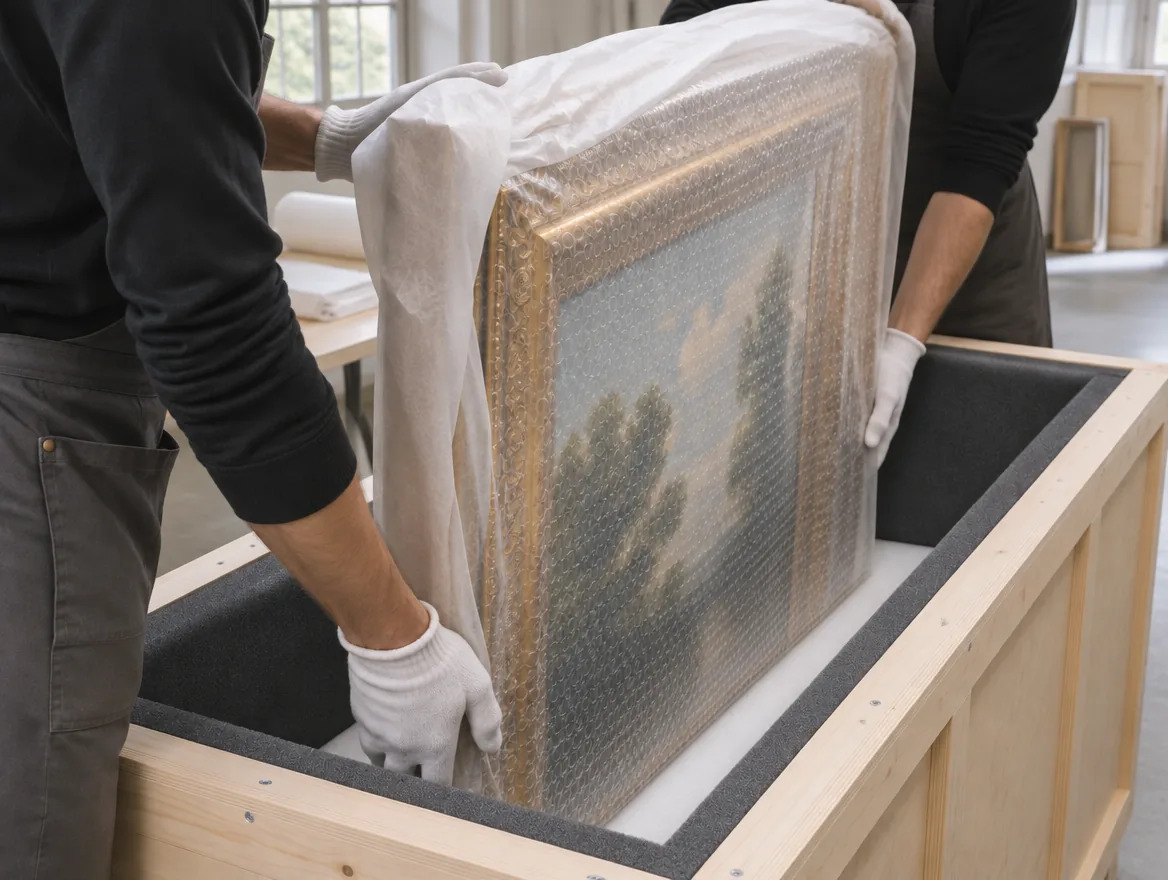
How to ship a painting safely
How to ship a painting safely depends on three questions: is it framed, is it behind glass, and how far is it going? This guide gives the wrap order we use, when a painting needs a crate, when a canvas should never be rolled, how to measure it, and what to know before it goes abroad.
- Next to the paint
- Acid-free tissue
- Glass
- Taped in a lattice
- Travels
- Upright, held by its frame
- Rolling
- Only flexible, thin canvases
Framed or unframed, glazed or unglazed: what changes?
Every painting needs the same two things: nothing pressing on its surface, and nothing letting it move. What changes is where the risk sits.

| Your painting | Main risk | How it is protected |
|---|---|---|
| Framed, no glass | The paint surface and the frame corners | Tissue over the front, corner guards, held by the frame |
| Framed behind glass | Glass breaking and cutting the work | Glass taped in a lattice, frame held by battens |
| Framed behind acrylic | Scratches; tape can mark it | No tape, a soft wrap, and tell us it is acrylic |
| Pastel or charcoal behind glass | Loose pigment; taping can create static that lifts it onto the glass | Tell us first: it needs a different approach |
| Unframed canvas on a stretcher | Anything pressing on the canvas, front or back | Held by the stretcher bars, never by the canvas |
How to ship a painting: the wrap order
Work from the inside out: soft and smooth against the work, cushioning in the middle, rigid on the outside.
Bubble wrap should never touch a painted surface. Its pattern can press into the paint, especially in warm weather, and the marks don't come out.
- 01Photograph it
Front, back, frame corners and any existing damage, in good light.
- 02Tape the glass, if there is any
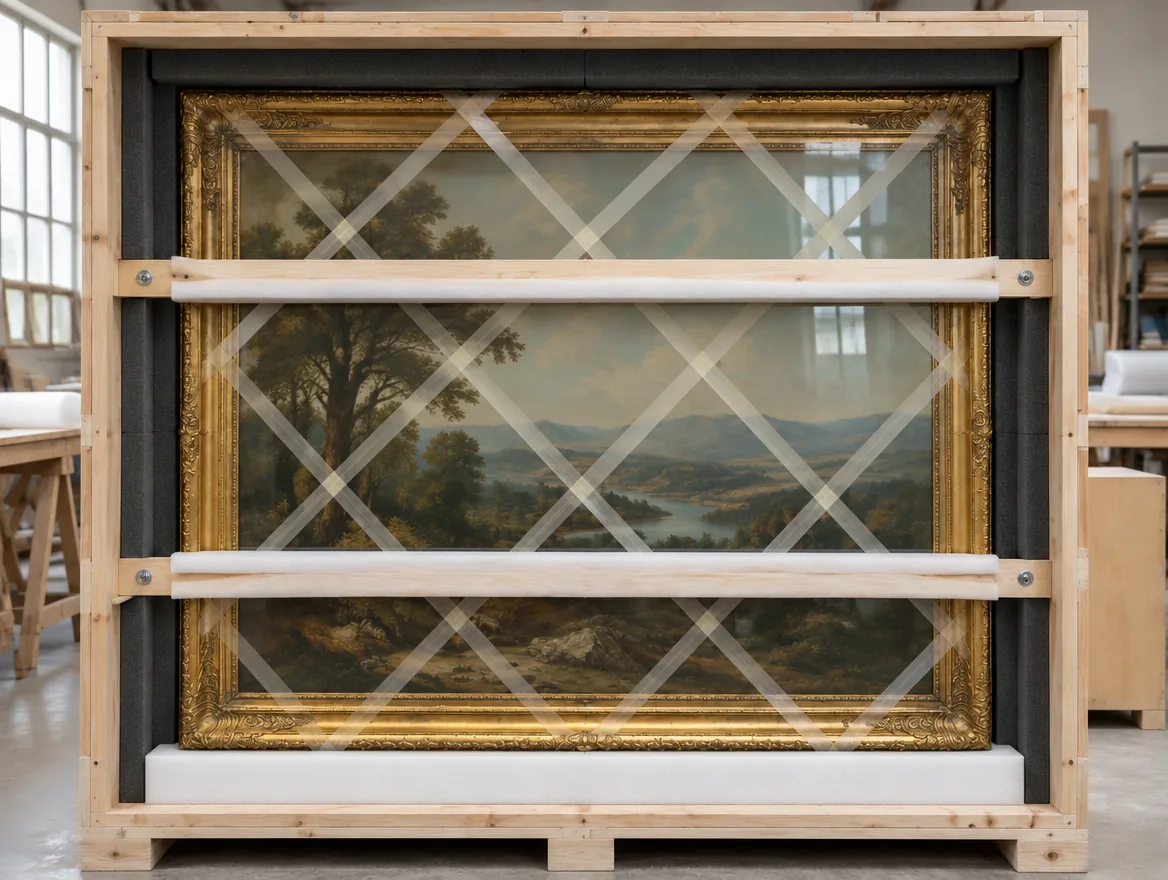
Masking tape in a lattice, on the glass only. Skip this for acrylic, pastel and charcoal.
- 03Guard the corners
Card or foam corner guards on each corner of the frame.
- 04Acid-free tissue first
A layer of acid-free tissue over the front and frame. Nothing rough, and no tape, touches the paint.
- 05Then bubble wrap, bubbles out
Over the tissue, never straight onto paint, and with the bubbles facing outwards.
- 06A rigid outer layer
Stiff board front and back, or better, a crate built to the painting's size.
- 07Hold it still and mark it
Nothing should move when the box or crate is tilted. Mark it Fragile and This way up.
How to ship a painting behind glass
Glass is the part most likely to break, and broken glass is what damages the work. So the glass is taped in a lattice before anything else, and the painting travels upright, on its edge, held by its frame.
Inside our crates, a glazed painting stands on a padded cradle along its whole bottom edge, with padded battens across the frame front and back, so nothing presses on the glass. The crate is built a little larger than the frame, with room for the lining and no more.
Travel frames or crates?
A travel frame is a light timber frame that a framed painting is fixed into by plates on its edges. Some museums and other firms use them. We don't offer them: if a painting needs more than a box, we build it a crate.
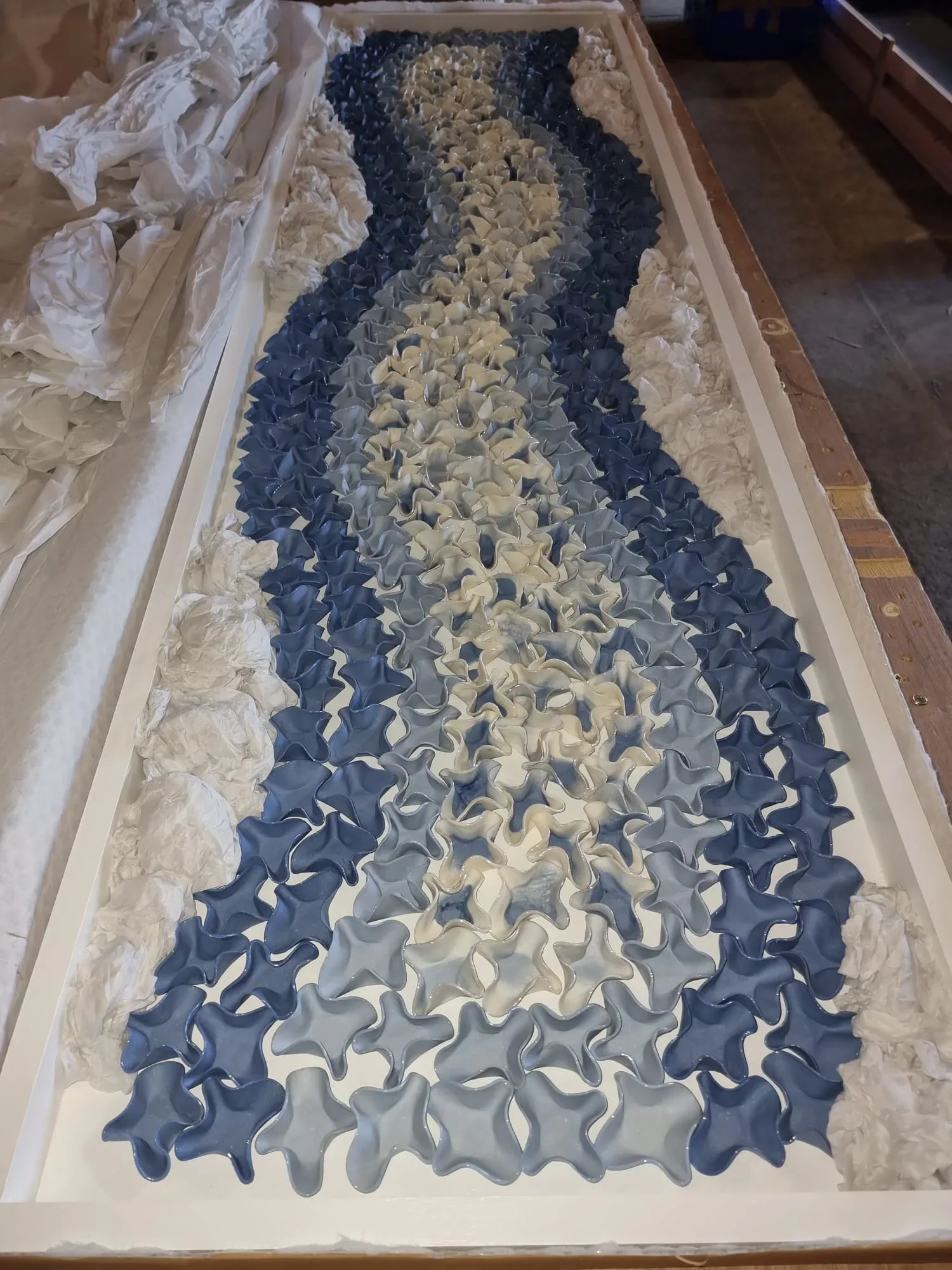
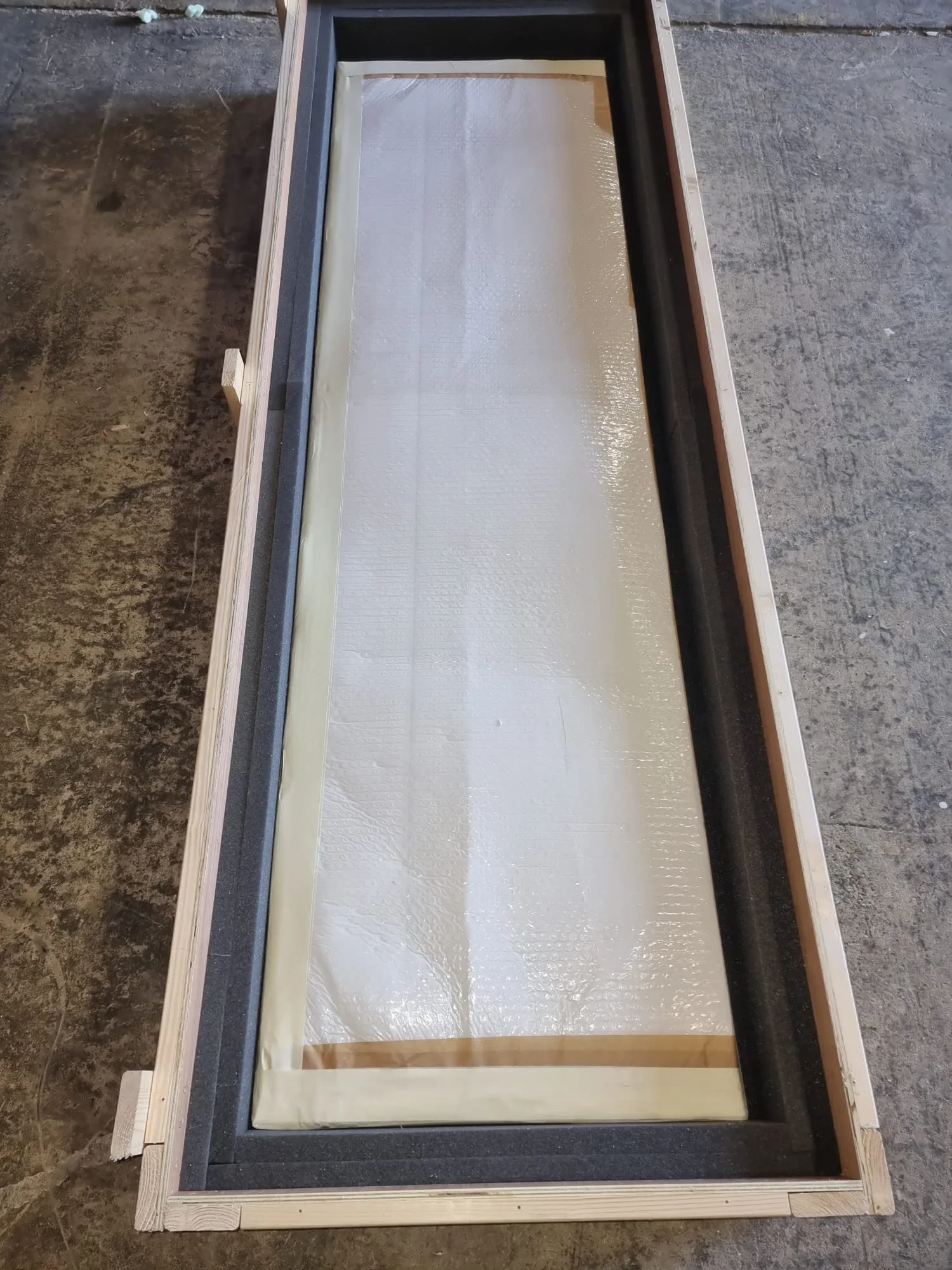
Our crates are a pine frame with plywood panels, built to measure and lined with foam. For most framed paintings we use HLB22 soft foam, charcoal grey and gentle around a delicate frame. Lighter flat works can be lined with polystyrene, the most affordable option. Padded battens hold the painting by its frame, so nothing touches the surface. Unframed canvases are held by the stretcher bars in the same way.
Can you roll a canvas to ship it?
Only some canvases, and never a finished painting that is valuable, old, thickly painted or varnished. Rolling saves space, but paint that can't flex cracks.
- Never roll thick, textured paint
- Never roll an old canvas, or one with any cracking or flaking
- Never roll a painting that is still drying
- Never roll a painting on panel or board (it can't be done)
- Don't take a sound painting off its stretcher just to save on shipping
If a flexible, thinly painted canvas really must be rolled, conservation guidance is to roll it paint side out, around the widest tube you can manage (conservators suggest about 30 cm across), with a smooth sheet laid over the paint. Never fold it. For anything you care about, we would rather crate it flat.
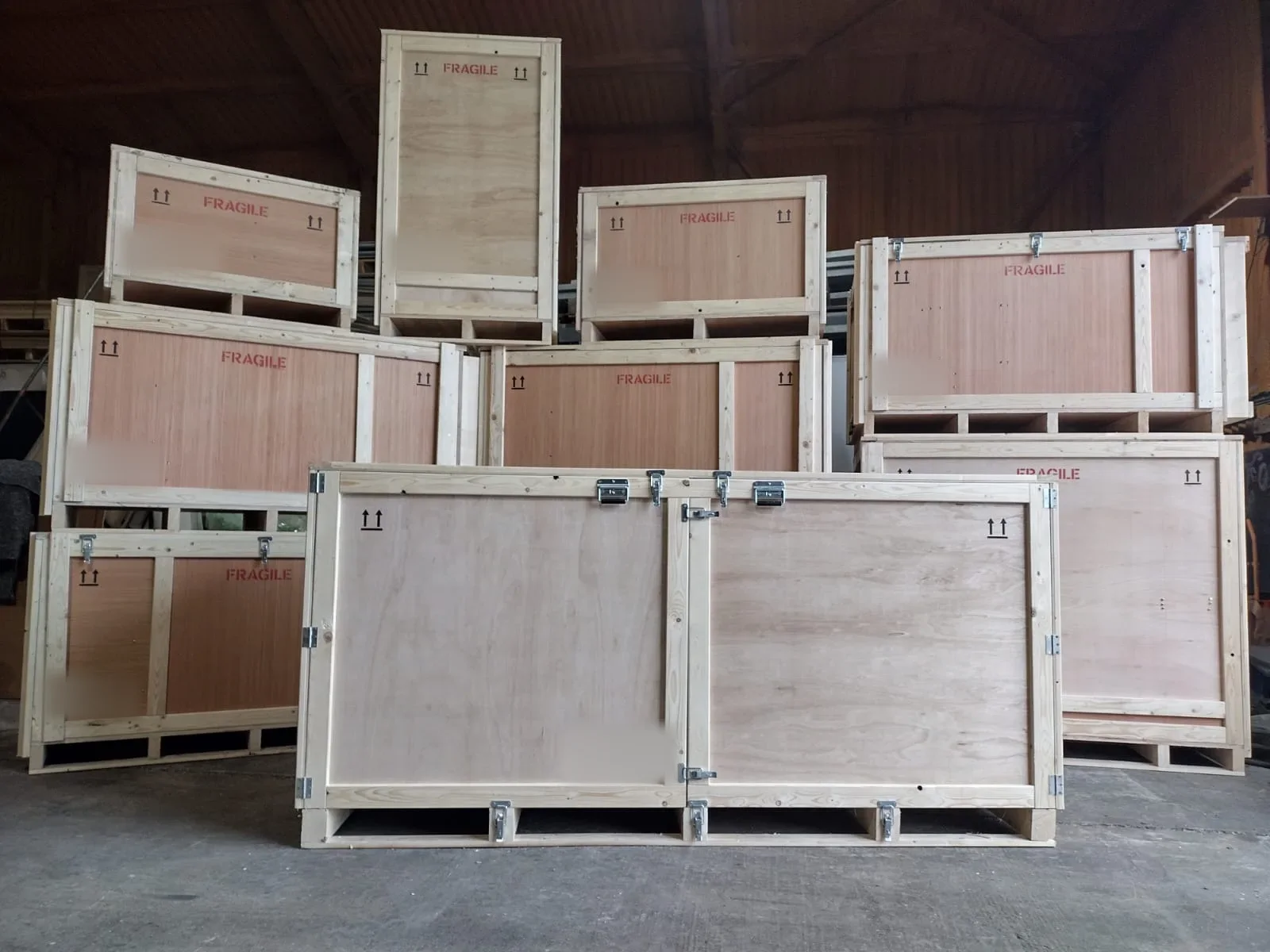
Send us a photo and the measurements.
We’ll recommend the crate, the lining and the supports, and come back with a bespoke quote.
Damp, heat and cold
Quick changes in humidity and temperature do more harm than steady conditions. Canvas, paint, panel and frame all swell and shrink at different rates, and that is how cracks start. Very damp air is especially bad for canvas.
- Don't pack a painting that is still drying. Fresh oils and thick paint can stay soft for a long time.
- Don't leave a packed painting in a cold van or a damp store.
- Let a crate that has come from a very different climate sit for a day or so before opening it.
- Unpack in a room with steady heating, away from radiators and outside doors.
A closed, lined crate slows changes in the air around the painting, which is one more reason to crate anything going by sea or air.
How to measure a painting for shipping
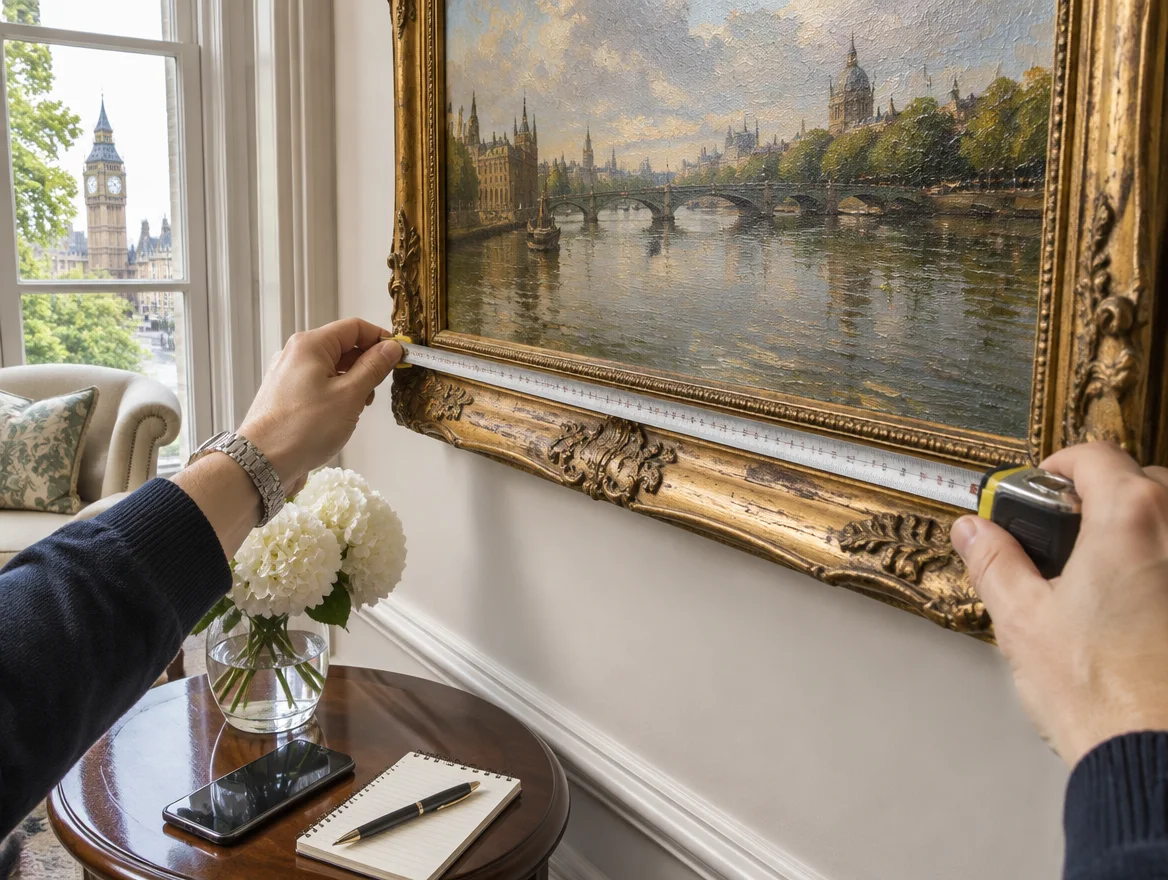
Measure the outside of the frame, not the picture. Use centimetres, and round up.
- Height and width at the widest points, including any carved ornament or projecting moulding
- Depth from the back of the frame to the furthest point at the front
- Hanging fittings at the back: note them, or take off wire and hooks first
- For an unframed canvas, the depth of the stretcher bars
- Roughly what it weighs: can one person lift it, or does it take two?
- Whether it is behind glass or acrylic, and what it is painted with
Crate or box for a painting?
A strong, well-packed box can be enough for a small, unglazed painting of modest value on a short UK trip. Choose a crate when the painting is valuable, behind glass, has a fragile or gilded frame, is large, or is going abroad. Our guide crate or box goes through it in detail.
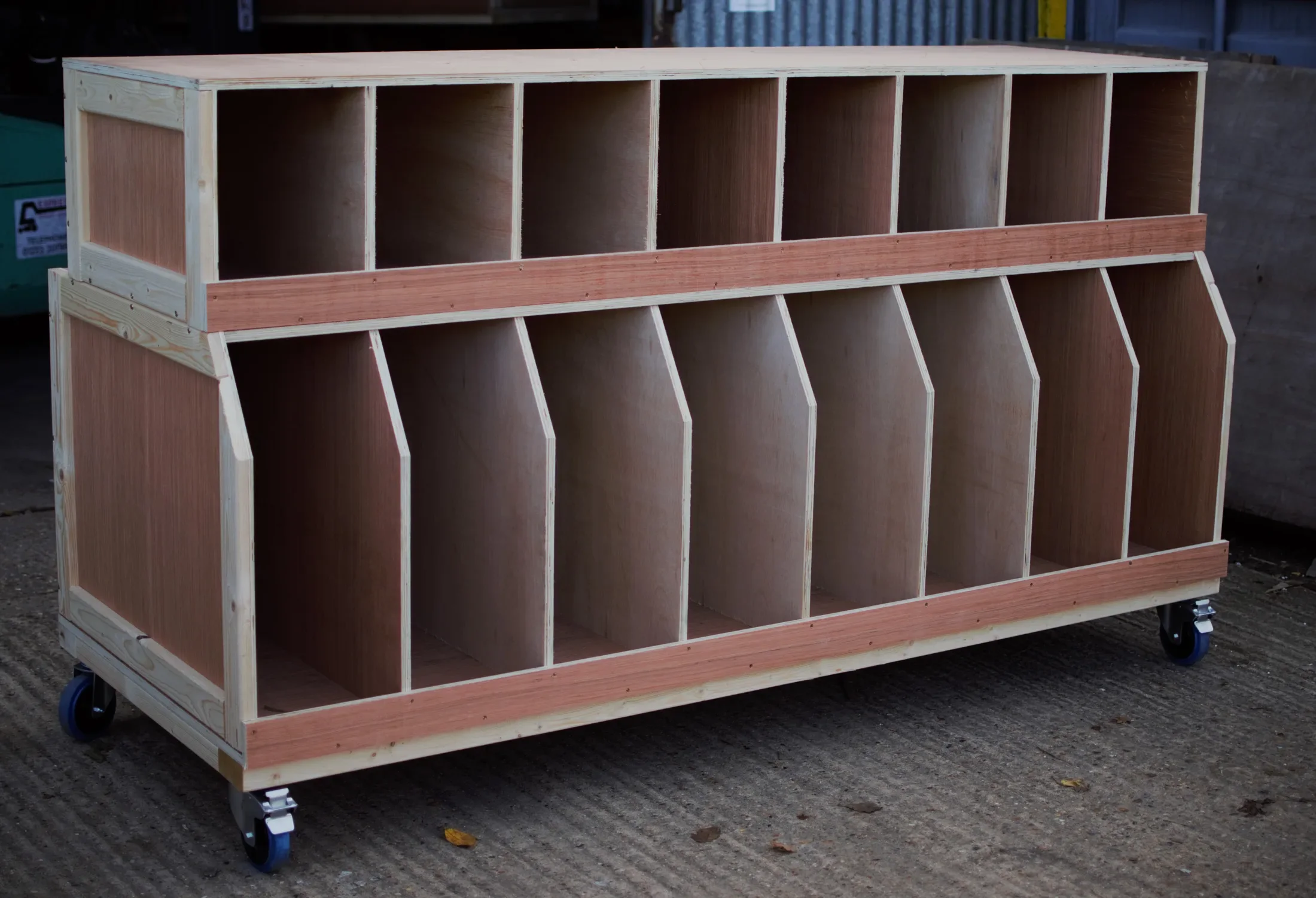
Sending several works? A rack crate with a padded slot for each one keeps the frames apart and makes unpacking simple. See crates for paintings.
Shipping a painting abroad: the basics
The packing is the same. What changes is the paperwork and the crate itself.
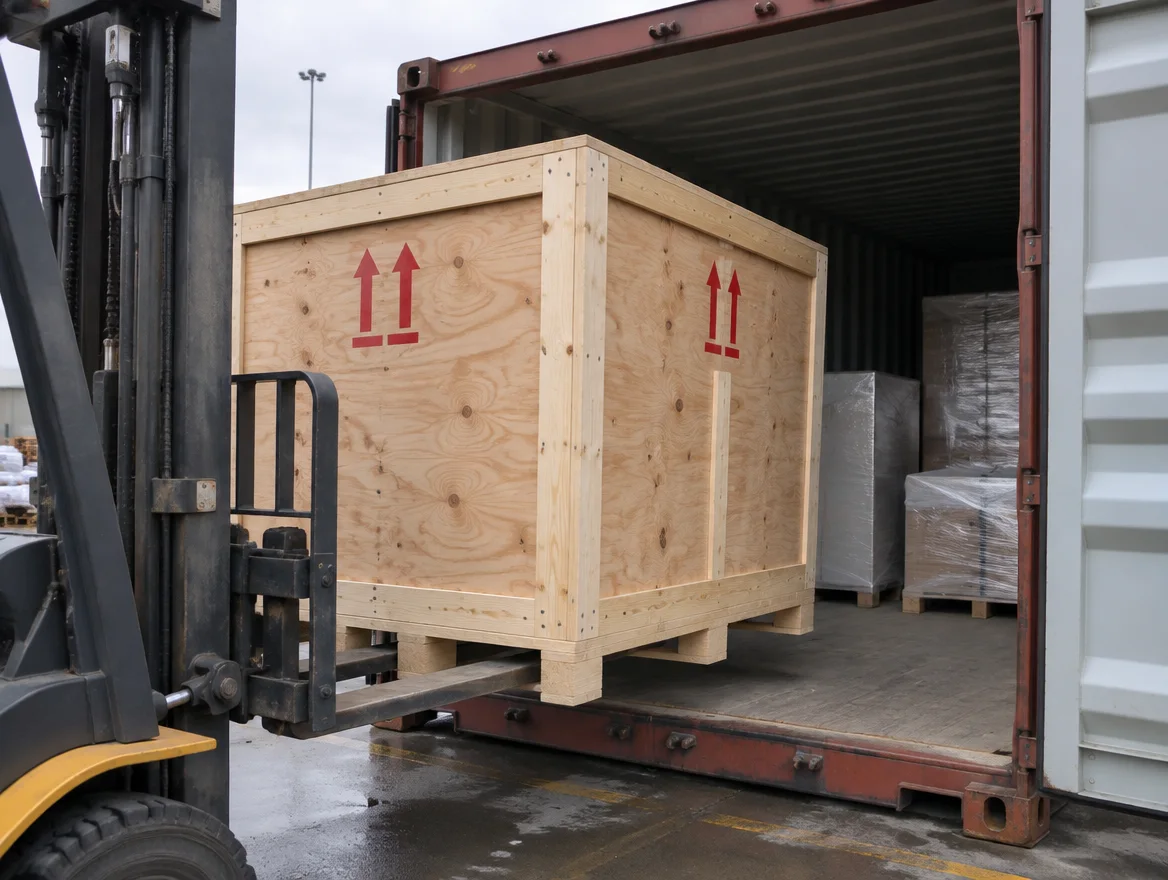
- ISPM 15. Solid timber in a crate usually has to be heat treated and marked to cross a border. See ISPM 15 explained.
- UK export licence. An oil or tempera painting over 50 years old valued at £180,000 or more usually needs an individual licence. Check the current position with Arts Council England.
- Duty and VAT. Original paintings have long been duty free into the United States, but tariff rules have changed often, so check the current position. Import VAT is usually due on art entering the EU. See shipping art to the USA and shipping art to Europe.
- Customs paperwork (export declarations, licences, import entries) is arranged by you, your shipper or a customs agent. We don't handle it.
- Insurance. Transit insurance is bought by you, job by job. See insurance.
Two ways we can take over
If you'd rather hand it over, there are two ways to work with us.
If you want, we can also arrange the onward shipping. Galleries and auction buyers, see galleries and art fairs and crating for auction buyers. Then request a quote.
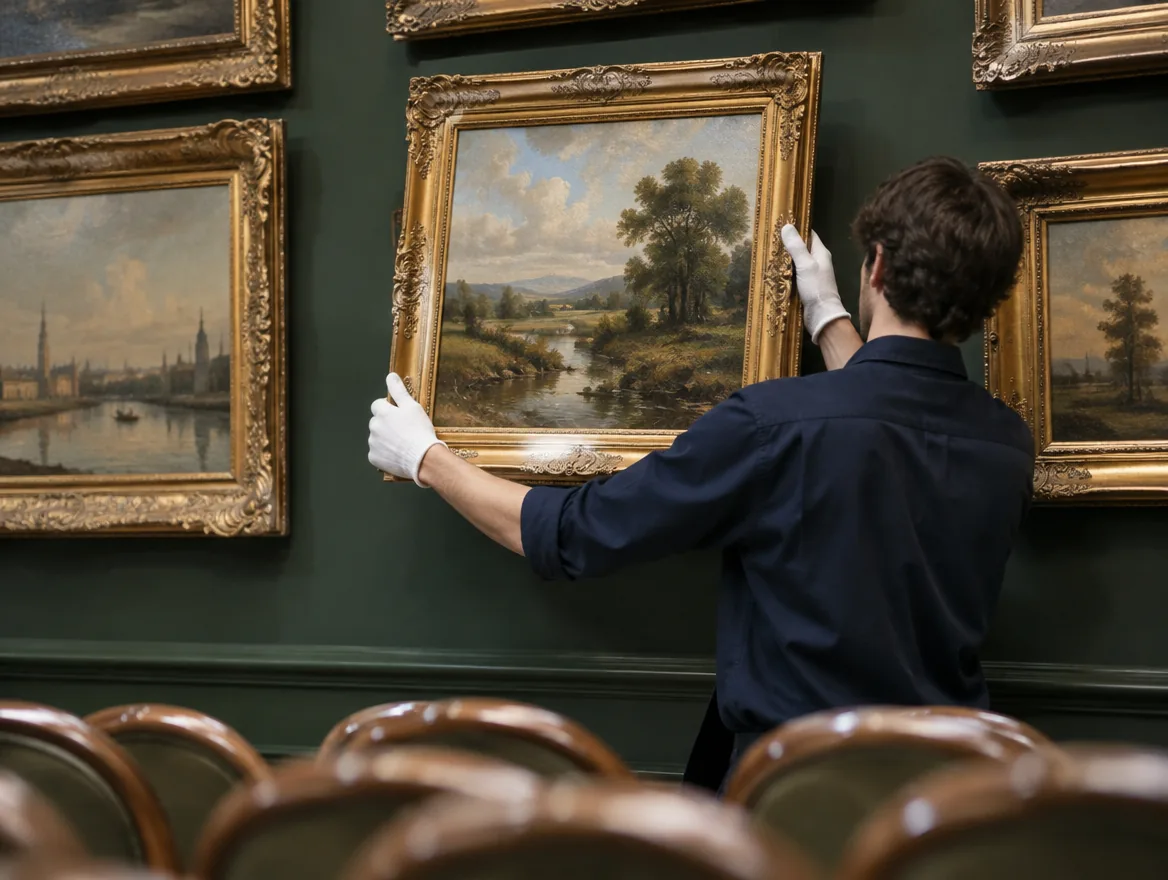
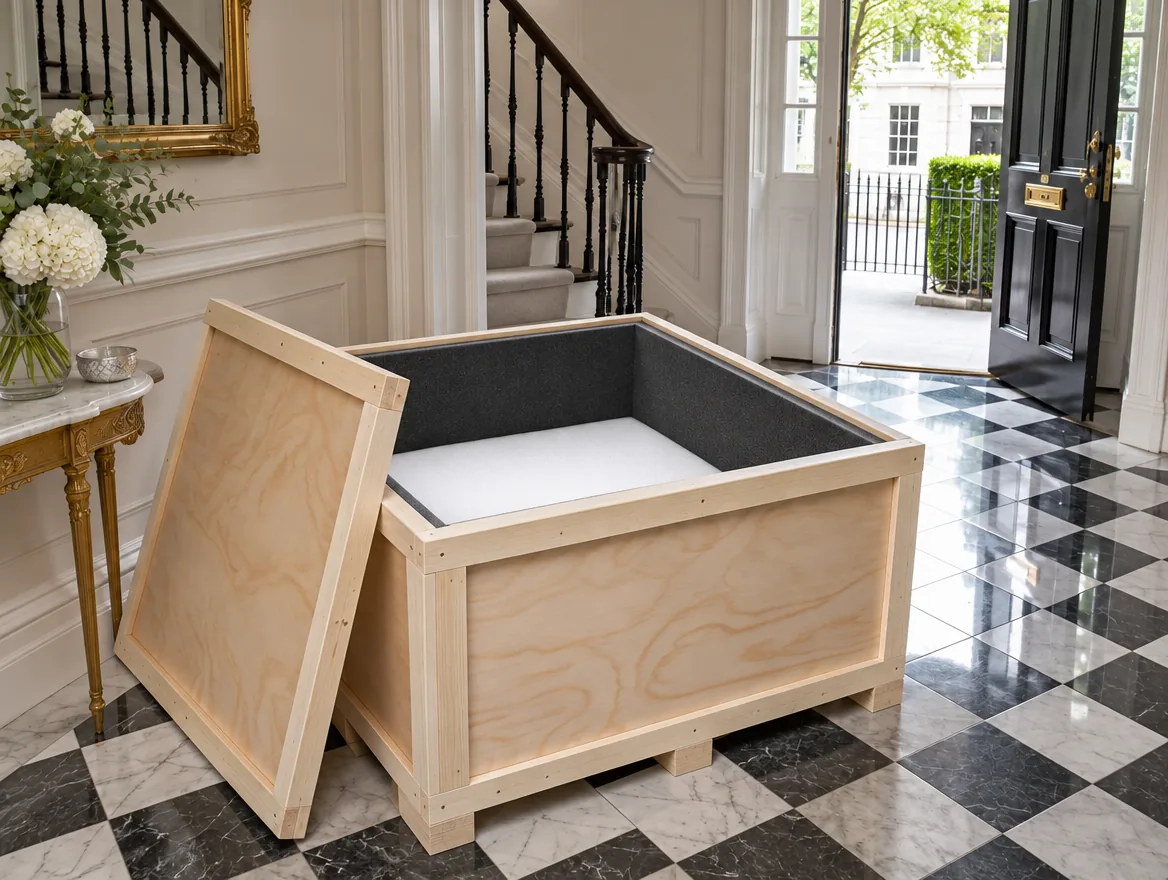
We collect the painting from your home, a gallery, an auction room or storage, wrap it and build its crate around it at our warehouse. Your courier or shipper collects the finished crate from us. You don't measure anything. How collect and crate works.
Send us the frame sizes and what the painting is. We confirm the measurements with you, build the crate and deliver it to your address, ready to pack. Crates built to your measurements.
Common questions
Can I ship a painting in a cardboard box? +
For a small, unglazed painting of modest value on a short UK trip, a strong double-walled box packed properly can be enough. For anything valuable, glazed or going abroad, use a crate.
How long after painting can I ship an oil painting? +
Oils can stay soft for a long time, especially where the paint is thick. Wrapping too soon can mark the surface. Tell us when it was finished and ask us how best to protect it.
Should a painting be shipped flat or upright? +
Upright, on its edge, held by its frame. Lying flat, anything stacked on top presses on it, and glass flexes.
Is it safe to ship a painting by air? +
Yes, if it is crated. A closed, lined crate protects it through handling and slows changes in temperature and humidity in the hold.
Do I need to take a painting out of its frame to ship it? +
Usually not. The frame is what the painting is held by in the crate. Taking it out exposes the edges and the surface.
What should I write on the outside of the crate? +
Fragile, This way up, and the glass side if there is glass. Keep your own photos of the painting and the crate before it leaves.
Can you crate a painting I have just bought at auction? +
Yes. We can collect it from the saleroom, crate it at our warehouse and have your courier collect it from us. See crating for auction buyers.
How much does it cost to ship a painting? +
Every quote is bespoke, based on the painting's size, frame, glass, where it is going and how. Send us the details and we'll come back with a price.
More on shipping paintings
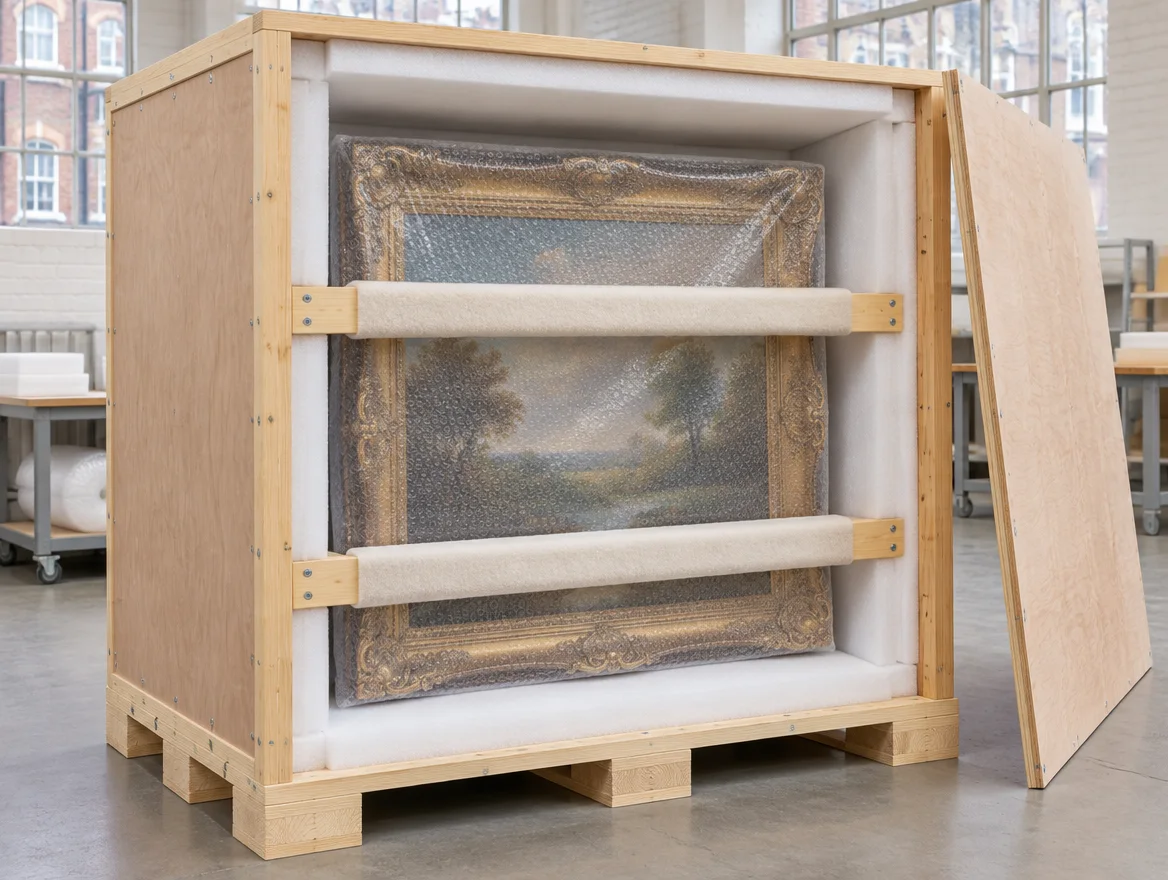
Surface protected, frame held still.
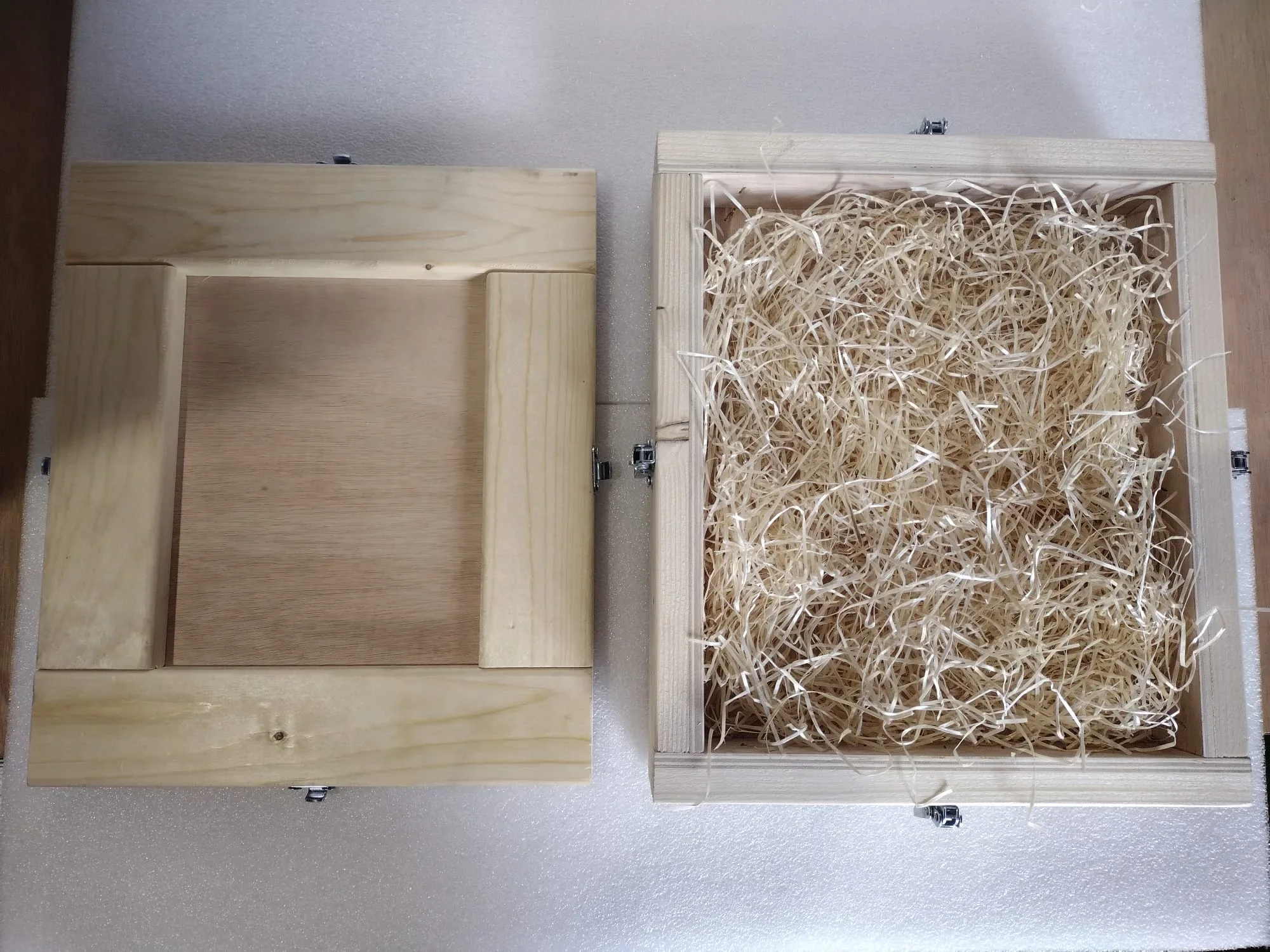
Wooden crate or box: what your piece needs.
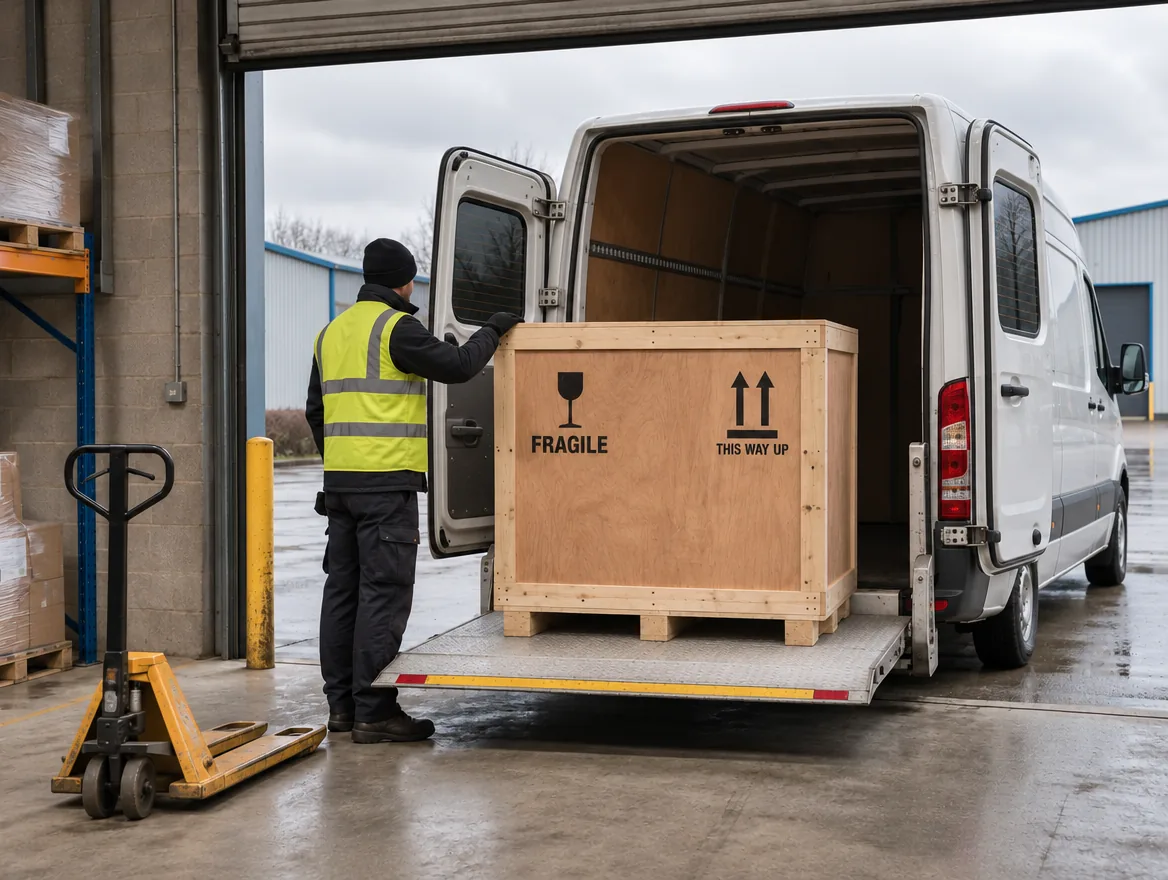
Nothing to measure. We build the crate around the piece.
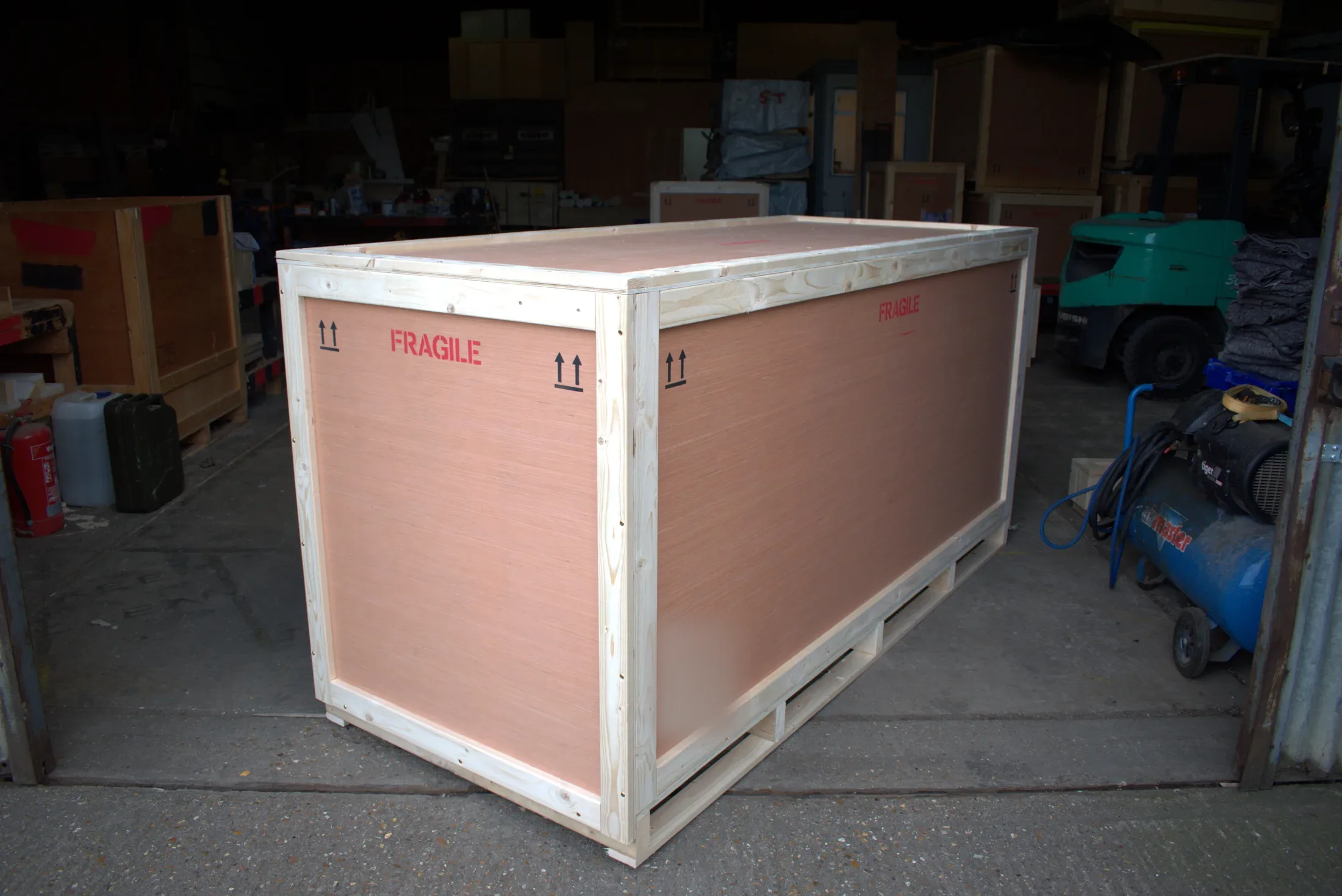
From London to anywhere in the States.
Swipe for more →
Tell us what needs to travel.
Every quote is bespoke, based on the piece itself. Send us the details and we'll come back to you.